Ordinary Time Week 10: Wednesday 
— Saint Barnabas, Apostle —

“Amen, I say to you, until heaven and earth pass away, not the smallest letter or the smallest part of a letter will pass from the law, until all things have taken place.” (Matthew 5:18)

Origen of Alexandria comments on this verse from the Gospel proclaimed at Mass today:

”But the “one dot” is not only the iota of the Greeks but also that which among the Hebrews is called the yod. And the “one iota” or “one dot” can symbolically be said to be Jesus, since the beginning of his name is written not only by Greeks with an iota but also by Hebrews with a yod. So Jesus will be the one dot, the Word of God in the law which does not pass from the law until all is accomplished. But the iota might also be (as he himself says) the Ten Commandments of the law, for everything else passes away, but these do not pass away. But neither does Jesus pass away; if he “falls to the ground” he does so willingly, in order to bear much fruit. Again, the “one iota” or “one dot” has mastery over things both in heaven and on earth.” (Fragment, 99)


On 31 January 2007, Pope Benedict XVI devoted his Wednesday Audience to a reflection on the people who assisted Saint Paul in his ministry. In Acts (4:36), Barnabas is known as “son of encouragement” and was a valuable companion of Saint Paul.


Sanctoral Collect
O God, who decreed that Saint Barnabas,
a man filled with faith and the Holy Spirit,
should be set apart to convert the nations,
grant that the Gospel of Christ,
which he strenuously preached,
may be faithfully proclaimed by word and by deed.
Through our Lord Jesus Christ, Your Son,
Who lives and reigns with You
in the unity of the Holy Spirit,
one God, for ever and ever. Amen.


Ordinary Time Collect
O God, from whom all good things come,
grant that we, who call on You in our need,
may at Your prompting discern what is right,
and by Your guidance do it.
Through our Lord Jesus Christ, Your Son,
Who lives and reigns with You
in the unity of the Holy Spirit,
one God, for ever and ever. Amen.


Glory to the Father
and to the Son
and to the Holy Spirit:
as it was in the beginning,
is now, and will be forever. Amen



Ordinary Time Week 10: Tuesday 
Evening Reflection on Today’s Gospel

“Just so, your light must shine before others, that they may see your good deeds and glorify your heavenly Father.” (Matthew 5:16)

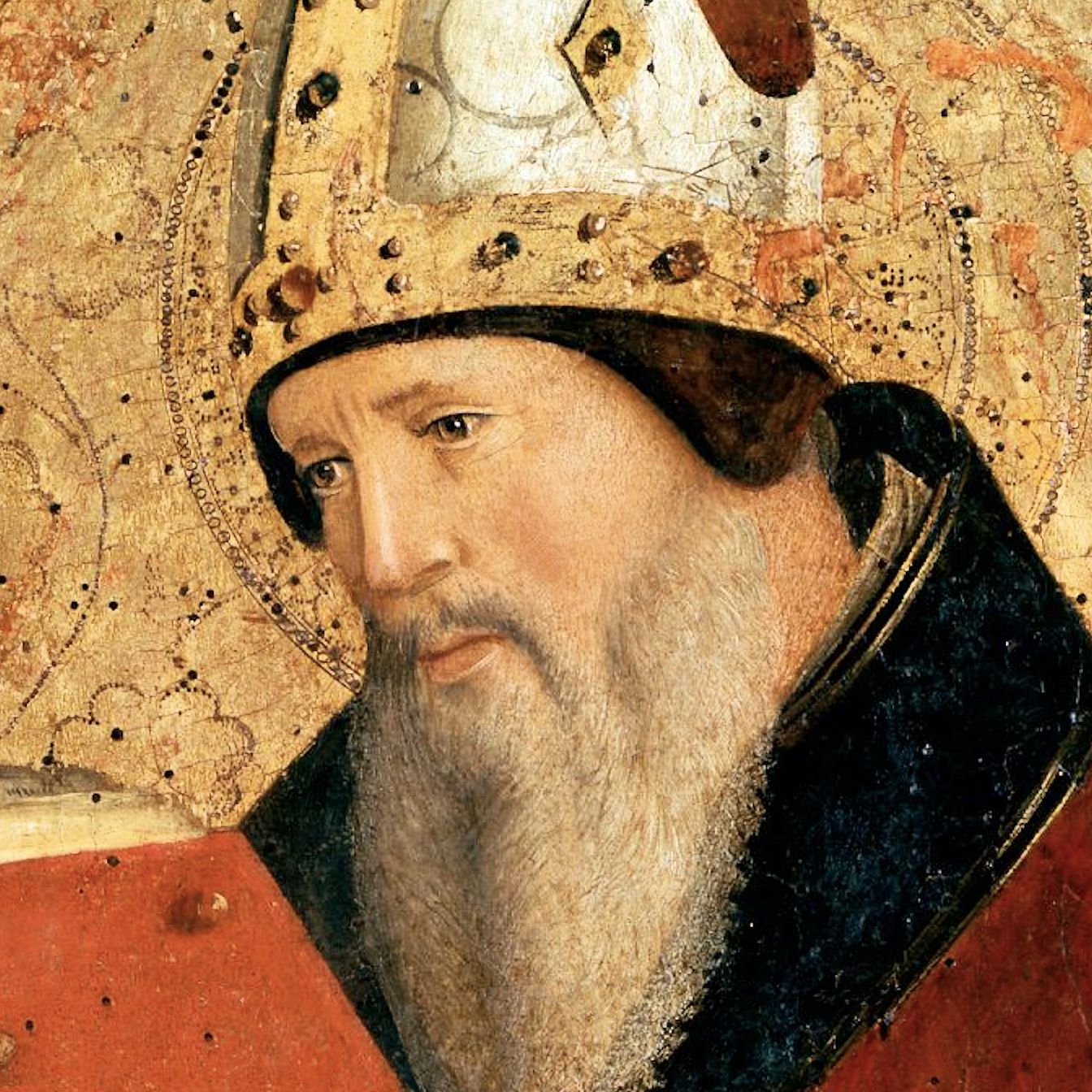
Saint Augustine of Hippo comments on this verse from the Gospel proclaimed at Mass today:

”Of course, the very words of the gospel are self-explanatory. While they feed the hearts of those who knock, they do not hinder the shouts of those who hunger. One must look deeply into the human heart to see in what direction it is turned and on what point its gaze is fixed. Suppose someone desires that his good work be seen by others. Suppose he regards his glory and profit according to the estimation of others and seeks to be elevated in the sight of others. By doing so he fulfills neither of the commands that the Lord has given in this text. For he has sought to practice his justice before the eyes of others, in order to be seen by them. Therefore his light has not caused others to give glory to the Father who is in heaven. He did not wish to have glory rendered to God but to himself. He did not love the will of God but sought advantage for himself. Of such the apostle says, “For they all seek their own interests, not those of Jesus Christ.” The saying “Let your light so shine before others that they may see your good works” is incomplete. He immediately adds the reason why this should be done: “that they may give glory to your Father who is in heaven.” This means that even though one is seen by others in doing good works, in one’s conscience one ought to have the simple intention of glorifying God. It is only for the sake of God’s glory that we should allow our good works to become known.” (Sermon 54)


Ordinary Time Collect
O God, from whom all good things come,
grant that we, who call on You in our need,
may at Your prompting discern what is right,
and by Your guidance do it.
Through our Lord Jesus Christ, Your Son,
Who lives and reigns with You
in the unity of the Holy Spirit,
one God, for ever and ever. Amen.


Glory to the Father
and to the Son
and to the Holy Spirit:
as it was in the beginning,
is now, and will be forever. Amen


Ordinary Time Week 10: Tuesday

“You are the salt of the earth. But if salt loses its taste, with what can it be seasoned? It is no longer good for anything but to be thrown out and trampled underfoot.” (Matthew 5:13)

Origen of Alexandria comments on this verse from the Gospel proclaimed at Mass today:

”Salt is useful for so many purposes in human life! What need is there to speak about this? Now is the proper time to say why Jesus’ disciples are compared with salt. Salt preserves meats from decaying into stench and worms. It makes them edible for a longer period. They would not last through time and be found useful without salt. So also Christ’s disciples, standing in the way of the stench that comes from the sins of idolatry and fornication, support and hold together this whole earthly realm.” (Fragment, 91)


Ordinary Time Collect
O God, from whom all good things come,
grant that we, who call on You in our need,
may at Your prompting discern what is right,
and by Your guidance do it.
Through our Lord Jesus Christ, Your Son,
Who lives and reigns with You
in the unity of the Holy Spirit,
one God, for ever and ever. Amen.


Glory to the Father
and to the Son
and to the Holy Spirit:
as it was in the beginning,
is now, and will be forever. Amen


Ordinary Time Week 10: Monday

“When He [Jesus] saw the crowds, He went up the mountain, and after He had sat down, His disciples came to Him.” (Matthew 5:1)

Saint Augustine of Hippo offers the following insight on this verse from today’s Gospel:

“If we ask what the mountain signifies, it is rightly understood to point toward the gospel’s higher righteousness. The precepts given to the Hebrews were lower. Yet, through his holy prophets and servants and in accordance with a most orderly arrangement of circumstance, the same God gave the lower precepts to a people to whom it was fitting to be bound by fear. Through his Son he gave the higher precepts to a people to whom it is fitting to be set free by love.” (Sermon on the Mount, 1)


Ordinary Time Collect
O God, from whom all good things come,
grant that we, who call on you in our need,
may at your prompting discern what is right,
and by your guidance do it.
Through our Lord Jesus Christ, Your Son,
Who lives and reigns with You
in the unity of the Holy Spirit,
one God, for ever and ever. Amen.


Glory to the Father
and to the Son
and to the Holy Spirit:
as it was in the beginning,
is now, and will be forever. Amen


Words of THE WORD: “to forgive” 
Pentecost 2014

Gospel excerpt
“And when he had said this, he breathed on them and said to them, “Receive the Holy Spirit. Whose sins you forgive (ἀφῆτε, aphete) are forgiven (ἀφέωνται, apheontai) them, and whose sins you retain are retained.” (John 20:22-23)

Reflection
Reminiscent of the Father’s creative Breath that fashioned humanity in His image and likeness (Genesis 2), the Risen Jesus breathes that same creative Breath, the Person of the Holy Spirit, to continue His saving and renewing work through the forgiveness of sins.

Because the experience of forgiveness is at the core of Jesus’ teaching and way of living, it is well worth pondering its meaning in the Word of God this Pentecost Sunday. Throughout His Public ministry, Jesus freely imparted the Father’s forgiveness in response to sorrow for sin. He taught His disciples to forgive one another and included it as a petition in the prayer that defines all Christian Prayer, the Lord’s Prayer. He even pronounced a prayer of forgiveness from His broken Body engulfed in a pain that words cannot even begin to express as He was dying on the Cross. And just in case none of this has moved us, Jesus concluded a parable with one of the Gospels’ most stinging challenge: “So will my heavenly Father do to you, unless each of you forgives his brother (ἀφῆτε, aphete) from his heart (Matthew 18:35).”

Jesus’ Words certainly cut deep into our minds and hearts. Every time we hear Him say a word about forgiveness our minds vividly present us with the many faces of strained and broken relationships that are still oozing with pain. The pain and hurt often prompt thoughts, if not action, of revenge because ‘he or she is not going to get away with hurting me.’ Other times the hurts generate anger as we realize we cannot do anything to ‘feel better.’ We have experienced hurts so deep that ‘forgiveness’ (whatever that might be) seems impossible to us at that moment.

ἀφίημι (aphíēmi) is the Greek verb that is generally rendered “to forgive” in the majority of English Bible translations. In antiquity, ἀφίημι (aphíēmi) meant “to release” suggesting a prior action that has somehow bound or even imprisoned a person or object. Closely related to the meaning of “to release,” is “to leave” and “to leave to another.” While there are a number of other English words that also translate ἀφίημι (aphíēmi), all of the translations suggest some type of movement. This further suggests that ἀφίημι (aphíēmi) ‘permits’ movement since, implicitly, motion has been halted. Secular usage of ἀφίημι (aphíēmi) conveyed a sense of “lifting or releasing a debt owed;” a meaning that is often woven into biblical texts such as the Lord’s Prayer.

So what does this all have to say to us when it comes to the very difficult action of forgiving another or others? Sin (sin in Hebrew hatta means “to miss the mark”) by its very nature is not only evil or disorder, but also an evil or disorder that is chosen. When I sin, I choose to introduce a level of chaos and disorder into life that retards and may even stop any growth or movement in life towards the other, others and Other (God). The greater ‘the sin’ the harder the brakes are applied to life and relationship living. Some offenses may even bring all movement to a screeching stop similar to putting a car ‘in park’ and blocking the wheels, not to mention the possibility of lifting the car on jack stands and removing the wheels. Nobody is going anywhere then.

The act of forgiving (ἀφίημι (aphíēmi)) is a power breathed into life that has been stopped dead in its tracks. ἀφίημι (aphíēmi) is an act of creation – a mighty act of creation – enabled by the Divine Life of the Holy Trinity within that jump-starts life once again. It does not whitewash or pretend that the hurt or damage has not occurred. Forgiveness is not about forgetting or having the memory of the hurt obliterated. That is impossible; after all what has occurred is an event in history. The damage occurred in a particular time and particular place and is real. To ‘pretend’ otherwise is foolish. What forgiveness does, however, is release one from the crippling affect and effect that the memories of painful events have over our life in the present. In the end, forgiveness is Divine Love that calls forth life into existence much the same way reality first came into existence: the response to the Word, Jesus, breathing the Holy Spirit of Love by the almighty and loving Father.

Pentecost 2014

“And when he had said this, he breathed on them and said to them, “Receive the holy Spirit.” (John 20:22)

Saint Augustine of Hippo offers the following insight on this verse from today’s Gospel:

“But the reason why, after his resurrection, he both gave the Holy Spirit, first on earth, and afterward sent him from heaven, is in my judgment this: that “love is shed abroad in our hearts,” by that gift itself, whereby we love God and our neighbors, according to those two commandments, “on which hang all the law and the prophets.” And Jesus Christ signified this by giving them the Holy Spirit once on earth because of the love of our neighbor and a second time from heaven because of the love of God. And if some other reason may perhaps be given for this double gift of the Holy Spirit, at any rate we ought not to doubt that the same Holy Spirit was given when Jesus breathed on them, of whom he says, “Go, baptize all nations in the name of the Father, and of the Son and of the Holy Spirit,” where this Trinity is especially commended to us. It is therefore he who was also given from heaven on the day of Pentecost, that is, ten days after the Lord ascended into heaven.” (On the Trinity, 15)


Easter Collect
O God, who by the mystery of today’s great feast
sanctify your whole Church in every people and nation,
pour out, we pray, the gifts of the Holy Spirit
across the face of the earth
and, with the divine grace that was at work
when the Gospel was first proclaimed,
fill now once more the hearts of believers.
Through our Lord Jesus Christ, Your Son,
Who lives and reigns with You
in the unity of the Holy Spirit,
one God, for ever and ever. Amen.


The Lord is risen! Alleluia!
He is risen, indeed! Alleluia!


Easter Week 7: Saturday

“Jesus said to him, “What if I want him to remain until I come? What concern is it of yours? You follow me.”” (John 21:22)

Saint Augustine of Hippo offers the following insight on this verse from today’s Gospel:

“There are two states of life, therefore, preached and commended as revealed to the church from heaven: the one being in faith, the other in sight; one remaining in time in a foreign land, the other residing in the eternal heavenly dwelling. The first was signified by the apostle Peter, the other by John. And so, it is said to Peter, “Follow me” by imitating me in the endurance of temporal evils. [But of John it is said], “Let him remain” till I come to restore everlasting bliss. And this may be expressed more clearly in this way: Let action that is perfected, informed by the example of my passion, follow me; but let contemplation that has only just begun remain until I come, to be perfected when I come. For the godly fullness of patience, reaching forward even unto death, follows Christ; but the fullness of knowledge remains until Christ comes, to be manifested then. For here the evils of this world are endured in the land of the dying, while the good things of the Lord shall be seen in the land of the living. For in saying, “I want him to remain till I come,” we are not to understand that John was supposed to remain on earth, or to abide permanently, but he was, rather, to wait. Therefore, what is signified by John shall certainly not be fulfilled now, but when Christ comes.

But what is signified by Peter to whom it was said, “Follow me,” except that his [and our] following must be done now, or it will never reach the expected outcome. In such an active life, the more we love Christ the more easily we are delivered from evil. But he loves us less as we now are, and therefore delivers us from this state of being so that we may not always be such as we are. There [in heaven], however, he loves us more; for we shall not have anything about us to displease him, or anything that would cause Christ to separate us from him. He loves us here for the purpose of healing and delivering us from everything he doesn’t love. Here, therefore, he loves us less because it is a place where he does not want us to remain. There [in heaven] he will love us in an even larger measure as the place toward which he would have us to be passing as we leave behind the place where he knows we would otherwise perish. Let Peter therefore love him, that we may obtain deliverance from our present mortality; let John be loved by him, that we may be preserved in the immortality to come.” (Tractates on the Gospel of John, 124)


Easter Collect
Grant, we pray, almighty God,
that we, who have celebrated the paschal festivities,
may by your gift hold fast to them
in the way that we live our lives.
Through our Lord Jesus Christ, Your Son,
Who lives and reigns with You
in the unity of the Holy Spirit,
one God, for ever and ever. Amen.


The Lord is risen! Alleluia!
He is risen, indeed! Alleluia!


Easter Week 7: Friday 
Memorial, Saint Norbert

“When they had finished breakfast, Jesus said to Simon Peter, “Simon, son of John, do you love me more than these?” He said to him, “Yes, Lord, you know that I love you.” He said to him, “Feed my lambs.”” (John 21:15)

Aphrahat (Aphraates) offers the following insight on these verses from today's Gospel:

“O pastors! Imitate that diligent pastor, the chief of the whole flock, who cared so greatly for his flock. He brought near those who were far away. He brought back the wanderers. He visited the sick. He strengthened the weak. He bound up the broken. He guarded those who were well fed. He gave himself up for the sake of the sheep. He chose and instructed excellent leaders, and committed the sheep into their hands and gave them authority over all his flock. For he said to Simon Cephas, “Feed my sheep and my lambs and my ewes.” So Simon fed his sheep and fulfilled his calling and handed over the flock to you and departed. And so you also must feed and guide them well. For the pastor who cares for his sheep engages in no other pursuit along with that. He does not make a vineyard, or plant gardens, or fall into the troubles of this world. Never have we seen a pastor who left his sheep in the wilderness and became a merchant, or one who left his flock to wander and became a husbandman. But if he deserts his flock and does these things, he thereby hands over his flock to the wolves.” (Demonstration, 10)


Sanctoral Collect
O God, who made the Bishop Saint Norbert
a servant of your Church
outstanding in his prayer and pastoral zeal,
grant, we ask, that by the help of his intercession,
the flock of the faithful
may always find shepherds after your own heart
and be fed in the pastures of salvation.
Through our Lord Jesus Christ, Your Son,
Who lives and reigns with You
in the unity of the Holy Spirit,
one God, for ever and ever.


Easter Collect
O God, who by the glorification of your Christ
and the light of the Holy Spirit
have unlocked for us the gates of eternity,
grant, we pray,
that, partaking of so great a gift,
our devotion may grow deeper
and our faith be strengthened.
Through our Lord Jesus Christ, Your Son,
Who lives and reigns with You
in the unity of the Holy Spirit,
one God, for ever and ever.


The Lord is risen! Alleluia!
He is risen, indeed! Alleluia!


Easter Week 7: Thursday
 Memorial of Saint Boniface

“And I have given them the glory you gave me, so that they may be one, as we are one ...” (John 17:22)

Saint Gregory of Nyssa offers the following insight on these verses from today's Gospel:

“In giving “all power” to his disciples by his blessing, in his prayer here to the Father he grants many other favors to those who are holy. And he adds this, which is the crown of all blessings, that in all the diversity of life’s decisions they should never be divided greatly in their choice of the good. And so he prays that all “may be one,” united in a single good so that linked “in the bond of peace,” as the apostle says, through “the unity of the [Holy] Spirit,” all might become “one body and one spirit,” through the “one hope” to which they have all been called.

But it would be better here if we would quote the actual words of the Gospel. “That they all may be one,” he says, “as you, Father, are in me, and I in you; that they also may be one in us.” Now the bond of this unity is glory, and no one who would consider seriously the Lord’s words would deny that this glory is the Holy Spirit. For he says, “The glory that you have given me, I have given to them.” He gave his disciples this glory when he said to them, “Receive the Holy Spirit.” And he himself received this glory when he put on human nature, though he had indeed always possessed it since before the beginning of the world. And now that his human nature has been glorified by the Spirit, this participation in the glory of the Spirit is communicated to all who are united with him, beginning with his disciples.” (Homilies on the Song of Songs, 15)


Sanctoral Collect
May the Martyr Saint Boniface
be our advocate, O Lord,
that we may firmly hold the faith
he taught with his lips and sealed in his blood
and confidently profess it by our deeds.
Through our Lord Jesus Christ, Your Son,
Who lives and reigns with You
in the unity of the Holy Spirit,
one God, for ever and ever.


Easter Collect
May your Spirit, O Lord, we pray,
imbue us powerfully with spiritual gifts,
that he may give us a mind pleasing to you
and graciously conform us to your will.
Through our Lord Jesus Christ, Your Son,
Who lives and reigns with You
in the unity of the Holy Spirit,
one God, for ever and ever.


The Lord is risen! Alleluia!
He is risen, indeed! Alleluia!


Easter Week 7: Wednesday

“I do not ask that you take them out of the worldj but that you keep them from the evil one.” (John 17:15)

Saint Augustine of Hippo offers the following insight on this verse from today’s Gospel:

““I pray not,” he adds, “that you should take them out of the world but that you should keep them from the evil.” For they still thought it was necessary to be in the world, although they were no longer of it. Then he repeats the same statement: “They are not of the world, even as I am not of the world. Sanctify them in the truth.” For they are kept from the evil, as he had previously prayed that they might be. But it may be inquired how they were no longer of the world if they were not yet sanctified in the truth. Or, if they already were, why does he request that they should be sanctified? Isn’t it because even those who are sanctified still continue to make progress in the same sanctification and grow in holiness? And they do not do so without the aid of God’s grace but by his sanctifying of their progress, even as he sanctified them at the outset [of their sanctification].” (Tractates on the Gospel of John, 108)


Easter Collect
Graciously grant to Your Church, O merciful God,
that, gathered by the Holy Spirit,
She may be devoted to You with all Her heart
and united in purity of intent.
Through our Lord Jesus Christ, Your Son,
Who lives and reigns with You
in the unity of the Holy Spirit,
one God, for ever and ever. Amen.


The Lord is risen! Alleluia!
He is risen, indeed! Alleluia!