Showing posts with label Peter. Show all posts

Easter Week 7: Saturday

“Jesus said to him, “What if I want him to remain until I come? What concern is it of yours? You follow me.”” (John 21:22)

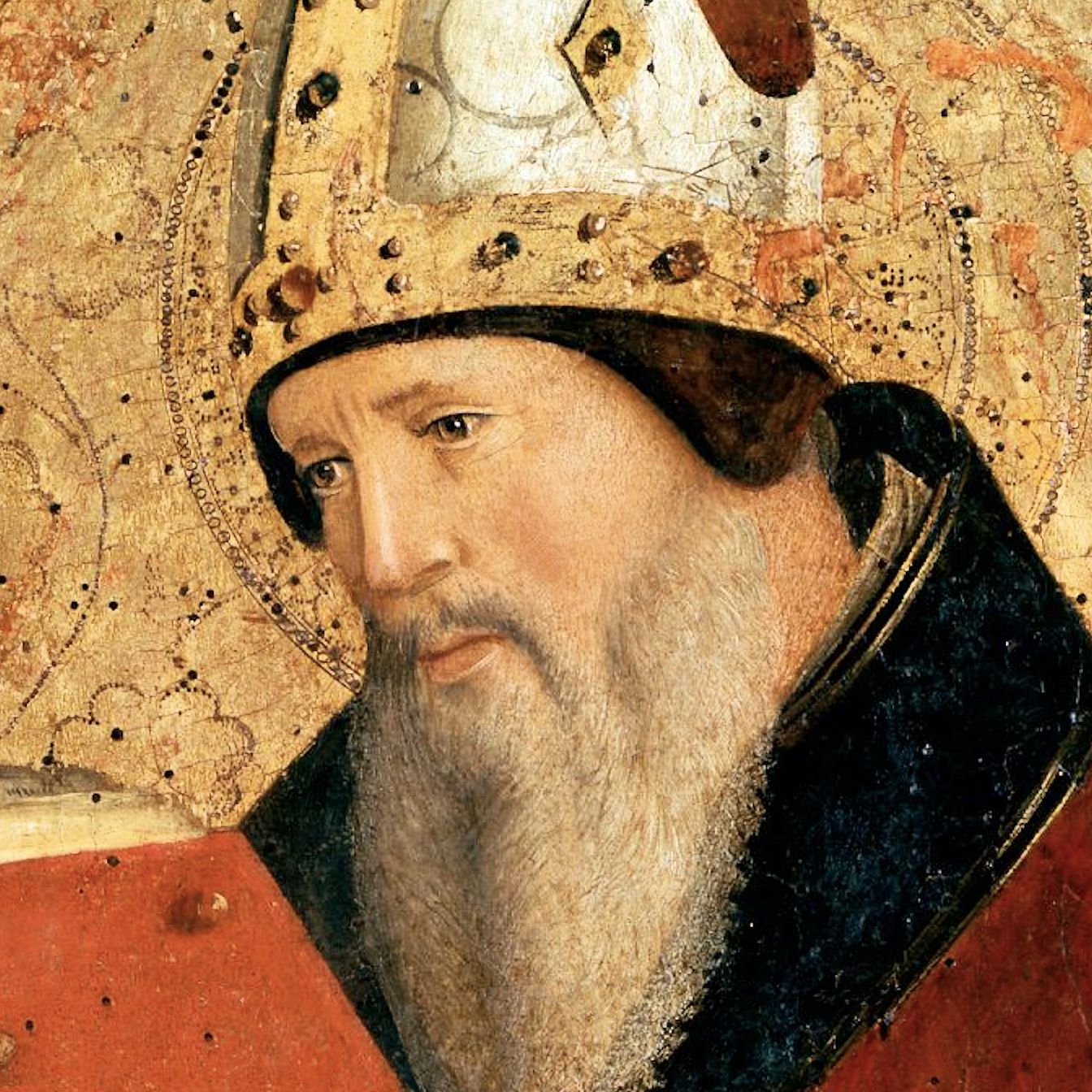
Saint Augustine of Hippo offers the following insight on this verse from today’s Gospel:

“There are two states of life, therefore, preached and commended as revealed to the church from heaven: the one being in faith, the other in sight; one remaining in time in a foreign land, the other residing in the eternal heavenly dwelling. The first was signified by the apostle Peter, the other by John. And so, it is said to Peter, “Follow me” by imitating me in the endurance of temporal evils. [But of John it is said], “Let him remain” till I come to restore everlasting bliss. And this may be expressed more clearly in this way: Let action that is perfected, informed by the example of my passion, follow me; but let contemplation that has only just begun remain until I come, to be perfected when I come. For the godly fullness of patience, reaching forward even unto death, follows Christ; but the fullness of knowledge remains until Christ comes, to be manifested then. For here the evils of this world are endured in the land of the dying, while the good things of the Lord shall be seen in the land of the living. For in saying, “I want him to remain till I come,” we are not to understand that John was supposed to remain on earth, or to abide permanently, but he was, rather, to wait. Therefore, what is signified by John shall certainly not be fulfilled now, but when Christ comes.

But what is signified by Peter to whom it was said, “Follow me,” except that his [and our] following must be done now, or it will never reach the expected outcome. In such an active life, the more we love Christ the more easily we are delivered from evil. But he loves us less as we now are, and therefore delivers us from this state of being so that we may not always be such as we are. There [in heaven], however, he loves us more; for we shall not have anything about us to displease him, or anything that would cause Christ to separate us from him. He loves us here for the purpose of healing and delivering us from everything he doesn’t love. Here, therefore, he loves us less because it is a place where he does not want us to remain. There [in heaven] he will love us in an even larger measure as the place toward which he would have us to be passing as we leave behind the place where he knows we would otherwise perish. Let Peter therefore love him, that we may obtain deliverance from our present mortality; let John be loved by him, that we may be preserved in the immortality to come.” (Tractates on the Gospel of John, 124)


Easter Collect
Grant, we pray, almighty God,
that we, who have celebrated the paschal festivities,
may by your gift hold fast to them
in the way that we live our lives.
Through our Lord Jesus Christ, Your Son,
Who lives and reigns with You
in the unity of the Holy Spirit,
one God, for ever and ever. Amen.


The Lord is risen! Alleluia!
He is risen, indeed! Alleluia!


Easter Week 7: Friday 
Memorial, Saint Norbert

“When they had finished breakfast, Jesus said to Simon Peter, “Simon, son of John, do you love me more than these?” He said to him, “Yes, Lord, you know that I love you.” He said to him, “Feed my lambs.”” (John 21:15)

Aphrahat (Aphraates) offers the following insight on these verses from today's Gospel:

“O pastors! Imitate that diligent pastor, the chief of the whole flock, who cared so greatly for his flock. He brought near those who were far away. He brought back the wanderers. He visited the sick. He strengthened the weak. He bound up the broken. He guarded those who were well fed. He gave himself up for the sake of the sheep. He chose and instructed excellent leaders, and committed the sheep into their hands and gave them authority over all his flock. For he said to Simon Cephas, “Feed my sheep and my lambs and my ewes.” So Simon fed his sheep and fulfilled his calling and handed over the flock to you and departed. And so you also must feed and guide them well. For the pastor who cares for his sheep engages in no other pursuit along with that. He does not make a vineyard, or plant gardens, or fall into the troubles of this world. Never have we seen a pastor who left his sheep in the wilderness and became a merchant, or one who left his flock to wander and became a husbandman. But if he deserts his flock and does these things, he thereby hands over his flock to the wolves.” (Demonstration, 10)


Sanctoral Collect
O God, who made the Bishop Saint Norbert
a servant of your Church
outstanding in his prayer and pastoral zeal,
grant, we ask, that by the help of his intercession,
the flock of the faithful
may always find shepherds after your own heart
and be fed in the pastures of salvation.
Through our Lord Jesus Christ, Your Son,
Who lives and reigns with You
in the unity of the Holy Spirit,
one God, for ever and ever.


Easter Collect
O God, who by the glorification of your Christ
and the light of the Holy Spirit
have unlocked for us the gates of eternity,
grant, we pray,
that, partaking of so great a gift,
our devotion may grow deeper
and our faith be strengthened.
Through our Lord Jesus Christ, Your Son,
Who lives and reigns with You
in the unity of the Holy Spirit,
one God, for ever and ever.


The Lord is risen! Alleluia!
He is risen, indeed! Alleluia!


Voices ever ancient, ever new. Lent, Week 2: Sunday

“And he was transfigured before them; his face shone like the sun and his clothes became white as light.” (Matthew 17:2)

Origen of Alexandria comments on this verse from the Gospel proclaimed at Mass today:

“But some may ask, when he was transfigured before those who were led up by him into the lofty mountain, did he appear to them in the form of God or in the preincarnate form that he earlier had? Did he appear to those left below in the form of a servant, but to those who had followed him after the six days to the lofty mountain, did he have not the form of a servant but the form of God? Listen carefully, if you can, and at the same time be attentive spiritually. It is not simply said that he was transfigured, but with a certain necessary addition. Both Matthew and Mark have recorded this: he was transfigured before them. Is it therefore possible for Jesus to be transfigured before some but not before others?

Do you wish to see the transfiguration of Jesus? Behold with me the Jesus of the Gospels. Let him be simply apprehended. There he is beheld both “according to the flesh” and at the same time in his true divinity. He is beheld in the form of God according to our capacity for knowledge. This is how he was beheld by those who went up upon the lofty mountain to be apart with him. Meanwhile those who do not go up the mountain can still behold his works and hear his words, which are uplifting. It is before those who go up that Jesus is transfigured, and not to those below. When he is transfigured, his face shines as the sun, that he may be manifested to the children of light, who have put off the works of darkness and put on the armor of light. They are no longer the children of darkness or night but have become the children of day. They walk honestly as in the day. Being manifested, he will shine to them not simply as the sun but as he is demonstrated to be, the sun of righteousness.” (Commentary on Matthew, 12)


O God, who have commanded us
to listen to your beloved Son,
be pleased, we pray,
to nourish us inwardly by your word,
that, with spiritual sight made pure,
we may rejoice to behold your glory.
Through our Lord Jesus Christ, Your Son,
Who lives and reigns with You
in the unity of the Holy Spirit,
one God, for ever and ever. Amen.


Glory to You Father, Son and Holy Spirit:
as it was in the beginning is now
and will be forever. Amen!


Voices ever ancient, ever new. Ordinary Time Week 7: Tuesday.

“But they did not understand the saying, and they were afraid to question him.” (Mark 9:32)

Saint John Chrysostom comments on this verse from today’s Gospel reading:

“It is remarkable how, when Peter had been rebuked, and Moses and Elijah had discoursed, and had seen the glory of what was coming, and the Father had uttered a voice from above, and so many miracles had been done, and the resurrection was right at the door (for he said, he should by no means abide any long time in death, but should be raised the third day), even after all that they did not fathom what was happening. Rather they were troubled, and not merely troubled, but exceedingly mournful. Now this arose from their being ignorant as yet of the force of his sayings.

If ignorant, how could they be sorrowful? Because they were not altogether ignorant. They knew that he was soon to die, for they had continually been told about it. But just what this death might mean, they did not grasp clearly, nor that there would be a speedy recognition of it, from which innumerable blessings would flow. They did not see that there would be a resurrection. This is why they grieved.” (Gospel of Saint Matthew, Homily 58)


Grant, we pray, almighty God,
that, always pondering spiritual things,
we may carry out in both word and deed
that which is pleasing to You.
Through our Lord Jesus Christ, Your Son,
Who lives and reigns with You
in the unity of the Holy Spirit,
one God, for ever and ever. Amen.


Glory to You Father, Son and Holy Spirit:
as it was in the beginning is now
and will be forever. Amen!