Solemnity of the Immaculate Conception of the Blessed Virgin Mary


“And coming to her [Mary], he [Gabriel] said, “Hail, favored one! The Lord is with you.” (Luke 1:28)

Origen of Alexandria (part 2 of Pope Benedict’s reflections on Origen) comments on this verse from the Gospel proclaimed at Mass today:

“The angel greeted Mary with a new address, which I could not find anywhere else in Scripture. I ought to explain this expression briefly. The angel says, “Hail, full of grace.” I do not remember having read this word elsewhere in Scripture. An expression of this kind, “Hail, full of grace,” is not addressed to a male. This greeting was reserved for Mary alone. Mary knew the Law; she was holy, and had learned the writings of the prophets by meditating on them daily. If Mary had known that someone else had been greeted by words like these, she would never have been frightened by this strange greeting. Hence the angel says to her, “Do not be afraid, Mary! You have found grace in God’s eyes. Behold, you will conceive in your womb. You will bear a son, and you will name him ‘Jesus.’ He will be great, and will be called ‘Son of the Most High.’” (Homilies on the Gospel of Luke, 6.)


Collect
O God,
Who by the Immaculate Conception
of the Blessed Virgin prepared a worthy dwelling
for your Son, grant, we pray,
that, as you preserved her from every stain
by virtue of the Death of your Son,
which you foresaw,
so, through her intercession, we, too,
may be cleansed and admitted to your presence.
Through our Lord Jesus Christ, Your Son,
Who lives and reigns with You
in the unity of the Holy Spirit,
one God, for ever and ever.


Glory to the Father
and to the Son
and to the Holy Spirit:
as it was in the beginning,
is now, and will be forever. Amen


Top


Virgin Mary, all nature is blessed by you


Priest, Abbot and Doctor of the Church

An excerpt from Oration 52

Solemnity of the Immaculate Conception of the Blessed Virgin Mary

Blessed Lady, sky and stars, earth and rivers, day and night — everything that is subject to the power or use of man — rejoice that through you they are in some sense restored to their lost beauty and are endowed with inexpressible new grace. All creatures were dead, as it were, useless for men or for the praise of God, who made them. The world, contrary to its true destiny, was corrupted and tainted by the acts of men who served idols. Now all creation has been restored to life and rejoices that it is controlled and given splendor by men who believe in God. The universe rejoices with new and indefinable loveliness. Not only does it feel the unseen presence of God himself, its Creator, it sees him openly, working and making it holy. These great blessings spring from the blessed fruit of Mary’s womb.

Through the fullness of the grace that was given you, dead things rejoice in their freedom, and those in heaven are glad to be made new. Through the Son who was the glorious fruit of your virgin womb, just souls who died before his life-giving death rejoice as they are freed from captivity, and the angels are glad at the restoration of their shattered domain.

Lady, full and overflowing with grace, all creation receives new life from your abundance. Virgin, blessed above all creatures, through your blessing all creation is blessed, not only creation from its Creator, but the Creator himself has been blessed by creation.

To Mary God gave his only-begotten Son, whom he loved as himself. Through Mary God made himself a Son, not different but the same, by nature Son of God and Son of Mary. The whole universe was created by God, and God was born of Mary. God created all things, and Mary gave birth to God. The God who made all things gave himself form through Mary, and thus he made his own creation. He who could create all things from nothing would not remake his ruined creation without Mary.

God, then, is the Father of the created world and Mary the mother of the re-created world. God is the Father by whom all things were given life, and Mary the mother through whom all things were given new life. For God begot the Son, through whom all things were made, and Mary gave birth to him as the Savior of the world. Without God’s Son, nothing could exist; without Mary’s Son, nothing could be redeemed.

Truly the Lord is with you, to whom the Lord granted that all nature should owe as much to you as to himself.


Glory to the Father
and to the Son
and to the Holy Spirit:
as it was in the beginning,
is now, and will be forever. Amen


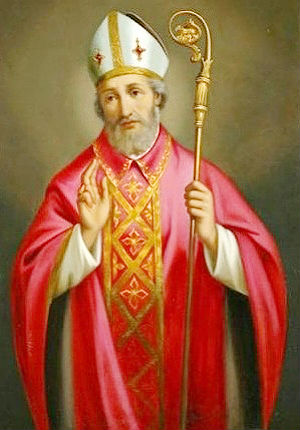
Memorial of Saint Ambrose, Bishop and Doctor of the Church


“The wilderness and the parched land will exult; the Arabah will rejoice and bloom ...” (Isaiah 35:1.)

Saint Gregory of Nyssa (part 2 of the background of Saint Gregory of Nyssa is found here) offers the following insight on this verse from today’s First Reading:

“I said, “What are the fire, the gulf, or the other things which are mentioned, if they are not what they are said to be?”

“And where shall we place that oracle of Isaiah, which cries to the wilderness, “Be glad, O thirsty wilderness. Let the desert rejoice and blossom as a lily, and the desolate places of Jordan shall blossom and shall rejoice”? For it is clear that it is not to places without soul or sense that he proclaims the good tidings of joy, but he speaks, by the figure of the desert, of the soul that is parched and unadorned.

And “the excellence of Carmel” is given to the soul that bears the likeness to the desert, that is, the grace bestowed through the Spirit. For since Elijah dwelt in Carmel, and the mountain became famous and renowned by the virtue of him who dwelt there, and since moreover John the Baptist, illustrious in the spirit of Elijah, sanctified the Jordan, therefore the prophet foretold that “the excellence of Carmel” should be given to the river.

And “the glory of Lebanon,” from the similitude of its lofty trees, he transfers to the river. For as great Lebanon presents a sufficient cause of wonder in the very trees that it brings forth and nourishes, so is the Jordan glorified by regenerating people and planting them in the paradise of God. And of them, as the words of the psalmist say, ever blooming and bearing the foliage of virtues, “the leaf shall not wither,” and God shall be glad, receiving their fruit in due season, rejoicing, like a good planter, in his own works.” (On the Baptism of Christ)


Collect
O God,
Who made the Bishop Saint Ambrose
a teacher of the Catholic faith
and a model of apostolic courage,
raise up in Your Church
men after Your own heart
to govern her with courage and wisdom.
Through our Lord Jesus Christ, Your Son
Who lives and reigns with You
in the unity of the Holy Spirit,
one God, for ever and ever.


Glory to the Father
and to the Son
and to the Holy Spirit:
as it was in the beginning,
is now, and will be forever. Amen


By the grace of your words win over your people


Bishop and Great Latin Father of the Church

An excerpt from Letter 2

Memorial of Saint Ambrose, Bishop and Doctor of the Church

You have entered upon the office of bishop. Sitting at the helm of the Church, you pilot the ship against the waves. Take firm hold of the rudder of faith so that the severe storms of this world cannot disturb you. The sea is mighty and vast, but do not be afraid, for as Scripture says: he has founded it upon the seas, and established it upon the waters.

The Church of the Lord is built upon the rock of the apostles among so many dangers in the world; it therefore remains unmoved. The Church’s foundation is unshakeable and firm against the assaults of the raging sea. Waves lash at the Church but do not shatter it. Although the elements of this world constantly beat upon the Church with crashing sounds, the Church possesses the safest harbor of salvation for all in distress. Although the Church is tossed about on the sea, it rides easily on rivers, especially those rivers that Scripture speaks of: The rivers have lifted up their voice. These are the rivers flowing from the heart of the man who is given drink by Christ and who receives from the Spirit of God. When these rivers overflow with the grace of the Spirit, they lift up their voice.

There is also a stream which flows down on God’s saints like a torrent. There is also a rushing river giving joy to the heart that is at peace and makes for peace. Whoever has received from the fullness of this river, like John the Evangelist, like Peter and Paul, lifts up his voice. Just as the apostles lifted up their voices and preached the Gospel throughout the world, so those who drink these waters begin to preach the good news of the Lord Jesus.

Drink, then, from Christ, so that your voice may also be heard. Store up in your mind the water that is Christ, the water that praises the Lord. Store up water from many sources, the water that rains down from the clouds of prophecy.

Whoever gathers water from the mountains and leads it to himself or draws it from springs, is himself a source of dew like the clouds. Fill your soul, then, with this water, so that your land may not be dry, but watered by your own springs.

He who reads much and understands much, receives his fill. He who is full, refreshes others. So Scripture says: If the clouds are full, they will pour rain upon the earth.

Therefore, let your words be rivers, clean and limpid, so that in your exhortations you may charm the ears of your people. And by the grace of your words win them over to follow your leadership. Let your sermons be full of understanding. Solomon says: The weapons of the understanding are the lips of the wise; and in another place he says: Let your lips be bound with wisdom. That is, let the meaning of your words shine forth, let understanding blaze out. See that your addresses and expositions do not need to invoke the authority of others, but let your words be their own defence. Let no word escape your lips in vain or be uttered without depth of meaning.


Glory to the Father
and to the Son
and to the Holy Spirit:
as it was in the beginning,
is now, and will be forever. Amen


When preparing is preparing ...


εὐαγγελίζω (euaggelizo)
“to announce the Good News of victory in battle”

“The beginning of the gospel (Αρχὴ τοῦ εὐαγγελίου) of Jesus Christ [the Son of God]. As it is written in Isaiah the prophet:
“Behold, I am sending my messenger ahead of you;
he will prepare (κατασκευάσει) your way.
A voice of one crying out in the desert:
Prepare (ἑτοιμάσατε) the way of the Lord,
make straight his paths.’”
John [the] Baptist appeared in the desert (ἐν τῇ ἐρήμῳ)
proclaiming a baptism of repentance (μετανοίας) for the forgiveness of sins.”
(Mark 1:1-4)


θεωρέω (theoreo)
(“to perceive, discover, ponder a deeper meaning”)

Do you have a favorite Advent Text from the Book of the Prophet Isaiah? For many, this Sunday’s proclamation from the Prophet of Hope is the signature Word of Advent found in the Old Testament only overshadowed by Isaiah 7:14 (“Therefore the Lord himself will give you a sign, the virgin will be with child and you shall name him Emmanuel.”) George Frederick Handel enshrined Isaiah 40 as the opening movement in Messiah.


As for the Sacred Text at hand, all four Evangelists employ some aspects of Isaiah 40 as Jesus’ Public Ministry commences in the region of Galilee. The Synoptic Evangelists also include the command “Prepare (ἑτοιμάσατε) [Mark 1:2, Matthew 3:3 and Luke 3:4].” Take note of the verses in this Sunday’s proclamation from Mark: “Behold, … he will prepare (κατασκευάσει) your way (Mark 1:2)” and “A voice … ‘Prepare (ἑτοιμάσατε) the way of the Lord’ (Mark 1:3).” The English word prepare appears twice in 2 verses, yet the Greek verbs are different: κατασκευάζω (kataskeuazo in verse 2) and ἑτοιμάζω (hetoimazo, in verse 3). Is the Evangelist making a point here by using two separate verbs or is he simply availing himself of a theological thesaurus, varying the words to keep our attention?


Considering the myriad of insights one could bring to the Marcan Gospel, ‘fluff’ is not one of the Evangelist’s characteristics. In fact, when one examines the Greek Text of what is perhaps the first written Gospel, one quickly discovers difficulty in reading. Saint Mark’s favorite word is AND (καί, kai in Greek). It seems he grammatically has confused the word and with a period. Many note that he writes in ‘run-on’ sentences and the over use of and joining 1 thought to another is a nightmare for teachers and professors of writing. But this gives us an insight into the Evangelist. For Mark, time is short – not necessarily chronologically but time in the sense of acting now to prevent a situation from getting worse. One might liken this to an infection in the body: far better to ‘nip it [the infection] in the bud’ because if it is permitted to fester, one runs the risk of a loss of limb or even one’s physical life despite aggressive antibiotics. The Evangelist bluntly, boldly and urgently records the events of Jesus’ Words and Deeds with the intent that one will permit the Person Jesus to transform the hard heart and open one’s heart to God the Father's way of living, known in the Gospels as the Kingdom of God (more on the Kingdom of God, to repent and to believe when we return to Ordinary Time in January).

This background is meant to form a basis not only for our reception of Mark’s Gospel this Liturgical Year, but also to make a case, from a human perspective, that the 2 distinct verbs – both translated into English as prepare – is intentional on Saint Mark’s part. In verse 3, notice the proximity of the command (yes, a command!) ἑτοιμάσατε (hetoimasate) to the verse concerning John the Baptist’s proclamation of “baptism of repentance (μετανοίας) for the forgiveness of sins.” While μετάνοια (metanoia) is often translated “repentance,” it is composed of 2 Greek words: “beyond (μετά, meta)” and “mind (νοῦς, nous).” To go “beyond the mind” in antiquity was the equivalent of “going to/from the heart.” ἑτοιμάσατε (hetoimasate) is about putting ‘heart’ into your thoughts, your words and your actions. Permitting your heart to invade thoughts, words and actions minimally raises the bar of attentiveness. Increasing attentiveness is more properly perceived and received as recognizing that the Holy Spirit is guiding our lives. When you and I are inattentive and attempt to run life according to personal agendas, life gets messed-up and messed-up big time! Recall what happened in the Garden: when humanity stopped listening to the words of the Creator our guard dropped. Our inattentiveness to the words and instructions for life from the Creator resulted in listening to another voice, a divided voice that brought division and alienation into human nature requiring the incarnate and consubstantial intervention of Jesus the Christ.

Speaking of the Garden … there is still another prepare verb to consider: κατασκευάζω (kataskeuazo in verse 2). Many English translations of the Sacred Scriptures render this verb prepare, and do so perhaps because the verb is not frequently used in the New Testament. Literally κατασκευάζω (kataskeuazo) means ‘to create’ or ‘to fashion vessels necessary for persons to live.’ This verb has a decidedly concrete, touchable, tangible – CREATED focus. Notice the proximity of this verse to the opening verse: “The beginning of the gospel (Αρχὴ τοῦ εὐαγγελίου) of Jesus Christ” (verse 1). Biblically, Αρχὴ (arche, beginning) has a connection with THE beginning, Genesis. This is the same Greek word that Saint John uses to begin the Fourth Gospel and it is the same word that is used in the Greek translation of the Old Testament, the Septuagint (LXX). The Creation motif is certainly not out of place here and it ties in well with Advent being both a time and a way of living in which something is new, something new is being created. Naturally the question arises, what? What is being created? What is new?

In one way, Advent is a time of a new creation – a creation that is not only spiritual (change of heart) but also something that is quite touchable, tangible and visible. While the Season is about being made ready for the celebration of Jesus’ birth, the readiness for His Nativity requires the creation of a new attitude in us who bear His Name. The attitude or disposition is this: as a Christian is Jesus the singularly, unique Person Who grounds my life and the life of our parishes? This is one of the fundamental questions the εὐαγγελίον (euaggelion, Good News, Gospel) - Who is Jesus? Those who self-identify as “Christian” may have varying levels of intellectual, catechetical, and cultural ‘knowledge’ ABOUT Jesus. But timely Advent question is, ‘has this knowledge been permitted to become love FOR, WITH and OF Jesus?’ Knowing what we have done and do for people we love can be a pattern for growing in love that Christ offers. Being with Him, hanging out in silent prayer, attentive celebration of the Sacraments and pondering His Word, saying NO to anything not of Him and charitable service in His Name are some of the simple acts to respond to His invitation of love. Accepting this invitation permits His work of loving creation to continue in our lives and the lives of our communities. These graced works prepare and prepare each of us for Jesus.


Glory to the Father
and to the Son
and to the Holy Spirit:
as it was in the beginning,
is now, and will be forever. Amen


Second Sunday of Advent


“A voice proclaims: In the wilderness prepare the way of the LORD! Make straight in the wasteland a highway for our God!” (Isaiah 40:3)

Origen of Alexandria comments on these verses from the Gospel proclaimed at Mass today:

“The Lord wants to find in you a path by which he can enter into your souls and make his journey. Prepare for him the path of which it is said, “Make straight his path.” “The voice of one crying in the desert” — the voice cries, “prepare the way.

Now the way of the Lord is made straight in two ways: by contemplation, which is clarified by truth unmixed with falsehood, and by activity, which follows sound contemplation of the appropriate action to be taken, which is conformed to the correct sense of these things to be done.” (Homilies on Gospel of Luke, 21)

A reflection on preparing in light of this Sunday’s Scriptures.

Collect
Almighty and merciful God,
may no earthly undertaking hinder those
who set out in haste to meet Your Son,
but may our learning of heavenly wisdom
gain us admittance to His company.
Who lives and reigns with You
in the unity of the Holy Spirit,
one God, for ever and ever. Amen.


Glory to the Father
and to the Son
and to the Holy Spirit:
as it was in the beginning,
is now, and will be forever. Amen


The voice in the wilderness


Ancient Christian Writer

An excerpt from his Commentary on Isaiah

Second Sunday of Advent

The voice of one crying in the wilderness: Prepare the way of the Lord, make straight the paths of our God. The prophecy makes clear that it is to be fulfilled, not in Jerusalem but in the wilderness: it is there that the glory of the Lord is to appear, and God’s salvation is to be made known to all mankind.

It was in the wilderness that God’s saving presence was proclaimed by John the Baptist, and there that God’s salvation was seen. The words of this prophecy were fulfilled when Christ and his glory were made manifest to all: after his baptism the heavens opened, and the Holy Spirit in the form of a dove rested on him, and the Father’s voice was heard, bearing witness to the Son: This is my beloved Son, listen to him.

The prophecy meant that God was to come to a deserted place, inaccessible from the beginning. None of the pagans had any knowledge of God, since his holy servants and prophets were kept from approaching them. The voice commands that a way be prepared for the Word of God: the rough and trackless ground is to be made level, so that our God may find a highway when he comes. Prepare the way of the Lord: the way is the preaching of the Gospel, the new message of consolation, ready to bring to all mankind the knowledge of God’s saving power.

Climb on a high mountain, bearer of good news to Zion. Lift up your voice in strength, bearer of good news to Jerusalem. These words harmonize very well with the meaning of what has gone before. They refer opportunely to the evangelists and proclaim the coming of God to men, after speaking of the voice crying in the wilderness. Mention of the evangelists suitably follows the prophecy on John the Baptist.

What does Zion mean if not the city previously called Jerusalem? This is the mountain referred to in that passage from Scripture: Here is mount Zion, where you dwelt. The Apostle says: You have come to mount Zion. Does not this refer to the company of the apostles, chosen from the former people of the circumcision?

This is the Zion, the Jerusalem, that received God’s salvation. It stands aloft on the mountain of God, that is, it is raised high on the only-begotten Word of God. It is commanded to climb the high mountain and announce the word of salvation. Who is the bearer of the good news but the company of the evangelists? What does it mean to bear the good news but to preach to all nations, but first of all to the cities of Judah, the coming of Christ on earth?

Reflection on this Sunday’s challenge «to prepare»

Glory to the Father
and to the Son
and to the Holy Spirit:
as it was in the beginning,
is now, and will be forever. Amen


Saturday of the First Week of Advent


“Then he said to his disciples, “The harvest is abundant but the laborers are few...” (Matthew 9:37.)

Saint Jerome offers the following insight on this verse from today’s Gospel Proclamation:

“An abundant harvest signified the multitude of people. The few laborers signified the dearth of teachers. He commands them to ask the Lord of the harvest to send out laborers into his harvest. These are the laborers of whom the psalmist speaks: “May those who sow in tears reap with shouts of joy! He that goes forth weeping, bearing the seed for sowing, shall come home with shouts of joy, bringing his sheaves with him.”3 And that I may speak in broader terms: an abundant harvest represents all the believing multitude. The few laborers imply the apostles and their imitators who are sent to the harvest.” (Commentary on Matthew)


Collect
O God,
Who sent Your Only Begotten Son into this world
to free the human race
from its ancient enslavement,
bestow on those who devoutly await Him
the grace of Your compassion from on high,
that we may attain the prize of true freedom.
Through our Lord Jesus Christ, Your Son,
Who lives and reigns with You
in the unity of the Holy Spirit,
one God, for ever and ever.


Glory to the Father
and to the Son
and to the Holy Spirit:
as it was in the beginning,
is now, and will be forever. Amen


Top


We hope for what we do not see


Bishop, Father of the Church and Martyr

An excerpt from his On the Value of Patience

Saturday of the First Week of Advent

Patience is a precept for salvation given us by our Lord, our teacher: Whoever endures to the end will be saved. And again: If you persevere in my word, you will truly be my disciples; you will know the truth, and the truth will set you free.

Dear brethren, we must endure and persevere if we are to attain the truth and freedom we have been allowed to hope for; faith and hope are the very meaning of our being Christians, but if faith and hope are to bear their fruit, patience is necessary.

We do not seek glory now, in the present, but we look for future glory, as Saint Paul instructs us when he says: By hope we were saved. Now hope which is seen is not hope; how can a man hope for what he sees? But if we hope for what we do not see, we wait for it in patience. Patient waiting is necessary if we are to be perfected in what we have begun to be, and if we are to receive from God what we hope for and believe.

In another place the same Apostle instructs and teaches the just, and those active in good works, and those who store up for themselves treasures in heaven through the reward God gives them. They are to be patient also, for he says: Therefore while we have time, let us do good to all, but especially to those who are of the household of the faith. But let us not grow weary in doing good, for we shall reap our reward in due season.

Paul warns us not to grow weary in good works through impatience, not to be distracted or overcome by temptations and so give up in the midst of our pilgrimage of praise and glory, and allow our past good deeds to count for nothing because what was begun falls short of completion.

Finally, the Apostle, speaking of charity, unites it with endurance and patience. Charity, he says, is always patient and kind; it is not jealous, is not boastful, is not given to anger, does not think evil, loves all things, believes all things, hopes all things, endures all things. He shows that charity can be steadfast and persevering because it has learned how to endure all things.

And in another place he says: Bear with one another lovingly, striving to keep the unity of the Spirit in the bond of peace. He shows that neither unity nor peace can be maintained unless the brethren cherish each other with mutual forbearance and preserve the bond of harmony by means of patience.

Glory to the Father
and to the Son
and to the Holy Spirit:
as it was in the beginning,
is now, and will be forever. Amen


Friday of the First Week of Advent


“When he entered the house, the blind men approached him and Jesus said to them, “Do you believe that I can do this?” “Yes, Lord,” they said to him...” (Matthew 9:28.)

Saint Jerome offers the following insight on this verse from today’s Gospel proclamation:

“As the Lord Jesus was passing on from the ruler’s house and proceeding to his own (as we read above): “And getting into a boat he crossed over and came to his own city,” suddenly “two blind men cried out and said, ‘Have pity on us, Son of David!’” They are not healed along the route, as they might expect, but only after he reached his house. They approach him and go inside. First, their faith is discussed that they may receive the light of true faith. Another sign is added to the first sign we mentioned about the ruler’s daughter and the woman with a hemorrhage, so that what death and disability demonstrated in the one case, blindness demonstrated in the other. Both men were blind at the time the Lord was passing through this world on the way to his house. Unless they had exclaimed “Have pity on us, Son of David!” and in answer to Jesus’ question “Do you believe that I can do this to you?” affirmed “Yes, Lord,” they would not have received the pristine light.” (Commentary on Matthew, 1.)


Collect
Stir up Your power, we pray,
O Lord, and come,
that with You to protect us,
we may find rescue
from the pressing dangers of our sins,
and with You to set us free,
we may be found worthy of salvation.
Who lives and reigns with You
in the unity of the Holy Spirit,
one God, for ever and ever.


Glory to the Father
and to the Son
and to the Holy Spirit:
as it was in the beginning,
is now, and will be forever. Amen


Top


Desire for the vision of God


Priest and Missionary

An excerpt from his Proslogion

Friday of the First Week of Advent

Insignificant man, escape from your everyday business for a short while, hide for a moment from your restless thoughts. Break off from your cares and troubles and be less concerned about your tasks and labors. Make a little time for God and rest a while in him.

Enter into your mind’s inner chamber. Shut out everything but God and whatever helps you to seek him; and when you have shut the door, look for him. Speak now to God and say with your whole heart: I seek your face; your face, Lord, I desire.

Lord, my God, teach my heart where and how to seek you, where and how to find you. Lord, if you are not here where shall I look for you in your absence? Yet if you are everywhere, why do I not see you when you are present? But surely you dwell in “light inaccessible.” And where is light inaccessible? How shall I approach light inaccessible? Or who will lead me and bring me into it that I may see you there? And then, by what signs and under what forms shall I seek you? I have never seen you, Lord my God; I do not know your face.

Lord most high, what shall this exile do, so far from you? What shall your servant do, tormented by love of you and cast so far from your face? He yearns to see you, and your face is too far from him. He desires to approach you, and your dwelling is unapproachable. He longs to find you, and does not know your dwelling place. He strives to look for you, and does not know your face.

Lord, you are my God and you are my Lord, and I have never seen you. You have made me and remade me, and you have given me all the good things I possess, and still I do not know you. I was made in order to see you, and I have not yet done that for which I was made.

Lord, how long will it be? How long, Lord, will you forget us? How long will you turn your face away from us? when will you look upon us and hear us? When will you enlighten our eyes and show us your face? When will you give yourself back to us?

Look upon us, Lord, hear us and enlighten us, show us your very self. Restore yourself to us that it may go well with us whose life is so evil without you. Take pity on our efforts and our striving toward you, for we have no strength apart from you.

Teach me to seek you, and when I seek you show yourself to me, for I cannot seek you unless you teach me, nor can I find you unless you show yourself to me. Let me seek you in desiring you and desire you in seeking you, find you in loving you and love you in finding you.


Glory to the Father
and to the Son
and to the Holy Spirit:
as it was in the beginning,
is now, and will be forever. Amen


Memorial of Saint Francis Xavier, Priest


“On that day this song shall be sung in the land of Judah: “A strong city have we; he sets up victory as our walls and ramparts...” (Isaiah 26:1.)

Apponius offers the following insight on this verses from today’s First Reading:

“Hence, if they find anyone outside, they beat, wound and rob him1 by not believing in the true flesh of Christ that was nailed to the cross, from whom true blood flowed when pierced by a lance, and by not believing in the true God who bore a true soul and laid it down freely and raised it up freely. Isaiah prophesied about this city and, indeed, demonstrated with his finger, when he said, “Behold, our Savior is a strong city, fortified with walls and bulwarks.

For this reason, it seems to me that the wall3 represents the people who are acquainted with the one omnipotent God, having been brought near to the Word of the Father, about whom Isaiah prophesied, saying, “The Savior is our strong city. A wall and a bulwark is established in him.” This indicates that Christ was shown to be equipped with a true soul and true flesh for the redemption of the world. But those who have already attained greater perfection, who are prepared to have their blood shed for the sake of his name, who by their own example offer unbelievers access to salvation, are compared with gates. For although the Word of God clothed himself with the nature of every human person for the liberation of the human race, it is nevertheless true that anyone becomes the wall or the gate of the prophesied city, that is of Christ, who, bearing God’s image and holding fast to the true faith, merits with his holy works to contain the Word himself, as he promised through the prophet: “I will dwell within them, and I will be their God.” (Exposition of the Song of Songs, 8 and 12.)


Collect
O God,
Who through the preaching of
Saint Francis Xavier
won many peoples to Yourself,
grant that the hearts of the faithful
may burn with the same zeal for the faith
and that Holy Church may everywhere rejoice
in an abundance of offspring.
Through our Lord Jesus Christ, Your Son,
Who lives and reigns with You
in the unity of the Holy Spirit,
one God, for ever and ever.


Glory to the Father
and to the Son
and to the Holy Spirit:
as it was in the beginning,
is now, and will be forever. Amen


Top


Woe to me if I do not preach the Gospel


Priest and Missionary

An excerpt from Letters to Saint Ignatius

Memorial of Saint Francis Xavier, Priest

We have visited the villages of the new converts who accepted the Christian religion a few years ago. No Portuguese live here—the country is so utterly barren and poor. The native Christians have no priests. They know only that they are Christians. There is nobody to say Mass for them; nobody to teach them the Creed, the Our Father, the Hail Mary and the Commandments of God’s Law.

I have not stopped since the day I arrived. I conscientiously made the rounds of the villages. I bathed in the sacred waters all the children who had not yet been baptized. This means that I have purified a very large number of children so young that, as the saying goes, they could not tell their right hand from their left. The older children would not let me say my Office or eat or sleep until I taught them one prayer or another. Then I began to understand: The kingdom of heaven belongs to such as these.

I could not refuse so devout a request without failing in devotion myself. I taught them, first the confession of faith in the Father, the Son and the Holy Spirit, then the Apostles’ Creed, the Our Father and Hail Mary. I noticed among them persons of great intelligence. If only someone could educate them in the Christian way of life, I have no doubt that they would make excellent Christians.

Many, many people hereabouts are not becoming Christians for one reason only: there is nobody to make them Christians. Again and again I have thought of going round the universities of Europe, especially Paris, and everywhere crying out like a madman, riveting the attention of those with more learning than charity: “What a tragedy: how many souls are being shut out of heaven and falling into hell, thanks to you!”

I wish they would work as hard at this as they do at their books, and so settle their account with God for their learning and the talents entrusted to them.

This thought would certainly stir most of them to meditate on spiritual realities, to listen actively to what God is saying to them. They would forget their own desires, their human affairs, and give themselves over entirely to God’s will and his choice. They would cry out with all their heart: Lord, I am here! What do you want me to do? Send me anywhere you like—even to India.


Glory to the Father
and to the Son
and to the Holy Spirit:
as it was in the beginning,
is now, and will be forever. Amen


Wednesday of the First Week of Advent


“And great multitudes came unto him, having with them those that were lame, blind, dumb, maimed, and many others, and cast them down at Jesus’ feet; and he healed them...” (Matthew 15:30.)

Origen of Alexandria (part 2 of Pope Benedict’s reflections on Origen) comments on this verse from the Gospel proclaimed at Mass today:

“Again Jesus went up on the mountain where he sat down. Not only people who were healthy but also those suffering from various disorders went up on the mountain where Jesus was sitting. Think of this mountain to which Jesus went up and sat as the church. It has been set up through the word of God over the rest of the world, and all sorts of people come to it. To this assembly have come not only the disciples, as if they were leaving behind the multitudes, as they did in the case of the Beatitudes. Rather, there are great crowds here, many of whom are deaf or suffer from many afflictions. Look at the crowds who come to this mountain where the Son of God sits. Some of them have become deaf to the things that have been promised. Others have become blind in soul, not looking toward the true light.2 Others are lame and not able to walk according to reason. Others are maimed and unable to work profitably. Each of these who are suffering in soul from such things go up along with the multitudes into the mountain where Jesus sits.

Some who do not draw near to the feet of Jesus are not healed. But those who are brought by the multitude and cast at his feet are being healed. Even those who come only to the edges, just the extremities of the body of Christ, who feel themselves unworthy to obtain such things, are being healed. So now you come into the congregation of what is more commonly called the church. See the catechumens? They are, as it were, cast in the far side or back of those who are the extreme end of the body, as if they were coming merely to the feet of the body of Jesus—the church. They are coming to it with their own deafness and blindness and lameness and crookedness. In time they will be cured according to the Word. Observing this you would not be wrong in saying that these people have gone up with the multitudes into the church, up to the mountain where Jesus sits, and have been cast at his feet and are being healed. And so the multitudes are astonished at beholding the transformations that are taking place. They behold those who are being converted from such great evils to that which is so much better.” (Commentary on Matthew, 11.)


Collect
Prepare our hearts,
we pray, O Lord our God,
by your divine power,
so that at the coming of Christ your Son
we may be found worthy
of the banquet of eternal life
and merit to receive
heavenly nourishment from his hands.
Who lives and reigns with You
in the unity of the Holy Spirit,
one God, for ever and ever.


Glory to the Father
and to the Son
and to the Holy Spirit:
as it was in the beginning,
is now, and will be forever. Amen


Top


God’s Word will come to us


Abbot and Doctor of the Church

An excerpt from his On the Advent of the Lord, Sermon 5

Most Holy Name of the Blessed Virgin Mary

We know that there are three comings of the Lord. The third lies between the other two. It is invisible, while the other two are visible. In the first coming he was seen on earth, dwelling among men; he himself testifies that they saw him and hated him. In the final coming all flesh will see the salvation of our God, and they will look on him whom they pierced. The intermediate coming is a hidden one; in it only the elect see the Lord within their own selves, and they are saved. In his first coming our Lord came in our flesh and in our weakness; in this middle coming he comes in spirit and in power; in the final coming he will be seen in glory and majesty.

Because this coming lies between the other two, it is like a road on which we travel from the first coming to the last. In the first, Christ was our redemption; in the last, he will appear as our life; in this middle coming, he is our rest and consolation.

In case someone should think that what we say about this middle coming is sheer invention, listen to what our Lord himself says: If anyone loves me, he will keep my word, and my Father will love him, and we will come to him. There is another passage of Scripture which reads: He who fears God will do good, but something further has been said about the one who loves, that is, that he will keep God’s word. Where is God’s word to be kept? Obviously in the heart, as the prophet says: I have hidden your words in my heart, so that I may not sin against you.

Keep God’s word in this way. Let it enter into your very being, let it take possession of your desires and your whole way of life. Feed on goodness, and your soul will delight in its richness. Remember to eat your bread, or your heart will wither away. Fill your soul with richness and strength.

If you keep the word of God in this way, it will also keep you. The Son with the Father will come to you. The great Prophet who will build the new Jerusalem will come, the one who makes all things new. This coming will fulfill what is written: As we have borne the likeness of the earthly man, we shall also bear the likeness of the heavenly man. Just as Adam’s sin spread through all mankind and took hold of all, so Christ, who created and redeemed all, will glorify all, once he takes possession of all.

Glory to the Father
and to the Son
and to the Holy Spirit:
as it was in the beginning,
is now, and will be forever. Amen


Tuesday of the First Week of Advent


“But a shoot shall sprout from the stump of Jesse, and from his roots a bud shall blossom.” (Isaiah 11:1.)

Saint Jerome offers the following insight on this verses from today’s First Reading:

“Until the beginning of the vision, or the burden of Babylon, which Isaiah the son of Amos saw, his entire prophecy was about Christ, a prophecy that we want to explain piecemeal lest the ideas and discussions thereof together confuse the reader’s memory. The Jews interpreted the branch and the flower from the root of Jesse to be the Lord himself because the power of his governance is demonstrated in the branch and his beauty in the flower. But we understand the branch from the root of Jesse to be the holy Virgin Mary, who had no shoot connatural to herself. About her we read above: “Behold, a virgin will conceive and bear a son.” And the flower is the Lord our Savior, who said in the Song of Songs, “I am the flower of the field and the lily of the valleys.” In place of “root,” which only the Septuagint translated, the Hebrew text has geza, which Aquila and Symmachus and Theodotus interpret as kormon, that is, “stem.” And they translated “flower,” which the Hebrew text calls nēṣer, as “bud” to show that after a long time in Babylonian captivity, no longer possessing any glory from the sprout of the old kingdom of David, Christ would rise from Mary as though from her stem. The educated of the Hebrews believe that what all the ecclesiastics sought in the Gospel of Matthew but could not find, where it was written “Because he will be called a Nazarene,” was taken from this place. But it should be noted that nēṣer was written here with the [Hebrew] letter ṣade [צ], the peculiar sound of which —somewhere between z and s—the Latin language does not express.” (Commentary on Isaiah, 4.)


Collect
Look with favor, Lord God, on our petitions,
and in our trials grant us your compassionate help,
that, consoled by the presence of your Son,
whose coming we now await,
we may be tainted no longer
by the corruption of former ways.
Through our Lord Jesus Christ, Your Son,
Who lives and reigns with You
in the unity of the Holy Spirit,
one God, for ever and ever.


Glory to the Father
and to the Son
and to the Holy Spirit:
as it was in the beginning,
is now, and will be forever. Amen


Top


The marvel of the Incarnation


Bishop and Father of the Church

An excerpt from Oration 45

Tuesday of the First Week of Advent

The very Son of God, older than the ages, the invisible, the incomprehensible, the incorporeal, the beginning of beginning, the light of light, the fountain of life and immortality, the image of the archetype, the immovable seal, the perfect likeness, the definition and word of the Father: he it is who comes to his own image and takes our nature for the good of our nature, and unites himself to an intelligent soul for the good of my soul, to purify like by like. He takes to himself all that is human, except for sin. He was conceived by the Virgin Mary, who had been first prepared in soul and body by the Spirit; his coming to birth had to be treated with honor, virginity had to receive new honor. He comes forth as God, in the human nature he has taken, one being, made of two contrary elements, flesh and spirit. Spirit gave divinity, flesh received it.

He who makes rich is made poor; he takes on the poverty of my flesh, that I may gain the riches of his divinity. He who is full is made empty; he is emptied for a brief space of his glory, that I may share in his fullness. What is this wealth of goodness? What is this mystery that surrounds me? I received the likeness of God, but failed to keep it. He takes on my flesh, to bring salvation to the image, immortality to the flesh. He enters into a second union with us, a union far more wonderful than the first.

Holiness had to be brought to man by the humanity assumed by one who was God, so that God might overcome the tyrant by force and so deliver us and lead us back to himself through the mediation of his Son. The Son arranged this for the honor of the Father, to whom the Son is clearly obedient in all things.

The Good Shepherd, who lays down his life for the sheep, came in search of the straying sheep to the mountains and hills on which you used to offer sacrifice. When he found it, he took it on the shoulders that bore the wood of the cross, and led it back to the life of heaven.

Christ, the light of all lights, follows John, the lamp that goes before him. The Word of God follows the voice in the wilderness; the bridegroom follows the bridegroom’s friend, who prepares a worthy people for the Lord by cleansing them by water in preparation for the Spirit.
We need God to take our flesh and die, that we might live. We have died with him, that we may be purified. We have risen again with him, because we have died with him. We have been glorified with him, because we have risen again with him.


Glory to the Father
and to the Son
and to the Holy Spirit:
as it was in the beginning,
is now, and will be forever. Amen


Feast of Saint Andrew, Apostle


“He said to them, “Come after me, and I will make you fishers of men...” (Matthew 4:19.)

In commenting on these verses from today’s Gospel, Saint John Chrysostom writes:

“And they left their nets, and followed him.” And yet John (the Evangelist) says that they were called in a different way. From this it is evident that this was a second call. One may conclude this from several evidences. For there it is said that they came to him when “John had not yet been thrown into prison”; but here it says after he was in confinement. And there Andrew calls Peter, but here Jesus calls both. On the one hand, John says, “Jesus saw Simon coming and said, ‘You are Simon, the Son of Jonah. You shall be called Cephas, which is translated Peter.’” On the other hand, Matthew says that he was already called by that name, for he says, “Seeing Simon who was called Peter.” In the other instance, Andrew is seen coming into his house and hearing many things. But here, having heard one brief call, they both followed immediately. When they earlier had seen that John was in prison and that Jesus was withdrawing, it would not have been unnatural for them to return again to their own craft, fishing, having followed him at the beginning and then later having left him to fish. Accordingly, you now see that Jesus finds them actively fishing. But he neither resisted them at first when they desired to withdraw from him, nor having withdrawn themselves, did he let them go altogether. He gave way when they moved aside from him and came again to win them back. This, after all, is exactly what fishing is all about.” (The Gospel of Matthew, Homily 14.)


Collect
We humbly implore your majesty, O Lord,
that, just as the blessed Apostle Andrew
was for your Church a preacher and pastor,
so he may be for us
a constant intercessor before You.
Through our Lord Jesus Christ, your Son,
Who lives and reigns with You
in the unity of the Holy Spirit,
one God, for ever and ever. Amen.


Glory to the Father
and to the Son
and to the Holy Spirit:
as it was in the beginning,
is now, and will be forever. Amen


We have found the Messiah


Bishop and Father of the Church

An excerpt from his Homily 19

Feast of Saint Andrew, Apostle

After Andrew had stayed with Jesus and had learned much from him, he did not keep this treasure to himself, but hastened to share it with his brother. Notice what Andrew said to him: We have found the Messiah, that is to say, the Christ. Notice how his words reveal what he has learned in so short a time. They show the power of the master who has convinced them of this truth. They reveal the zeal and concern of men preoccupied with this question from the very beginning. Andrew’s words reveal a soul waiting with the utmost longing for the coming of the Messiah, looking forward to his appearing from heaven, rejoicing when he does appear, and hastening to announce so great an event to others. To support one another in the things of the spirit is the true sign of good will between brothers, of loving kinship and sincere affection.

Notice, too, how, even from the beginning, Peter is docile and receptive in spirit. He hastens to Jesus without delay. He brought him to Jesus, says the evangelist. But Peter must not be condemned for his readiness to accept Andrew’s word without much weighing of it. It is probable that his brother had given him, and many others, a careful account of the event; the evangelists, in the interest of brevity, regularly summarize a lengthy narrative. Saint John does not say that Peter believed immediately, but that he brought him to Jesus. Andrew was to hand him over to Jesus, to learn everything for himself. There was also another disciple present, and he hastened with them for the same purpose.

When John the Baptist said: This is the Lamb, and he baptizes in the Spirit, he left the deeper understanding of these things to be received from Christ. All the more so would Andrew act in the same way, since he did not think himself able to give a complete explanation. He brought his brother to the very source of light, and Peter was so joyful and eager that he would not delay even for a moment.

Glory to the Father
and to the Son
and to the Holy Spirit:
as it was in the beginning,
is now, and will be forever. Amen


Be watchful. Be alert. Be on the watch. Watch. Watch.


εὐαγγελίζω (euaggelizo)
“to announce the Good News of victory in battle”

“Be watchful (Βλέπετε, blepete)! Be alert (ἀγρυπνεῖτε, agrutneite)!
You do not know when the time will come.
It is like a man traveling abroad.
He leaves home and places his servants in charge,
each with his work,
and orders the gatekeeper to be on the watch (γρηγορῇ).
Watch (γρηγορεῖτε, gregoreite), therefore;
you do not know when the lord of the house is coming,
whether in the evening, or at midnight,
or at cockcrow, or in the morning.
May he not come suddenly and find you sleeping.
What I say to you, I say to all: ‘Watch (γρηγορεῖτε, gregoreite)!’”
(Mark 13:33-37)
First Sunday of Advent


θεωρέω (theoreo)
(“to perceive, discover, ponder a deeper meaning”)

Be watchful.
Be alert.
Be on the watch.
Watch.
Watch.

It is hard to miss the verb “watch” in the first Gospel proclamation of Advent. Typical of Saint Mark, the Gospel is blunt, bold and to the point. With the exception of “to be on the watch,” all the verbs are plural, present imperatives. In other words, Jesus’ address is not to an individual but to His disciples. The force of the imperative, sounded in the present (underscoring that this is a work to be done now and immediately), conveys the command “must.” “You [plural] must be watchful, must be alert.” “You [plural] must watch, therefore, …” “I say to all: “you [plural] must watch.”


In addition to the noticeably forceful imperatives, the Evangelist employs 3 Greek verbs — βλέπω (blepo, to look at), ἀγρυπνέω (agrupneo, to be without sleep) and γρηγορεύω (gregoreuo, to keep awake) — in these 5 verses from chapter 13. Biblical Greek specialists note that these words, in varying degrees, have a ‘figurative’ meaning that speaks of a disposition the believer nurtures as she or he waits for the return of Jesus the Lord, γρηγορεύω (gregoreuo, to keep awake) more so. Another view of these verbs is that they have a ‘deeper meaning’ or salvific meaning in the context of Christian living. They express what the Church prays in every celebration of the Most Holy Eucharist following the Lord’s Prayer: “Deliver us, Lord, we pray, from every evil, graciously grant peace in our days, that, by the help of Your mercy, we may be always free from sin and safe from all distress, as we await the blessed hope and the coming of our Savior, Jesus Christ.” Being watchful, being alert and watching are done because Jesus will return and will return at a time unknown to us. But wait, we heard that message last Sunday, correct? We heard this message at daily Mass last week, correct? So what is uniquely ‘Adventy’ about “the Lord of the house” returning?

Because the Lord is returning, He commands all initially to “be watchful (Βλέπετε)” and “be alert (ἀγρυπνεῖτε).” βλέπω (blepo, to look at) while translated here “be watchful,” often indicates a type of ‘seeing’ that penetrates or gazes to the core of a given reality. When a person is the object, blepo is the ‘seeing to the heart,’ the motives or the agenda that drive our thoughts, words and actions. βλέπω (blepo) can also mean “to see” in the sense of “to contemplate.” In the Marcan Gospel, blepo is ‘how’ Jesus sees. His gaze penetrates the surface and gets to the ground of reality. Admittedly in Mark’s Gospel, when Jesus ‘blepoes’ He often does not like what He sees because He gazes upon a harden-heart.

In addition to the command “be watchful,” Jesus issues the command “be alert ἀγρυπνέω (agrupneo)!” Another way of translating this command: “You must not sleep!” (Interestingly, in the Letter to the Hebrews – building on Psalm 95 – we are permitted to rest (actually drawn into rest), though not sleep … but that is a thought for another day.) This command catches us off-guard in its bluntness. But when you stop to consider, the two initial commands complement each other. Intense gazing requires ‘eyes’ wide open, not shut as we do when sleeping. Not sleeping, i.e. awake, enables us to see reality about us. Seeing the world around us calls for attentiveness and vigilance, the third verb in the group: γρηγορεύω (gregoreuo). This verb expresses Jesus’ command: “Watch.” Often in the Gospels, this verb is paired with Jesus’ return at the end of the ages. Translated in Sunday’s Text as the command “watch,” γρηγορεύω (gregoreuo) has a long tradition of referring to spiritual attentiveness, most especially – as Patristic commentaries repeatedly point out – the attentiveness of the lover waiting the beloved as expressed in the Song of Songs.

Jesus’ 3 commands in this Sunday’s Gospel do help us grasp the uniqueness of His return in the context of Advent. When Sacred Scripture speaks of Jesus’ return, the Greek word παρουσία (parousia) is often used and has become a significant theological term synonymous with Jesus’ Second Coming. Yet among the Fathers of the Church, παρουσία (parousia) had another significance in their time: presence. While “we await the blessed hope and the coming of our Savior, Jesus Christ” we cannot afford to miss His presence NOW, especially His presence sacramentally, in the poor and where “2 or 3 gather” in His Name. As such, Advent becomes more than a Liturgical Season, it becomes a way of living energized by the grace ‘to gaze with attentive vigilance’ Jesus’ encountering presence among us. We recognize that much of our lives quite frankly can be considered ‘sleep walking,’ ‘sleep working,’ even ‘sleep praying’ and ‘sleep living.’ Advent, both as a season and a way of life, sounds an urgent command: no sleeping, eyes wide open, hearts attentive to gaze and to behold His presence now.


Preface I of Advent

It is truly right and just, our duty and our salvation,
always and everywhere to give you thanks,
Lord, holy Father, almighty and eternal God,
through Christ our Lord.

For he assumed at his first coming
the lowliness of human flesh,
and so fulfilled the design you formed long ago,
and opened for us the way to eternal salvation,
that, when he comes again in glory and majesty
and all is at last made manifest,
we who watch for that day
may inherit the great promise
in which now we dare to hope.

And so, with Angels and Archangels,
with Thrones and Dominions,
and with all the hosts and Powers of heaven,
we sing the hymn of your glory,
as without end we acclaim ...


Collect
Grant Your faithful,
we pray, Almighty God,
the resolve
to run forth to meet Your Christ
with righteous deeds at His coming,
so that, gathered at His right hand,
they may be worthy
to possess the heavenly Kingdom.
Through our Lord Jesus Christ, Your Son,
Who lives and reigns with You
in the unity of the Holy Spirit
one God, for ever and ever. Amen.


Glory to the Father
and to the Son
and to the Holy Spirit:
as it was in the beginning,
is now, and will be forever. Amen




The First Sunday of Advent


“We have all become like something unclean, all our just deeds are like polluted rags; we have all withered like leaves, and our crimes carry us away like the wind.” (Isaiah 64:5)

Saint Gregory the Great offers the following insight on this verse from today’s First Reading:

“Here is what Isaiah deeply deplored by saying, “We all have fallen like leaves, and our sins have carried us off like the wind.” But the righteous are able, through innocence they have received, to ward off the charges of the present accusation, but they are not strong enough in their own strength to drive out the bonds of death that result. The Redeemer of the human race, who became the mediator of God and humanity through the flesh alone showed himself righteous among people, yet he received the punishment of blame without blame. He convicted humanity lest it get worse and stood before God lest he smite; he offered examples of innocence and took the punishment for evil.” (Morals on the Book of Job, 9)


Collect
Grant Your faithful, we pray, Almighty God,
the resolve to run forth to meet Your Christ
with righteous deeds at His coming,
so that, gathered at His right hand,
they may be worthy
to possess the heavenly Kingdom.
Through our Lord Jesus Christ, Your Son,
Who lives and reigns with You
in the unity of the Holy Spirit
one God, for ever and ever. Amen.


Glory to the Father
and to the Son
and to the Holy Spirit:
as it was in the beginning,
is now, and will be forever. Amen


On the twofold coming of Christ


Bishop and Father of the Church

An excerpt from Catechetical Instruction, Catechesis 15

First Sunday of Advent

We do not preach only one coming of Christ, but a second as well, much more glorious than the first. The first coming was marked by patience; the second will bring the crown of a divine kingdom.

In general, whatever relates to our Lord Jesus Christ has two aspects. There is a birth from God before the ages, and a birth from a virgin at the fullness of time. There is a hidden coming, like that of rain on fleece, and a coming before all eyes, still in the future.

At the first coming he was wrapped in swaddling clothes in a manger. At his second coming he will be clothed in light as in a garment. In the first coming he endured the cross, despising the shame; in the second coming he will be in glory, escorted by an army of angels. We look then beyond the first coming and await the second. At the first coming we said: Blessed is he who comes in the name of the Lord. At the second we shall say it again; we shall go out with the angels to meet the Lord and cry out in adoration: Blessed is he who comes in the name of the Lord.
The Savior will not come to be judged again, but to judge those by whom he was judged. At his own judgement he was silent; then he will address those who committed the outrages against him when they crucified him and will remind them: You did these things, and I was silent.

His first coming was to fulfill his plan of love, to teach men by gentle persuasion. This time, whether men like it or not, they will be subjects of his kingdom by necessity. Malachi the prophet speaks of the two comings. And the Lord whom you seek will come suddenly to his temple: that is one coming.

Again he says of another coming: Look, the Lord almighty will come, and who will endure the day of his entry, or who will stand in his sight? Because he comes like a refiner’s fire, a fuller’s herb, and he will sit refining and cleansing.

These two comings are also referred to by Paul in writing to Titus: The grace of God the Savior has appeared to all men, instructing us to put aside impiety and worldly desires and live temperately, uprightly, and religiously in this present age, waiting for the joyful hope, the appearance of the glory of our great God and Savior, Jesus Christ. Notice how he speaks of a first coming for which he gives thanks, and a second, the one we still await.

That is why the faith we profess has been handed on to you in these words: He ascended into heaven, and is seated at the right hand of the Father, and he will come again in glory to judge the living and the dead, and his kingdom will have no end.

Our Lord Jesus Christ will therefore come from heaven. He will come at the end of the world, in glory, at the last day. For there will be an end to this world, and the created world will be made new.


Glory to the Father
and to the Son
and to the Holy Spirit:
as it was in the beginning,
is now, and will be forever. Amen