Memorial of Saint Barnabas, Apostle


“But I say to you, whoever is angry with his brother will be liable to judgment, and whoever says to his brother, ‘Raqa,’ will be answerable to the Sanhedrin, and whoever says, ‘You fool,’ will be liable to fiery Gehenna.” (Matthew 5:22.)


Saint Augustine of Hippo comments on this verse from the Gospel proclaimed during today’s Mass:

“What are we to do? “Whoever says, ‘You fool!’ shall be liable to the hell of fire.” But “no human being can tame the tongue.” Will everyone therefore go to the hell of fire? By no means. “Lord, you have become our refuge from generation to generation.” Your wrath is just. You send no one to hell unjustly. “Where shall I go from your spirit? or where shall I flee from your presence,” unless to you? Thus let us understand, my dearly beloved, that if no human being can tame the tongue, we must take refuge in God, who will tame it. Does your own human nature prevent you from taming your tongue? “No human being can tame the tongue.

Consider this analogy from the animals that we tame. A horse does not tame itself; a camel does not tame itself; an elephant does not tame itself; a snake does not tame itself; a lion does not tame itself. So too a man does not tame himself. In order to tame a horse, an ox, a camel, an elephant, a lion and a snake, a human being is required. Therefore God should be required in order for a human being to be tamed.” (Sermon 55)


Collect
O God,
Who decreed that Saint Barnabas,
a man filled with faith and the Holy Spirit,
should be set apart to convert the nations,
grant that the Gospel of Christ,
which he strenuously preached,
may be faithfully proclaimed by word and by deed.
Through our Lord Jesus Christ, your Son,
who lives and reigns with you in the
unity of the Holy Spirit,
one God, for ever and ever.


Glory to the Father
and to the Son
and to the Holy Spirit:
as it was in the beginning,
is now, and will be forever. Amen


You are the light of the world


Bishop and Ancient Christian Writer

An excerpt from Treatise on the Gospel of Saint Matthew

Memorial of Saint Barnabas, Apostle

You are the light of the world. A city set on a hill cannot be hidden. Nor do men light a lamp only to put it under a bushel basket; they put it on a stand where it gives light to all in the house. The Lord called his disciples the salt of the earth because they seasoned with heavenly wisdom the hearts of men, rendered insipid by the devil. Now he calls them the light of the world as well, because they have been enlightened by him, the true and everlasting light, and have themselves become a light in the darkness.

Since he is the Sun of Justice, he fittingly calls his disciples the light of the world. The reason for this is that through them, as through shining rays, he has poured out the light of the knowledge of himself upon the entire world. For by manifesting the light of truth, they have dispelled the darkness of error from the hearts of men.

Moreover, we too have been enlightened by them. We have been made light out of darkness as the Apostle says: For once you were darkness, but now you are light in the Lord; walk as children of light. He says another time: For you are not sons of the night and of darkness, but you are all sons of light and of the day.

Saint John also rightly asserts in his letter: God is light, and whoever abides in God is in the light just as God himself is in the light. Therefore, because we rejoice in having been freed from the darkness of error, we should always walk in the light as children of light. This is why the Apostle says: Among them you shine as lights in the world, holding fast to the word of life.

If we fail to live in the light, we shall, to our condemnation and that of others, be veiling over and obscuring by our infidelity the light men so desperately need. As we know from Scripture, the man who received the talent should have made it produce a heavenly profit, but instead he preferred to hide it away rather than put it to work and was punished as he deserved.

Consequently, that brilliant lamp which was lit for the sake of our salvation should always shine in us. For we have the lamp of the heavenly commandment and spiritual grace, to which David referred: Your law is a lamp to my feet and a light to my path. Solomon also says this about it: For the command of the law is a lamp.

Therefore, we must not hide this lamp of law and faith. Rather, we must set it up in the Church, as on a lampstand, for the salvation of many, so that we may enjoy the light of truth itself and all believers may be enlightened.


Glory to the Father
and to the Son
and to the Holy Spirit:
as it was in the beginning,
is now, and will be forever. Amen


Wednesday of the Tenth Week in Ordinary Time


“Amen, I say to you, until heaven and earth pass away, not the smallest letter or the smallest part of a letter will pass from the law, until all things have taken place.” (Matthew 5:18.)

Origen of Alexandria (part 2 of Pope Benedict’s reflections on Origen) comments on this verse from the Gospel proclaimed at Mass today:

But the “one dot” is not only the iota of the Greeks but also that which among the Hebrews is called the yod. And the “one iota” or “one dot” can symbolically be said to be Jesus, since the beginning of his name is written not only by Greeks with an iota but also by Hebrews with a yod. So Jesus will be the one dot, the Word of God in the law which does not pass from the law until all is accomplished. But the iota might also be (as he himself says) the Ten Commandments of the law, for everything else passes away, but these do not pass away. But neither does Jesus pass away; if he “falls to the ground” he does so willingly, in order to bear much fruit. Again, the “one iota” or “one dot” has mastery over things both in heaven and on earth.” (Fragment 99)


Collect
O God, from Whom all good things come,
grant that we, who call on You in our need,
may at Your prompting discern what is right,
and by Your guidance do it.
Through our Lord Jesus Christ, Your Son,
Who lives and reigns with You
in the unity of the Holy Spirit,
one God, for ever and ever.


Glory to the Father
and to the Son
and to the Holy Spirit:
as it was in the beginning,
is now, and will be forever. Amen


Top


The crossing of the Jordan


Priest, Ancient Christian Writer and Martyr

An excerpt from Homily on Joshua

Wednesday of the Tenth Week in Ordinary Time

The ark of the covenant led the people of God across the Jordan. The priests and the Levites halted, and the waters, as though out of reverence to the ministers of God, stopped flowing. They piled up in a single mass, thus allowing the people of God to cross in safety. As a Christian, you should not be amazed to hear of these wonders performed for men of the past. The divine Word promises much greater and more lofty things to you who have passed through Jordan’s stream by the sacrament of baptism: he promises you a passage even through the sky. Listen to what Paul says concerning the just: We shall be caught up in the clouds to meet Christ in heaven, and so we shall always be with the Lord. There is absolutely nothing for the just man to fear; the whole of creation serves him. Listen to another promise that God makes him through the prophet: If you pass through fire, the flame shall not burn you, for I am the Lord your God. The just man is everywhere welcome, and everything renders him due service.

So you must not think that these events belong only to the past, and that you who now hear the account of them do not experience anything of the kind. It is in you that they all find their spiritual fulfillment. You have recently abandoned the darkness of idolatry, and you now desire to come and hear the divine law. This is your departure from Egypt. When you became a catechumen and began to obey the laws of the Church, you passed through the Red Sea; now at the various stops in the desert, you give time every day to hear the law of God and to see the face of Moses unveiled by the glory of God. But once you come to the baptismal font and, in the presence of the priests and deacons, are initiated into those sacred and august mysteries which only those know who should, then, through the ministry of the priests, you will cross the Jordan and enter the promised land. There Moses will hand you over to Jesus, and He himself will be your guide on your new journey.

Mindful, then, of all the mighty works of God, remembering that he divided the sea for you and held back the waters of the river, you will turn to them and say: Why was it, sea, that you fled? Jordan, why did you turn back? Mountains, why did you skip like rams, and you hills, like young sheep? And the word of the Lord will reply: The earth is shaken at the face of the Lord, at the face of the God of Jacob, who turns stones into a pool and rock into springs of water.


Glory to the Father
and to the Son
and to the Holy Spirit:
as it was in the beginning,
is now, and will be forever. Amen


Tuesday of the Tenth Week in Ordinary Time


“You are the salt of the earth. But if salt loses its taste, with what can it be seasoned? It is no longer good for anything but to be thrown out and trampled underfoot.” (Matthew 5:13.)

Origen of Alexandria (part 2 of Pope Benedict’s reflections on Origen) comments on this verse from the First Reading proclaimed at Mass today:

Salt is useful for so many purposes in human life! What need is there to speak about this? Now is the proper time to say why Jesus’ disciples are compared with salt. Salt preserves meats from decaying into stench and worms. It makes them edible for a longer period. They would not last through time and be found useful without salt. So also Christ’s disciples, standing in the way of the stench that comes from the sins of idolatry and fornication, support and hold together this whole earthly realm.” (Fragment 91)


Collect
O God,
from Whom all good things come,
grant that we, who call on You in our need,
may at Your prompting discern what is right,
and by your guidance do it.
Through our Lord Jesus Christ, Your Son,
who lives and reigns with you in the
unity of the Holy Spirit,
one God, for ever and ever.


Glory to the Father
and to the Son
and to the Holy Spirit:
as it was in the beginning,
is now, and will be forever. Amen

Top


My earthly desires have been crucified


Bishop, Apostolic Father of the Church and Martyr

An excerpt from The Letter to the Romans, 6.

Tuesday of the Tenth Week in Ordinary Time

The delights of this world and all its kingdoms will not profit me. I would prefer to die in Jesus Christ than to rule over all the earth. I seek him who died for us, I desire him who rose for us. I am in the throes of being born again. Bear with me, my brothers; do not keep me from living, do not wish me to die. I desire to belong to God; do not give me over to the world, and do not seduce me with perishable things. Let me see the pure light; when I am there, I shall be truly a man at last. Let me imitate the sufferings of my God. If anyone has God in him, let him understand what I want and have sympathy for me, knowing what drives me on.

The prince of this world would snatch me away and destroy my desire to be with God. So let none of you who will be there give him help; side rather with me, that is, with God. Do not have Jesus Christ on your lips and the world in your hearts. Give envy no place among you. And if, when I get there, I should beg for your intervention, pay no attention to me; no, believe instead what I am writing to you now. For I write to you while I yet live, but I long for death. My earthly desires have been crucified, and there no longer burns in me the love of perishable things, but a living water speaks within me, saying: “Come to the Father.”

I take no delight in corruptible food or in the pleasures of this life. I want the bread of God, which is the flesh of Jesus Christ, who was of David’s seed, and for drink I want his blood, the sign of his imperishable love.

I no longer wish to live, as men count life. And I shall have my way, if you wish it so. Wish it, then, so that you too may have God’s favor. With these few words I beg you to believe me. Jesus Christ will make plain to you the Father’s truth. Pray for me that I may reach my goal. I have written to you not prompted by merely human feelings and values, but by God’s purpose for me. If I am to suffer, it will be because you loved me well; if I am rejected, it will be because you hated me.

Remember in your prayers the church of Syria: it now has God for its shepherd instead of me. Jesus Christ alone will be its bishop, along with your love. For myself, I am ashamed to be counted among its members, for I do not deserve it, being the least of all, born out of due time. I greet you from my heart, and so do the churches that have welcomed me in love not as a mere passerby but as the representative of Jesus Christ. Yes, even the churches that were not on my route humanly speaking, though spiritually on the same journey, were there to meet me in city after city.


Glory to the Father
and to the Son
and to the Holy Spirit:
as it was in the beginning,
is now, and will be forever. Amen


Monday of the Tenth Week in Ordinary Time


“Blessed are they who hunger and thirst for righteousness, for they will be satisfied.” (Matthew 5:6.)

Origen of Alexandria (part 2 of Pope Benedict’s reflections on Origen) comments on this verse from the Gospel proclaimed at Mass today:

But if I must utilize a bold explanation indeed, I think that perhaps it was through the word that is measured by virtue and justice that the Lord presents himself to the desire of the hearers. He was born as wisdom from God for us, and as justice and sanctification and redemption. He is “the bread that comes down from heaven” and “living water,” for which the great David himself thirsted. He said in one of his psalms, “My soul has thirsted for you, even for the living God; when shall I come and appear before the face of God?” “I shall behold your face in righteousness; I shall be satisfied in beholding your glory.” This then, in my estimation, is the true virtue, the good unmingled with any lesser good, that is, God, the virtue that covers the heavens, as Habakkuk relates.” (Fragment 83)


Collect
O God,
from whom all good things come,
grant that we, who call on you in our need,
may at your prompting discern what is right,
and by your guidance do it.
Through our Lord Jesus Christ, Your Son,
who lives and reigns with you in the
unity of the Holy Spirit,
one God, for ever and ever.


Glory to the Father
and to the Son
and to the Holy Spirit:
as it was in the beginning,
is now, and will be forever. Amen


Top


Let me not only be called a Christian, but prove to be one


Bishop, Apostolic Father of the Church and Martyr

An excerpt from his Letter to the Romans, 3.

Monday of the Tenth Week in Ordinary Time

You have never begrudged the martyrs their triumph but rather trained them for it. And so I am asking you to be consistent with the lessons you teach them. Just beg for me the courage and endurance not only to speak but also to will what is right, so that I may not only be called a Christian, but prove to be one. For if I prove myself to be a Christian by martyrdom, then people will call me one, and my loyalty to Christ will be apparent when the world sees me no more. Nothing you can see is truly good. For our Lord Jesus Christ, now that he has returned to his Father, has revealed himself more clearly. Our task is not one of producing persuasive propaganda; Christianity shows its greatness when it is hated by the world.

I am writing to all the churches to declare to them all that I am glad to die for God, provided you do not hinder me. I beg you not to show me a misplaced kindness. Let me be the food of beasts that I may come to God. I am his wheat, and I shall be ground by the teeth of beasts, that I may become Christ’s pure bread.

I would rather that you coaxed the beasts to become my tomb and to leave no scrap of me behind; then when I have died I will be a burden to no one. I shall be a true disciple of Christ when the world no longer sees my body. Pray to Christ for me that by these means I may become a sacrifice to God. I do not give you orders like Peter and Paul. They were apostles, I am a condemned criminal; they were free, I am still a slave. But if I suffer, I shall become the freedman of Jesus Christ and I shall rise again to freedom in him.

Now as a prisoner I am learning to give up my own wishes. All the way from Syria to Rome I am fighting wild beasts, by land and by sea, by day and by night, chained as I am to ten leopards, I mean the detachment of soldiers who guard me; the better you treat them, the worse they become. I am more and more trained in discipleship by their ill usage of me, but I am not therefore justified. How happy I will be with the beasts which are prepared for me! I hope that they will make short work of me. I shall even coax them to devour me quickly and not to be afraid of touching me, as sometimes happens; in fact, if they hold back, I shall force them to it. Bear with me, for I know what is good for me. Now I am beginning to be a disciple. May nothing visible or invisible rob me of my prize, which is Jesus Christ! The fire, the cross, packs of wild beasts, lacerations, rendings, wrenching of bones, mangling of limbs, crushing of the whole body, the horrible tortures of the devil—let all these things come upon me, if only I may gain Jesus Christ!

Glory to the Father
and to the Son
and to the Holy Spirit:
as it was in the beginning,
is now, and will be forever. Amen


The Solemnity of the Most Holy Trinity


“For God so loved the world that he gave His only Son, so that everyone who believes in Him might not perish but might have eternal life.” (John 3:16)

Saint John Chrysostom comments on this verse from today’s Gospel reading:

“The text, “God so loved the world,” shows such an intensity of love. For great indeed and infinite is the distance between the two. The immortal, the infinite majesty without beginning or end loved those who were but dust and ashes, who were loaded with ten thousand sins but remained ungrateful even as they constantly offended him. This is who he “loved.” For God did not give a servant, or an angel or even an archangel “but his only begotten Son.” And yet no one would show such anxiety even for his own child as God did for his ungrateful servants.

"He laid down his life for us and poured forth his precious blood for our sakes — even though there is nothing good in us — while we do not even pour out our money for our own sake and neglect him who died for us when he is naked and a stranger. We put gold necklaces on ourselves and even on our pets but neglect our Lord who goes about naked and passes from door to door. He gladly goes hungry so that you may be fed; naked so that he may provide you with the materials for a garment of incorruption, yet we will not even give up any of our own food or clothing for him. These things I say continually, and I will not cease to say them, not so much because I care for the poor but because I care for your souls.” (Homilies on the Gospel of John, 27)


Collect
God our Father,
Who by sending into the world
the Word of truth and the
Spirit of sanctification
made known to the human race
Your wondrous mystery,
grant us, we pray,
that in professing the true faith,
we may acknowledge the Trinity of eternal glory
and adore your Unity, powerful in majesty.
Through our Lord Jesus Christ, Your Son,
Who lives and reigns with You
in the unity of the Holy Spirit,
one God, for ever and ever. Amen.


Glory to the Father
and to the Son
and to the Holy Spirit:
as it was in the beginning,
is now, and will be forever. Amen


Light, radiance and grace are in the Trinity and from the Trinity


Bishop and Great Eastern Father of the Church

An excerpt from First Letter to Serapion

The Solemnity of the Most Holy Trinity

It will not be out of place to consider the ancient tradition, teaching and faith of the Catholic Church, which was revealed by the Lord, proclaimed by the apostles and guarded by the fathers. For upon this faith the Church is built, and if anyone were to lapse from it, he would no longer be a Christian either in fact or in name.

We acknowledge the Trinity, holy and perfect, to consist of the Father, the Son and the Holy Spirit. In this Trinity there is no intrusion of any alien element or of anything from outside, nor is the Trinity a blend of creative and created being. It is a wholly creative and energizing reality, self-consistent and undivided in its active power, for the Father makes all things through the Word and in the Holy Spirit, and in this way the unity of the holy Trinity is preserved. Accordingly, in the Church, one God is preached, one God who is above all things and through all things and in all things. God is above all things as Father, for he is principle and source; he is through all things through the Word; and he is in all things in the Holy Spirit.

Writing to the Corinthians about spiritual matters, Paul traces all reality back to one God, the Father, saying: Now there are varieties of gifts, but the same Spirit; and varieties of service, but the same Lord; and there are varieties of working, but it is the same God who inspires them all in everyone.

Even the gifts that the Spirit dispenses to individuals are given by the Father through the Word. For all that belongs to the Father belongs also to the Son, and so the graces given by the Son in the Spirit are true gifts of the Father. Similarly, when the Spirit dwells in us, the Word who bestows the Spirit is in us too, and the Father is present in the Word. This is the meaning of the text: My Father and I will come to him and make our home with him. For where the light is, there also is the radiance; and where the radiance is, there too are its power and its resplendent grace.

This is also Paul’s teaching in his second letter to the Corinthians: The grace of our Lord Jesus Christ and the love of God and the fellowship of the Holy Spirit be with you all. For grace and the gift of the Trinity are given by the Father through the Son in the Holy Spirit. Just as grace is given from the Father through the Son, so there could be no communication of the gift to us except in the Holy Spirit. But when we share in the Spirit, we possess the love of the Father, the grace of the Son and the fellowship of the Spirit himself.


Glory to the Father
and to the Son
and to the Holy Spirit:
as it was in the beginning,
is now, and will be forever. Amen


Memorial of Saint Norbert, Bishop


“If any one comes to me without hating his father and mother, wife and children, brothers and sisters, and even his own life, he cannot be my disciple.” (Luke 14:26.)

Saint Augustine of Hippo comments on this verse from the Gospel proclaimed during today’s Mass:

“On another occasion, the Lord says, “Whoever comes to me and does not hate his father and mother, and wife and children, and brothers and sisters, and even his own soul, cannot be my disciple.” As a rule, this is more upsetting to the mind of new Christians who are eager to begin at once to live in accordance with the precepts of Christ. To those who do not fully grasp its meaning, it would seem contradictory…. He has condescended to call his disciples to the eternal kingdom. He also called them brothers. In the kingdom these relationships are transcended, because “there is neither Jew nor Greek, neither male nor female, neither slave nor freeman, but Christ is all things and in all.”1 The Lord says, “For in the resurrection they will neither be married nor marry, but will be as the angels of God in heaven.”2 Whoever wishes to prepare himself now for the life of that kingdom must not hate people but those earthly relationships through which the present life is sustained, the temporary life that begins at birth and ends with death. Whoever does not hate this necessity does not yet love that other life in which there will be no condition of birth and death, the condition that makes marriages natural on earth.” (Sermon on the Mount, 15.)


Collect
O God,
Who made the Bishop Saint Norbert
a servant of Your Church outstanding
in his prayer and pastoral zeal,
grant, we ask,
that by the help of his intercession,
the flock of the faithful
may always find shepherds
after Your own heart and
be fed in the pastures of salvation.
Through our Lord Jesus Christ, Your Son,
Who lives and reigns with You
in the unity of the Holy Spirit,
one God, for ever and ever. Amen.


Glory to the Father
and to the Son
and to the Holy Spirit:
as it was in the beginning,
is now, and will be forever. Amen


Top


The way to come to true life


Priest and Doctor of the Church

An excerpt from his Exposition on John

Saturday of the Ninth Week in Ordinary Time

Christ himself is the way, and therefore he says: I am the way. This certainly is eminently right for through him we have access to the Father. Since this way is not separate from its end, but joined to it, he adds the truth and the life; thus he is himself at once both the way and the goal. In his human nature he is the way, and in his divine nature he is the goal. Therefore, speaking as man he says: I am the way; and speaking as God he adds: the truth and the life. These two words are an apt description of this goal.

For this goal is the object of human desire, and a man desires two things above all. In the first place he wants to know the truth, which is peculiar to him; and secondly he wants to continue to exist, which is common to all things. Christ is the way by which we come to know truth, though he is also that truth: Lead me, O Lord, in truth, and I shall enter into your way. Christ is also the way to come to life, though he is also that life: You have made known the ways of life.

Therefore, he designated the end of this way by truth and life, about which we have spoken above with reference to Christ. First, he himself is life, for life was in him; then, he is truth, because he was the light of men, and light is truth.

If, then, you are looking for the way by which you should go, take Christ, because he himself is the way: This is the way; walk in it. And Augustine says: Make man your way and you shall arrive at God. It is better to limp along the way than stride along off the way. For a man who limps along the way, even if he only makes slow progress, comes to the end of the way; but one who is off the way, the more quickly he runs, the further away is he from his goal.

If you are looking for a goal, hold fast to Christ, because he himself is the truth, where we desire to be. My mouth shall reflect on the truth. If you are looking for a resting place, hold fast to Christ, because he himself is the life. Whoever finds me finds life, and receives salvation from the Lord.

Therefore hold fast to Christ if you wish to be safe. You will not be able to go astray, because he is the way. He who remains with him does not wander in trackless places; he is on the right way. Moreover he cannot be deceived, because he is the truth, and he teaches every truth. And he says: For this I was born and for this I have come, to bear witness to the truth. Nor can he be disturbed, because he is both life and the giver of life. For he says: I have come that they may have life, and have it more abundantly.


Glory to the Father
and to the Son
and to the Holy Spirit:
as it was in the beginning,
is now, and will be forever. Amen


Memorial of Saint Boniface, Bishop and Martyr


“I have other sheep that do not belong to this fold. These also I must lead, and they will hear my voice, and there will be one flock, one shepherd.” (John 10:16.)

Saint Augustine of Hippo comments on this verse from the Gospel proclaimed during today’s Mass:

“So listen to this unity being even more urgently drawn to your attention: “I have other sheep,” he says, “who are not of this fold.” He was talking, you see, to the first sheepfold of the race of Israel according to the flesh. But there were others, of the race of the same Israel according to faith, and they were still outside, they were of the Gentiles, predestined but not yet gathered in. He knew those whom he had predestined. He knew those whom he had come to redeem by shedding his blood. He was able to see them, while they could not yet see him. He knew them, though they did not yet believe in him. “I have,” he said, “other sheep that are not of this fold,” because they are not of the race of Israel according to the flesh. But all the same, they will not be outside this sheepfold, because “I must bring them along too, so that there may be one flock and one shepherd.” (Sermon 138)


Collect
May the martyr Saint Boniface
be our advocate, O Lord,
that we may firmly hold the faith
he taught with his lips and
sealed in his blood and
confidently profess it by our deeds.
Through our Lord Jesus Christ, Your Son
Who lives and reigns with You
in the unity of the Holy Spirit,
one God, for ever and ever.


Glory to the Father
and to the Son
and to the Holy Spirit:
as it was in the beginning,
is now, and will be forever. Amen


Top


The careful shepherd watches over Christ’s flock


Bishop and Martyr

An excerpt from his Letter 78

Memorial of Saint Boniface, Bishop and Martyr

In her voyage across the ocean of this world, the Church is like a great ship being pounded by the waves of life’s different stresses. Our duty is not to abandon ship but to keep her on her course.

The ancient fathers showed us how we should carry out this duty: Clement, Cornelius and many others in the city of Rome, Cyprian at Carthage, Athanasius at Alexandria. They all lived under emperors who were pagans; they all steered Christ’s ship—or rather his most dear spouse, the Church. This they did by teaching and defending her, by their labors and sufferings, even to the shedding of blood.

I am terrified when I think of all this. Fear and trembling came upon me and the darkness of my sins almost covered me. I would gladly give up the task of guiding the Church which I have accepted if I could find such an action warranted by the example of the fathers or by holy Scripture.

Since this is the case, and since the truth can be assaulted but never defeated or falsified, with our tired mind let us turn to the words of Solomon: Trust in the Lord with all your heart and do not rely on your own prudence. Think on him in all your ways, and he will guide your steps. In another place he says: The name of the Lord is an impregnable tower. The just man seeks refuge in it and he will be saved.

Let us stand fast in what is right and prepare our souls for trial. Let us wait upon God’s strengthening aid and say to him: O Lord, you have been our refuge in all generations.

Let us trust in him who has placed this burden upon us. What we ourselves cannot bear let us bear with the help of Christ. For he is all-powerful and he tells us: My yoke is easy and my burden is light.

Let us continue the fight on the day of the Lord. The days of anguish and of tribulation have overtaken us; if God so wills, let us die for the holy laws of our fathers, so that we may deserve to obtain an eternal inheritance with them.

Let us be neither dogs that do not bark nor silent onlookers nor paid servants who run away before the wolf. Instead let us be careful shepherds watching over Christ’s flock. Let us preach the whole of God’s plan to the powerful and to the humble, to rich and to poor, to men of every rank and age, as far as God gives us the strength, in season and out of season, as Saint Gregory writes in his book of Pastoral Instruction.


Glory to the Father
and to the Son
and to the Holy Spirit:
as it was in the beginning,
is now, and will be forever. Amen


Thursday of the Ninth Week in Ordinary Time


“This saying is trustworthy: If we have died with him we shall also live with him ...” (2 Timothy 2:11.)

Origen of Alexandria (part 2 of Pope Benedict’s reflections on Origen) comments on this verse from the First Reading proclaimed at Mass today:

The Savior, too, first granted you this very thing — that you should fall. You were a Gentile. Let the Gentile in you fall. You loved prostitutes. Let the lover of prostitutes in you perish first. You were a sinner. Let the sinner in you fall. Then you can rise again and say, “If we have died with him, we shall also live with him,” and, “If we have been made like him in death, we shall also be like him in resurrection.” (Homilies on Luke, 17.)


Collect
O God,
Whose providence never fails in its design,
keep from us, we humbly beseech You,
all that might harm us and
grant all that works for our good.
Through our Lord Jesus Christ, Your Son,
who lives and reigns with you in the
unity of the Holy Spirit,
one God, for ever and ever.


Glory to the Father
and to the Son
and to the Holy Spirit:
as it was in the beginning,
is now, and will be forever. Amen


Top


The Church moves forward like the advancing dawn


Bishop of Rome and Great Western Father of the Church

An excerpt from Moral Reflections on Job, Book 29.

Thursday of the Ninth Week in Ordinary Time

Since the daybreak or the dawn is changed gradually from darkness into light, the Church, which comprises the elect, is fittingly styled daybreak or dawn. While she is being led from the night of infidelity to the light of faith, she is opened gradually to the splendor of heavenly brightness, just as dawn yields to the day after darkness. The Song of Songs says aptly: Who is this who moves forward like the advancing dawn? Holy Church, inasmuch as she keeps searching for the rewards of eternal life, has been called the dawn. While she turns her back on the darkness of sins, she begins to shine with the light of righteousness.

This reference to the dawn conjures up a still more subtle consideration. The dawn intimates that the night is over; it does not yet proclaim the full light of day. While it dispels the darkness and welcomes the light, it holds both of them, the one mixed with the other, as it were. Are not all of us who follow the truth in this life daybreak and dawn? While we do some things which already belong to the light, we are not free from the remnants of darkness. In Scripture the Prophet says to God: No living being will be justified in your sight. Scripture also says: In many ways all of us give offense.

When he writes, the night is passed. Paul does not add, the day is come, but rather, the day is at hand. Since he argues that after the night has passed, the day as yet is not come but is rather at hand, he shows that the period before full daylight and after darkness is without doubt the dawn, and that he himself is living in that period.

It will be fully day for the Church of the elect when she is no longer darkened by the shadow of sin. It will be fully day for her when she shines with the perfect brilliance of interior light. This dawn is aptly shown to be an ongoing process when Scripture says: And you showed the dawn its place. A thing which is shown its place is certainly called from one place to another. What is the place of the dawn but the perfect clearness of eternal vision? When the dawn has been brought there, it will retain nothing belonging to the darkness of night. When the Psalmist writes: My soul thirsts for the living God; when shall I go and see the face of God?, does he not refer to the effort made by the dawn to reach its place? Paul was hastening to the place which he knew the dawn would reach when he said he wished to die and to be with Christ. He expressed the same idea when he said: For me to live is Christ, and to die is gain.


Glory to the Father
and to the Son
and to the Holy Spirit:
as it was in the beginning,
is now, and will be forever. Amen


Memorial of Saint Charles Lwanga and Companions, Martyrs


“Jesus said to them, “Are you not misled because you do not know the scriptures or the power of God?"” (Mark 12:24.)

Saint Augustine of Hippo comments on this verse from the Gospel proclaimed during today’s Mass:

“Sadducees do not have our hope for the resurrection, since they “know neither the scriptures nor the power of God,”5 who is able to restore what is lost, to raise what is dead to life, to revive what has rotted away, to gather together what is corruptible and finite. The Lord promised to do this, and he gives as a guarantee the promises he has already fulfilled. So let your faith speak of this to you, since your hope will not be disappointed even though your love may be put to the test.” (Letter 263 (To Sapida))


Collect
O God, who have made the blood of Martyrs
the seed of Christians,
mercifully grant
that the field which is your Church,
watered by the blood
shed by Saints Charles Lwanga
and his companions,
may be fertile and
always yield you an abundant harvest.
Through our Lord Jesus Christ, your Son,
Who lives and reigns with You
in the unity of the Holy Spirit,
one God, for ever and ever. Amen.


Glory to the Father
and to the Son
and to the Holy Spirit:
as it was in the beginning,
is now, and will be forever. Amen


Top


The glory of the martyrs — a sign of rebirth


Bishop of Rome

An excerpt from the Canonization Homily of Saint Charles Lwanga and Companions

Saint Charles Lwanga and Companions

The African martyrs add another page to the martyrology —  the Church’s roll of honor — an occasion both of mourning and of joy. This is a page worthy in every way to be added to the annals of that Africa of earlier times which we, living in this era and being men of little faith, never expected to be repeated.

In earlier times, there occurred those famous deeds, so moving to the spirit, of the martyrs of Scilli, of Carthage, and of that “white robed army” of Utica commemorated by Saint Augustine and Prudentius; of the martyrs of Egypt so highly praised by Saint John Chrysostom, and of the martyrs of the Vandal persecution. Who would have thought that in our days we should have witnessed events as heroic and glorious?

Who could have predicted to the famous African confessors and martyrs such as Cyprian, Felicity, Perpetua and — the greatest of all — Augustine, that we would one day add names so dear to us as Charles Lwanga and Matthias Mulumba Kalemba and their twenty companions? Nor must we forget those members of the Anglican Church who also died for the name of Christ.

These African martyrs herald the dawn of a new age. If only the mind of man might be directed not toward persecutions and religious conflicts but toward a rebirth of Christianity and civilization!

Africa has been washed by the blood of these latest martyrs, the first of this new age (and, God willing, let them be the last, although such a holocaust is precious indeed). Africa is reborn free and independent.

The infamous crime by which these young men were put to death was so unspeakable and so expressive of the times. It shows us clearly that a new people needs a moral foundation, needs new spiritual customs firmly planted, and to be handed down to posterity. Symbolically, this crime also reveals that a simple and rough way of life—enriched by many fine human qualities yet enslaved by its own weakness and corruption—must give way to a more civilized life wherein the higher expressions of the mind and better social conditions prevail.


Glory to the Father
and to the Son
and to the Holy Spirit:
as it was in the beginning,
is now, and will be forever. Amen


Tuesday of the Ninth Week in Ordinary Time


“They came and said to him, “Teacher, we know that you are a truthful man and that you are not concerned with anyone’s opinion. You do not regard a person’s status but teach the way of God in accordance with the truth. Is it lawful to pay the census tax to Caesar or not? Should we pay or should we not pay?” (Mark 12:14.)

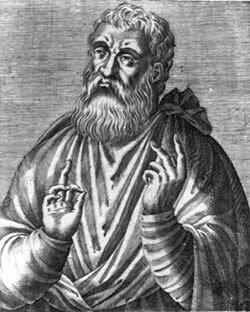
Saint Justin of Rome comments on this verse from the Gospel proclaimed at Mass today:

“So we worship God only, but in temporal matters we gladly serve you, recognizing you as emperors and rulers, and praying that along with your imperial power you may also be found to have a sound mind. Suppose you pay no attention to our prayers and our frank statements about everything. That will not injure us, since we believe, and are convinced without doubt, that everyone will finally experience the restraint of divine judgment in relation to their voluntary actions. Each will be required to give account for the responsibilities which he has been given by God” (First Apology, 17.)


Collect
O God,
Whose providence never fails in its design,
keep from us, we humbly beseech You,
all that might harm us and
grant all that works for our good.
Through our Lord Jesus Christ, your Son,
Who lives and reigns with You
in the unity of the Holy Spirit,
one God, for ever and ever.


Glory to the Father
and to the Son
and to the Holy Spirit:
as it was in the beginning,
is now, and will be forever. Amen


Top


On false spiritual peace


Abbot

An excerpt from his collection of teachings

Tuesday of the Ninth Week in Ordinary Time

The man who finds fault with himself accepts all things cheerfully—misfortune, loss, disgrace, dishonor and any other kind of adversity. He believes that he is deserving of all these things and nothing can disturb him. No one could be more at peace than this man.

But perhaps you will offer me this objection: “Suppose my brother injures me, and on examining myself I find that I have not given him any cause. Why should I blame myself?”

Certainly if someone examines himself carefully and with fear of God, he will never find himself completely innocent. He will see that he has given some provocation by an action, a word or by his manner. If he does find that he is not guilty in any of these ways, certainly he must have injured that brother somehow at some other time. Or perhaps he has been a source of annoyance to some other brother. For this reason he deserves to endure the injury because of many other sins that he has committed on other occasions.

Someone else asks why he should accuse himself when he was sitting peacefully and quietly when a brother came upon him with an unkind or insulting word. He cannot tolerate it, and so he thinks that his anger is justified. If that brother had not approached him and said those words and upset him, he never would have sinned.

This kind of thinking is surely ridiculous and has no rational basis. For the fact that he has said anything at all in this situation breaks the cover on the passionate anger within him, which is all the more exposed by his excessive anxiety. If he wished, he would do penance. He has become like a clean, shiny grain of wheat that, when broken, is full of dirt inside.

The man who thinks that he is quiet and peaceful has within him a passion that he does not see. A brother comes up, utters some unkind word and immediately all the venom and mire that lie hidden within him are spewed out. If he wishes mercy, he must do penance, purify himself and strive to become perfect. He will see that he should have returned thanks to his brother instead of returning the injury, because his brother has proven to be an occasion of profit to him. It will not be long before he will no longer be bothered by these temptations. The more perfect he grows, the less these temptations will affect him. For the more the soul advances, the stronger and more powerful it becomes in bearing the difficulties that it meets.


Glory to the Father
and to the Son
and to the Holy Spirit:
as it was in the beginning,
is now, and will be forever. Amen


Memorial of the Blessed Virgin Mary, Mother of the Church


“All these devoted themselves with one accord to prayer, together with some women, and Mary the mother of Jesus, and his brothers...” (Acts 1:14.)

Arator comments on this verse from the First Reading proclaimed during today’s Mass:

“They sought by a swift path, with which it was possible to go a mile on their sabbath, the well-known walls where Mary, the gateway of God, the virgin mother of her Creator, formed by her own son, was sitting at a religious gathering. The second virgin put to flight the woes of Eve’s crime; there is no harm done to the sex; she restored what the first took away. Let grief not raise up complaints or vex mourning hearts with groaning over the old law; these very forms of wickedness and crime rather cause delight at this bargain, and a better lot comes to the redeemed world from the fall. The person, not the nature [of a woman], caused ruin; in those days [of Eve] a pregnant woman [brought forth] peril. In these [of Mary] one grew great to bring forth God, the one begetting mortal things and the other bearing divine—she through whom the Mediator came forth into the world and carried actual flesh to the heavens.” (On the Acts of the Apostles, 1.)


Collect
O God, Father of mercies,
Whose Only Begotten Son,
as He hung upon the Cross,
chose the Blessed Virgin Mary, His Mother,
to be our Mother also,
grant, we pray, that with her loving help
your Church may be more fruitful day by day
and, exulting in the holiness of her children,
may draw to her embrace
all the families of the peoples.
Through our Lord Jesus Christ, Your Son
Who lives and reigns with You
in the unity of the Holy Spirit,
one God, for ever and ever. Amen.


Glory to the Father
and to the Son
and to the Holy Spirit:
as it was in the beginning,
is now, and will be forever. Amen


Mary’s motherhood in the order of grace


Second Vatican Council

An excerpt from Lumen Gentium, 61-62.

Memorial of the Blessed Virgin Mary, Mother of the Church

The Blessed Virgin was predestined to be the Mother of God in the eternal plan for the incarnation of God’s Word. By decree of God’s providence she was, here on earth, the loving mother of the divine Redeemer, the noblest of all his companions, and the humble servant of the Lord. In conceiving Christ, in bearing him, in nursing him, in presenting him to the Father in the temple, in sharing her Son’s passion as he was dying on the cross, by her obedience, her faith, her hope and burning love, she cooperated, in a way that was quite unique, in the work of the Savior in restoring supernatural life to souls. She is therefore a mother to us in the order of grace.

This motherhood of Mary in the order of grace — from the consent which she gave in faith at the annunciation, and which she continued to give unhesitatingly at the foot of the cross — lasts without interruption until all the elect enter into eternal fulfillment. When she was taken up into heaven, she did not lay aside this saving role but she continues by her intercession for all to gain for us the gifts of eternal salvation.

In her maternal love she cares for the brothers and sisters of her Son as they journey on earth in the midst of dangers and hardships, until they are brought safely home to the happiness of heaven.

The Blessed Virgin is thus invoked in the Church under the titles of Advocate, Auxiliatrix, Adjutrix and Mediatrix. These titles must not, however, be understood as in any way detracting from, or adding to, the dignity and effectiveness of Christ, the one Mediator.

No creature can ever be classed as an equal with the incarnate Word, the Redeemer. But just as the priesthood of Christ is shared in various ways by his ministers and his faithful people, and as the goodness of God, one though it is, is, in different ways, really shared with creatures, so also the unique meditation of Christ does not exclude but brings about a variety of shared cooperation, deriving from the one unique source.

The Church does not hesitate to acknowledge this kind of subordinate role in the person of Mary. The Church has continuous experience of its effects, and commends it to the hearts of the faithful, so that as they lean on her motherly protection they may be brought into closer union with the Mediator, our Savior.


Glory to the Father
and to the Son
and to the Holy Spirit:
as it was in the beginning,
is now, and will be forever. Amen