ORDINARY TIME


— The Lord’s Day —


Sunday Week XXVII


Saint Ephrem the Syrian
“So the LORD God cast a deep sleep on the man, and while he was asleep, he took out one of his ribs and closed up its place with flesh.” (Genesis 2:21)

Saint Ephrem the Syrian offers the following insight on these verses from today’s First Reading:

“That man, awake, anointed with splendor, and who did not yet know sleep, fell on the earth naked and slept. It is likely that Adam saw in his dream what was done to him as if he were awake. After Adam’s rib had been taken out in the twinkling of an eye, God closed up the flesh in its place in the blink of an eyelash. The bare bone took on the full appearance and all the beauty of a woman. God then brought her to Adam, who was both one and two. He was one in that he was Adam, and he was two because he had been created male and female.” (Commentary on Genesis, 2.)

Thoughts on this Sunday’s Gospel.


Collect
Almighty ever-living God,
who in the abundance of your kindness
surpass the merits and the desires
of those who entreat you,
pour out your mercy upon us
to pardon what conscience dreads
and to give what prayer does not dare to ask.
Through our Lord Jesus Christ, Your Son,
who lives and reigns with You
in the unity of the Holy Spirit,
one God, for ever and ever.


Glory to the Father
and to the Son
and to the Holy Spirit:
as it was in the beginning,
is now, and will be forever. Amen


Let the pastor be discreetly silent,
and to the point when he speaks


(Bishop of Rome and Father of the Church)
An excerpt from his Pastoral Guide


A spiritual guide should be silent when discretion requires and speak when words are of service. Otherwise he may say what he should not or be silent when he should speak. Indiscreet speech may lead men into error and an imprudent silence may leave in error those who could have been taught. Pastors who lack foresight hesitate to say openly what is right because they fear losing the favor of men. As the voice of truth tells us, such leaders are not zealous pastors who protect their flocks, rather they are like mercenaries who flee by taking refuge in silence when the wolf appears.

The Lord reproaches them through the prophet: They are dumb dogs that cannot bark. On another occasion he complains: You did not advance against the foe or set up a wall in front of the house of Israel, so that you might stand fast in battle on the day of the Lord. To advance against the foe involves a bold resistance to the powers of this world in defense of the flock. To stand fast in battle on the day of the Lord means to oppose the wicked enemy out of love for what is right.

When a pastor has been afraid to assert what is right, has he not turned his back and fled by remaining silent? Whereas if he intervenes on behalf of the flock, he sets up a wall against the enemy in front of the house of Israel. Therefore, the Lord again says to his unfaithful people: Your prophets saw false and foolish visions and did not point out your wickedness, that you might repent of your sins. The name of prophet is sometimes given in the sacred writings to teachers who both declare the present to be fleeting and reveal what is to come. The word of God accuses them of seeing false visions because they are afraid to reproach men for their faults and thereby lull the evildoer with an empty promise of safety. Because they fear reproach, they keep silent and fail to point out the sinner’s wrongdoing.

The word of reproach is a key that unlocks a door, because reproach reveals a fault of which the evildoer is himself often unaware. That is why Paul says of the bishop: He must be able to encourage men in sound doctrine and refute those who oppose it. For the same reason God tells us through Malachi: The lips of the priest are to preserve knowledge, and men shall look to him for the law, for he is the messenger of the Lord of hosts. Finally, that is also the reason why the Lord warns us through Isaiah: Cry out and be not still; raise your voice in a trumpet call.

Anyone ordained a priest undertakes the task of preaching, so that with a loud cry he may go on ahead of the terrible judge who follows. If, then, a priest does not know how to preach, what kind of cry can such a dumb herald utter? It was to bring this home that the Holy Spirit descended in the form of tongues on the first pastors, for he causes those whom he has filled, to speak out spontaneously.

Thoughts on this Sunday’s Gospel.


Glory to the Father
and to the Son
and to the Holy Spirit:
as it was in the beginning,
is now, and will be forever. Amen


ORDINARY TIME


Saturday of Week XXVI


“For you provoked your Maker with sacrifices to demons and not to God; ...” (Baruch 4:7.)

In commenting on these verses from today’s First Reading, Saint John Chrysostom writes:

“And my people has not understood me.” They have not understood me, he says, that I am more brilliant than the sun. “Woe to a sinful people.” This also is typical of the prophets, to grieve over one who is sick with an incurable illness. Jeremiah does this in many places, and Christ as well, saying, “Woe to you, Chorazin, woe to you, Bethsaida,” because this also is a form of instruction. In fact, one who has not been brought back by reasoning can often be corrected by someone’s grief. “People full of sins.” Another accusation: all are so, and gravely. “Perverse race.” He does not accuse their birth but indicates that their wickedness began from the earliest age. Just as John, when he said, “serpents, children of vipers,” did not depreciate their nature (otherwise he would not have said, “Produce fruit, then, worthy of repentance,” if they had been such by nature and by birth), so also here, in saying “Perverse race,” the prophet does not accuse their birth. “Lawless children.” He did not say, “outside of the law,” but “without law,” with a disposition in no way better than those who had received no law at all, thus showing that the difference is in their previous choice. “You have abandoned the Lord, angering him.” He said this expressively: the name of God would have been enough to establish the accusation. It is what Jeremiah reproves, saying, “Since they have departed from him and are drawn near to demons.” “The Holy One of Israel.” This is the culmination of the accusation, by the fact that though he was the common Lord of all, it was to them that he had made himself known.” (Commentary on Isaiah, 1.)


Collect
O God,
Who manifest your almighty power
above all by pardoning and showing mercy,
bestow, we pray, your grace abundantly upon us
and make those hastening to attain your promises
heirs to the treasures of heaven.
Through our Lord Jesus Christ, your Son,
Who lives and reigns with You
in the unity of the Holy Spirit,
one God, for ever and ever. Amen.


Glory to the Father
and to the Son
and to the Holy Spirit:
as it was in the beginning,
is now, and will be forever. Amen


Top


MEMORIAL


The Holy Guardian Angels


“Do not remember against us the iniquities of our forefathers; let your compassion move quickly ahead of us, for we have been brought very low.” (Psalm 79, 8.)

Saint Clement of Alexandria offers the following insight on this verse from today’s Psalm:

“But God’s righteousness cried out, “If you will come to me righteous, I will deal with you justly. If you walk treacherously, I will do so also, says the Lord of hosts.” He is suggesting that he will punish the treacherous ways of hardened sinners. The righteousness that is his by nature is indicated by the iota of the name Jesus. His goodness to those who believe out of obedience is immoveable and unwavering. “Since I called and you did not obey,” the Lord says, “you have disregarded my advice and have not heeded my reprimand.” The Lord’s reprimand is very beneficial. The Lord also says, through David, that these people are “an unjust and rebellious generation, a generation that does not set its heart straight and whose spirit does not trust in God. They did not keep God’s covenant and did not want to walk according to his law.” These are the reasons for his frustration and why he will come as a judge to pass judgment on those who do not want to choose to live a good life. On account of this he treats them quite severely in the hope of thwarting their march toward death. At any rate, through David he states very clearly his reason for his threat: “They did not believe in his wondrous deeds. When he killed them, they sought him and returned and came straight to God. They remembered that God was their helper and the most high God their redeemer.” In this way, he knew that they repented because of fear after they scorned his love for humankind. As a rule, people who have little regard for what is good behave kindly and remember to love humankind out of fear of justice.” (Christ the Educator, 1)


Collect
O God,
Who in Your unfathomable providence
are pleased to send Your holy Angels to guard us,
hear our supplication as we cry to You,
that we may always be defended by their protection
and rejoice eternally in their company
Through our Lord Jesus Christ, Your Son,
who lives and reigns with You
in the unity of the Holy Spirit,
one God, for ever and ever.


Glory to the Father
and to the Son
and to the Holy Spirit:
as it was in the beginning,
is now, and will be forever. Amen


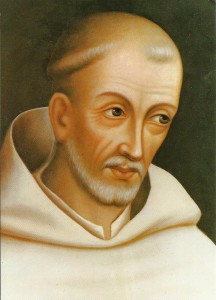
That they might guard you in all your ways


MEMORIAL
The Holy Guardian Angels 
(Abbot and Doctor of the Church)

An excerpt from a Sermon 12

He has given his angels charge over you to guard you in all your ways. Let them thank the Lord for his mercy; his wonderful works are for the children of men. Let them give thanks and say among the nations, the Lord has done great things for them. O Lord, what is man that you have made yourself known to him, or why do you incline your heart to him? And you do incline your heart to him; you show him your care and your concern. Finally, you send your only Son and the grace of your Spirit, and promise him a vision of your countenance. And so, that nothing in heaven should be wanting in your concern for us, you send those blessed spirits to serve us, assigning them as our guardians and our teachers.

He has given his angels charge over you to guard you in all your ways. These words should fill you with respect, inspire devotion and instill confidence; respect for the presence of angels, devotion because of their loving service, and confidence because of their protection. And so the angels are here; they are at your side, they are with you, present on your behalf. They are here to protect you and to serve you. But even if it is God who has given them this charge, we must nonetheless be grateful to them for the great love with which they obey and come to help us in our great need.

So let us be devoted and grateful to such great protectors; let us return their love and honor them as much as we can and should. Yet all our love and honor must go to him, for it is from him that they receive all that makes them worthy of our love and respect.

We should then, my brothers, show our affection for the angels, for one day they will be our co-heirs just as here below they are our guardians and trustees appointed and set over us by the Father. We are God’s children although it does not seem so, because we are still but small children under guardians and trustees, and for the present little better than slaves.

Even though we are children and have a long, a very long and dangerous way to go, with such protectors what have we to fear? They who keep us in all our ways cannot be overpowered or led astray, much less lead us astray. They are loyal, prudent, powerful. Why then are we afraid? We have only to follow them, stay close to them, and we shall dwell under the protection of God’s heaven.

Glory to the Father
and to the Son
and to the Holy Spirit:
as it was in the beginning,
is now, and will be forever. Amen


MEMORIAL


Saint Thérèse of the Child Jesus


“Now when the seventh month came, the whole people gathered as one in the square in front of the Water Gate, and they called upon Ezra the scribe to bring forth the book of the law of Moses which the LORD had commanded for Israel.” (Nehemiah 8:1.)

Saint Bede the Venerable comments on this verse from today’s First Reading:

“As Nehemiah was seeking to make plans and decide who should reside in the city that they had built, the seventh month arrived, for it was not far off. For since the wall had been completed on the twenty-fifth day of the sixth month, not more than five days remained until the beginning of the seventh month. The whole of this seventh month, from its first day until the twenty-second, was consecrated with ceremonies prescribed by the Law; when these had been duly celebrated, only then did he return with the leaders and common people to decide who should be residents of the rebuilt city. The point to note here is the devotion and also the like-mindedness of the people who as one person (that is, with one and the same faith and love) came together at the Lord’s temple; and they themselves asked their pontifex to bring the book and recount for them the commandments of the Law that they must observe, so that along with the rebuilt city, a structure of good works pleasing to God might spring up in case, just as before, neglect of religion should lead to the ruination of the city as well. And it is appropriate that the city was completed in the sixth month and that the people gathered in it to hear the Law in the seventh; for in the Law there are six days for working and a seventh for resting. And this, after we have done good work, is the form of our rest that is most beloved and most acceptable to the Lord: to abstain from servile work (that is, from sin) and devote ourselves to hearing and fulfilling his commandments with due diligence. This is why the Feast of Trumpets, by whose blast the people, amid their prayers and offerings, were more fervently moved to remembrance of the divine law, was placed in the beginning of this seventh month also.

Even today too, according to the spiritual meaning, the construction of the holy city should be followed by divine reading and the frequent sounding of trumpets, no doubt because it is necessary that when a people has been initiated into the heavenly sacraments they should also, as occasion requires, be carefully instructed by divine discourses how they should live. Now he says that the people assembled “in the square that is before the Water Gate.” I think that by the Water Gate is meant the gate in the courtyard of the priests that surrounded the temple on all its sides in a square, especially on the temple’s eastern side, where there was the bronze sea for washing the hands and feet of those going into the temple, the ten bronze washbasins for washing the victims and the altar of burnt offering between which and the temple Zechariah son of Berechiah was stoned to death. The people did not have permission to enter inside the gate of this court but only the priests and ministers of the Lord; the people were accustomed to stand outside of this gate and especially in the square that was at its eastern side, in order to listen to the word or to pray. Therefore, it is appropriate that the people gathered before the Water Gate, because they were to be given spiritual drink by their high priest from the streams of Scripture.” (On Ezra and Nehemiah, 3.)


Collect
O God,
Who open your Kingdom
to those who are humble and to little ones,
lead us to follow trustingly
in the little way of Saint Thérèse,
so that through her intercession
we may see your eternal glory revealed.
Through our Lord Jesus Christ, your Son,
Who lives and reigns with You
in the unity of the Holy Spirit,
one God, for ever and ever. Amen.


Glory to the Father
and to the Son
and to the Holy Spirit:
as it was in the beginning,
is now, and will be forever. Amen


In the heart of the Church I will be love


(Doctor of the Church)
An excerpt from her autobiography


Since my longing for martyrdom was powerful and unsettling, I turned to the epistles of Saint Paul in the hope of finally finding an answer. By chance the twelfth and thirteenth chapters of the first epistle to the Corinthians caught my attention, and in the first section I read that not everyone can be an apostle, prophet or teacher, that the Church is composed of a variety of members, and that the eye cannot be the hand. Even with such an answer revealed before me, I was not satisfied and did not find peace.

I persevered in the reading and did not let my mind wander until I found this encouraging theme: Set your desires on the greater gifts. And I will show you the way which surpasses all others. For the Apostle insists that the greater gifts are nothing at all without love and that this same love is surely the best path leading directly to God. At length I had found peace of mind.

When I had looked upon the mystical body of the Church, I recognized myself in none of the members which Saint Paul described, and what is more, I desired to distinguish myself more favorably within the whole body. Love appeared to me to be the hinge for my vocation. Indeed I knew that the Church had a body composed of various members, but in this body the necessary and more noble member was not lacking; I knew that the Church had a heart and that such a heart appeared to be aflame with love. I knew that one love drove the members of the Church to action, that if this love were extinguished, the apostles would have proclaimed the Gospel no longer, the martyrs would have shed their blood no more. I saw and realized that love sets off the bounds of all vocations, that love is everything, that this same love embraces every time and every place. In one word, that love is everlasting.

Then, nearly ecstatic with the supreme joy in my soul, I proclaimed: O Jesus, my love, at last I have found my calling: my call is love. Certainly I have found my place in the Church, and you gave me that very place, my God. In the heart of the Church, my mother, I will be love, and thus I will be all things, as my desire finds its direction.


Glory to the Father
and to the Son
and to the Holy Spirit:
as it was in the beginning,
is now, and will be forever. Amen


MEMORIAL


Saint Jerome of Bethlehem


“In the month Nisan of the twentieth year of King Artaxerxes, when the wine was in my charge, I took some and offered it to the king. Because I had never before been sad in his presence,” (Nehemiah 2:1.)

Saint Bede the Venerable comments on this verse from today’s First Reading:

“We have plainly learned from the teaching of Isaiah how Cyrus, the first king of the Persians, represents a figure of the Lord Savior because he ended the captivity of the people of God and decreed that the temple be restored. So too, we can properly take the successor of this same empire, Artaxerxes, who with the same devotion ordered that the city of Jerusalem be rebuilt, as a type of the Lord, who builds a city for himself from living stones (that is, the one church made from all the elect) through the service of preachers. Thus it is appropriate that the name Artaxerxes means “a light that tests silently.” For the Lord is indeed the light of life who tests the hearts of his faithful silently, at times illuminating them with the sweetness of celestial grace, at others clouding them with the burdens of this life, so that, instructed by temporal adversities, they might desire eternal goods more ardently.” (On Ezra and Nehemiah, 3.)


Collect
O God,
who gave the Priest Saint Jerome
a living and tender love for Sacred Scripture,
grant that your people
may be ever more fruitfully nourished by your Word
and find in it the fount of life.
Through our Lord Jesus Christ, your Son,
Who lives and reigns with You
in the unity of the Holy Spirit,
one God, for ever and ever. Amen.


Glory to the Father
and to the Son
and to the Holy Spirit:
as it was in the beginning,
is now, and will be forever. Amen


Ignorance of Scripture is ignorance of Christ


(Father of the Church)
An excerpt from
Commentary on Isaiah (Prologue)


I interpret as I should, following the command of Christ: Search the Scriptures, and Seek and you shall find. Christ will not say to me what he said to the Jews: You erred, not knowing the Scriptures and not knowing the power of God. For if, as Paul says, Christ is the power of God and the wisdom of God, and if the man who does not know Scripture does not know the power and wisdom of God, then ignorance of Scripture is ignorance of Christ.

Therefore, I will imitate the head of a household who brings out of his storehouse things both new and old, and says to his spouse in the Song of Songs: I have kept for you things new and old, my beloved. In this way permit me to explain Isaiah, showing that he was not only a prophet, but an evangelist and an apostle as well. For he says about himself and the other evangelists: How beautiful are the feet of those who preach good news, of those who announce peace. And God speaks to him as if he were an apostle: Whom shall I send, who will go to my people? And he answers: Here I am; send me.

No one should think that I mean to explain the entire subject matter of this great book of Scripture in one brief sermon, since it contains all the mysteries of the Lord. It prophesies that Emmanuel is to be born of a virgin and accomplish marvelous works and signs. It predicts his death, burial and resurrection from the dead as the Savior of all men. I need say nothing about the natural sciences, ethics and logic. Whatever is proper to holy Scripture, whatever can be expressed in human language and understood by the human mind, is contained in the book of Isaiah. Of these mysteries the author himself testifies when he writes: You will be given a vision of all things, like words in a sealed scroll. When they give the writings to a wise man, they will say: Read this. And he will reply: I cannot, for it is sealed. And when the scroll is given to an uneducated man and he is told: Read this, he will reply: I do not know how to read.

Should this argument appear weak to anyone, let him listen to the Apostle: Let two or three prophets speak, and let others interpret; if, however, a revelation should come to one of those who are seated there, let the first one be quiet. How can they be silent, since it depends on the Spirit who speaks through his prophets whether they remain silent or speak? If they understood what they were saying, all things would be full of wisdom and knowledge. But it was not the air vibrating with the human voice that reached their ears, but rather it was God speaking within the soul of the prophets, just as another prophet says: It is an angel who spoke in me; and again, Crying out in our hearts, Abba, Father, and I shall listen to what the Lord God says within me.

Glory to the Father
and to the Son
and to the Holy Spirit:
as it was in the beginning,
is now, and will be forever. Amen


FEAST


— The Archangels —


Saints Michael, Gabriel and Raphael


“As I watched, Thrones were set up and the Ancient of Days took his throne. His clothing was white as snow, the hair on his head like pure wool; His throne was flames of fire, with wheels of burning fire.” (Daniel 7:9.)

Origen of Alexandria (part 2 of Pope Benedict’s reflections on Origen) comments on this verse from the First Reading proclaimed at Mass today:

“Next they come to Libnah, which means “whitewashing.” I know that in some respects whitewashing has a pejorative connotation, as when we speak of a “whitewashed wall” and “whitewashed tombs.” But this whitewashing is that concerning which the prophet says, “You will wash me, and I shall be whiter than snow.” And again Isaiah says, “Though your sins are like scarlet, I will whiten them like snow and will make them white like wool.” Again in the psalm, “They were whitened with snow in Zalmon.” And the hair of the Ancient of Days is said to be dazzling, white, that is, white like wool. So then, this whitewashing must be understood to come from the radiance of the true light and to descend from the brightness of heavenly visions.” (Homilies on Numbers, 27.)


Collect
O God,
who dispose in marvelous order
ministries both angelic and human,
graciously grant
that our life on earth may be defended
by those who watch over us
as they minister perpetually to you in heaven
Through our Lord Jesus Christ, your Son,
Who lives and reigns with You
in the unity of the Holy Spirit,
one God, for ever and ever. Amen.

Glory to the Father
and to the Son
and to the Holy Spirit:
as it was in the beginning,
is now, and will be forever. Amen


Top


The word angel denotes a function
rather than a nature


(Bishop of Rome and Father of the Church)

An excerpt from his Homily 34


You should be aware that the word “angel” denotes a function rather than a nature. Those holy spirits of heaven have indeed always been spirits. They can only be called angels when they deliver some message. Moreover, those who deliver messages of lesser importance are called angels; and those who proclaim messages of supreme importance are called archangels.

And so it was that not merely an angel but the archangel Gabriel was sent to the Virgin Mary. It was only fitting that the highest angel should come to announce the greatest of all messages.

Some angels are given proper names to denote the service they are empowered to perform. In that holy city, where perfect knowledge flows from the vision of almighty God, those who have no names may easily be known. But personal names are assigned to some, not because they could not be known without them, but rather to denote their ministry when they came among us. Thus, Michael means “Who is like God”; Gabriel is “The Strength of God”; and Raphael is “God’s Remedy.”

Whenever some act of wondrous power must be performed, Michael is sent, so that his action and his name may make it clear that no one can do what God does by his superior power. So also our ancient foe desired in his pride to be like God, saying: I will ascend into heaven; I will exalt my throne above the stars of heaven; I will be like the Most High. He will be allowed to remain in power until the end of the world when he will be destroyed in the final punishment. Then, he will fight with the archangel Michael, as we are told by John: A battle was fought with Michael the archangel.

So too Gabriel, who is called God’s strength, was sent to Mary. He came to announce the One who appeared as a humble man to quell the cosmic powers. Thus God’s strength announced the coming of the Lord of the heavenly powers, mighty in battle.

Raphael means, as I have said, God’s remedy, for when he touched Tobit’s eyes in order to cure him, he banished the darkness of his blindness. Thus, since he is to heal, he is rightly called God’s remedy.


Glory to the Father
and to the Son
and to the Holy Spirit:
as it was in the beginning,
is now, and will be forever. Amen


ORDINARY TIME


Monday of Week XXVI


“The city will be filled with boys and girls playing in its streets.” (Zechariah 8:5.)

Saint Jerome offers the following insight on this verses from today’s First Reading:

“This is that wine with which, when youths and maidens are intoxicated, they at once thirst for virginity. They are filled with the spirit of chastity, and the prophecy of Zechariah comes to pass, at least if we follow the Hebrew literally, for he prophesied concerning virgins: “And the streets of the city shall be full of boys and girls playing in the streets thereof. For what is his goodness, and what is his beauty, but the corn of the elect, and wine that gives birth to virgins?” They are virgins of whom it is written in the forty-fifth Psalm: “She is led to the king, with her virgin companions, her escort, in her train. With joy and gladness they are led along as they enter the palace of the king.” (Against Jovinianus, 1)


Collect
O God,
Who manifest your almighty power
above all by pardoning and showing mercy,
bestow, we pray, your grace abundantly upon us
and make those hastening to attain your promises
heirs to the treasures of heaven.
Through our Lord Jesus Christ, your Son,
Who lives and reigns with You
in the unity of the Holy Spirit,
one God, for ever and ever. Amen.

Glory to the Father
and to the Son
and to the Holy Spirit:
as it was in the beginning,
is now, and will be forever. Amen


Top


Let us put on the armor of righteousness


(Bishop, Father of the Church and Martyr)
An excerpt from the beginning of the
Leter to the Philippains


It is not out of presumption that I write to you, my brothers, on what righteousness means, but rather because you asked me to do so. For neither I nor anyone like me can equal the wisdom of the blessed and glorious Paul. When he was in your city, he fully and courageously taught the men of that time the word of truth; when he was absent, he wrote you letters. By carefully studying these letters, you can strengthen yourselves in the faith that has been given to you. This faith is the mother of us all, followed by hope, preceded by love—love of God, of Christ, of our neighbor. Whoever lives within this framework has fulfilled the commandment of righteousness. For anyone who has love is far from sin.

Now the source of all evil is the desire to possess. Mindful that we brought nothing into this world and can take nothing out of it, let us put on the armor of righteousness. We must begin by teaching ourselves how to walk in the commandment of the Lord. Then you should teach your wives to walk in the faith that has been handed down to them, in love and in chastity. They must love their husbands with complete fidelity, but they must cherish all others equally, and with self-control; they must raise their children in the discipline that comes from fear of God. We must teach widows to be discreet in all that concerns the faith of the Lord; they must pray without ceasing for all men, shunning all calumny, gossip, false witness, greed, in a word, every sort of evil. They must bear in mind that they are God’s sacrificial altar. He sees everything clearly, nothing escapes his vigilance, be it calculation, thought or some secret desire of the heart.

God, as we know, is not mocked. Let us walk in a way that is worthy of his commands and his purposes. Deacons, in the same way, must be blameless in the sight of his goodness, for they are servants of God and of Christ, not of men. They must avoid calumny, hypocritical talk and greed. Merciful and diligent, they must control all their desires, walking according to the truth of the Lord who became the servant of all. If we please him in this life, we shall receive the life to come; for he has promised us that he will raise us from the dead, and that, if we lead lives worthy of him, we shall reign along with him. This is what our faith tells us..


Glory to the Father
and to the Son
and to the Holy Spirit:
as it was in the beginning,
is now, and will be forever. Amen
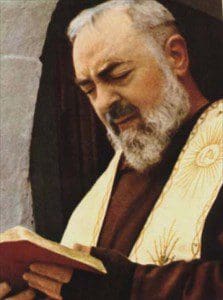


It is by grace that you are saved


(Bishop and Father of the Church)
An excerpt from the beginning of the
Leter to the Philippains


From Polycarp and his fellow presbyters to the pilgrim church of God at Philippi: May you have mercy and peace in abundance from Almighty God and Jesus Christ our Savior.

I rejoice with you greatly in the Lord Jesus Christ because you have assumed the pattern of true love and have rightly helped on their way those who were in chains. Such chains are becoming to the faithful; they are the rich crown of the chosen ones of our Lord and God. I am glad, too, that your deep-rooted faith, proclaimed of old, still abides and continues to bear fruit in the life-giving power of our Lord Jesus Christ. He, for our sins, did not refuse to go down to death, and God raised him up after destroying the pains of hell. With a glorious joy that no words can express you believe in Christ without seeing him. This is the joy in which many wish to share knowing that it is by grace that you are saved and not by works, for so God has willed through Jesus Christ.

So prepare yourselves for the struggle, serve the Lord in fear and truth. Put aside empty talk and popular errors; your faith must be in him who raised our Lord Jesus Christ from the dead and gave him a share in his own glory and a seat at his right hand. To him everything was made subject in heaven and on earth; all things obey him, who will come as judge of the living and the dead. All who refuse to believe must answer to God for the blood of his Son.

He who raised him from the dead will raise us too if we do his will and keep his commandments, loving what he loved, refraining from all wrongdoing, fraud, avarice, malice and slander. We must abstain from false witness, not returning evil for evil, nor curse for curse, nor blow for blow, nor denunciation for denunciation. Always remember the words of the Lord, who taught: Do not judge and you will not be judged; forgive and you will be forgiven; be merciful and you will find mercy; the amount you measure out to others will be the amount measured out to you. Blessed are the poor and those who suffer persecution, for theirs is the kingdom of God.


Glory to the Father
and to the Son
and to the Holy Spirit:
as it was in the beginning,
is now, and will be forever. Amen


ORDINARY TIME


Saturday of Week XXV


“... and he said to the latter, “Run, speak to that official: Jerusalem will be unwalled, because of the abundance of people and beasts in its midst.” (Zechariah 2:9.)

Saint Augustine of Hippo comments on this verse from the First Reading proclaimed at Mass today:

“Another example to prove the same point may be found in a passage of Zechariah where the “Almighty” sends the “Almighty.” This can only mean that God the Father sends God the Son. The text runs, “So says the Lord Almighty: ‘After the glory he has sent me to the nations that have robbed you; for he that touches you touches the apple of my eye. For behold, I lift up my head upon them, and they shall be a prey to those who served them; and you shall know that the Lord almighty sent me.’” In this case, the Lord almighty says that he is sent by the Lord almighty. How can anyone doubt that it is Christ who is speaking and, in fact, speaking to the lost sheep of the house of Israel? Remember what is said in the Gospel: “I was not sent except to the lost sheep of the house of Israel.” The comparison of these lost sheep to the apple of God’s eye is explained by the perfection of God’s love. And, of course, it was to this flock of sheep that the apostles belonged. “After the glory” of his resurrection—a glory alluded to in the words “Jesus had not yet been glorified” — it was in the person of these apostles that Jesus was sent to the Gentiles. And this was to be the fulfillment of what the psalmist had prophesied: “You will deliver me from the contradictions of the people; you will make me head of the Gentiles.” (City of God, 20.)


Collect
O God,
Who founded all the commands
of Your sacred Law
upon love of You and of our neighbor,
grant that, by keeping Your precepts,
we may merit to attain eternal life.
Through our Lord Jesus Christ, your Son,
Who lives and reigns with You
in the unity of the Holy Spirit,
one God, for ever and ever. Amen.

Glory to the Father
and to the Son
and to the Holy Spirit:
as it was in the beginning,
is now, and will be forever. Amen


Top


The river whose streams gladden the city of God

(Bishop and Father of the Church)
An excerpt from On Psalm 64


The river of God is brimming with water. You have provided their food, for this is your way of preparing them. There can be no doubt about the river referred to, for the prophet says: There is a river whose streams gladden the city of God; and in the gospel the Lord himself says: Streams of living water welling up to eternal life will flow from the heart of anyone who drinks the water I shall give him. He was speaking of the Holy Spirit, whom those who believed in him were to receive. The river of God is brimming with water; that is to say, we are inundated by the gifts of the Holy Spirit and from that fountain of life the river of God pours into us in full blood.

We also have food prepared for us. And who is this food? It is he in whom we are prepared for life with God, for by receiving his holy body we receive a place in the communion of his holy body. This is what is meant by the words of the psalm: You have provided their food, for this is your way of preparing them. For as well as refreshing us now, that food also prepares us for the life to come.

We who have been reborn through the sacrament of baptism experience intense joy when we feel within us the first stirrings of the Holy Spirit. We begin to have an insight into the mysteries of faith, we are able to prophesy and to speak with wisdom. We become steadfast in hope and receive the gift of healing. Demons are made subject to our authority. These gifts enter us like a gentle rain, and once having done so, little by little, they bring forth fruit in abundance.

Glory to the Father
and to the Son
and to the Holy Spirit:
as it was in the beginning,
is now, and will be forever. Amen


ORDINARY TIME


Thursday of Week XXV


“Go up into the hill country; bring timber, and build the house that I may be pleased with it, and that I may be glorified, says the LORD.” (Haggai 1:8.)

Saint Ambrose of Milan offers the following insight on this verse from today’s First Reading:

“The man who dies before his time does not build his tomb, for, although he lives, he is dead. He does not hear the words of Haggai, whose name interpreted the banqueter, for he does not enter the tabernacle of God “with the voice of joy and praise, the noise of one feasting.” How does he hear his voice if he does not see his works? If he saw them, he would hear the word which was put within his grasp, he would rejoice in his acts, whereby “he knocked and it was opened to him,” and he would have gone down into his soul that he might feed therein upon the food of sincerity and truth. Because he failed to hear, the word of Haggai again comes, saying: Rise from houses embossed and carved with wickedness, and go up to the mount of heavenly Scriptures and hew the tree of wisdom, the tree of life and the tree of knowledge. Make straight your ways, order your actions so that they may have due order which is necessary and useful for building the house of God.” (Letter 80)


Collect
O God,
Who founded all the commands
of Your sacred Law
upon love of You and of our neighbor,
grant that, by keeping Your precepts,
we may merit to attain eternal life.
Through our Lord Jesus Christ, your Son,
Who lives and reigns with You
in the unity of the Holy Spirit,
one God, for ever and ever. Amen.


Glory to the Father
and to the Son
and to the Holy Spirit:
as it was in the beginning,
is now, and will be forever. Amen


Top


In good pastures I shall feed my sheep


(Bishop and Father of the Church)
Continuation of an excerpt from his  Sermon 46 «On Pastors»


I shall lead them forth from the Gentiles, and I shall gather them from foreign lands; I shall bring them into their own land, and I shall feed them on the mountains of Israel. It was God who brought forth the mountains of Israel, that is to say, the authors of the divine Scriptures. Feed there that you may feed in safety. Whatever you hear from that source, you should savor. Whatever is foreign to it, reject. Hear the voice of the shepherd, lest you wander about in the mist. Gather at the mountains of holy Scripture. There, are the things that will delight your hearts; there, you will find nothing poisonous, nothing hostile; there the pastures are most plentiful. There, you will be healthy sheep; you will feed safely on the mountain of Israel.

And I shall feed them in streams and in every inhabited place in the land. From the mountains which we have shown you, there have issued the streams of the gospel message because their voice has gone forth into the whole world, and every habitable place has become pleasant and fertile for the grazing sheep.

In good pastures and on the high mountains of Israel, I shall feed them. And their grazing ground shall be there, that is, the place where they will rest, where they will say: “I am happy”; where they will say: “It is true, it is clear, we are not deceived.” They will find rest in the glory of God, when they find rest in those grazing grounds. And they will sleep, that is, find rest, and they will rest in good pleasures.

And they will be fed in rich pastures on the mountains of Israel. I have already spoken of the mountains of Israel, the good mountains to which we raise our eyes and from which may come our help. But our help is from the Lord, who made heaven and earth. Let us not then place our hope in the good mountains themselves, but let us rely on his word which says: I will feed my sheep on the mountains of Israel. Let us not merely remain on the mountains themselves, for he added immediately: I will feed my sheep. Raise your eyes, therefore, to the mountains, whence your help comes; but take note that he says: I will feed. For your help is from the Lord, who made heaven and earth.

He concludes by saying: And I will feed them with judgment. Observe that he alone so feeds his sheep, in feeding them with judgment. For what man can judge rightly concerning another? Our whole daily life is filled with rash judgments. He of whom we had despaired is converted suddenly and becomes very good. He from whom we had anticipated a great deal suddenly fails and becomes very bad. Neither our fear nor our hope is certain.

What any man is today, that man himself scarcely knows. Still in some way he does know what he is today. What he will be tomorrow, however, he does not know. Hence the Lord, who assigns to each what is owed to him, feeds his sheep with judgment, giving some things to one group, other things to another, and to each his due. For he knows what he is doing. With judgment he feeds those whom he, being judged himself, redeemed. Therefore, he himself feeds his sheep with judgment.

Glory to the Father
and to the Son
and to the Holy Spirit:
as it was in the beginning,
is now, and will be forever. Amen


MEMORIAL


Saint Pius of Pietrelcina


“Then, at the time of the evening sacrifice, I rose in my wretchedness, and with cloak and mantle torn I fell on my knees, stretching out my hands to the LORD, my God.” (Ezra 9:5.)

Saint Bede the Venerable comments on this verse from today’s First Reading:

“Ezra had prepared himself through compunction of heart and through bodily affliction so that he might be made worthy to hear heavenly mercy, and only then did he begin to break forth in words of prayer. He bends his knees, spreads out his hands and pours forth prayers to the Lord at the time of the evening sacrifice, not doubting that this sacrifice that is offered with a humble spirit and contrite heart would be more pleasing to God than one offered with the flesh or blood of cattle. Typologically, however, in the fact that with his garment torn he falls on his knees, spreads out his hands to God and turns the mind of very many to repentance by pouring out prayers and tears, as is written in what follows, he represents the Lord Savior, who deigned to pray for our sins both before and at the very time of his passion and who allowed his hands to be stretched out on the cross and the garment of his own flesh to be torn with wounds and mortified at the appointed time on behalf of our restoration, so that, as the apostle says, he who “died on behalf of our sins” might rise “for our justification.” This was aptly done at the time of evening sacrifice either because the Lord at the end of the age offered the sacrifice of his own flesh and blood to the Father and ordered that it should be offered by us in bread and wine or because with legal sacrifice coming to an end, he freed us through his own passion and, separating us from the people of the lands, made us become heavenly and allowed those who are chaste in heart and body to adhere to him.” (On Ezra and Nehemiah, 2.)


Collect
Almighty ever-living God,
Who, by a singular grace,
gave the Priest Saint Pius
a share in the Cross of Your Son
and, by means of his ministry,
renewed the wonders of Your mercy,
grant that through his intercession
we may be united constantly
to the sufferings of Christ,
and so brought happily
to the glory of the resurrection.
Through our Lord Jesus Christ, your Son,
Who lives and reigns with You
in the unity of the Holy Spirit,
one God, for ever and ever. Amen.


Glory to the Father
and to the Son
and to the Holy Spirit:
as it was in the beginning,
is now, and will be forever. Amen


I will raise my voice and
will not stop imploring Him


(Priest)
An excerpt from his Letters

Out of obedience I am obliged to manifest to you what happened to me on the evening of the 5th of this month of August 1918 and all day on the 6th.

I am quite unable to convey to you what occurred during this period of utter torment. While I was hearing the boys’ confessions on the evening of the 5th, I was suddenly terrorized by the sight of a celestial person who presented himself to my mind’s eye. He had in his hand a sort of weapon like a very long sharp-pointed steel blade which seemed to emit fire. At the very instant that I saw all this, I saw that person hurl the weapon into my soul with all his might. I cried out with difficulty and felt I was dying. I asked the boys to leave because I felt ill and no longer had the strength to continue. This agony lasted uninterruptedly until the morning of the 7th. I cannot tell you how much I suffered during this period of anguish. Even my entrails were torn and ruptured by the weapon, and nothing was spared.

From that day on I have been mortally wounded. I feel in the depths of my soul a wound that is always open and which causes me continual agony. What can I tell you in answer to your questions regarding my crucifixion? My God! What embarrassment and humiliation I suffer by being obliged to explain what you have done to this wretched creature!

On the morning of the 20th of last month, in the choir, after I had celebrated Mass I yielded to a drowsiness similar to a sweet sleep. All the internal and external senses and even the very faculties of my soul were immersed in indescribable stillness. Absolute silence surrounded and invaded me. I was suddenly filled with great peace and abandonment which effaced everything else and caused a lull in the turmoil. All this happened in a flash. While this was taking place I saw before me a mysterious person similar to the one I had seen on the evening of August 5th. The only difference was that his hands and feet and side were dripping blood. This sight terrified me and what I felt at that moment is indescribable. I thought I should die and really should have died if the Lord had not intervened and strengthened my heart which was about to burst out of my chest. The vision disappeared and I became aware that my hands, feet and side were dripping blood. Imagine the agony I experienced and continue to experience almost every day. The heart wound bleeds continually, especially from Thursday evening until Saturday.

Dear Father, I am dying of pain because of the wounds and the resulting embarrassment I feel deep in my soul. I am afraid I shall bleed to death if the Lord does not hear my heartfelt supplication to relieve me of this condition. Will Jesus, who is so good, grant me this grace? Will he at least free me from the embarrassment caused by these outward signs? I will raise my voice and will not stop imploring him until in his mercy he takes away, not the wound or the pain, which is impossible since I wish to be inebriated with pain, but these outward signs which cause me such embarrassment and unbearable humiliation. The person of whom I spoke in a previous letter is none other than the one I mentioned having seen on August 5th. He continues his work incessantly, causing me extreme spiritual agony. There is a continual rumbling within me like the gushing of blood. My God! Your punishment is just and your judgment right, but grant me your mercy. Lord, with your Prophet I shall continue to repeat: O Lord, do not rebuke me in your anger; do not punish me in your rage! Dear Father, now that my whole interior state is known to you, do not refuse to send me a word of comfort in the midst of such severe and harsh suffering.

Glory to the Father
and to the Son
and to the Holy Spirit:
as it was in the beginning,
is now, and will be forever. Amen


— Prayer for Pope Francis —


O God,
Who in Your providential design
willed that Your Church be built
upon blessed Peter,
Whom You set over the other Apostles,
look with favor, we pray, on Francis our Pope
and grant that he, whom You have made Peter’s successor,
may be for Your people a visible source and foundation
of unity in faith and of communion.
Through our Lord Jesus Christ, your Son,
who lives and reigns with you in the unity of the Holy Spirit, one God, for ever and ever.


ORDINARY TIME


Tuesday of Week XXV


“Let the governor and the elders of the Jews continue the work on that house of God; they are to rebuild it on its former site.” (Ezra 6:7.)

Saint Bede the Venerable comments on this verse from today’s First Reading:

“The sequence of events in the text is as if Darius himself had read Cyrus’s letter and, having perused it, immediately endorsed it with his authority, in such a way that suppressing all their adversaries, he ordered the temple of God to be rebuilt on its site just as the letter said, and himself, with a most devout mind in all things, assisted God’s worshipers to serve his will. Let Artaxerxes, therefore, who above forbade that the house or city of God be built, designate those lords of worldly affairs who by inciting persecutions opposed the construction of the holy church, while in the upheaval of these persecutions that church flourished chiefly by the triumph of martyrs. Let Darius designate the dutiful devotion of those kings who, recognizing the will of God, endeavored not only not to resist the Christian faith but also to assist it with their decrees; and many of them, forbidding the persecutions of their predecessors, wished that they themselves along with the people under their sway might be consecrated in the sacraments of the same faith.” (On Ezra and Nehemiah), 2.


Collect
O God,
Who founded all the commands
of Your sacred Law
upon love of You and of our neighbor,
grant that, by keeping Your precepts,
we may merit to attain eternal life.
Through our Lord Jesus Christ, your Son,
Who lives and reigns with You
in the unity of the Holy Spirit,
one God, for ever and ever. Amen.


Glory to the Father
and to the Son
and to the Holy Spirit:
as it was in the beginning,
is now, and will be forever. Amen


Top