The Church, like a vine,
spreads everywhere in her growth


Continuation of an excerpt from his  Sermon 46 «On Pastors»
(Bishop and Father of the Church)

They were scattered on every mountain, and on every hill and over the entire face of the earth. What is the meaning of the phrase: They were scattered over the entire face of the earth? Some men continually strive for all the goods of the world, the goods that are so evident on the face of the earth; yes, they love and prize them. They do not want to die, to have their lives buried in Christ. Over the entire face of the earth: such men love earthly things; moreover such straying sheep are to be found over the entire face of the earth. They dwell in different places, but one mother, pride, has given birth to them all, just as one mother, our Catholic Church, has given birth to all faithful Christians scattered over the entire world.

Small wonder that pride gives birth to division, and love to unity. But our catholic mother is herself a shepherd; she seeks the straying sheep everywhere, strengthens the weak, heals the sick, and binds up the injured. They may not know one another, but she knows all of them because she reaches out to all her sheep. Thus she is like a vine that is spread out everywhere in its growth. The straying sheep are like useless branches which because of their sterility are deservedly cut off, not to destroy the vine but to prune it. When these branches were cut down, they were left lying there. But the vine grew and flourished, and it knew both the branches that remained upon it and those that had been cut off and left lying beside it.

She calls the stray sheep back, however, because the Apostle said in reference to the broken branches: God has the power to graft them on again. Call them sheep straying from the flock or branches cut off from the vine, God is equally capable of calling back the sheep or of grafting the branches on again, for he is equally the chief shepherd and the true farmer. And they were scattered over the entire face of the earth, and there was no one to search for them, no one to call them back, that is to say, no one among those wicked shepherds. There was no one to search for them, that is, no one among men.

Therefore, shepherds, hear the word of the Lord: I live, says the Lord God. Notice the beginning of this passage; it is as if God were taking an oath, giving testimony to his own life. I live, says the Lord. The shepherds are dead, but the sheep are safe, for the Lord lives. I live, says the Lord God. Which shepherds are dead? Those who seek what is theirs and not what is Christ’s. But will there be shepherds who seek what is Christ’s and not what is theirs, and will they be found? There will indeed be such shepherds, and they will indeed be found; they are not lacking, nor will they be lacking in the future.

Glory to the Father
and to the Son
and to the Holy Spirit:
as it was in the beginning,
is now, and will be forever. Amen


FEAST


— Saint Matthew —


Apostle and Evangelist


“... with all humility and gentleness, with patience, bearing with one another through love ...” (Ephesians 4:2.)

In commenting on these verses from today’s First Reading, Saint John Chrysostom writes:

“How is it possible to “walk worthily” with “all lowliness”? Meekness is the foundation of all virtue. If you are humble and are aware of your limits and remember how you were saved, you will take this recollection as the motive for every excellent moral behavior. You will not be excessively impressed with either chains or privileges. You will remember that all is of grace and so walk humbly. “With all lowliness,” he says, not in words only or even in deeds but more so in the very manner and tone of your voice. And not meek toward one person and rude toward another but humble toward everyone, whether enemy or friend, great or small.” (Homily on Ephesians, 9.)


Collect
O God,
Who with untold mercy
were pleased to choose as an Apostle
Saint Matthew, the tax collector,
grant that,
sustained by his example and intercession,
we may merit to hold firm in following You.
Through our Lord Jesus Christ, your Son,
Who lives and reigns with You
in the unity of the Holy Spirit,
one God, for ever and ever. Amen.


Glory to the Father
and to the Son
and to the Holy Spirit:
as it was in the beginning,
is now, and will be forever. Amen


Jesus saw him through the eyes of mercy
and chose him


An excerpt from Homily 21
(Priest and Doctor of the Church)

Jesus saw a man called Matthew sitting at the tax office, and he said to him: Follow me. Jesus saw Matthew, not merely in the usual sense, but more significantly with his merciful understanding of men.

He saw the tax collector and, because he saw him through the eyes of mercy and chose him, he said to him: Follow me. This following meant imitating the pattern of his life—not just walking after him. Saint John tells us: Whoever says he abides in Christ ought to walk in the same way in which he walked.

And he rose and followed him. There is no reason for surprise that the tax collector abandoned earthly wealth as soon as the Lord commanded him. Nor should one be amazed that neglecting his wealth, he joined a band of men whose leader had, on Matthew’s assessment, no riches at all. Our Lord summoned Matthew by speaking to him in words. By an invisible, interior impulse flooding his mind with the light of grace, he instructed him to walk in his footsteps. In this way Matthew could understand that Christ, who was summoning him away from earthly possessions, had incorruptible treasures of heaven in his gift.

As he sat at table in the house, behold many tax collectors and sinners came and sat down with Jesus and his disciples. This conversion of one tax collector gave many men, those from his own profession and other sinners, an example of repentance and pardon. Notice also the happy and true anticipation of his future status as apostle and teacher of the nations. No sooner was he converted than Matthew drew after him a whole crowd of sinners along the same road to salvation. He took up his appointed duties while still taking his first steps in the faith, and from that hour he fulfilled his obligation and thus grew in merit.

To see a deeper understanding of the great celebration Matthew held at his house, we must realize that he not only gave a banquet for the Lord at his earthly residence, but far more pleasing was the banquet set in his own heart which he provided through faith and love. Our Savior attests to this: Behold I stand at the door and knock; if anyone hears my voice and opens the door, I will come in to him and eat with him, and he with me.

On hearing Christ’s voice, we open the door to receive him, as it were, when we freely assent to his promptings and when we give ourselves over to doing what must be done. Christ, since he dwells in the hearts of his chosen ones through the grace of his love, enters so that he might eat with us and we with him. He ever refreshes us by the light of his presence insofar as we progress in our devotion to and longing for the things of heaven. He himself is delighted by such a pleasing banquet.

Glory to the Father
and to the Son
and to the Holy Spirit:
as it was in the beginning,
is now, and will be forever. Amen


ORDINARY TIME


— The Lord’s Day —


Sunday Week XXV


Pondering Jesus’ victorious Word


εὐαγγελίζω (euaggelizo)
“to announce the Good News of victory in battle”

“Jesus and his disciples left from there and began a journey through Galilee, but he did not wish anyone to know about it. He was teaching (διδάσκω, didasko) his disciples and telling (ἔλεγεν, elegen) them, "The Son of Man is to be handed over to men and they will kill him, and three days after his death the Son of Man will rise." But they did not understand the saying, and they were afraid to question him.”


θεωρέω (theoreo)
(“to perceive, discover, ponder a deeper meaning”)

In the chronology of the Evangelist Mark, much has happened between last week’s lesson on Jesus’ identity and this week’s announcement once again of what awaits Jesus in Jerusalem. Preceding today’s proclamation, Jesus took Peter, James and John atop “a high mountain” and was transfigured before them. Jesus gave those three disciples a glimpse, a peek into His glorified identity – an identity that would not be revealed until the Cross. Following this event, which had the three questioning, “what rising from the dead meant,” a man brought his “son possessed by a mute spirit.” The father explained that the disciples could not cure him and Jesus reminded all of the need once again to have faith, that radical and complete trust in the Person, Jesus. In a dramatic characteristic of the Evangelist Mark, the episode - filled with violence at one point, ends with Jesus peacefully returning him to his father. Jesus’ disciples then question why they could not cure the son and Jesus once again counsels them on the necessity of prayer.All of this forms a backdrop for today’s proclamation that once again reminds the disciples of the events that await Jesus in Jerusalem.


The episode opens with Jesus “teaching his disciples and telling them.” Teaching and telling: is there a difference between these two actions? While we generally think of teaching involving some type of oral communication, διδάσκω (didasko) is “teaching that demonstrates, shows or reveals.” The activity of διδάσκω involves much more than speaking bits of information to others. ‘Showing how’ the teaching works in the person’s life is more at the core meaning of διδάσκω. The disciples, as far as Jesus was concerned, were not only to hear what was being said (teaching) but to see the ‘teaching’ or the lesson embodied in the Teacher Himself. This is a particular meaning of διδάσκω that is rather unique in the biblical usage of both Testaments. Sadly, the disciples missed the point and Jesus needed to re-present the lesson.

The event does speak volumes to all involved in the Church’s teaching ministry. In view of the upcoming visit of Pope Francis and his announcing of Jesus’ teaching that both comforts and challenges, how do we receive what Our Lord Jesus has set forth in the Gospel? Do we experience the Gospel as a mere list of do's and don'ts - OR - are we grateful for the Word of hope and life? The present life of the Body of Christ as joyfully sounded by Pope Francis is clear: the handing-on of the Person Jesus wherein the ‘seers’ and ‘listeners’ encounter a Person - Jesus and respond with lives of daily conversion and service to God our Father and one another.


On weak Christians


Continuation of an excerpt from his  Sermon 46 «On Pastors»
(Bishop and Father of the Church)

You have failed to strengthen the weak, says the Lord. He is speaking to wicked shepherds, false shepherds, shepherds who seek their own concerns and not those of Christ. They enjoy the bounty of milk and wool, but they take no care at all of the sheep, and they make no effort to heal those who are ill. I think there is a difference between one who is weak (that is, not strong) and one who is ill, although we often say that the weak are also suffering from illness.

My brothers, when I try to make that distinction, perhaps I could do it better and with greater precision, or perhaps someone with more experience and insight could do so. But when it comes to the words of Scripture, I say what I think so that in the meantime you will not be deprived of all profit. In the case of the weak sheep, it is to be feared that the temptation, when it comes, may break him. The sick person, however, is already ill by reason of some illicit desire or other, and this is keeping him from entering God’s path and submitting to Christ’s yoke.

There are men who want to live a good life and have already decided to do so, but are not capable of bearing sufferings even though they are ready to do good. Now it is a part of the Christian’s strength not only to do good works but also to endure evil. Weak men are those who appear to be zealous in doing good works but are unwilling or unable to endure the sufferings that threaten. Lovers of the world, however, who are kept from good works by some evil desire, lie sick and listless, and it is this sickness that deprives them of any strength to accomplish good works.

The paralytic was like that. When his bearers could not bring him in to the Lord, they opened the roof and lowered him down to the feet of Christ. Perhaps you wish to do this in spirit: to open the roof and to lower a paralytic soul down to the Lord. All its limbs are lifeless, it is empty of every good work, burdened with its sins, and weak from the illness brought on by its evil desires. Since all its limbs are helpless, and the paralysis is interior, you cannot come to the physician. But perhaps the physician is himself concealed within; for the true understanding of Scripture is hidden. Reveal therefore what is hidden, and thus you will open the roof and lower the paralytic to the feet of Christ.

As for those who fail to do this and those who are negligent, you have heard what was said to them: You have failed to heal the sick; you have failed to bind up what was broken. Of this we have already spoken. Man was broken by terrible temptations. But there is at hand a consolation that will bind what was broken: God is faithful. He does not allow you to be tempted beyond your strength, but with the temptation he will also provide the way of escape, that you may be able to endure it.

A reflection on this Sunday’s Gospel.


Glory to the Father
and to the Son
and to the Holy Spirit:
as it was in the beginning,
is now, and will be forever. Amen


ORDINARY TIME


Saturday of Week XXIV


“... who alone has immortality, who dwells in unapproachable light, and whom no human being has seen or can see. To him be honor and eternal power. Amen.” (1 Timothy 6:16.)

Saint Gregory of Nyssa (part 2 of the background of Saint Gregory of Nyssa is found here) offers the following insight on this verse from today’s First Reading:

“But we, even when we are told that God “only has immortality,” we understand by “immortality” the Son. For life is immortality, and the Lord is that life, who said, “I am the Life.” And if he is said to dwell “in the light that no man can approach,” again we make no difficulty in understanding that the true Light, unapproachable by falsehood, is the Only-begotten, in whom we learn from the Truth itself that the Father is. Are we to think of the Only-begotten in a manner worthy of the Godhead, or to call him, as heresy prescribes, perishable and temporary?” (Against Eunomius, 2.)


Collect
Look upon us, O God,
Creator and ruler of all things,
and, that we may feel the working of your mercy,
grant that we may serve you with all our heart.
Through our Lord Jesus Christ, your Son,
Who lives and reigns with You
in the unity of the Holy Spirit,
one God, for ever and ever. Amen.


Glory to the Father
and to the Son
and to the Holy Spirit:
as it was in the beginning,
is now, and will be forever. Amen


Offer the bandage of consolation


Continuation of an excerpt from his  Sermon 46 «On Pastors»
(Bishop and Father of the Church)

Scripture says: God chastises every son whom he acknowledges. But the bad shepherd says: “Perhaps I will be exempt.” If he is exempt from the suffering of his chastisements, then he is not numbered among God’s sons. You will say: “Does God indeed punish every son?” Yes, every one, just as he chastised his only Son. His only Son, born of the substance of the Father, equal to the Father in the form of God, the Word through whom all things were made, he could not be chastised. For this reason he was clothed with flesh so that he might know chastisement. God punishes his only Son who is without sin; does he then leave unpunished an adopted son who is with sin? The Apostle says that we have been called to adoption. We have been adopted as sons, that we might be co-heirs with the only Son, and also that we might be his inheritance: Ask of me and I will give you the nations as your inheritance. Christ gave us the example by his own sufferings.

But clearly one who is weak must neither be deceived with false hope nor broken by fear. Otherwise he may fail when temptations come. Say to him: Prepare your soul for temptation. Perhaps he is starting to falter, to tremble with fear, perhaps he is unwilling to approach. You have another passage of Scripture for him: God is faithful. He does not allow you to be tempted beyond your strength. Make that promise while preaching about the sufferings to come, and you will strengthen the man who is weak. When someone is held back because of excessive fear, promise him God’s mercy. It is not that temptations will be lacking, but that God will not permit anyone to be tempted beyond what he can bear. In this manner you will be binding up the broken one.

When they hear of the trials that are coming, some men arm themselves more and, so to speak, are eager to drain the cup. The ordinary medicine of the faithful seems to them but a small thing; for their part they seek the glorious death of the martyrs. Others hear of the temptations to come, and when they do arrive, as arrive they must, they become broken and lame. Yet it is right that such things befall the Christian, and no one esteems them except the who desires to be a true Christian.

Offer the bandage of consolation, bind up what has been broken. Say this: “Do not be afraid. God in whom you have believed does not abandon you in temptations. God is faithful. He does not allow you to be tempted beyond your strength. It is not I who say this, but the Apostle, and he says further: Are you willing to accept his trial, the trial of Christ who speaks in me? When you hear this you are hearing it from Christ himself, you are hearing it from the shepherd who gives pasture to Israel. For of him it was said: You will give us tears to drink in measure. The Apostle says: He does not allow you to be tempted beyond your strength. This is also what the prophet intends by adding the words: in measure. God rebukes but also encourages, he brings fear and he brings consolation, he strikes and he heals. Do not reject him.”

Glory to the Father
and to the Son
and to the Holy Spirit:
as it was in the beginning,
is now, and will be forever. Amen


ORDINARY TIME


Friday of Week XXIV


“For the love of money is the root of all evils, and some people in their desire for it have strayed from the faith and have pierced themselves with many pains.” (1 Timothy 6:10.)

Saint Gregory of Nyssa (part 2 of the background of Saint Gregory of Nyssa is found here) offers the following insight on this verse from today’s First Reading:

“The tree, then, from which comes this fruit of mixed knowledge is among those things which are forbidden. Its fruit is combined of opposite qualities, and therefore for this reason perhaps has the serpent to commend it. For the evil is not exposed in its nakedness, thereby appearing in its own proper nature; for wickedness would surely fail of its effect were it not decked with some fair color to entice to the desire of it him whom it deceives. But now the nature of evil is in a manner mixed and thus keeps destruction like some snare concealed in its depths and displays some phantom of good in the deceitfulness of its exterior. The beauty of the substance seems good to those who love money.” (On the Making of Man, 20.)


Collect
Look upon us, O God,
Creator and ruler of all things,
and, that we may feel the working of your mercy,
grant that we may serve you with all our heart.
Through our Lord Jesus Christ, your Son,
Who lives and reigns with You
in the unity of the Holy Spirit,
one God, for ever and ever. Amen.


Glory to the Father
and to the Son
and to the Holy Spirit:
as it was in the beginning,
is now, and will be forever. Amen


ORDINARY TIME


Thursday of Week XXIV


“Let no one have contempt for your youth, but set an example for those who believe, in speech, conduct, love, faith, and purity.” (1 Timothy 4:12.)

Saint Augustine of Hippo comments on this verse from the First Reading proclaimed at Mass today:

“In what way is it said that bad shepherds kill the sheep? By leading bad lives, by setting a bad example. Was it for nothing that a servant of God was told, one prominent among the members of the supreme shepherd, “Offering yourself in all company as an example of good works;” and “Be a model to the faithful.” You see, even a strong sheep often enough, when he notices his pastor leading a bad life, if his eyes wander from the rules of the Lord and are attracted by human considerations, begins to say to himself, “If my pastor lives like that, who am I not to behave as he does?” He has killed a strong sheep. So if he has killed a strong sheep, what must he be doing for the others, seeing that by his bad life he has slaughtered what he hadn’t fattened himself, but has found fat and sturdy?” (Sermon 46)


Collect
Look upon us, O God,
Creator and ruler of all things,
and, that we may feel the working of your mercy,
grant that we may serve you with all our heart.
Through our Lord Jesus Christ, your Son,
Who lives and reigns with You
in the unity of the Holy Spirit,
one God, for ever and ever. Amen.


Glory to the Father
and to the Son
and to the Holy Spirit:
as it was in the beginning,
is now, and will be forever. Amen


MEMORIAL


Saints
Cornelius, Pope
Cyprian, Bishop
Martyrs


“But if I should be delayed, you should know how to behave in the household of God, which is the church of the living God, the pillar and foundation of truth.” (1 Timothy 3:15.)

Origen of Alexandria (part 2 of Pope Benedict’s reflections on Origen) comments on this verse from the First Reading proclaimed at Mass today:

“The spiritual interpretation, however, is not so difficult and hard to come by.1 For the bride of the Word, the soul who abides in his royal house—that is, in the church—is taught by the Word of God, who is her Bridegroom, whatever things are stored and hidden within the royal court and in the king’s chamber. In this house, which is the church of the living God, she becomes acquainted also with the cellar of that wine which is extracted from the holy wine presses, the wine that is not only new, but also old and sweet—that is, the teaching of the Law and the Prophets.” (Commentary on the Song of Songs, 3.)


Collect
O God,
who gave Saints Cornelius and Cyprian
to your people
as diligent shepherds and valiant Martyrs,
grant that through their intercession
we may be strengthened in faith and constancy
and spend ourselves without reserve
for the unity of the Church.
Through our Lord Jesus Christ, your Son,
Who lives and reigns with You
in the unity of the Holy Spirit,
one God, for ever and ever. Amen.

Glory to the Father
and to the Son
and to the Holy Spirit:
as it was in the beginning,
is now, and will be forever. Amen


Top


A faith that is ready and unshaken


MEMORIAL
Saints Cornelius, Pope, and Cyprian, Bishop, Martyrs
(Bishop, Father of the Church and Martyr)

An excerpt from a Letter 60

Cyprian sends greetings to his brother Cornelius. My very dear brother, we have heard of the glorious witness given by your courageous faith. On learning of the honor you had won by your witness, we were filled with such joy that we felt ourselves sharers and companions in your praiseworthy achievements. After all, we have the same Church, the same mind, the same unbroken harmony. Why then should a priest not take pride in the praise given to a fellow priest as though it were given to him? What brotherhood fails to rejoice in the happiness of its brothers wherever they are?

Words cannot express how great was the exultation and delight here when we heard of your good fortune and brave deeds: how you stood out as a leader of your brothers in their declaration of their faith. You led the way to glory, but you gained many companions in that glory; being foremost in your readiness to bear witness on behalf of all, you prevailed on your people to become a single witness. We cannot decide which we ought to praise, your own ready and unshaken faith or the love of your brothers who would not leave you. While the courage of the bishop who thus led the way has been demonstrated, at the same time the unity of the brotherhood who followed has been manifested. Since you have one heart and one voice, it is the Roman Church as a whole that has thus borne witness.

Dearest brother, bright and shining is the faith which the blessed Apostle praised in your community. He foresaw in the spirit the praise your courage deserves and the strength that could not be broken; he was heralding the future when he testified to your achievements; his praise of the fathers was a challenge to the sons. Your unity, your strength have become shining examples of these virtues to the rest of the brethren.

Divine providence has now prepared us. God’s merciful design has warned us that the day of our own struggle, our own contest, is at hand. By that shared love which binds us closely together, we are doing all we can to exhort our congregation, to give ourselves unceasingly to fasting, vigils and prayers in common. These are the heavenly weapons which give us the strength to stand firm and endure; they are the spiritual defenses, the God-given armaments that protect us.

Let us then remember one another, united in mind and heart. Let us pray without ceasing, you for us, we for you; by the love we share we shall thus relieve the strain of these great trials.


Glory to the Father
and to the Son
and to the Holy Spirit:
as it was in the beginning,
is now, and will be forever. Amen


MEMORIAL


Our Lady of Sorrows


“This saying is trustworthy: whoever aspires to the office of bishop desires a noble task.” (1 Timothy 3:1.)

Saint Augustine of Hippo comments on this verse from the First Reading proclaimed at Mass today:

“I want to be a bishop; oh, if only I were a bishop!” Would that you were! Are you seeking the name or the real thing? If it’s the real thing you’re seeking, you are setting your heart on a good work. If it’s the name you’re seeking, you can have it even with a bad work but with a worse punishment. So what shall we say? Are there bad bishops? Perish the thought, there aren’t any; yes, I have the nerve, the gall to say there are no bad bishops; because if they are bad, they aren’t bishops. You are calling me back again to the name and saying, “He is a bishop, because he is seated on the bishop’s throne.” And a straw scarecrow is guarding the vineyard.” (Sermon 340)


Collect
O God,
Who willed
that, when your Son
was lifted high on the Cross,
his Mother should stand close by
and share his suffering,
grant that your Church,
participating with the Virgin Mary
in the Passion of Christ,
may merit a share in his Resurrection.
Who lives and reigns with You
in the unity of the Holy Spirit,
one God, for ever and ever. Amen.

Glory to the Father
and to the Son
and to the Holy Spirit:
as it was in the beginning,
is now, and will be forever. Amen


His mother stood by the Cross


MEMORIAL
Our Lady of Sorrows 
(Abbot and Doctor of the Church)

An excerpt from a Sermon

The martyrdom of the Virgin is set forth both in the prophecy of Simeon and in the actual story of our Lord’s passion. The holy old man said of the infant Jesus: He has been established as a sign which will be contradicted. He went on to say to Mary: And your own heart will be pierced by a sword.

Truly, O blessed Mother, a sword has pierced your heart. For only by passing through your heart could the sword enter the flesh of your Son. Indeed, after your Jesus—who belongs to everyone, but is especially yours—gave up his life, the cruel spear, which was not withheld from his lifeless body, tore open his side. Clearly it did not touch his soul and could not harm him, but it did pierce your heart. For surely his soul was no longer there, but yours could not be torn away. Thus the violence of sorrow has cut through your heart, and we rightly call you more than martyr, since the effect of compassion in you has gone beyond the endurance of physical suffering.

Or were those words, Woman, behold your Son, not more than a word to you, truly piercing your heart, cutting through to the division between soul and spirit? What an exchange! John is given to you in place of Jesus, the servant in place of the Lord, the disciple in place of the master; the son of Zebedee replaces the Son of God, a mere man replaces God himself. How could these words not pierce your most loving heart, when the mere remembrance of them breaks ours, hearts of iron and stone though they are!

Do not be surprised, brothers, that Mary is said to be a martyr in spirit. Let him be surprised who does not remember the words of Paul, that one of the greatest crimes of the Gentiles was that they were without love. That was far from the heart of Mary; let it be far from her servants.

Perhaps someone will say: “Had she not known before that he would not die?” Undoubtedly. “Did she not expect him to rise again at once?” Surely. “And still she grieved over her crucified Son?” Intensely. Who are you and what is the source of your wisdom that you are more surprised at the compassion of Mary than at the passion of Mary’s Son? For if he could die in body, could she not die with him in spirit? He died in body through a love greater than anyone had known. She died in spirit through a love unlike any other since his.

Glory to the Father
and to the Son
and to the Holy Spirit:
as it was in the beginning,
is now, and will be forever. Amen


FEAST


Exaltation of the Holy Cross


“Accordingly Moses made a bronze serpent and mounted it on a pole, and whenever the serpent bit someone, the person looked at the bronze serpent and recovered.” (Numbers, 21:9.)

Saint Gregory of Nazianzus reflects on this verse from today’s First Reading:

“That brazen serpent was hung up as a remedy for the biting serpents, not as a type of him that suffered for us but as a contrast. It saved those that looked upon it, not because they believed it to live but because it was killed, and killed with it were the powers that were subject to it, being destroyed as it deserved. And what is the fitting epitaph for it from us? “O death, where is your sting? O grave, where is your victory?”10 You are overthrown by the cross. You are slain by him who is the giver of life. You are without breath, dead, without motion, even though you keep the form of a serpent lifted up high on a pole.” (Oration 45)


Collect
O God,
Who willed that your Only Begotten Son
should undergo the Cross to save the human race,
grant, we pray,
that we, who have known his mystery on earth,
may merit the grace of his redemption in heaven.
Through our Lord Jesus Christ, your Son,
Who lives and reigns with You
in the unity of the Holy Spirit,
one God, for ever and ever. Amen.


Glory to the Father
and to the Son
and to the Holy Spirit:
as it was in the beginning,
is now, and will be forever. Amen


The cross is Christ’s glory and triumph


FEAST
Exaltation of the Holy Cross 
(Bishop)

An excerpt from his Oration 10: Exaltation of the Cross

We are celebrating the feast of the cross which drove away darkness and brought in the light. As we keep this feast, we are lifted up with the crucified Christ, leaving behind us earth and sin so that we may gain the things above. So great and outstanding a possession is the cross that he who wins it has won a treasure. Rightly could I call this treasure the fairest of all fair things and the costliest, in fact as well as in name, for on it and through it and for its sake the riches of salvation that had been lost were restored to us.

Had there been no cross, Christ could not have been crucified. Had there been no cross, life itself could not have been nailed to the tree. And if life had not been nailed to it, there would be no streams of immortality pouring from Christ’s side, blood and water for the world’s cleansing. The legal bond of our sin would not be canceled, we should not have attained our freedom, we should not have enjoyed the fruit of the tree of life and the gates of paradise would not stand open. Had there been no cross, death would not have been trodden underfoot, nor hell despoiled.

Therefore, the cross is something wonderfully great and honorable. It is great because through the cross the many noble acts of Christ found their consummation—very many indeed, for both his miracles and his sufferings were fully rewarded with victory. The cross is honorable because it is both the sign of God’s suffering and the trophy of his victory. It stands for his suffering because on it he freely suffered unto death. But it is also his trophy because it was the means by which the devil was wounded and death conquered; the barred gates of hell were smashed, and the cross became the one common salvation of the whole world.

The cross is called Christ’s glory; it is saluted as his triumph. We recognize it as the cup he longed to drink and the climax of the sufferings he endured for our sake. As to the cross being Christ’s glory, listen to his words: Now is the Son of Man glorified, and in him God is glorified, and God will glorify him at once. And again: Father, glorify me with the glory I had with you before the world came to be. And once more: Father, glorify your name. Then a voice came from heaven: I have glorified it and I will glorify it again. Here he speaks of the glory that would accrue to him through the cross. And if you would understand that the cross is Christ’s triumph, hear what he himself also said: When I am lifted up, then I will draw all men to myself. Now you can see that the cross is Christ’s glory and triumph.

Glory to the Father
and to the Son
and to the Holy Spirit:
as it was in the beginning,
is now, and will be forever. Amen
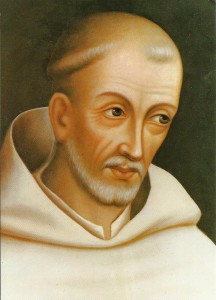


I am a Christian as well as a leader


An excerpt from his sermon «On Pastors»
(Bishop and Father of the Church)

You have often learned that all our hope is in Christ and that he is our true glory and our salvation. You are members of the flock of the Good Shepherd, who watches over Israel and nourishes his people. Yet there are shepherds who want to have the title of shepherd without wanting to fulfil a pastor’s duties; let us then recall what God says to his shepherds through the prophet. You must listen attentively; I must listen with fear and trembling.

The word of the Lord came to me and said: Son of man, prophesy against the shepherds of Israel and speak to the shepherds of Israel. We just heard this reading a moment ago, my brothers, and I have decided to speak to you on this passage. The Lord will help me to speak the truth if I do not speak on my own authority. For if I speak on my own authority, I will be a shepherd nourishing myself and not the sheep. However, if my words are the Lord’s, then he is nourishing you no matter who speaks. Thus says the Lord God: Shepherds of Israel, who have been nourishing only themselves! Should not the shepherds nourish the sheep? In other words, true shepherds take care of their sheep, not themselves. This is the principle reason why God condemns those shepherds: they took care of themselves rather than their sheep. Who are they who nourish themselves? They are the shepherds the Apostle described when he said: They all seek what is theirs and not what is Christ’s.

I must distinguish carefully between two aspects of the role the Lord has given me, a role that demands a rigorous accountability, a role based on the Lord’s greatness rather than on my own merit. The first aspect is that I am a Christian; the second, that I am a leader. I am a Christian for my own sake, whereas I am a leader for your sake; the fact that I am a Christian is to my own advantage, but I am a leader for your advantage.

Many persons come to God as Christians but not as leaders. Perhaps they travel by an easier road and are less hindered since they bear a lighter burden. In addition to the fact that I am a Christian and must give God an account of my life, I as a leader must give him an account of my stewardship as well.

Glory to the Father
and to the Son
and to the Holy Spirit:
as it was in the beginning,
is now, and will be forever. Amen


Saturday of Week XXIII


“This saying is trustworthy and deserves full acceptance: Christ Jesus came into the world to save sinners. Of these I am the foremost.” (1 Timothy 1:15.)

Origen of Alexandria (part 2 of Pope Benedict’s reflections on Origen) comments on this verse from the First Reading proclaimed at Mass today:

“Moreover, Paul says in the Epistle to Timothy, even though he himself had later become an apostle of Jesus, “this is a faithful saying, that Christ Jesus came into the world to save sinners, of whom I am chief.” For some unknown reason he [Celsus] forgot or did not think of saying anything about Paul, who after Jesus established the churches in Christ. Why then is it outrageous if Jesus, wanting to show mankind the extent of his ability to heal souls, chose infamous and most wicked men and led them on so far that they were an example of the purest moral character to those who were converted by them to the gospel of Christ?” (Against Celsus, 1.)


Collect
O God,
by Whom we are redeemed and receive adoption,
look graciously upon
Your beloved sons and daughters,
that those who believe in Christ
may receive true freedom
and an everlasting inheritance.
Through our Lord Jesus Christ, your Son,
Who lives and reigns with You
in the unity of the Holy Spirit,
one God, for ever and ever. Amen.

Glory to the Father
and to the Son
and to the Holy Spirit:
as it was in the beginning,
is now, and will be forever. Amen

Top


You gave us life in the beginning;
give us new life


An excerpt from On the Incarnation of the Word
(Bishop and Father of the Church)

God, the Word of the all-good Father, did not disregard the human race, his own creation, when it was sinking back into corruption, but rather by the offering of his own body he destroyed the death men had incurred, and by his teaching he corrected their negligence. So he restored by his power all that belongs to man’s estate.

Anyone can find confirmation of this from the Savior’s own disciples who spoke of him, for in their writings one reads: The charity of Christ constrains us as we judge that if one died on behalf of all, then all died; and he died for all in order that we may live no longer for ourselves but for him who died for us and rose from the dead, our Lord Jesus Christ. And again: We see Jesus, who for a little while was made lower than the angels, crowned with glory and honor because he suffered death, that by God’s grace he might taste death for everyone. Then the writer goes on to show why it had to be God the Word and no other who became man: Indeed it was fitting that in bringing many sons to glory, God, for whom and through whom all things exist, should make perfect the one who leads them to salvation. By this he means that the task of bringing men back from the corruption into which they had fallen belonged to no other save God the Word who had made them in the beginning. Further, Scripture shows that the Word assumed a body for the purpose of offering it in sacrifice on behalf of other bodies like his own, for the writer continues: Since the children have blood and flesh in common, he likewise shared in them himself so that by his own death he might destroy the one who had power over death, that is, the devil, and might deliver those who all their life long were enslaved by fear of death.

For by the sacrifice of his own body he both put an end to the law that stood against us and made a new beginning of life for us by giving us the hope of resurrection. Hence Paul, the Christbearer, declares: As through a man came death, so through a man has come the resurrection of the dead. For as all died in Adam, so also in Christ all shall be made to live.

No longer, then, do we die as men condemned, but as men being raised even now, we await the general resurrection of all, which God, whose work and gift it is, will reveal at the appointed time.

Glory to the Father
and to the Son
and to the Holy Spirit:
as it was in the beginning,
is now, and will be forever. Amen


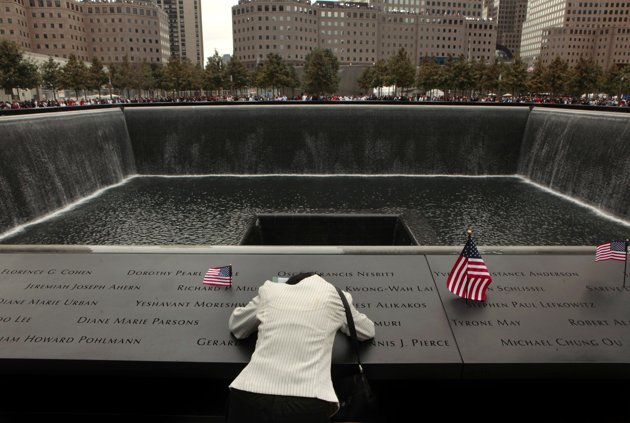
A Prayer on 11 September


O God, merciful and strong,
who crush wars and cast down the proud,
be pleased to banish violence swiftly from our midst
and to wipe away all tears,
so that we may all truly deserve to be called your children.
Through our Lord Jesus Christ, your Son,
who lives and reigns with you in the unity of the Holy Spirit,
one God, for ever and ever.

Or:

O God, author and lover of peace,
to know you is to live, to serve you is to reign;
defend against every attack those who cry to you,
so that we, who trust in your protection,
may not fear the weapons of any foe.
Through our Lord Jesus Christ, your Son,
who lives and reigns with you in the unity of the Holy Spirit,
one God, for ever and ever.

(From Roman Missal, “In Time of War or Civil Disturbance”)


Pope-Emeritus Benedict at Ground Zero


O God of love, compassion, and healing,
look on us, people of many different faiths and traditions,
who gather today at this site,
the scene of incredible violence and pain.


We ask you in your goodness
to give eternal light and peace
to all who died here—
the heroic first-responders:
our fire fighters, police officers,
emergency service workers, and Port Authority personnel,
along with all the innocent men and women
who were victims of this tragedy
simply because their work or service
brought them here on September 11, 2001.

We ask you, in your compassion
to bring healing to those
who, because of their presence here that day,
suffer from injuries and illness.
Heal, too, the pain of still-grieving families
and all who lost loved ones in this tragedy.
Give them strength
to continue their lives with courage and hope.

We are mindful as well
of those who suffered death, injury, and loss
on the same day at
the Pentagon and in Shanksville, Pennsylvania.
Our hearts are one with theirs
as our prayer embraces their pain and suffering.

God of peace, bring your peace to our violent world:
peace in the hearts of all men and women
and peace among the nations of the earth.
Turn to your way of love
those whose hearts and minds
are consumed with hatred.

God of understanding,
overwhelmed by the magnitude of this tragedy,
we seek your light and guidance
as we confront such terrible events.
Grant that those whose lives were spared
may live so that the lives lost here
may not have been lost in vain.
Comfort and console us,
strengthen us in hope,
and give us the wisdom and courage
to work tirelessly for a world
where true peace and love reign
among nations and in the hearts of all.


Friday of Week XXIII


“I am grateful to him who has strengthened me, Christ Jesus our Lord, because he considered me trustworthy in appointing me to the ministry.” (1 Timothy 1:12.)

In commenting on these verses from today’s First Reading, Saint John Chrysostom writes:

“If you have sinned and God has pardoned your sin, receive your pardon and give thanks. But do not be forgetful of your sin. It is not that you should fret over the thought of it, but that you may school your soul not to grow lax or relapse again into the same snares. This is what Paul did, not hiding his actions as a blasphemer, persecutor and injurer. It is as if he were saying: “Let the life of your servant be openly exposed, so that the loving kindness of the Lord might be all the more apparent. For although I have received the remission of sins, I do not reject the memory of those sins.” And this not only made transparent the loving kindness of the Lord but made the man himself the more remarkable. For when you have learned who he was before, then you will be the more astonished at him. When you see what he came to be out of what he was, then you will commend him the more. So if you have greatly sinned, you yourself upon being changed will hope all the more by seeing him. Such an example comforts those who are in despair and causes them again to stand tall.” (Homilies Concerning the Statues, 12.)


Collect
O God,
by Whom we are redeemed and receive adoption,
look graciously upon Your beloved sons and daughters,
that those who believe in Christ
may receive true freedom
and an everlasting inheritance.
Through our Lord Jesus Christ, your Son,
Who lives and reigns with You
in the unity of the Holy Spirit,
one God, for ever and ever. Amen.


Glory to the Father
and to the Son
and to the Holy Spirit:
as it was in the beginning,
is now, and will be forever. Amen


Christ will forgive no sin without the Church


Friday of Week XXIII in Ordinary Time
(Abbot)

An excerpt from a Sermon 11

The prerogative of receiving the confession of sin and the power to forgive sin are two things that belong properly to God alone. We must confess our sins to him and look to him for forgiveness. Since only he has the power to forgive sins, it is to him that we must make our confession. But when the Almighty, the Most High, wedded a bride who was weak and of low estate, he made that maid-servant a queen. He took her from her place behind him, at his feet, and enthroned her at his side. She had been born from his side, and therefore he betrothed her to himself. And as all that belongs to the Father belongs also to the Son because by nature they are one, so also the bridegroom gave all he had to the bride and he shared in all that was hers. He made her one both with himself and with the Father. Praying for his bride, the Son said to the Father: I want them to be one with us, even as you and I are one.

And so the bridegroom is one with the Father and one with the bride. Whatever he found in his bride alien to her own nature he took from her and nailed to his cross when he bore her sins and destroyed them on the tree. He received from her and clothed himself in what was hers by nature and gave her what belonged to him as God. He destroyed what was diabolical, took to himself what was human, and conferred on her what was divine. So all that belonged to the bride was shared in by the bridegroom, and he who had done no wrong and on whose lips was found no deceit could say: Have pity on me, Lord, for I am weak. Thus, sharing as he did in the bride’s weakness, the bridegroom made his own her cries of distress, and gave his bride all that was his. Therefore, she too has the prerogative of receiving the confession of sin and the power to forgive sin, which is the reason for the command: Go, show yourself to the priest.

The Church is incapable of forgiving any sin without Christ, and Christ is unwilling to forgive any sin without the Church. The Church cannot forgive the sin of one who has not repented, who has not been touched by Christ; Christ will not forgive the sin of one who despises the Church. What God has joined together, man must not separate. This is a great mystery, but I understand it as referring to Christ and the Church.

Do not destroy the whole Christ by separating head from body, for Christ is not complete without the Church, nor is the Church complete without Christ. The whole and complete Christ is head and body. This is why he said: No one has ever ascended into heaven except the Son of Man whose home is in heaven. He is the only man who can forgive sin.


Glory to the Father
and to the Son
and to the Holy Spirit:
as it was in the beginning,
is now, and will be forever. Amen