I have accepted the true doctrines of the Christians


Today’s Second Reading from the
Office of Readings (Liturgy of the Hours)
Ordinary Time: monday of the Ninth Week

Memorial
Saint Justin
(martyr and apologist)

An excerpt from:
Acts of the martyrdom of Saint Justin and his companion saints


The saints were seized and brought before the prefect of Rome, whose name was Rusticus. As they stood before the judgement seat, Rusticus the prefect said to Justin: “Above all, have faith in the gods and obey the emperors.” Justin said: “We cannot be accused or condemned for obeying the commands of our Savior, Jesus Christ.”

Rusticus said: “What system of teaching do you profess?” Justin said: “I have tried to learn about every system, but I have accepted the true doctrines of the Christians, though these are not approved by those who are held fast by error.”

The prefect Rusticus said: “Are those doctrines approved by you, wretch that you are?” Justin said: “Yes, for I follow them with their correct teaching.”

The prefect Rusticus said: “What sort of teaching is that?” Justin said: “Worship the God of the Christians. We hold him to be from the beginning the one creator and maker of the whole creation, of things seen and things unseen. We worship also the Lord Jesus Christ, the Son of God. He was foretold by the prophets as the future herald of salvation for the human race and the teacher of distinguished disciples. For myself, since I am a human being, I consider that what I say is insignificant in comparison with his infinite godhead. I acknowledge the existence of a prophetic power, for the one I have just spoken of as the Son of God was the subject of prophecy. I know that the prophets were inspired from above when they spoke of his coming among men.”

Rusticus said: “You are a Christian, then?” Justin said: “Yes, I am a Christian.”

The prefect said to Justin: “You are called a learned man and think that you know what is true teaching. Listen: if you were scourged and beheaded, are you convinced that you would go up to heaven?” Justin said: “I hope that I shall enter God’s house if I suffer that way. For I know that God’s favor is stored up until the end of the whole world for all who have lived good lives.”

The prefect Rusticus said: “Do you have an idea that you will go up to heaven to receive some suitable rewards?” Justin said: “It is not an idea that I have; it is something I know well and hold to be most certain.”

The prefect Rusticus said: “Now let us come to the point at issue, which is necessary and urgent. Gather round then and with one accord offer sacrifice to the gods.” Justin said: “No one who is right thinking stoops from true worship to false worship.”

The prefect Rusticus said: “If you do not do as you are commanded you will be tortured without mercy.” Justin said: “We hope to suffer torment for the sake of our Lord Jesus Christ, and so be saved. For this will bring us salvation and confidence as we stand before the more terrible and universal judgment-seat of our Lord and Savior.”

In the same way the other martyrs also said: “Do what you will. We are Christians; we do not offer sacrifice to idols.”

The prefect Rusticus pronounced sentence, saying: “Let those who have refused to sacrifice to the gods and to obey the command of the emperor be scourged and led away to suffer capital punishment according to the ruling of the laws.” Glorifying God, the holy martyrs went out to the accustomed place. They were beheaded, and so fulfilled their witness of martyrdom in confessing their faith in their Savior.

Glory to the Father
and to the Son
and to the Holy Spirit:
as it was in the beginning,
is now, and will be forever. Amen

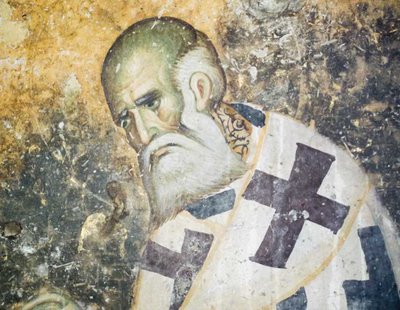


Light, radiance and grace are
in the Trinity and from the Trinity

Today’s Second Reading from the
Office of Readings (Liturgy of the Hours)
Solemnity of the
Most Holy Trinity

Saint Athanasius of Alexandria
(bishop and Father of the Church)

An excerpt from:
The First letter to Serapion


It will not be out of place to consider the ancient tradition, teaching and faith of the Catholic Church, which was revealed by the Lord, proclaimed by the apostles and guarded by the fathers. For upon this faith the Church is built, and if anyone were to lapse from it, he would no longer be a Christian either in fact or in name.

We acknowledge the Trinity, holy and perfect, to consist of the Father, the Son and the Holy Spirit. In this Trinity there is no intrusion of any alien element or of anything from outside, nor is the Trinity a blend of creative and created being. It is a wholly creative and energizing reality, self-consistent and undivided in its active power, for the Father makes all things through the Word and in the Holy Spirit, and in this way the unity of the holy Trinity is preserved. Accordingly, in the Church, one God is preached, one God who is above all things and through all things and in all things. God is above all things as Father, for he is principle and source; he is through all things through the Word; and he is in all things in the Holy Spirit.

Writing to the Corinthians about spiritual matters, Paul traces all reality back to one God, the Father, saying: Now there are varieties of gifts, but the same Spirit; and varieties of service, but the same Lord; and there are varieties of working, but it is the same God who inspires them all in everyone.

Even the gifts that the Spirit dispenses to individuals are given by the Father through the Word. For all that belongs to the Father belongs also to the Son, and so the graces given by the Son in the Spirit are true gifts of the Father. Similarly, when the Spirit dwells in us, the Word who bestows the Spirit is in us too, and the Father is present in the Word. This is the meaning of the text: My Father and I will come to him and make our home with him. For where the light is, there also is the radiance; and where the radiance is, there too are its power and its resplendent grace.

This is also Paul’s teaching in his second letter to the Corinthians: The grace of our Lord Jesus Christ and the love of God and the fellowship of the Holy Spirit be with you all. For grace and the gift of the Trinity are given by the Father through the Son in the Holy Spirit. Just as grace is given from the Father through the Son, so there could be no communication of the gift to us except in the Holy Spirit. But when we share in the Spirit, we possess the love of the Father, the grace of the Son and the fellowship of the Spirit himself.

Glory to the Father
and to the Son
and to the Holy Spirit:
as it was in the beginning,
is now, and will be forever. Amen


Ordinary Time
Saturday of the Eighth Week

“More desirable than gold, than a hoard of purest gold, Sweeter also than honey or drippings from the comb.” (Psalm 19, 11.)

Saint Basil the Great offers the following insight on this verse from today's Responsorial Psalm:

“Renunciation [is] the severance of the bonds of this material and transient life and freedom from human concerns, whereby we render ourselves more fit to set out on the road leading to God. It is the unhindered impulse toward the possession and enjoyment of inestimable goods, “more to be desired than gold and many precious stones.” In short, it is the transference of the human heart to a heavenly mode of life, so that we can say, “But our conversation is in heaven.” Also — and this is the chief point — it is the first step toward the likeness to Christ, who, being rich, became poor for our sake. Unless we attain to this likeness, it is impossible for us to achieve a way of life in accord with the gospel of Christ.” (The Long Rules, Q. 8)


Collect
Grant us, O Lord, we pray,
that the course of our world
may be directed by your peaceful rule
and that your Church may rejoice,
untroubled in her devotion.
Through our Lord Jesus Christ, Your Son,
Who lives and reigns with You
in the unity of the Holy Spirit,
one God, for ever and ever. Amen.


Glory to the Father
and to the Son
and to the Holy Spirit:
as it was in the beginning,
is now, and will be forever. Amen


Job was a type of Christ

Today’s Second Reading from the
Office of Readings (Liturgy of the Hours)
Ordinary Time: Saturday of the Eighth Week

An excerpt from:
Sermon (Tractate 15)
Saint Zeno of Verona
(bishop)

Is Job a type of Christ? If I am right, he is, and the comparison will reveal the truth of my claim. But while Job was called a just man by God, God himself is the fountain of justice from whom all the saints drink. See what Scripture says: The sun of justice will arise for you. Job was called truthful, but the Lord is, as he says in the Gospel, the way, the truth and the life. And while Job was rich, the Lord is far richer, for the earth is the Lord’s and everything in it; the world and all who dwell in it. All rich men are his servants, and the whole world and all of nature as well.

But we may compare Job and Christ in many ways. As Job was tempted by the devil three times, so too Christ was tempted three times. The Lord set aside his riches out of love for us and chose poverty so that we might become rich, while Job lost all that he possessed. A violent wind killed Job’s sons, while the sons of God, the prophets, were killed by the fury of the Pharisees. Job became ulcerated and disfigured, while the Lord, by becoming man, took on the defilement of the sins committed by all mankind. The wife of Job tempted him to sin, much as the synagogue tried to force the Lord to yield to corrupt leadership. Thus he was insulted by the priests, the servants of his altar, as Job was insulted by his friends. And as Job sat on a dunghill of worms, so all the evil of the world is really a dunghill which became the Lord’s dwelling place, while men that abound in every sort of crime and base desire are really worms.

The restoration of health and riches to Job prefigures the resurrection, which gives health and eternal life to those who believe in Christ. Regaining lordship over all the world, Christ says: All things have been given to me by my Father. And just as Job fathered other sons, so too did Christ, for the apostles, the sons of the Lord, succeeded the prophets.

Job died happily and in peace, but there is no death for the Lord. He is praised for ever, just as he was before time began, and as he always will be as time continues and moves into eternity.

Glory to the Father
and to the Son
and to the Holy Spirit:
as it was in the beginning,
is now, and will be forever. Amen


Ordinary Time
Friday of the Eighth Week

“Sing to the LORD a new song, his praise in the assembly of the faithful.” (Psalm 149, 1.)

Saint Augustine of Hippo comments on this verse from the Responsorial Psalm proclaimed at Mass today:

“My brothers and sisters, my children, O seedlings of the catholic church, O holy and heavenly seed, O you that have been born again in Christ and been born from above, listen to me — or rather, listen to God through me: “Sing to the Lord a new song.” “Well, I am singing,” you say. Yes, you are singing, of course you are singing, I can hear you. But do not let your life give evidence against your tongue. Sing with your voices, sing also with your hearts; sing with your mouths, sing also with your conduct. “Sing to the Lord a new song.” You ask what you should sing about the one you love? For of course you do want to sing about the one you love. You are asking for praises of his to sing. You have been told, “Sing to the Lord a new song.” You are looking for songs of praise, are you? “His praise is in the church of the saints.” The praise of the one to be sung about is the singer himself. Do you want to sing God his praises? Be yourselves what you sing. You are his praise if you lead good lives. His praise, you see, is not to be found in the synagogues of the Jews, or in the madness of the pagans, or in the errors of the heretics or in the applause of the theaters. You ask, “Where it is to be found?” Look at yourselves: you are it. “His praise is in the church of the saints.” You ask what to rejoice about when you are singing? “Let Israel rejoice in the one who made him,” and all he can find to rejoice about is God.” (Sermon 34, 6.)


Collect
Grant us, O Lord, we pray,
that the course of our world
may be directed by your peaceful rule
and that your Church may rejoice,
untroubled in her devotion.
Through our Lord Jesus Christ, Your Son,
Who lives and reigns with You
in the unity of the Holy Spirit,
one God, for ever and ever. Amen.


Glory to the Father
and to the Son
and to the Holy Spirit:
as it was in the beginning,
is now, and will be forever. Amen


The interior witness

Today’s Second Reading from the
Office of Readings (Liturgy of the Hours)
Ordinary Time: Friday of the Eighth Week

An excerpt from:
Moral Reflections on Job, (Book 10)
Saint Gregory the Great
(pope and Father of the Church)

Whoever is mocked by his friend, as I am, shall call upon God, and he shall hear him. A weak-minded person is frequently diverted toward pursuing exterior happiness when the breath of popular favor accompanies his good actions. So he gives up his own personal choices, preferring to remain at the mercy of whatever he hears from others. Thus, he rejoices not so much to become but to be called blessed. Eager for praise, he gives up what he had begun to be; and so he is severed from God by the very means by which he appeared to be commendable in God.

But sometimes a soul firmly strives for righteousness and yet is beset by men’s ridicule. He does what is admirable but he gets only mockery. He might have gone out of himself because of man’s praise; he returns to himself when repelled buy their abuse. Finding no resting-place without, he cleaves more intensely to God within. All his hope is fixed on his Creator, and amid all the ridicule and abuse he invokes his interior witness alone. One who is afflicted in this way grows closer to God the more he turns away from human popularity. He straightway pours himself out in prayer, and, pressured from without, he is refined with a more perfect purity to penetrate what is within.

In this context, the words apply: Whoever is mocked by his friend, as I am, shall call upon God, and he shall hear him. For while the wicked reproach the just, they show them whom they should look to as the witness of their actions. Thus afflicted, the soul strengthens itself by prayer; it is united within to one who listens from on high precisely because it is cut off externally from the praise of men. Again, we should note how appropriately the words, are inserted, as I am. There are some people who are both oppressed by human mockery and are yet deprived of God's favorable hearing. For when the mockery is done to a man’s own sin, it obviously does not produce the merit that is due to virtue.

The simplicity of the just man is laughed to scorn. It is the wisdom of this world to conceal the heart with stratagems, to veil one’s thoughts with words to make what is false appear true and what is true appear false. On the other hand it is the wisdom of the just never to pretend anything for show, always to use words to express one’s thoughts, to love the truth as it is and to avoid what is false, to do what is right without reward and to be more willing to put up with evil than to perpetrate it, not to seek revenge for wrong, and to consider as gain any insult for truth’s sake. But this guilelessness is laughed to scorn, for the virtue of innocence is held as foolishness by the wise of this world. Anything that is done out of innocence, they doubtless consider to be stupidity, and whatever truth approves of, in practice is called folly by their worldly wisdom.

Glory to the Father
and to the Son
and to the Holy Spirit:
as it was in the beginning,
is now, and will be forever. Amen


Ordinary Time
Thursday of the Eighth Week

“By the LORD’S word the heavens were made; by the breath of his mouth all their host.” (Psalm 33, 6.)

Saint Basil the Great offers the following insight on this verse from today's Responsorial Psalm:

“Where are those who set at naught the Spirit? Where are those who separate it from the creative power? Where are those who dissever it from union with the Father and Son? Let them hear the psalm that says, “By the word of the Lord the heavens were established; and all the power of them by the spirit of his mouth.” The term “Word” will not be considered as this common form of diction that consists of names and expressions; nor will the Spirit be considered as vapor poured out in the air but as the Word, which was in the beginning with God, and as the Holy Spirit, which has obtained appellation as its own. As, then, the Creator, the Word, firmly established the heavens, so the Spirit, which is from God, which proceeds from the Father, that is, which is from his mouth (that you may not judge that it is some external object or some creature but may glorify it as having its substance from God) brings with it all the powers in him. Since, then, the Savior is the Word of the Lord and the Holy Spirit is the Spirit from his mouth, both joined with him in the creation of the heavens and the powers in them, and for this reason the statement was made: “By the word of the Lord the heavens were established; and all the power of them by the spirit of his mouth.” For nothing is made holy except by the presence of the Spirit.” (Homilies on the Psalms, 15)


Collect
Grant us, O Lord, we pray,
that the course of our world
may be directed by your peaceful rule
and that your Church may rejoice,
untroubled in her devotion.
Through our Lord Jesus Christ, Your Son,
Who lives and reigns with You
in the unity of the Holy Spirit,
one God, for ever and ever. Amen.


Glory to the Father
and to the Son
and to the Holy Spirit:
as it was in the beginning,
is now, and will be forever. Amen


The law of the Lord is manifold

Today’s Second Reading from the
Office of Readings (Liturgy of the Hours)
Ordinary Time: Thursday of the Eighth Week

An excerpt from:
Moral Reflections on Job, (Book 10)
Saint Gregory the Great
(pope and Father of the Church)

How must we interpret this law of God? How, if not by love? The love that stamps the precepts of right-living on the mind and bids us put them into practice. Listen to Truth speaking of this law: This is my commandment, that you love one another. Listen to Paul: The whole law, he declares, is summed up in love; and again: Help one another in your troubles, and you will fulfill the law of Christ. The law of Christ—does anything other than love more fittingly describe it? Truly we are keeping this law when, out of love, we go to the help of a brother in trouble.

But we are told that this law is manifold. Why? Because love’s lively concern for others is reflected in all the virtues. It begins with two commands, but it soon embraces many more. Paul gives a good summary of its various aspects. Love is patient, he says, and kind; it is never jealous or conceited; its conduct is blameless; it is not ambitious, not selfish, not quick to take offense; it harbors no evil thoughts, does not gloat over other people’s sins, but is gladdened by an upright life.

The man ruled by this love shows his patience by bearing wrongs with equanimity; his kindness by generously repaying good for evil. Jealousy is foreign to him. It is impossible to envy worldly success when he has no worldly desires. He is not conceited. The prizes he covets lie within; outward blessings do not elate him. His conduct is blameless, for he cannot do wrong in devoting himself entirely to love of God and his neighbor. He is not ambitious. The welfare of his own soul is what he cares about. Apart from that he seeks nothing. He is not selfish. Unable to keep anything he has in this world, he is as indifferent to it as if it were another’s. Indeed, in his eyes nothing is his own but what will be so always. He is not quick to take offense. Even under provocation, thought of revenge never crosses his mind. The reward he seeks hereafter will be greater in proportion to his endurance. He harbors no evil thoughts. Hatred is utterly rooted out of a heart whose only love is goodness. Thoughts that defile a man can find no entry. He does not gloat over other people’s sins. No; an enemy’s fall affords him no delight, for loving all men, he longs for their salvation.

On the other hand, he is gladdened by an upright life. Since he loves others as himself, he takes as much pleasure in whatever good he sees in them as if the progress were his own. That is why this law of God is manifold.

Glory to the Father
and to the Son
and to the Holy Spirit:
as it was in the beginning,
is now, and will be forever. Amen


Ordinary Time
Wednesday of the Eighth Week

“Help us, God our savior, on account of the glory of your name. Deliver us, pardon our sins for your name’s sake.” (Psalm 79, 9.)

Saint Augustine of Hippo comments on this verse from the Responsorial Psalm proclaimed at Mass today:

“As for those who insult over them in their trials, and when ills befall them say, “Where is thy God?” we may ask them where their gods are when they suffer the very calamities for the sake of avoiding which they worship their gods, or maintain they ought to be worshipped; for the family of Christ is furnished with its reply: our God is everywhere present, wholly everywhere; not confined to any place. He can be present unperceived, and be absent without moving; when he exposes us to adversities, it is either to prove our perfections or correct our imperfections; and in return for our patient endurance of the sufferings of time, he reserves for us an everlasting reward. But who are you, that we should deign to speak with you even about your own gods, much less about our God, who is “to be feared above all gods? For all the gods of the nations are idols; but the Lord made the heavens.” (City of God, 1.)


Collect
Grant us, O Lord, we pray,
that the course of our world
may be directed by your peaceful rule
and that your Church may rejoice,
untroubled in her devotion.
Through our Lord Jesus Christ, Your Son,
Who lives and reigns with You
in the unity of the Holy Spirit,
one God, for ever and ever. Amen.


Glory to the Father
and to the Son
and to the Holy Spirit:
as it was in the beginning,
is now, and will be forever. Amen


All my hope lies in your great mercy

Today’s Second Reading from the
Office of Readings (Liturgy of the Hours)
Ordinary Time: Wednesday of the Eighth Week


An excerpt from: The Confessions (Book 10)
Saint Augustine
(bishop and Father of the Church)

Where did I find you, that I came to know you? You were not within my memory before I learned of you. Where, then, did I find you before I came to know you, if not within yourself, far above me? We come to you and go from you, but no place is involved in this process. In every place, O Truth, you are present to those who seek your help, and at one and the same time you answer all, though they seek your counsel on different matters.

You respond clearly, but not everyone hears clearly. All ask what they wish, but do not always hear the answer they wish. Your best servant is he who is intent not so much on hearing his petition answered, as rather on willing whatever he hears from you.

Late have I loved you, O beauty ever ancient, ever new, late have I loved you! You were within me, but I was outside, and it was there that I searched for you. In my unloveliness I plunged into the lovely things which you created. You were with me, but I was not with you. Created things kept me from you; yet if they had not been in you they would not have been at all. You called, you shouted, and you broke through my deafness. You flashed, you shone, and you dispelled my blindness. You breathed your fragrance on me; I drew in breath and now I pant for you. I have tasted you; now I hunger and thirst for more. You touched me, and I burned for your peace.

When once I shall be united to you with my whole being, I shall at last be free of sorrow and toil. Then my life will be alive, filled entirely with you. When you fill someone, you relieve him of his burden, but because I am not yet filled with you, I am a burden to myself. My joy when I should be weeping struggles with my sorrows when I should be rejoicing. I know not where victory lies. Woe is me! Lord, have mercy on me! My evil sorrows and good joys are at war with one another. I know not where victory lies. Woe is me! Lord, have mercy! Woe is me! I make no effort to conceal my wounds. You are my physician, I your patient. You are merciful; I stand in need of mercy.

Is not the life of man upon earth a trial? Who would want troubles and difficulties? You command us to endure them, not to love them. No person loves what he endures, though he may love the act of enduring. For even if he is happy to endure his own burden, he would still prefer that the burden not exist. I long for prosperity in times of adversity, and I fear adversity when times are good. Yet what middle ground is there between these two extremes where the life of man would be other than trial? Pity the prosperity of this world, pity it once and again, for it corrupts joy and brings the fear of adversity. Pity the adversity of this world, pity it again, then a third time; for it fills men with a longing for prosperity, and because adversity itself is hard for them to bear and can even break their endurance. Is not the life of man upon earth a trial, a continuous trial?

Glory to the Father
and to the Son
and to the Holy Spirit:
as it was in the beginning,
is now, and will be forever. Amen


Rejoice in the Lord always

Today’s Second Reading from the
Office of Readings (Liturgy of the Hours)
Ordinary Time: Tuesday of the Eighth Week

Saint Philip Neri

An excerpt from: Sermon 171
Saint Augustine
(bishop and Father of the Church)

The Apostle tells us to rejoice, but in the Lord, not in the world. Whoever wishes to be a friend of this world, says Scripture, will be reckoned an enemy of God. As a man cannot serve two masters, so one cannot rejoice both in the world and in the Lord.

Let joy in the Lord prevail, then, until joy in the world is no more. Let joy in the Lord go on increasing; let joy in the world go on decreasing until it is no more. This is said, not because we are not to rejoice while we are in this world, but in order that, even while we are still in this world, we may already rejoice in the Lord.

You may object: I am in the world; if I rejoice I certainly rejoice where I am. What is this? Do you mean that because you are in the world you are not in the Lord? Listen again to the Apostle, speaking now to the Athenians: in the Acts of the Apostles he says this is of God and the Lord our creator: In him we live and move and have our being. If he is everywhere, where is he not? Surely this was what he was exhorting us to realize. The Lord is near, do not be anxious about anything.

This is a great truth, that he ascended above all the heavens, yet is near to those on earth. Who is this stranger and neighbor if not the one who became our neighbor out of compassion? The man lying on the road, left half-dead by robbers, the man treated with contempt by the priest and the levite who passed by, the man approached by the passing Samaritan to take care of him and help him, that man is the whole human race. When the immortal one, the holy one, was far removed from us because we were mortal and sinners, he came down to us, so that he, the stranger, might become our neighbor.

He did not treat us as our sins deserved. For we are now sons of God. How do we show this? The only Son of God died for us, so that he might not remain alone. He who died as the only Son did not want to remain as the only Son. For the only Son of God made many sons of God. he bought brothers for himself by his blood; he made them welcome by being rejected; he ransomed them by being sold; he honored them by being dishonored; he gave them life by being put to death.

So, brethren, rejoice in the Lord, not in the world. That is, rejoice in the truth, not in wickedness; rejoice in the hope of eternity, not in the fading flower of vanity. That is the way to rejoice. Wherever you are on earth, however long you remain on earth, the Lord is near, do not be anxious about anything.

Glory to the Father
and to the Son
and to the Holy Spirit:
as it was in the beginning,
is now, and will be forever. Amen


Pentecost

“And suddenly there came from the sky a noise like a strong driving wind, and it filled the entire house in which they were.” (Acts of the Apostles 2:2)

In commenting on these verses from today’s First Reading, Saint John Chrysostom writes:

“Thus Moses was the greatest of the prophets, yet he, when others were to receive the Spirit, suffered diminution himself. But here it is not so. For just as fire kindles as many lamps as it will, so here the abundance of the Spirit was shown. Each one received a spring of Spirit, just as he himself said, that those who believe in him shall have “a spring of water gushing up to eternal life.” And it was justly so. For they were not going forth to argue with the pharaoh but to wrestle with the devil. The wonderful thing is this: they made no objections when they were sent; they did not say they were “weak in voice and slow of speech.” For Moses had taught them better. They did not say they were too young. Jeremiah had made them wise. And yet they heard many fearful things, much worse than what was in former times, but they were afraid to object. For they were angels of light and the servants of things on high. No one from heaven appeared to people of former times, because they were in pursuit of matters on earth. But when man ascended on high, the Spirit descends from on high, “like the rush of a mighty wind.” Through this it is made clear that nothing will be able to stand against them and they will blow away all adversaries like a heap of dust.” (Homilies on the Acts of the Apostles, 4)


Collect
O God,
Who by the mystery of today’s great feast
sanctify your whole Church
in every people and nation,
pour out, we pray,
the gifts of the Holy Spirit
across the face of the earth
and, with the divine grace that was at work
when the Gospel was first proclaimed,
fill now once more the hearts of believers.
Through our Lord Jesus Christ, your Son,
Who lives and reigns with You
in the unity of the Holy Spirit,
one God, for ever and ever. Amen.


The Lord is risen. Alleluia!
He is risen, indeed. Alleluia!


Glory to the Father
and to the Son
and to the Holy Spirit:
as it was in the beginning,
is now, and will be forever. Amen
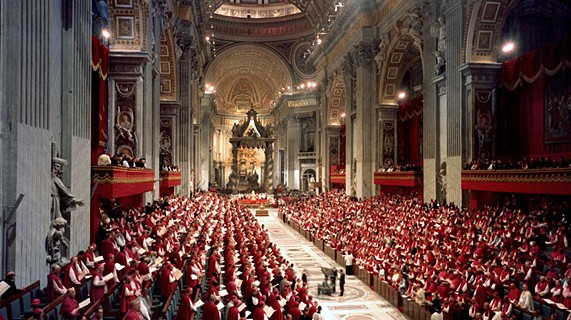


The sending of the Holy Spirit

Today’s Second Reading from the
Office of Readings (Liturgy of the Hours)
Pentecost

An excerpt from:
Against Heresies (Book 3)
Saint Irenaeus of Lyons
(bishop, Father of the Church and martyr)

When the Lord told his disciples to go and teach all nations and baptize them in the name of the Father and of the Son and of the Holy Spirit, he conferred on them the power of giving men new life in God.

He had promised through the prophets that in these last days he would pour out his Spirit on his servants and handmaids, and that they would prophesy. So when the Son of God became the Son of Man, the Spirit also descended upon him, becoming accustomed in this way to dwelling with the human race, to living in men and to inhabiting God’s creation. The Spirit accomplished the Father’s will in men who had grown old in sin, and gave them new life in Christ. Luke says that the Spirit came down on the disciples at Pentecost, after the Lord’s ascension, with power to open the gates of life to all nations and to make known to them the new covenant. So it was that men of every language joined in singing one song of praise to God, and scattered tribes, restored to unity by the Spirit, were offered to the Father as the first-fruits of all the nations.

This was why the Lord had promised to send the Advocate: he was to prepare us as an offering to God. Like dry flour, which cannot become one lump of dough, one loaf of bread, without moisture, we who are many could not become one in Christ Jesus without the water that comes down from heaven. And like parched ground, which yields no harvest unless it receives moisture, we who were once like a waterless tree could never have lived and borne fruit without this abundant rainfall from above. Through the baptism that liberates us from change and decay we have become one in body; through the Spirit we have become one in soul.

The Spirit of wisdom and understanding, the Spirit of counsel and strength, the Spirit of knowledge and the fear of God came down upon the Lord, and the Lord in turn gave this Spirit to his Church, sending the Advocate from heaven into all the world into which, according to his own words, the devil too had been cast down like lightning.

If we are not to be scorched and made unfruitful, we need the dew of God. Since we have our accuser, we need an advocate as well. And so the Lord in his pity for man, who had fallen into the hands of brigands, having himself bound up his wounds and left for his care two coins bearing the royal image, entrusted him to the Holy Spirit. Now, through the Spirit, the image and inscription of the Father and the Son have been given to us, and it is our duty to use the coin committed to our charge and make it yield a rich profit for the Lord.

Glory to the Father
and to the Son
and to the Holy Spirit:
as it was in the beginning,
is now, and will be forever. Amen


Easter: Saturday of the Seventh Week

“... and with complete assurance and without hindrance he proclaimed the kingdom of God and taught about the Lord Jesus Christ.” (Acts of the Apostles 28:31)

In commenting on this verse from today’s First Reading, Eusebius of Caesarea writes:

“And Luke, who wrote the Acts of the Apostles, brought his history to a close at this point, after stating that Paul spent two whole years at Rome as a prisoner at large and preached the word of God without restraint. Thus after he had made his defense it is said that the apostle was sent again upon the ministry of preaching and that upon coming to the same city a second time he suffered martyrdom. In this imprisonment [Paul] wrote his Second Epistle to Timothy, in which he mentions his first defense and his impending death. But hear his testimony on these matters.

“At my first answer,” he says, “no one stood with me, but all forsook me: I pray God that it may not be laid to their charge. Notwithstanding the Lord stood with me and strengthened me, that by me the preaching might be fully known and that all the Gentiles might hear; and I was delivered out of the mouth of the lion.” He plainly indicates in these words that on the former occasion, in order that the preaching might be fulfilled by him, he was rescued from the mouth of the lion, referring, in this expression, to Nero, as is probable on account of the latter’s cruelty. He did not therefore afterward add the similar statement, “He will rescue me from the mouth of the lion”; for he saw in the Spirit that his end would not be long delayed. Wherefore he adds to the words “and he delivered me from the mouth of the lion” this sentence, “The Lord shall deliver me from every evil work and will preserve me to his heavenly kingdom,” indicating his speedy martyrdom; which he also foretells still more clearly in the same epistle, when he writes, “For I am now ready to be offered, and the time of my departure is at hand.”

In his Second Epistle to Timothy, moreover, he indicates that Luke was with him when he wrote that at his first defense not even Luke was there. So it is probable that Luke wrote the Acts of the Apostles at that time, continuing his history down to the period when he was with Paul. But these things have been adduced by us to show that Paul’s martyrdom did not take place at the time of that Roman sojourn that Luke records. It is probable indeed that as Nero was more disposed to mildness in the beginning, Paul’s defense of his doctrine was more easily received; but that when he [Nero] had advanced to the commission of lawless deeds of daring, he made the apostles as well as others the subjects of his attacks.” (Ecclesiastical History, 2)


Collect
Grant, we pray, almighty God,
that we, who have celebrated
the paschal festivities,
may by your gift hold fast to them
in the way that we live our lives.
Through our Lord Jesus Christ, your Son,
Who lives and reigns with You
in the unity of the Holy Spirit,
one God, for ever and ever. Amen.


The Lord is risen. Alleluia!
He is risen, indeed. Alleluia!


Glory to the Father
and to the Son
and to the Holy Spirit:
as it was in the beginning,
is now, and will be forever. Amen


Easter: Friday of the Seventh Week

“Since they spent several days there, Festus referred Paul’s case to the king, saying, “There is a man here left in custody by Felix.”” (Acts of the Apostles 25:14)

In commenting on these verses from today’s First Reading, Saint John Chrysostom writes:

“See [Paul’s] enemies who unwittingly conspired in creating a large audience. Even Agrippa himself falls into a desire for a hearing — and not only does he listen, but he does so with intensity. And then, look at [his] defense. As Festus presents it, he exposes the cruelty of the Jewish leaders. Because when the governor says these things, he is beyond suspicion, resulting in the Jewish leaders being convicted by him. For, after he has exposed the truth about all these things, then God metes out punishment. Felix condemns them, Festus condemns them and, even though he was favorably inclined, Agrippa condemns them too.” (Homilies on the Acts of the Apostles, 51)


Collect
O God, who by the glorification of your Christ
and the light of the Holy Spirit
have unlocked for us the gates of eternity,
grant, we pray,
that, partaking of so great a gift,
our devotion may grow deeper
and our faith be strengthened.
Through our Lord Jesus Christ, your Son,
Who lives and reigns with You
in the unity of the Holy Spirit,
one God, for ever and ever. Amen.


The Lord is risen. Alleluia!
He is risen, indeed. Alleluia!


Glory to the Father
and to the Son
and to the Holy Spirit:
as it was in the beginning,
is now, and will be forever. Amen


The Father’s gift in Christ

Today’s Second Reading from the
Office of Readings (Liturgy of the Hours)
Easter: Friday the Seventh Week

An excerpt from:
On the Trinity
Saint Hilary of Poitiers
(bishop and Father of the Church)

Our Lord commanded us to baptize in the name of the Father and of the Son and of the Holy Spirit. In baptism, then, we profess faith in the Creator, in the only-begotten Son and in the gift which is the Spirit. There is one Creator of all things, for in God there is one Father from whom all things have their being. And there is one only-begotten Son, our Lord Jesus Christ, through whom all things exist. And there is one Spirit, the gift who is in all. So all follow their due order, according to the proper operation of each: one power, which brings all things into being, one Son, through whom all things come to be, and one gift of perfect hope. Nothing is wanting to this flawless union: in Father, Son and Holy Spirit, there is infinity of endless being, perfect reflection of the divine image, and mutual enjoyment of the gift.

Our Lord has described the purpose of the Spirit’s presence in us. Let us listen to his words: I have yet many things to say to you, but you cannot bear them now. It is to your advantage that I go away; if I go, I will send you the Advocate. And also: I will ask the Father and he will give you another Counselor to be with you for ever, the Spirit of truth. He will guide you into all the truth; for he will not speak on his own authority, but whatever he hears he will speak, and he will declare to you the things that are to come. He will glorify me, for he will take what is mine.

From among many of our Lord’s sayings, these have been chosen to guide our understanding, for they reveal to us the intention of the giver, the nature of the gift and the condition for its reception. Since our weak minds cannot comprehend the Father or the Son, we have been given the Holy Spirit as our intermediary and advocate, to shed light on that hard doctrine of our faith, the incarnation of God.

We receive the Spirit of truth so that we can know the things of God. In order to grasp this, consider how useless the faculties of the human body would become if they were denied their exercise. Our eyes cannot fulfill their task without light, either natural or artificial; our ears cannot react without sound vibrations, and in the absence of any odor our nostrils are ignorant of their function. Not that these senses would lose their own nature if they were not used; rather, they demand objects of experience in order to function. It is the same with the human soul. Unless it absorbs the gift of the Spirit through faith, the mind has the ability to know God but lacks the light necessary for that knowledge.

This unique gift which is in Christ is offered in its fullness to everyone. It is everywhere available, but it is given to each man in proportion to his readiness to receive it. Its presence is the fuller, the greater a man’s desire to be worthy of it. This gift will remain with us until the end of the world, and will be our comfort in the time of waiting. By the favors it bestows, it is the pledge of our hope for the future, the light of our minds, and the splendor that irradiates our understanding.

Glory to the Father
and to the Son
and to the Holy Spirit:
as it was in the beginning,
is now, and will be forever. Amen


Easter: Thursday of the Seventh Week

“The following night the Lord stood by him and said, “Take courage. For just as you have borne witness to my cause in Jerusalem, so you must also bear witness in Rome.” (Acts of the Apostles 23:11)

In commenting on these verses from today’s First Reading, Saint John Chrysostom writes:

“Notice how great is the consolation! First he praises him, “as you have testified about me at Jerusalem”; then, he does not leave him fearful of the uncertainty of his journey to Rome. For not only will you arrive there, he says, but you will also make use of this boldness of speech. From this it is revealed that not only will he be saved but that he will be saved in the great city, honored with great crowns. Why didn’t [Jesus] appear to him before he fell into danger? Because, as always, it is in afflictions that God consoles. For then he appears more desirable, as he trains us even in the midst of dangers.” (Homilies on the Acts of the Apostles, 49)


Collect
May your Spirit, O Lord, we pray,
imbue us powerfully with spiritual gifts,
that he may give us a mind pleasing to you
and graciously conform us to your will.
Through our Lord Jesus Christ, your Son,
Who lives and reigns with You
in the unity of the Holy Spirit,
one God, for ever and ever. Amen.


The Lord is risen. Alleluia!
He is risen, indeed. Alleluia!


Glory to the Father
and to the Son
and to the Holy Spirit:
as it was in the beginning,
is now, and will be forever. Amen


If I do not go away,
the Comforter will not come to you

Today’s Second Reading from the
Office of Readings (Liturgy of the Hours)
Easter: Thursday of the Seventh Week

An excerpt from:
Commentary on the Gospel of John (Book 10)
Saint Cyril of Alexandria
(bishop and Father of the Church)

After Christ had completed his mission on earth, it still remained necessary for us to become sharers in the divine nature of the Word. We had to give up our own life and be so transformed that we would begin to live an entirely new kind of life that would be pleasing to God. This was something we could do only by sharing in the Holy Spirit.

It was most fitting that the sending of the Spirit and his descent upon us should take place after the departure of Christ our Savior. As long as Christ was with them in the flesh, it must have seemed to believers that they possessed every blessing in him; but when the time came for him to ascend to his heavenly Father, it was necessary for him to be united through his Spirit to those who worshiped him, and to dwell in our hearts through faith. Only by his own presence within us in this way could he give us confidence to cry out, Abba, Father, make it easy for us to grow in holiness and, through our possession of the all-powerful Spirit, fortify us invincibly against the wiles of the devil and the assaults of men.

It can easily be shown from examples both in the Old Testament and the New that the Spirit changes those in whom he comes to dwell; he so transforms them that they begin to live a completely new kind of life. Saul was told by the prophet Samuel: The Spirit of the Lord will take possession of you, and you shall be changed into another man. Saint Paul writes: As we behold the glory of the Lord with unveiled faces, that glory, which comes from the Lord who is the Spirit, transforms us all into his own likeness, from one degree of glory to another.

Does this not show that the Spirit changes those in whom he comes to dwell and alters the whole pattern of their lives? With the Spirit within them it is quite natural for people who had been absorbed by the things of this world to become entirely other-worldly in outlook, and for cowards to become men of great courage. There can be no doubt that this is what happened to the disciples. The strength they received from the Spirit enabled them to hold firmly to the love of Christ, facing the violence of their persecutors unafraid. Very true, then, was our Savior’s saying that it was to their advantage for him to return to heaven: his return was the time appointed for the descent of the Holy Spirit.

Glory to the Father
and to the Son
and to the Holy Spirit:
as it was in the beginning,
is now, and will be forever. Amen


Easter: Wednesday of the Seventh Week

“Keep watch over yourselves and over the whole flock of which the holy Spirit has appointed you overseers, in which you tend the church of God that he acquired with his own blood.” (Acts of the Apostles 20:28)

In commenting on these verses from today’s First Reading, Saint John Chrysostom writes:

“Take heed to yourselves and to all the flock, in which the Holy Spirit has made you overseers, to care for the church of God that he obtained with his own blood.” Do you see how [Paul] gives two orders here? Success with others alone does not bring any benefit — for I fear, he says, “lest after preaching to others I myself should be disqualified.” Equally, caring only for oneself brings no benefit. For such a one is selfish and seeks only his own good, like the man who has buried his gold. He says this not because our own salvation is more precious than that of the flock but because when we attend to ourselves, the flock also benefits” (Homilies on the Acts of the Apostles, 44)


Collect
Graciously grant to your Church, O merciful God,
that, gathered by the Holy Spirit,
she may be devoted to you with all her heart
and united in purity of intent.
Through our Lord Jesus Christ, your Son,
Who lives and reigns with You
in the unity of the Holy Spirit,
one God, for ever and ever. Amen.


The Lord is risen. Alleluia!
He is risen, indeed. Alleluia!


Glory to the Father
and to the Son
and to the Holy Spirit:
as it was in the beginning,
is now, and will be forever. Amen


The Mission of the Holy Spirit in the Church

Today’s Second Reading from the
Office of Readings (Liturgy of the Hours)
Easter: Wednesday of the Seventh Week

An excerpt from:
Dogmatic Constitution on the Church
(Lumen Gentium)

When the Son completed the work with which the Father had entrusted him on earth, the Holy Spirit was sent on the day of Pentecost to sanctify the Church unceasingly, and thus enable believers to have access to the Father through Christ in the one Spirit. He is the Spirit of life, the fountain of water welling up to give eternal life. Through him the Father gives life to men, dead because of sin, until he raises up their mortal bodies in Christ.

The Spirit dwells in the Church and in the hearts of the faithful as in a temple. He prays in them and bears witness in them to their adoption as sons. He leads the Church into all truth and gives it unity in communion and in service. He endows it with different hierarchical and charismatic gifts, directs it by their means, and enriches it with his fruits.

By the power of the Gospel he enables the Church to grow young, perpetually renews it, and leads it to complete union with its Bridegroom. For the Spirit and the Bride say to the Lord Jesus: “Come!” In this way the Church reveals itself as a people whose unity has its source in the unity of Father, Son and Holy Spirit.

The whole company of the faithful, who have an anointing by the Holy Spirit, cannot err in faith. They manifest this distinctive characteristic of theirs in the supernatural instinct of faith (sensus fidei) of the whole people when, from the bishops to the most ordinary lay person among the faithful, they display a universal agreement on matters of faith and morals.

This instinct of faith is awakened and kept in being by the Spirit of truth. Through it the people of God hold indefectibly to the faith once delivered to the saints, penetrate it more deeply by means of right judgment, and apply it more perfectly in their lives. They do all this under the guidance of the sacred teaching office: by faithful obedience to it they receive, not the word of men but in truth the word of God.

Moreover, the Holy Spirit not only sanctifies and guides God’s people by the sacraments and the ministries, and enriches it with virtues, he also distributes special graces among the faithful of every state of life, assigning his gifts to each as he chooses. By means of these special gifts he equips them and makes them eager for various activities and responsibilities that benefit the Church in its renewal or its increase, in accordance with the text: To each is given the manifestation of the Spirit for a good purpose.

These charisms, the simpler and more widespread as well as the most outstanding, should be accepted with a sense of gratitude and consolation, since in a very special way they answer and serve the needs of the Church.

Glory to the Father
and to the Son
and to the Holy Spirit:
as it was in the beginning,
is now, and will be forever. Amen


Easter: Tuesday of the Seventh Week

“When they came to him, he addressed them, “You know how I lived among you the whole time from the day I first came to the province of Asia.” (Acts of the Apostles 20:18)

In commenting on these verses from today’s First Reading, Saint John Chrysostom writes:

“Look, although [Paul] was in a hurry to sail past, he did not overlook them but planned everything. He sent for the leaders and broadcast his words through them. It is worthy of admiration how finding himself under compulsion to say something great about himself, he tries to make the least of it. For just as Samuel, about to hand over the rule to Saul, said in their presence, “Have I taken anything from you? You are witnesses and God also.” Likewise Paul himself says to the Corinthians, “I have been a fool! You forced me.” Even God does this: he speaks of himself not for no reason but when he is disbelieved, and then he offers his benefits. Observe, then, what Paul does here. First he brings up their testimony, so that you should not think he is boasting, and calls the listeners themselves to be witnesses of his words, since he was not likely to lie in their presence.” (Homilies on the Acts of the Apostles, 44)


Collect
Grant, we pray, almighty and merciful God,
that the Holy Spirit, coming near
and dwelling graciously within us,
may make of us a perfect temple of his glory.
Through our Lord Jesus Christ, your Son,
Who lives and reigns with You
in the unity of the Holy Spirit,
one God, for ever and ever. Amen.


The Lord is risen. Alleluia!
He is risen, indeed. Alleluia!


Glory to the Father
and to the Son
and to the Holy Spirit:
as it was in the beginning,
is now, and will be forever. Amen


The work of the Holy Spirit

Today’s Second Reading from the
Office of Readings (Liturgy of the Hours)
Easter: Tuesday the Seventh Week

An excerpt from:
On the Holy Spirit (chapter 9)
Saint Basil the Great
(bishop and Father of the Church)

The titles given to the Holy Spirit must surely stir the soul of anyone who hears them, and make him realize that they speak of nothing less than the supreme Being. Is he not called the Spirit of God, the Spirit of truth who proceeds from the Father, the steadfast Spirit, the guiding Spirit? But his principal and most personal title is the Holy Spirit. To the Spirit all creatures turn in their need for sanctification; all living things seek him according to their ability. His breath empowers each to achieve its own natural end.

The Spirit is the source of holiness, a spiritual light, and he offers his own light to every mind to help it in its search for truth. By nature the Spirit is beyond the reach of our mind, but we can know him by his goodness. The power of the Spirit fills the whole universe, but he gives himself only to those who are worthy, acting in each according to the measure of his faith.

Simple in himself, the Spirit is manifold in his mighty works. The whole of his being is present to each individual; the whole of his being is present everywhere. Though shared in by many, he remains unchanged; his self giving is no loss to himself. Like the sunshine, which permeates all the atmosphere, spreading over land and sea, and yet is enjoyed by each person as though it were for him alone, so the Spirit pours forth his grace in full measure, sufficient for all, and yet is present as though exclusively to everyone who can receive him. To all creatures that share in him he gives a delight limited only by their own nature, not by his ability to give.

The Spirit raises our hearts to heaven, guides the steps of the weak, and brings to perfection those who are making progress. He enlightens those who have been cleansed from every stain of sin and makes them spiritual by communion with himself. As clear, transparent substances become very bright when sunlight falls on them and shine with a new radiance, so also souls in whom the Spirit dwells, and who are enlightened by the Spirit, become spiritual themselves and a source of grace for others. From the Spirit comes foreknowledge of the future, understanding of the mysteries of faith, insight into the hidden meaning of Scripture, and other special gifts. Through the Spirit we become citizens of heaven, we enter into eternal happiness, and abide in God. Through the Spirit we acquire a likeness to God; indeed, we attain what is beyond our most sublime aspirations—we become God.

Glory to the Father
and to the Son
and to the Holy Spirit:
as it was in the beginning,
is now, and will be forever. Amen