The Eucharist is The Lord’s Passover

Today’s Second Reading from the
Office of Readings (Liturgy of the Hours)
Easter: Thursday of the Second Week

An excerpt from: Tractate 2
Saint Gaudentius of Brescia
(bishop)

One man has died for all, and now in every church in the mystery of bread and wine he heals those for whom he is offered in sacrifice, giving life to those who believe and holiness to those who consecrate the offering. This is the flesh of the Lamb; this is his blood. The bread that came down from heaven declared: The bread that I will give is my flesh for the life of the world. It is significant, too, that his blood should be given to us in the form of wine, for his own words in the gospel, I am the true vine, imply clearly enough that whenever wine is offered as a representation of Christ’s passion, it is offered as his blood. This means that it was of Christ that the blessed patriarch Jacob prophesied when he said: He will wash his tunic in wine and his cloak in the blood of the grape. The tunic was our flesh, which Christ was to put on like a garment and which he was to wash in his own blood.

Creator and Lord of all things, whatever their nature, he brought forth bread from the earth and changed it into his own body. Not only had he the power to do this, but he had promised it; and, as he had changed water into wine, he also changed wine into his own blood. It is the Lord’s passover, Scripture tells us, that is, the Lord’s passing. We are no longer to look upon the bread and wine as earthly substances. They have become heavenly, because Christ has passed into them and changed them into his body and blood. What you receive is the body of him who is the heavenly bread, and the blood of him who is the sacred vine; for when he offered his disciples the consecrated bread and wine, he said: This is my body, this is my blood. We have put our trust in him. I urge you to have faith in him; truth can never deceive.

When Christ told the crowds that they must eat his flesh and drink his blood, they were horrified and began to murmur among themselves: This teaching is too hard; who can be expected to listen to it? As I have already told you, thoughts such as these must be banished. The Lord himself used heavenly fire to drive them away by going on to declare: It is the spirit that gives life; the flesh is of no avail. The words that I have spoken to you are spirit and life.

Glory to the Father
and to the Son
and to the Holy Spirit:
as it was in the beginning,
is now, and will be forever. Amen


Easter: Wednesday of the Fifth Week

“Some who had come down from Judea were instructing the brothers, “Unless you are circumcised according to the Mosaic practice, you cannot be saved.”” (Acts of the Apostles 15:1)

Origen of Alexandria (part 2 of Pope Benedict’s reflections on Origen) comments on this verse from the First Reading proclaimed at Mass today:

“Observe what he alleges as a proof of his statement: “Christians at first were few in number and held the same opinions, but when they grew to be a great multitude, they were divided and separated, each wishing to have his own individual party. This was their object from the beginning.” That Christians at first were few in number, in comparison with the multitudes who subsequently became Christian, is no doubt true. He also says that “all the Christians were of one mind,” not noticing, even in this particular, that from the beginning there were differences of opinion among believers regarding the meaning of the books held to be divine. At all events, while the apostles were still preaching and eyewitnesses of Jesus were still teaching his doctrine, there was no small discussion among the converts from Judaism regarding Gentile believers and whether they ought to observe Jewish customs or reject the burden of clean and unclean meats as not being obligatory on those who had abandoned their ancestral Gentile customs and had become believers in Jesus.” (Against Celsus, 3)


Collect
O God,
restorer and lover of innocence,
direct the hearts of your servants
towards Yourself,
that those you have set free
from the darkness of unbelief
may never stray from the light of Your truth.
Through our Lord Jesus Christ, Your Son,
Who lives and reigns with You
in the unity of the Holy Spirit,
one God, for ever and ever. Amen.


The Lord is risen. Alleluia!
He is risen, indeed. Alleluia!


Glory to the Father
and to the Son
and to the Holy Spirit:
as it was in the beginning,
is now, and will be forever. Amen


The Christian in the world

Today’s Second Reading from the
Office of Readings (Liturgy of the Hours)
Easter: Wednesday of the Fifth Week

An excerpt from:
A Letter to Diognetus


Christians are indistinguishable from other men either by nationality, language or customs. They do not inhabit separate cities of their own, or speak a strange dialect, or follow some outlandish way of life. Their teaching is not based upon reveries inspired by the curiosity of men. Unlike some other people, they champion no purely human doctrine. With regard to dress, food and manner of life in general, they follow the customs of whatever city they happen to be living in, whether it is Greek or foreign.

And yet there is something extraordinary about their lives. They live in their own countries as though they were only passing through. They play their full role as citizens, but labor under all the disabilities of aliens. Any country can be their homeland, but for them their homeland, wherever it may be, is a foreign country. Like others, they marry and have children, but they do not expose them. They share their meals, but not their wives. They live in the flesh, but they are not governed by the desires of the flesh. They pass their days upon earth, but they are citizens of heaven. Obedient to the laws, they yet live on a level that transcends the law.

Christians love all men, but all men persecute them. Condemned because they are not understood, they are put to death, but raised to life again. They live in poverty, but enrich many; they are totally destitute, but possess an abundance of everything. They suffer dishonor, but that is their glory. They are defamed, but vindicated. A blessing is their answer to abuse, deference their response to insult. For the good they do they receive the punishment of malefactors, but even then they rejoice, as though receiving the gift of life. They are attacked by the Jews as aliens, they are persecuted by the Greeks, yet no one can explain the reason for this hatred.

To speak in general terms, we may say that the Christian is to the world what the soul is to the body. As the soul is present in every part of the body, while remaining distinct from it, so Christians are found in all the cities of the world, but cannot be identified with the world. As the visible body contains the invisible soul, so Christians are seen living in the world, but their religious life remains unseen. The body hates the soul and wars against it, not because of any injury the soul has done it, but because of the restriction the soul places on its pleasures. Similarly, the world hates the Christians, not because they have done it any wrong, but because they are opposed to its enjoyments.

Christians love those who hate them just as the soul loves the body and all its members despite the body’s hatred. It is by the soul, enclosed within the body, that the body is held together, and similarly, it is by the Christians, detained in the world as in a prison, that the world is held together. The soul, though immortal, has a mortal dwelling place; and Christians also live for a time amidst perishable things, while awaiting the freedom from change and decay that will be theirs in heaven. As the soul benefits from the deprivation of food and drink, so Christians flourish under persecution. Such is the Christian’s lofty and divinely appointed function, from which he is not permitted to excuse himself.

Glory to the Father
and to the Son
and to the Holy Spirit:
as it was in the beginning,
is now, and will be forever. Amen


Easter: Tuesday of the Fifth Week

“But when the disciples gathered around him, he got up and entered the city. On the following day he left with Barnabas for Derbe.” (Acts of the Apostles 14:20)

In commenting on this verse from today’s First Reading, Saint John Chrysostom writes:

“But when the disciples gathered about him, he rose up and entered the city.” Here the saying is fulfilled, “My grace is sufficient for you, for my strength is made perfect in weak ness.” This is greater than the raising of the lame man! “He entered the city.” Do you see his zeal? Do you see how fervent he is, how set on fire? He entered the city itself again, to show that if he should ever withdraw, it is because he had sown the word and did not wish to inflame their anger. ” (Homilies on the Acts of the Apostles, 31)


Collect
O God, who restore us to eternal life
in the Resurrection of Christ,
grant your people constancy in faith and hope,
that we may never doubt the promises
of which we have learned from you.
Through our Lord Jesus Christ, your Son,
Who lives and reigns with You
in the unity of the Holy Spirit,
one God, for ever and ever. Amen.


The Lord is risen. Alleluia!
He is risen, indeed. Alleluia!


Glory to the Father
and to the Son
and to the Holy Spirit:
as it was in the beginning,
is now, and will be forever. Amen


I am the vine, you are the branches

Today’s Second Reading from the
Office of Readings (Liturgy of the Hours)
Easter: Tuesday of the Fifth Week

An excerpt from:
Commentary on the Gospel of John
Saint Cyril of Alexandria
(bishop and Father of the Church)

The Lord calls himself the vine and those united to him branches in order to teach us how much we shall benefit from our union with him, and how important it is for us to remain in his love. By receiving the Holy Spirit, who is the bond of union between us and Christ our Savior, those who are joined to him, as branches are to a vine, share in his own nature.

On the part of those who come to the vine, their union with him depends upon a deliberate act of the will; on his part, the union is effected by grace. Because we had good will, we made the act of faith that brought us to Christ, and received from him the dignity of adoptive sonship that made us his own kinsmen, according to the words of Saint Paul: He who is joined to the Lord is one spirit with him.

The prophet Isaiah calls Christ the foundation, because it is upon him that we as living and spiritual stones are built into a holy priesthood to be a dwelling place for God in the Spirit. Upon no other foundation than Christ can this temple be built. Here Christ is teaching the same truth by calling himself the vine, since the vine is the parent of its branches, and provides their nourishment.

From Christ and in Christ, we have been reborn through the Spirit in order to bear the fruit of life; not the fruit of our old, sinful life but the fruit of a new life founded upon our faith in him and our love for him. Like branches growing from a vine, we now draw our life from Christ, and we cling to his holy commandment in order to preserve this life. Eager to safeguard the blessing of our noble birth, we are careful not to grieve the Holy Spirit who dwells in us, and who makes us aware of God’s presence in us.

Let the wisdom of John teach us how we live in Christ and Christ lives in us: The proof that we are living in him and he is living in us is that he has given us a share in his Spirit. Just as the trunk of the vine gives its own natural properties to each of its branches, so, by bestowing on them the Holy Spirit, the Word of God, the only-begotten Son of the Father, gives Christians a certain kinship with himself and with God the Father because they have been united to him by faith and determination to do his will in all things. He helps them to grow in love and reverence for God, and teaches them to discern right from wrong and to act with integrity.

Glory to the Father
and to the Son
and to the Holy Spirit:
as it was in the beginning,
is now, and will be forever. Amen


Easter: Monday of the Fifth Week

“He listened to Paul speaking, who looked intently at him, saw that he had the faith to be healed...” (Acts of the Apostles 14:9)

In commenting on this verse from today’s First Reading, Saint John Chrysostom writes:

“Look, he paid attention, it says, to Paul’s words. Do you see the elevation of his mind? In no way did his lameness hinder his eagerness to listen. “Paul, looking intently at him and seeing,” it says, “that he had faith to be made well.” He was already predisposed in his purpose and resolution. And yet in the case of the others it was the opposite. Their bodies were healed before their souls. Not so with this man. It seems to me that Paul saw into his soul.” (Homilies on the Acts of the Apostles, 30)


Collect
May your right hand, O Lord, we pray,
encompass your family with perpetual help,
so that, defended from all wickedness
by the Resurrection of your Only Begotten Son,
we may make our way
by means of your heavenly gifts.
Through our Lord Jesus Christ, your Son,
Who lives and reigns with You
in the unity of the Holy Spirit,
one God, for ever and ever. Amen.


The Lord is risen. Alleluia!
He is risen, indeed. Alleluia!


Glory to the Father
and to the Son
and to the Holy Spirit:
as it was in the beginning,
is now, and will be forever. Amen


The Firstborn of the New Creation

Today’s Second Reading from the
Office of Readings (Liturgy of the Hours)
Easter: Monday of the Fifth Week

An excerpt from:
Oration 1 on Christ’s Resurrection
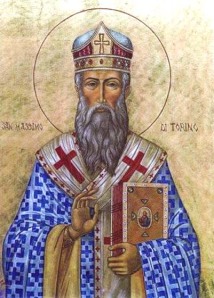
Saint Gregory of Nyssa
(bishop and Father of the Church)

The reign of life has begun, the tyranny of death is ended. A new birth has taken place, a new life has come, a new order of existence has appeared, our very nature has been transformed! This birth is not brought about by human generation, by the will of man, or by the desire of the flesh, but by God.

If you wonder how, I will explain in clear language. Faith is the womb that conceives this new life, baptism the rebirth by which it is brought forth into the light of day. The Church is its nurse; her teachings are its milk, the bread from heaven is its food. It is brought to maturity by the practice of virtue; it is wedded to wisdom; it gives birth to hope. Its home is the kingdom; its rich inheritance the joys of paradise; its end, not death, but the blessed and everlasting life prepared for those who are worthy.

This is the day the Lord has made—a day far different from those made when the world was first created and which are measured by the passage of time. This is the beginning of a new creation. On this day, as the prophet says, God makes a new heaven and a new earth. What is this new heaven? you may ask. It is the firmament of our faith in Christ. What is the new earth? A good heart, a heart like the earth, which drinks up the rain that falls on it and yields a rich harvest.

In this new creation, purity of life is the sun, the virtues are the stars, transparent goodness is the air, and the depths of the riches of wisdom and knowledge, the sea. Sound doctrine, the divine teachings are the grass and plants that feed God’s flock, the people whom he shepherds; the keeping of the commandments is the fruit borne by the trees.

On this day is created the true man, the man made in the image and likeness of God. For this day the Lord has made is the beginning of this new world. Of this day the prophet says that it is not like other days, nor is this night like other nights. But still we have not spoken of the greatest gift it has brought us. This day destroyed the pangs of death and brought to birth the firstborn of the dead.

I ascend to my Father and to your Father, to my God and to your God. O what wonderful good news! He who for our sake became like us in order to make us his brothers, now presents to his true Father his own humanity in order to draw all his kindred up after him.

Glory to the Father
and to the Son
and to the Holy Spirit:
as it was in the beginning,
is now, and will be forever. Amen


Christ is the Day

Today’s Second Reading from the
Office of Readings (Liturgy of the Hours)
Easter: the Fifth Sunday

An excerpt from:
Sermon 53, 1-2
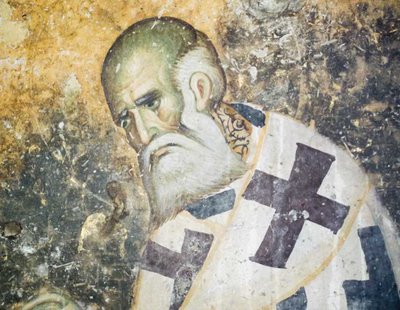
Saint Maximus of Turin
(Father of the Church)

Christ is risen! He has burst open the gates of hell and let the dead go free; he has renewed the earth through the members of his Church now born again in baptism, and has made it blossom afresh with men brought back to life. His Holy Spirit has unlocked the doors of heaven, which stand wide open to receive those who rise up from the earth. Because of Christ’s resurrection the thief ascends to paradise, the bodies of the blessed enter the holy city, and the dead are restored to the company of the living. There is an upward movement in the whole of creation, each element raising itself to something higher. We see hell restoring its victims to the upper regions, earth sending its buried dead to heaven, and heaven presenting the new arrivals to the Lord. In one and the same movement, our Savior’s passion raises men from the depths, lifts them up from the earth, and sets them in the heights.

Christ is risen. His rising brings life to the dead, forgiveness to sinners, and glory to the saints. And so David the prophet summons all creation to join in celebrating the Easter festival: Rejoice and be glad, he cries, on this day which the Lord has made.

The light of Christ is an endless day that knows no night. Christ is this day, says the Apostle; such is the meaning of his words: Night is almost over; day is at hand. He tells us that night is almost over, not that it is about to fall. By this we are meant to understand that the coming of Christ’s light puts Satan’s darkness to flight, leaving no place for any shadow of sin. His everlasting radiance dispels the dark clouds of the past and checks the hidden growth of vice. The Son is that day to whom the day, which is the Father, communicates the mystery of his divinity. He is the day who says through the mouth of Solomon: I have caused an unfailing light to rise in heaven. And as in heaven no night can follow day, so no sin can overshadow the justice of Christ. The celestial day is perpetually bright and shining with brilliant light; clouds can never darken its skies. In the same way, the light of Christ is eternally glowing with luminous radiance and can never be extinguished by the darkness of sin. This is why John the evangelist says: The light shines in the darkness, and the darkness has never been able to overpower it.

And so, my brothers, each of us ought surely to rejoice on this holy day. Let no one, conscious of his sinfulness, withdraw from our common celebration, nor let anyone be kept away from our public prayer by the burden of his guilt. Sinner he may indeed be, but he must not despair of pardon on this day which is so highly privileged; for if a thief could receive the grace of paradise, how could a Christian be refused forgiveness?

Glory to the Father
and to the Son
and to the Holy Spirit:
as it was in the beginning,
is now, and will be forever. Amen


Easter: Saturday of the Fourth Week
— Saint Athanasius of Alexandria —

“For so the Lord has commanded us, ‘I have made you a light to the Gentiles, that you may be an instrument of salvation to the ends of the earth.” (Acts of the Apostles 13:47)

In commenting on this verse from today’s First Reading, Saint John Chrysostom writes:

“It was necessary,” he says, “that the word should be spoken first to you. Since you thrust it from you.” Not an affront, but the same thing they had also done in the case of the prophets, “Speak not to us,” said they, “with talk.” “Since you thrust it from you,” he says, not “us.” For the affront from you was not against us. To prevent anyone from thinking “you judge yourselves unworthy” was an expression of their piety, [Paul] says first, “you thrust it from you,” and then “we turn to the Gentiles.” Full of great gentleness are these words. He did not say, “we abandon you,” but so that it is possible, he says, that we may turn to here again. And this was not the result of your affront, “for so the Lord has commanded us.” Then why have you not done this? There was indeed need that the Gentiles should hear. But the “before you” came about not from us but from you. “For so the Lord has commanded us. ‘I have set you to be a light for the Gentiles, that you may bring salvation.’” That is, to be the knowledge to salvation. And not only for the Gentiles but for all who were ordained to eternal life. This is also a proof that it was in accordance with the mind of God that they received the Gentiles.” (Homilies on the Acts of the Apostles, 30)


Collect
Almighty ever-living God,
who raised up the Bishop Saint Athanasius
as an outstanding champion of your Son’s divinity,
mercifully grant,
that, rejoicing in his teaching and his protection,
we may never cease to grow in knowledge and love of you.
Through our Lord Jesus Christ, your Son,
Who lives and reigns with You
in the unity of the Holy Spirit,
one God, for ever and ever. Amen.


The Lord is risen. Alleluia!
He is risen, indeed. Alleluia!


Glory to the Father
and to the Son
and to the Holy Spirit:
as it was in the beginning,
is now, and will be forever. Amen


On the Incarnation of the Word

Today’s Second Reading from the
Office of Readings (Liturgy of the Hours)
Easter: Saturday of the Fourth Week

Memorial: Saint Athanasius of Alexandria
(bishop and Father of the Church)

An excerpt from:
On the Incarnation of the Word, 8-9


The Word of God, incorporeal, incorruptible and immaterial, entered our world. Yet it was not as if he had been remote from it up to that time. For there is no part of the world that was ever without his presence; together with his Father, he continually filled all things and places.

Out of his loving-kindness for us he came to us, and we see this in the way he revealed himself openly to us. Taking pity on mankind’s weakness, and moved by our corruption, he could not stand aside and see death have the mastery over us; he did not want creation to perish and his Father’s work in fashioning man to be in vain. He therefore took to himself a body, no different from our own, for he did not wish simply to be in a body or only to be seen.

If he had wanted simply to be seen, he could indeed have taken another, and nobler, body. Instead, he took our body in its reality.

Within the Virgin he built himself a temple, that is, a body; he made it his own instrument in which to dwell and to reveal himself. In this way he received from mankind a body like our own, and, since all were subject to the corruption of death, he delivered this body over to death for all, and with supreme love offered it to the Father. He did so to destroy the law of corruption passed against all men, since all died in him. The law, which had spent its force on the body of the Lord, could no longer have any power over his fellowmen. Moreover, this was the way in which the Word was to restore mankind to immortality, after it had fallen into corruption, and summon it back from death to life. He utterly destroyed the power death had against mankind — as fire consumes chaff — by means of the body he had taken and the grace of the resurrection.

This is the reason why the Word assumed a body that could die, so that this body, sharing in the Word who is above all, might satisfy death’s requirement in place of all. Because of the Word dwelling in that body, it would remain incorruptible, and all would be freed for ever from corruption by the grace of the resurrection.

In death the Word made a spotless sacrifice and oblation of the body he had taken. By dying for others, he immediately banished death for all mankind.

In this way the Word of God, who is above all, dedicated and offered his temple, the instrument that was his body, for us all, as he said, and so paid by his own death the debt that was owed. The immortal Son of God, united with all men by likeness of nature, thus fulfilled all justice in restoring mankind to immortality by the promise of the resurrection.

The corruption of death no longer holds any power over mankind, thanks to the Word, who has come to dwell among them through his one body.

Glory to the Father
and to the Son
and to the Holy Spirit:
as it was in the beginning,
is now, and will be forever. Amen


— Saint Joseph the Worker —
Easter: Friday of the Fourth Week

“God blessed the seventh day and made it holy, because on it he rested from all the work he had done in creation.” (Genesis 2:3)

Saint Ambrose of Milan offers the following insight on this verse from today’s First Reading:

He created heaven and earth at the time when the months began, from which time it is fitting that the world took its rise. Then there was the mild temperature of spring, a season suitable for all things. Consequently the year too has the stamp of a world coming to birth. In order to show that the creation of the world took place in the spring, Scripture says: “This month shall be to you the beginning of months, it is for you the first in the months of the year,” calling the first month the springtime. It was fitting that the beginning of the year be the beginning of generation.” (Hexaemeron, 1)


Collect
O God,
Who laid down for the human race the law of work,
graciously grant
that by the example of
Saint Joseph and under his patronage
we may complete the works you set us to do
and attain the rewards you promise.
Through our Lord Jesus Christ, your Son,
Who lives and reigns with You
in the unity of the Holy Spirit,
one God, for ever and ever. Amen.


The Lord is risen. Alleluia!
He is risen, indeed. Alleluia!


Glory to the Father
and to the Son
and to the Holy Spirit:
as it was in the beginning,
is now, and will be forever. Amen


The worldwide activity of man

Today’s Second Reading from the
Office of Readings (Liturgy of the Hours)
Easter: Friday of the Fourth Week

Memorial: Saint Joseph the Worker

An excerpt from:
Pastoral Constitution on the Church in the Modern World
(Gaudium et spes, 33-34)

By his labor and abilities man has always striven to improve the quality of his life. Today, particularly by means of science and technology, he has extended his mastery over almost the whole of nature, and still continues to extend it. Through the development of the many means of communication among nations, the human family is coming to see itself, and establish itself, as a single worldwide community. As a result, where formerly man looked especially to supernatural forces for blessings, he now secures many of these benefits for himself, thanks to his own efforts.

In the face of this vast enterprise now engaging the whole human race, men are asking themselves a series of questions. What is the meaning and value of all this activity? How should these benefits be used? Where are the efforts of individuals and communities finally leading us?

The Church is the guardian of the deposit of God’s word, from which are drawn the principles of the religious and moral order. Without always having a ready answer to every question, the Church desires to integrate the light of revelation with the skilled knowledge of mankind, so that it may shine on the path which humanity has lately entered.

Those who believe in God take it for granted that, taken by itself, man’s activity, both individual and collective—that great struggle in which men in the course of the ages have sought to improve the conditions of human living—is in keeping with God’s purpose.

Man, created in God’s image, has been commissioned to master the earth and all it contains, and so rule the world in justice and holiness. He is to acknowledge God as the creator of all, and to see himself and the whole universe in relation to God, in order that all things may be subject to man, and God’s name be an object of wonder and praise over all the earth.

This commission extends to even the most ordinary activities of everyday life. Where men and women, in the course of gaining a livelihood for themselves and their families, offer appropriate service to society, they can be confident that their personal efforts promote the work of the Creator, confer benefit on their fellowmen, and help to realize God’s plan in history.

So far from thinking that the achievements gained by man’s abilities and strength are in opposition to God’s power, or that man with his intelligence is in some sense a rival to his Creator, Christians are, on the contrary, convinced that the triumphs of the human race are a sign of God’s greatness and the effect of his wonderful providence.

The more the power of men increases, the wider is the scope of their responsibilities, as individuals and as communities.

It is clear, then, that the Christian message does not deflect men from the building up of the world, or encourage them to neglect the good of their fellowmen, but rather places on them a stricter obligation to work for these objectives.

Glory to the Father
and to the Son
and to the Holy Spirit:
as it was in the beginning,
is now, and will be forever. Amen


Easter: Thursday of the Fourth Week

“They continued on from Perga and reached Antioch in Pisidia. On the sabbath they entered [into] the synagogue and took their seats.” (Acts of the Apostles 13:14)

In commenting on this verse from today’s First Reading, Saint John Chrysostom writes:

“They sat down in the synagogue,” he says, “and on the sabbath day,” to prepare the way beforehand for the Word. And they did not speak first but when invited, seeing that they summoned them as strangers. Had they not waited, there would have been no discourse. Here for the first time we have Paul preaching. And notice his wisdom: where the word was already sown, he passes on; but where there was none, he makes a stay. It is as he himself writes, “Yes, so have I strived to preach the gospel, not where Christ was named.”1 Great courage was also embodied in this. Truly from the very outset a wonderful man! Crucified, drawn up in the line of battle, he knew how great was the grace he obtained, and he brought in an equal zeal.” (Homilies on the Acts of the Apostles, 28)


Collect
O God, Who restore human nature
to yet greater dignity than at its beginnings,
look upon the amazing mystery of your loving kindness,
and in those you have chosen to make new
through the wonder of rebirth
may you preserve the gifts
of your enduring grace and blessing.
Through our Lord Jesus Christ, your Son,
Who lives and reigns with You
in the unity of the Holy Spirit,
one God, for ever and ever. Amen.


The Lord is risen. Alleluia!
He is risen, indeed. Alleluia!


Glory to the Father
and to the Son
and to the Holy Spirit:
as it was in the beginning,
is now, and will be forever. Amen


The New Commandment

Today’s Second Reading from the
Office of Readings (Liturgy of the Hours)
Easter: Thursday the Fourth Week

An excerpt from:
Treatise on John (chapter 15)
Saint Augustine
(bishop and Father of the Church)

A new commandment I give you, that you love one another. This commandment that he is giving them is a new one, the Lord Jesus tells his disciples. Yet was it not contained in the Old Law, where it is written: You shall love your neighbor as yourself? Why does the Lord call it new when it is clearly so old? Or is the commandment new because it divests us of our former selves and clothes us with the new man? Love does indeed renew the man who hears, or rather obeys its command; but only that love which Jesus distinguished from a natural love by the qualification: As I have loved you.

This is the kind of love that renews us. When we love as he loved us we become new men, heirs of the new covenant and singers of the new song. My brothers, this was the love that even in bygone days renewed the holy men, the patriarchs and prophets of old. In later times it renewed the blessed apostles, and now it is the turn of the Gentiles. From the entire human race throughout the world this love gathers together into one body a new people, to be the bride of God’s only Son. She is the bride of whom it is asked in the Song of Songs: Who is this who comes clothed in white? White indeed are her garments, for she has been made new; and the source of her renewal is none other than this new commandment.

And so all her members make each other’s welfare their common care. When one member suffers, all the members suffer with him, and if one member is glorified all the rest rejoice. They hear and obey the Lord’s words: A new commandment I give you, that you love one another; not as men love one another for their own selfish ends, nor merely on account of their common humanity, but because they are all gods and sons of the Most High. They love one another as God loves them so that they may be brothers of his only Son. He will lead them to the goal that alone will satisfy them, where all their desires will be fulfilled. For when God is all in all, there will be nothing left to desire.

This love is the gift of the Lord who said: As I have loved you, you also must love one another. His object in loving us, then, was to enable us to love each other. By loving us himself, our mighty head has linked us all together as members of his own body, bound to one another by the tender bond of love.

Glory to the Father
and to the Son
and to the Holy Spirit:
as it was in the beginning,
is now, and will be forever. Amen


Easter: Wednesday of the Fourth Week
— Saint Catherine of Siena—

“Then, completing their fasting and prayer, they laid hands on them and sent them off.” (Acts of the Apostles 13:3)

In commenting on this verse from today’s First Reading, Saint John Chrysostom writes:

“While they were wor shiping the Lord and fasting, the Holy Spirit said, ‘Set apart for me Barnabas and Saul for the work to which I have called them.’ Then after fasting and praying they laid their hands on them and sent them off.” What does “worshiping” mean? It means preaching. “Set apart Barnabas and Saul.” What does “set apart for me” mean? It means for the work, for the apostleship. Remember who ordained him? Lucius the Cyrenean and Manaen, or rather, one should say, the Spirit. For the more lowly the personages involved, the more palpable the grace of God. Paul is ordained henceforth to apostleship, to preach with authority. How is it then that he himself says, “Not from men nor by men”? Because it was not humankind that called him or brought him over. This is what “or by men” means. For this reason he says that he was not sent by this man but by the Spirit. ” (Homilies on the Acts of the Apostles, 27)


Collect
O God,
Who set Saint Catherine of Siena
on fire with divine love
in her contemplation of the Lord’s Passion
and her service of Your Church,
grant, through her intercession,
that Your people,
participating in the mystery of Christ,
may ever exult in the revelation of His glory.
Who lives and reigns with You
in the unity of the Holy Spirit,
one God, for ever and ever. Amen.


The Lord is risen. Alleluia!
He is risen, indeed. Alleluia!


Glory to the Father
and to the Son
and to the Holy Spirit:
as it was in the beginning,
is now, and will be forever. Amen


I tasted and I saw

Today’s Second Reading from the
Office of Readings (Liturgy of the Hours)
Easter: Wednesday the Fourth Week

Memorial: Saint Catherine of Siena

An excerpt from:
Dialogue on Divine Providence (chapter 15)
Saint Catherine of Siena
(doctor of the Church)

Eternal God, eternal Trinity, you have made the blood of Christ so precious through his sharing in your divine nature. You are a mystery as deep as the sea; the more I search, the more I find, and the more I find the more I search for you. But I can never be satisfied; what I receive will ever leave me desiring more. When you fill my soul I have an even greater hunger, and I grow more famished for your light. I desire above all to see you, the true light, as you really are.

I have tasted and seen the depth of your mystery and the beauty of your creation with the light of my understanding. I have clothed myself with your likeness and have seen what I shall be. Eternal Father, you have given me a share in your power and the wisdom that Christ claims as his own, and your Holy Spirit has given me the desire to love you. You are my Creator, eternal Trinity, and I am your creature. You have made of me a new creation in the blood of your Son, and I know that you are moved with love at the beauty of your creation, for you have enlightened me.

Eternal Trinity, Godhead, mystery deep as the sea, you could give me no greater gift than the gift of yourself. For you are a fire ever burning and never consumed, which itself consumes all the selfish love that fills my being. Yes, you are a fire that takes away the coldness, illuminates the mind with its light and causes me to know your truth. By this light, reflected as it were in a mirror, I recognize that you are the highest good, one we can neither comprehend nor fathom. And I know that you are beauty and wisdom itself. The food of angels, you gave yourself to man in the fire of your love.

You are the garment which covers our nakedness, and in our hunger you are a satisfying food, for you are sweetness and in you there is no taste of bitterness, O triune God!

Glory to the Father
and to the Son
and to the Holy Spirit:
as it was in the beginning,
is now, and will be forever. Amen


Easter: Tuesday of the Fourth Week

“Then he went to Tarsus to look for Saul...” (Acts of the Apostles 11:25)

Origen of Alexandria (part 2 of Pope Benedict’s reflections on Origen) comments on this verse from the First Reading proclaimed at Mass today:

“Now it is good to read through the history what Jeremiah suffered among the people, in reference to whom he said, “I said: No more shall I speak or name the name of the Lord,” and again elsewhere, “I have unceasingly been an object of derision.” But whatever he also suffered at the hand of the reigning king of Israel has been written in his prophecy. But that those from among the people came frequently to stone even Moses has also been written, and the stones of that place were not his homeland, but those following him were, that is, the people, by whom he too was dishonored. And Isaiah is reported to have been cut up by the people. Now, if someone does not accept this report because it is found in the apocryphal Isaiah, let him believe in what is written in the letter to the Hebrews: “They were stoned, cut up, put to the test.” The “cut up” is referred to Isaiah, just as the verse “they were murdered by the sword” applies to Zechariah, who was murdered “between the temple and the altar,” as the Savior taught bearing witness, I believe, to a writing not contained in the shared and publicly accepted books but to one that is probably apocryphal. But they were dishonored by the Jews and went about “in sheepskins, in goatskins, impoverished, suffering tribulation” and the following. For “all who desire to live uprightly in Christ Jesus will suffer persecution.” Now it is probably because he learned that a prophet cannot have honor “in his homeland,” that Paul, having proclaimed the word in many other places, did not preach in Tarsus.” (Commentary on Matthew, 10)


Collect
Grant, we pray, almighty God,
that, celebrating the mysteries
of the Lord’s Resurrection,
we may merit to receive
the joy of our redemption.
Through our Lord Jesus Christ, Your Son,
Who lives and reigns with You
in the unity of the Holy Spirit,
one God, for ever and ever. Amen.


The Lord is risen. Alleluia!
He is risen, indeed. Alleluia!


Glory to the Father
and to the Son
and to the Holy Spirit:
as it was in the beginning,
is now, and will be forever. Amen


Each of us is called to be
both a sacrifice to God and his priest

Today’s Second Reading from the
Office of Readings (Liturgy of the Hours)
Easter: Tuesday the Fourth Week

An excerpt from:
Sermon 108
Saint Peter Chrysologus
(bishop)

I appeal to you by the mercy of God. This appeal is made by Paul, or rather, it is made by God through Paul, because of God’s desire to be loved rather than feared, to be a father rather than a Lord. God appeals to us in his mercy to avoid having to punish us in his severity.

Listen to the Lord’s appeal: In me, I want you to see your own body, your members, your heart, your bones, your blood. You may fear what is divine, but why not love what is human? You may run away from me as the Lord, but why not run to me as your father? Perhaps you are filled with shame for causing my bitter passion. Do not be afraid. This cross inflicts a mortal injury, not on me, but on death. These nails no longer pain me, but only deepen your love for me. I do not cry out because of these wounds, but through them I draw you into my heart. My body was stretched on the cross as a symbol, not of how much I suffered, but of my all-embracing love. I count it no less to shed my blood: it is the price I have paid for your ransom. Come, then, return to me and learn to know me as your father, who repays good for evil, love for injury, and boundless charity for piercing wounds.

Listen now to what the Apostle urges us to do. I appeal to you, he says, to present your bodies as a living sacrifice. By this exhortation of his, Paul has raised all men to priestly status.

How marvellous is the priesthood of the Christian, for he is both the victim that is offered on his own behalf, and the priest who makes the offering. He does not need to go beyond himself to seek what he is to immolate to God: with himself and in himself he brings the sacrifice he is to offer God for himself. The victim remains and the priest remains, always one and the same. Immolated, the victim still lives: the priest who immolates cannot kill. Truly it is an amazing sacrifice in which a body is offered without being slain and blood is offered without being shed.

The Apostle says: I appeal to you by the mercy of God to present your bodies as a living sacrifice. Brethren, this sacrifice follows the pattern of Christ’s sacrifice by which he gave his body as a living immolation for the life of the world. He really made his body a living sacrifice, because, though slain, he continues to live. In such a victim death receives its ransom, but the victim remains alive. Death itself suffers the punishment. This is why death for the martyrs is actually a birth, and their end a beginning. Their execution is the door to life, and those who were thought to have been blotted out from the earth shine brilliantly in heaven.

Paul says: I appeal to you by the mercy of God to present your bodies as a sacrifice, living and holy. The prophet said the same thing: Sacrifice and offering you did not desire, but you have prepared a body for me. Each of us is called to be both a sacrifice to God and his priest. Do not forfeit what divine authority confers on you. Put on the garment of holiness, gird yourself with the belt of chastity. Let Christ be your helmet, let the cross on your forehead be your unfailing protection. Your breastplate should be the knowledge of God that he himself has given you. Keep burning continually the sweet smelling incense of prayer. Take up the sword of the Spirit. Let your heart be an altar. Then, with full confidence in God, present your body for sacrifice. God desires not death, but faith; God thirsts not for blood, but for self-surrender; God is appeased not by slaughter, but by the offering of your free will.

Glory to the Father
and to the Son
and to the Holy Spirit:
as it was in the beginning,
is now, and will be forever. Amen


Prayer for the People of Nepal

Offer prayer for our sisters and brothers suffering in Nepal. Catholic Relief Services is among the many organizations helping to ease the suffering.


Collect
(This prayer is taken from The Roman Missal, “Masses and Prayers for Various Needs and Occasions, #34:  In Time of Earthquake”)

O God,
Who set the earth on its firm foundation,
spare those who are fearful
and show favor to those who implore You,
so that, with all dangers of earthquake entirely gone,
we may continue to experience Your mercy
and serve You in thankfulness,
safe under Your protection.
Through our Lord Jesus Christ, Your Son
Who lives and reigns with You
in the unity of the Holy Spirit,
One God, for ever and ever.


Easter: Monday of the Fourth Week

“... and I remembered the word of the Lord, how he had said, ‘John baptized with water but you will be baptized with the holy Spirit.’” (Acts of the Apostles 11:16)

Origen of Alexandria (part 2 of Pope Benedict’s reflections on Origen) comments on this verse from the First Reading proclaimed at Mass today:

“The people received John, who was less than Christ. They reflected and thought, “Perhaps he is the Christ.” But they did not receive him who had come, who was greater than John. Do you want to know the reason? Recognize this: John’s baptism could be seen; the baptism of Christ was invisible. John said, “For I baptize you in water, but he who comes after me is greater than I. He will baptize you in the Holy Spirit and in fire.” When does Jesus baptize “with the Holy Spirit”? And again, when does he baptize “with fire”? Does he baptize at one and the same time “with Spirit and fire,” or at distinct and different times? He says, “But you will be baptized with the Holy Spirit not many days hence.” After his ascension into heaven, the apostles were baptized “with the Holy Spirit.” But Scripture does not record that they were baptized “with fire.”

At the Jordan River, John awaited those who came for baptism. Some he rejected, saying, “generation of vipers,” and so on. But those who confessed their faults and sins he received. In the same way, the Lord Jesus Christ will stand in the river of fire near the “flaming sword.” If anyone desires to pass over to paradise after departing this life and needs cleansing, Christ will baptize him in this river and send him across to the place he longs for. But whoever does not have the sign of earlier baptisms, him Christ will not baptize in the fiery bath. For it is fitting that one should be baptized in “water and the Spirit.” Then, when he comes to the fiery river, he can show that he preserved the bathing in water and the Spirit. Then he will deserve to receive in addition the baptism in Christ Jesus, to whom be glory and power for ages of ages. Amen.” (Homilies not eh Gospel of Luke, 24)


Collect
O God, perfect light of the blessed,
by whose gift we celebrate
the paschal mysteries on earth,
bring us, we pray,
to rejoice in the full measure of your grace
for ages unending.
Through our Lord Jesus Christ, Your Son,
Who lives and reigns with You
in the unity of the Holy Spirit,
one God, for ever and ever. Amen.


The Lord is risen. Alleluia!
He is risen, indeed. Alleluia!


Glory to the Father
and to the Son
and to the Holy Spirit:
as it was in the beginning,
is now, and will be forever. Amen


The Spirit gives life

Today’s Second Reading from the
Office of Readings (Liturgy of the Hours)
Easter: Monday the Fourth Week

An excerpt from:
On the Holy Spirit (chapter 15)
Saint Basil the Great
(bishop and Father of the Church)

Our Lord made a covenant with us through baptism in order to give us eternal life. There is in baptism an image both of death and of life, the water being the symbol of death, the Spirit giving the pledge of life. The association of water and the Spirit is explained by the twofold purpose for which baptism was instituted, namely, to destroy the sin in us so that it could never again give birth to death, and to enable us to live by the Spirit and so win the reward of holiness. The water into which the body enters as into a tomb symbolizes death; the Spirit instills into us his life-giving power, awakening our souls from the death of sin to the life that they had in the beginning. This then is what it means to be born again of water and the Spirit: we die in the water, and we come to life again through the Spirit.

To signify this death and to enlighten the baptized by transmitting to them knowledge of God, the great sacrament of baptism is administered by means of a triple immersion and the invocation of each of the three divine Persons. Whatever grace there is in the water comes not from its own nature but from the presence of the Spirit, since baptism is not a cleansing of the body, but a pledge made to God from a clear conscience.

As a preparation for our life after the resurrection, our Lord tells us in the gospel how we should live here and now. He teaches us to be peaceable, long-suffering, undefiled by desire for pleasure, and detached from worldly wealth. In this way we can achieve, by our own free choice, the kind of life that will be natural in the world to come.

Through the Holy Spirit we are restored to paradise, we ascend to the kingdom of heaven, and we are reinstated as adopted sons. Thanks to the Spirit we obtain the right to call God our Father, we become sharers in the grace of Christ, we are called children of light, blessing is showered upon us, both in this world and in the world to come. As we contemplate them even now, like a reflection in a mirror, it is as though we already possessed the good things our faith tells us that we shall one day enjoy. If this is the pledge, what will the perfection be? If these are the firstfruits, what will the full harvest be?

Glory to the Father
and to the Son
and to the Holy Spirit:
as it was in the beginning,
is now, and will be forever. Amen


Prayer for the People of Nepal

Pause for a moment to offer prayer for our sisters and brothers suffering in Nepal. Catholic Relief Services is among the many organizations helping to ease the suffering.


Collect
(This prayer is taken from The Roman Missal, “Masses and Prayers for Various Needs and Occasions, #34:  In Time of Earthquake”)

O God,
Who set the earth on its firm foundation,
spare those who are fearful
and show favor to those who implore You,
so that, with all dangers of earthquake entirely gone,
we may continue to experience Your mercy
and serve You in thankfulness,
safe under Your protection.
Through our Lord Jesus Christ, Your Son
Who lives and reigns with You
in the unity of the Holy Spirit,
One God, for ever and ever.