The cross of Christ
is the source of all blessings,
the cause of all graces

Today’s Second Reading from the
Office of Readings (Liturgy of the Hours)
Lent: Tuesday of the Fifth Week

An excerpt from: On the Passion of Our Lord (Sermon 8)
Pope Saint Leo the Great
(pope and Father of the Church)


Our understanding, which is enlightened by the Spirit of truth, should receive with purity and freedom of heart the glory of the cross as it shines in heaven and on earth. It should see with inner vision the meaning of the Lord’s words when he spoke of the imminence of his passion: The hour has come for the Son of Man to be glorified. Afterward he said: Now my soul is troubled, and what am I to say? Father, save me from this hour. But it was for this that I came to this hour. Father, glorify your Son. When the voice of the Father came from heaven, saying, I have glorified him, and will glorify him again, Jesus said in reply to those around him: It was not for me that this voice spoke, but for you. Now is the judgment of the world, now will the prince of this world be cast out. And I, if I am lifted up from the earth, will draw all things to myself.

How marvellous the power of the cross; how great beyond all telling the glory of the passion: here is the judgment-seat of the Lord, the condemnation of the world, the supremacy of Christ crucified.

Lord, you drew all things to yourself so that the devotion of all peoples everywhere might celebrate, in a sacrament made perfect and visible, what was carried out in the one temple of Judea under obscure foreshadowings.

Now there is a more distinguished order of Levites, a greater dignity for the rank of elders, a more sacred anointing for the priesthood, because your cross is the source of all blessings, the cause of all graces. Through the cross the faithful receive strength from weakness, glory from dishonor, life from death.

The different sacrifices of animals are no more: the one offering of your body and blood is the fulfillment of all the different sacrificial offerings, for you are the true Lamb of God: you take away the sins of the world. In yourself you bring to perfection all mysteries, so that, as there is one sacrifice in place of all other sacrificial offerings, there is also one kingdom gathered from all peoples.

Dearly beloved, let us then acknowledge what Saint Paul, the teacher of the nations, acknowledged so exultantly: This is a saying worthy of trust, worthy of complete acceptance: Christ Jesus came into this world to save sinners.

God’s compassion for us is all the more wonderful because Christ died, not for the righteous or the holy but for the wicked and the sinful, and, though the divine nature could not be touched by the sting of death, he took to himself, through his birth as one of us, something he could offer on our behalf.

The power of his death once confronted our death. In the words of Hosea the prophet: Death, I shall be your death; grave, I shall swallow you up. By dying he submitted to the laws of the underworld; by rising again he destroyed them. He did away with the everlasting character of death so as to make death a thing of time, not of eternity. As all die in Adam, so all will be brought to life in Christ.

Glory to the Father
and to the Son
and to the Holy Spirit:
as it was in the beginning,
is now, and will be forever. Amen


If anyone has sinned,
we have an advocate with the Father

Today’s Second Reading from the
Office of Readings (Liturgy of the Hours)
Lent: Monday of the Fifth Week

An excerpt from: Commentary on the Psalms
Saint John Fisher
(bishop and martyr)

Our high priest is Christ Jesus, our sacrifice is his precious body which he immolated on the altar of the cross for the salvation of all men.

The blood that was poured out for our redemption was not that of goats and calves (as in the old law) but that of the most innocent lamb, Christ Jesus our Savior.

The temple in which our high priest offered sacrifice was not one made by hands but built by the power of God alone. For he shed his blood in the sight of the world, a temple fashioned by the hand of God alone.

This temple, however, has two parts. The first is the earth, which we now inhabit. The second is as yet unknown to us mortals.

Christ offered sacrifice here on earth, when he underwent his most bitter death. Then, clothed in the new garment of immortality, with his own blood he entered into the holy of holies, that is, into heaven. There he also displayed before the throne of the heavenly Father that blood of immeasurable price which he had poured out seven times on behalf of all men subject to sin.

This sacrifice is so pleasing and acceptable to God that as soon as he has seen it he must immediately have pity on us and extend clemency to all who are truly repentant.

Moreover, it is eternal. It is offered not only each year (as with the Jews) but also each day for our consolation, and indeed at every hour and moment as well, so that we may have the strongest reason for comfort. That is why the Apostle adds: He has secured an eternal redemption.

All who have embarked on true contrition and penance for the sins they have committed, and are firmly resolved not to commit sins again for the future but to persevere constantly in that pursuit of virtues which they have now begun, all these become sharers in this holy and eternal sacrifice.

Saint John sets this before us in these words: My little children, I am writing this to you so that you may not sin. But if anyone does sin we have an advocate with the Father, Jesus Christ the righteous one. And he is the propitiation for our sins, and not only for our sins but also for those of the whole world.

Glory to the Father
and to the Son
and to the Holy Spirit:
as it was in the beginning,
is now, and will be forever. Amen


Lent: Monday of the Fifth Week

“... Yet it is better for me not to do it and to fall into your power than to sin before the Lord.” (Daniel 13:23)

Saint Augustine of Hippo comments on this verse from the First Reading proclaimed at Mass today:

“t is better for me not to escape your hands than to sin in front of God.” She refused the proposals she heard because she feared him who she could not see and to whose divine gaze, however, she was very visible. Because she did not happen, in fact, to see God does not mean that God did not see her. God saw what he was building up: he inspected his work, inhabited his temple. He was there; he was answering their insidious trap. If the giver of chastity had abandoned her, chastity also would have been extinguished. Therefore she said, “I am trapped on every side.” But she waited for the one who would save her from weakness of spirit and from the fury of the false witnesses who were like stormy winds. Between these winds and that storm, however, chastity did not suffer shipwreck because the Lord guided the route. She screamed. People came. The process began, and the case came up for judgment. The servants of Susanna believed what the imposter elders said against their mistress. It seemed to them that it would be against their religion not to believe the elders, even though the innocent and stainless life Susanna had led up to this point seemed to offer valid testimony of her chastity. No such chatter had been made on her account. There they were, false witnesses, but God noticed. The household believed one thing; God saw another. But what God saw, human beings did not know, and it seemed right to believe the elders. Therefore she had to die, but if her flesh were to die, her chastity still would have triumphed. Instead, the Lord was present to whom she prayed, and he heard because he knew her.” (Sermon 343)


Collect
O God,
by Whose wondrous grace
we are enriched with every blessing,
grant us so to pass
from former ways to newness of life,
that we may be made ready
for the glory of the heavenly Kingdom.
Through our Lord Jesus Christ, Your Son,
Who lives and reigns with You
in the unity of the Holy Spirit,
one God, for ever and ever. Amen.


Glory to the Father
and to the Son
and to the Holy Spirit:
as it was in the beginning,
is now, and will be forever. Amen


— The Lord’s Day —
Lent: Sunday of the Fifth Week

“Yet I was like a trusting lamb led to slaughter, not knowing that they were hatching plots against me: “Let us destroy the tree in its vigor; let us cut him off from the land of the living, so that his name will no longer be remembered.” (Jeremiah 11:19)

Origen of Alexandria (part 2 of Pope Benedict’s reflections on Origen) comments on this verse from the First Reading proclaimed at Mass today:

“In Jeremiah, too, he likens himself to a lamb, as thus: “I was as a gentle lamb that is led to the slaughter.” These and other similar sayings he applies to himself.

If we examine the declaration about Jesus who is pointed out by John in the words, “This is the Lamb of God who takes away the sin of the world,” from the standpoint of the dispensation itself of the bodily sojourn of the Son of God in the life of people, we will assume that the lamb is none other than his humanity. For he was “led as a sheep to the slaughter and was dumb as a lamb before its shearer,” saying, “I was as an innocent lamb being led to be sacrificed. (Commentary on the Gospel of John, 6)


Collect
By your help, we beseech you, Lord our God,
may we walk eagerly in that same charity
with which, out of love for the world,
your Son handed himself over to death.
Through our Lord Jesus Christ, Your Son,
Who lives and reigns with You
in the unity of the Holy Spirit,
one God, for ever and ever. Amen.


Glory to the Father
and to the Son
and to the Holy Spirit:
as it was in the beginning,
is now, and will be forever. Amen


We keep the coming feast of the Lord
through deeds, not words

Today’s Second Reading from the
Office of Readings (Liturgy of the Hours)
Lent: Sunday of the Fifth Week

An excerpt from: Letter 14 (Easter Letter)
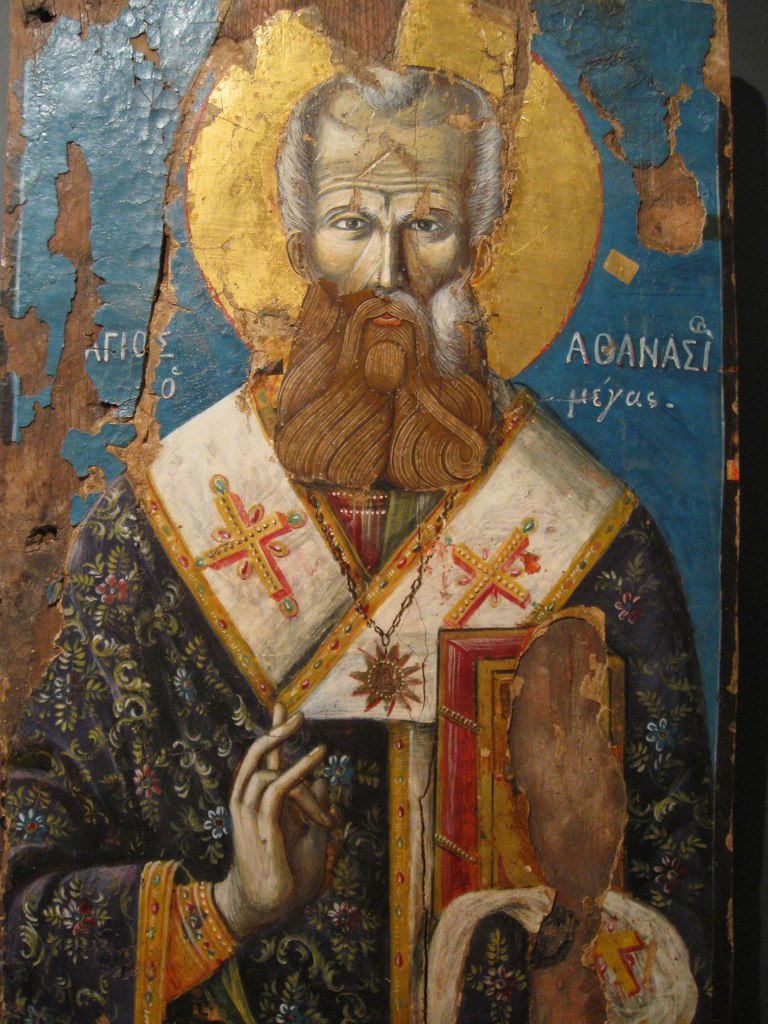
Saint Athanasius of Alexandria
(bishop and Father of the Church)

The Word who became all things for us is close to us, our Lord Jesus Christ who promises to remain with us always. He cries out, saying: See, I am with you all the days of this age. He is himself the shepherd, the high priest, the way and the door, and has become all things at once for us. In the same way, he has come among us as our feast and holy day as well. The blessed Apostle says of him who was awaited: Christ has been sacrificed as our Passover. It was Christ who shed his light on the psalmist as he prayed: You are my joy, deliver me from those surrounding me. True joy, genuine festival, means the casting out of wickedness. To achieve this one must live a life of perfect goodness and, in the serenity of the fear of God, practice contemplation in one’s heart.

This was the way of the saints, who in their lifetime and at every stage of life rejoiced as at a feast. Blessed David, for example, not once but seven times rose at night to win God’s favor through prayer. The great Moses was full of joy as he sang God’s praises in hymns of victory for the defeat of Pharaoh and the oppressors of the Hebrew people. Others had hearts filled always with gladness as they performed their sacred duty of worship, like the great Samuel and the blessed Elijah. Because of their holy lives they gained freedom, and now keep festival in heaven. They rejoice after their pilgrimage in shadows, and now distinguish the reality from the promise.

When we celebrate the feast in our own day, what path are we to take? As we draw near to this feast, who is to be our guide? Beloved, it must be none other than the one whom you will address with me as our Lord Jesus Christ. He says: I am the way. As blessed John tells us: it is Christ who takes away the sin of the world. It is he who purifies our souls, as the prophet Jeremiah says: Stand upon the ways; look and see which is the good path, and you will find in it the way of amendment for your souls.

In former times the blood of goats and the ashes of a calf were sprinkled on those who were unclean, but they were able to purify only the body. Now through the grace of God’s Word everyone is made abundantly clean. If we follow Christ closely we shall be allowed, even on this earth, to stand as it were on the threshold of the heavenly Jerusalem, and enjoy the contemplation of that everlasting feast, like the blessed apostles, who in following the Savior as their leader, showed, and still show, the way to obtain the same gift from God. They said: See, we have left all things and followed you. We too follow the Lord, and we keep his feast by deeds rather than by words.

Glory to the Father
and to the Son
and to the Holy Spirit:
as it was in the beginning,
is now, and will be forever. Amen


Lent: Saturday of the Fourth Week

“I knew it because the LORD informed me: at that time you showed me their doings.” (Jeremiah 11:18)

Saint Jerome offers the following insight on these verses from today’s First Reading:

“It is the consensus of all the church that these words are spoken by Christ through the person of Jeremiah. For the Father made it known to him how he should speak — he who was led like a lamb to the slaughter, not opening his mouth and not knowing. But the word sin is implicitly added to this last phrase, in agreement with what was said by the apostle: “When he did not know sin, he was made to be sin on our account.” And they said, “Let us put wood on his bread,” clearly referring to the cross on the body of the Savior, for he is the one who said, “I am the bread that descended from heaven.”

They also said “let us destroy (or eradicate) him from the land of the living.” And they conceived the evil in their soul that they would delete his name forever. In response to this, from the sacrament of the assumed body, the Son speaks to the Father and invokes his judgment while praising his justice and acknowledging him as the God who inspects the interior and the heart. He asks that the Father would return to the people what they deserve, saying, “Let me see your vengeance on them,” obviously referring only to those who continue in sin, not to those who repent. Concerning the latter, he said on the cross: “Father forgive them, for they do not realize what they are doing.” He also “disclosed his cause” to the Father, that he was crucified not because he deserved it but for the sins of the people, as he declared: “Behold, the prince of the world came and found nothing against me.” (Six Books on Jeremiah, 2)


Collect
May the working of your mercy,
O Lord, we pray,
direct our hearts aright,
for without your grace
we cannot find favor in your sight.
Through our Lord Jesus Christ, your Son,
Who lives and reigns with You
in the unity of the Holy Spirit,
one God, for ever and ever.


Glory to the Father
and to the Son
and to the Holy Spirit:
as it was in the beginning,
is now, and will be forever. Amen


All human activity is to find its purification
in the paschal mystery

Today’s Second Reading from the
Office of Readings (Liturgy of the Hours)
Lent: Saturday of the Fourth Week

An excerpt from:
Pastoral Constitution on the Church in the Modern World
Vatican Council II


Holy Scripture, with which the experience of the ages is in agreement, teaches the human family that human progress, though it is a great blessing for man, brings with it a great temptation. When the scale of values is disturbed and evil becomes mixed with good, individuals and groups consider only their own interests, not those of others.

The result is that the world is not yet a home of true brotherhood, while the increased power of mankind already threatens to destroy the human race itself.

If it is asked how this unhappy state of affairs can be set right, Christians state their belief that all human activity, in daily jeopardy through pride and inordinate self-love, is to find its purification and its perfection in the cross and resurrection of Christ.

Man, redeemed by Christ and made a new creation in the Holy Spirit, can and must love the very things created by God. For he receives them from God, and sees and reveres them as coming from the hand of God.

As he gives thanks for them to his Benefactor, and uses and enjoys them in a spirit of poverty and freedom, he enters into true possession of the world, as one having nothing and possessing all things. For all things are yours, and you are Christ’s, and Christ is God’s.

The Word of God, through whom all things were made, himself became man and lived in the world of men. As perfect man he has entered into the history of the world, taking it up into himself and bringing it into unity as its head. He reveals to us that God is love, and at the same time teaches us that the fundamental law of human perfection, and therefore of the transformation of the world, is the new commandment of love.

He assures those who have faith in God’s love that the way of love is open to all men, and that the effort to restore universal brotherhood is not in vain. At the same time he warns us that this love is not to be sought after only in great things but also, and above all, in the ordinary circumstances of life.

He suffered death for us all, sinners as we are, and by his example he teaches us that we also have to carry that cross which the flesh and the world lay on the shoulders of those who strive for peace and justice.

Constituted as the Lord by his resurrection, Christ, to whom all power in heaven and on earth has been given, is still at work in the hearts of men through the power of his Spirit. Not only does he awaken in them a longing for the world to come, but by that very fact he also inspires, purifies and strengthens those generous desires by which the human family seeks to make its own life more human and to achieve the same goal for the whole world.

The gifts of the Spirit are manifold. He calls some to bear open witness to the longing for a dwelling place in heaven, and to keep this fresh in the minds of all mankind; he calls others to dedicate themselves to the service of men here on earth, preparing by this ministry the material for the kingdom of heaven.

Yet he makes all free, so that, by denying their love of self and taking up all earth’s resources into the life of man, all may reach out to the future, when humanity itself will become an offering acceptable to God.

Glory to the Father
and to the Son
and to the Holy Spirit:
as it was in the beginning,
is now, and will be forever. Amen


Lent: Friday of the Fourth Week

“Let us condemn him to a shameful death; for according to his own words, God will take care of him.” (Wisdom 2:20)

Origen of Alexandria (part 2 of Pope Benedict’s reflections on Origen) comments on this verse from the First Reading proclaimed at Mass today:

“My Lord Jesus Christ, when he assumed the flesh of the Virgin for our salvation, was surely glorified, because “he came to seek what was lost,” though he was not “glorified gloriously.” In fact, it is said precisely of him, “We saw him, and he had neither beauty nor splendor, and his face was more to be despised than all the sons of mortals.” He was glorified also when he went to the cross and suffered death. Do you know why he was glorified? He said, “Father, the hour has come; glorify your Son, so that your Son may glorify you.” For him, therefore, even the passion of the cross was glory. This glory was not glorious, however, but humble. Finally, it is said of him, “He humbled himself even to death, death on a cross,” and of this also the prophet had foretold, “Let us condemn him to a shameful death.” But Isaiah also says of him, “He bore his judgment in humiliation.” Thus in all these events the Lord was glorified, but humbly, so to speak. He was not “glorified gloriously.” (Homilies on Exodus, 6)


Collect
O God, Who have prepared
fitting helps for us in our weakness,
grant, we pray, that we may receive
their healing effects with joy
and reflect them in a holy way of life.
Through our Lord Jesus Christ, Your Son,
Who lives and reigns with You
in the unity of the Holy Spirit,
one God, for ever and ever. Amen.


Glory to the Father
and to the Son
and to the Holy Spirit:
as it was in the beginning,
is now, and will be forever. Amen


The paschal sacrament
brings together in unity of faith
those physically separated from each other

Today’s Second Reading from the
Office of Readings (Liturgy of the Hours)
Lent: Friday of the Fourth Week

An excerpt from: Letter 5 (Easter Letter)
Saint Athanasius of Alexandria
(bishop and Father of the Church)

Brethren, how fine a thing it is to move from festival to festival, from prayer to prayer, from holy day to holy day. The time is now at hand when we enter on a new beginning: the proclamation of the blessed Passover, in which the Lord was sacrificed. We feed as on the food of life, we constantly refresh our souls with his precious blood, as from a fountain. Yet we are always thirsting, burning to be satisfied. But he himself is present for those who thirst and in his goodness invites them to the feast day. Our Savior repeats his words: If anyone thirsts, let him come to me and drink.

He quenched the thirst not only of those who came to him then. Whenever anyone seeks him he is freely admitted to the presence of the Savior. The grace of the feast is not restricted to one occasion. Its rays of glory never set. It is always at hand to enlighten the mind of those who desire it. Its power is always there for those whose minds have been enlightened and who meditate day and night on the holy Scriptures, like the one who is called blessed in the holy psalm: Blessed is the man who has not followed the counsel of the wicked, or stood where sinners stand, or sat in the seat of the scornful, but whose delight is in the law of the Lord, and who meditates on his law day and night.

Moreover, my friends, the God who first established this feast for us allows us to celebrate it each year. He who gave up his Son to death for our salvation, from the same motive gives us this feast, which is commemorated every year. This feast guides us through the trials that meet us in this world. God now gives us the joy of salvation that shines out from this feast, as he brings us together to form one assembly, uniting us all in spirit in every place, allowing us to pray together and to offer common thanksgiving, as is our duty on the feast. Such is the wonder of his love: he gathers to this feast those who are far apart, and brings together in unity of faith those who may be physically separated from each other.

Glory to the Father
and to the Son
and to the Holy Spirit:
as it was in the beginning,
is now, and will be forever. Amen


— Saint Joseph —
The faithful foster-father and guardian

Today’s Second Reading from the
Office of Readings (Liturgy of the Hours)
Solemnity
SAINT JOSEPH
Spouse of the Blessed Virgin Mary

An excerpt from: Sermon 2 On Saint Joseph
Saint Bernadine of Siena
(priest)

There is a general rule concerning all special graces granted to any human being. Whenever the divine favor chooses someone to receive a special grace, or to accept a lofty vocation, God adorns the person chosen with all the gifts of the Spirit needed to fulfill the task at hand.

This general rule is especially verified in the case of Saint Joseph, the foster-father of our Lord and the husband of the Queen of our world, enthroned above the angels. He was chosen by the eternal Father as the trustworthy guardian and protector of his greatest treasures, namely, his divine Son and Mary, Joseph’s wife. He carried out this vocation with complete fidelity until at last God called him, saying: Good and faithful servant, enter into the joy of your Lord.

What then is Joseph’s position in the whole Church of Christ? Is he not a man chosen and set apart? Through him and, yes, under him, Christ was fittingly and honorably introduced into the world. Holy Church in its entirety is indebted to the Virgin Mother because through her it was judged worthy to receive Christ. But after her we undoubtedly owe special gratitude and reverence to Saint Joseph.

In him the Old Testament finds its fitting close. He brought the noble line of patriarchs and prophets to its promised fulfillment. What the divine goodness had offered as a promise to them, he held in his arms.

Obviously, Christ does not now deny to Joseph that intimacy, reverence and very high honor which he gave him on earth, as a son to his father. Rather we must say that in heaven Christ completes and perfects all that he gave at Nazareth.

Now we can see how the last summoning words of the Lord appropriately apply to Saint Joseph: Enter into the joy of your Lord. In fact, although the joy of eternal happiness enters into the soul of a man, the Lord preferred to say to Joseph: Enter into joy. His intention was that the words should have a hidden spiritual meaning for us. They convey not only that this holy man possesses an inward joy, but also that it surrounds him and engulfs him like an infinite abyss.

Remember us, Saint Joseph, and plead for us to your foster-child. Ask your most holy bride, the Virgin Mary, to look kindly upon us, since she is the mother of him who with the Father and the Holy Spirit lives and reigns eternally. Amen.

Glory to the Father
and to the Son
and to the Holy Spirit:
as it was in the beginning,
is now, and will be forever. Amen


— Saint Joseph —
Spouse of the Blessed Virgin Mary

“...when your days have been completed and you rest with your ancestors, I will raise up your offspring after you, sprung from your loins, and I will establish his kingdom..” (II Samuel 7:12)

Tertullian comments on this verse from the First Reading proclaimed at Mass today:

“That new dispensation, then, which is found in Christ now, will prove to be what the Creator then promised under the appellation of “the sure mercies of David,” which were Christ’s, inasmuch as Christ sprang from David, or rather his very flesh itself was David’s “sure mercies,” consecrated by religion, and “sure” after its resurrection. Accordingly the prophet Nathan, in the first [book] of Kings [Samuel], makes a promise to David for his seed, “which shall proceed,” he says, “from your own body.” Now, if you explain this simply of Solomon, you will send me into a fit of laughter. For David will evidently have brought forth Solomon! But is not Christ here designated the seed of David, as of that womb which was derived from David, that is, Mary’s? Now, because Christ rather than any other was to build the temple of God, that is to say, a holy manhood, wherein God’s Spirit might dwell as in a better temple, Christ rather than David’s son Solomon was to be looked for as the Son of God. Then, again, the throne forever with the kingdom forever is more suited to Christ than to Solomon, a mere temporal king.” (Against Marcion, 3)


Collect
Grant, we pray, almighty God,
that by Saint Joseph’s intercession
your Church may constantly watch over
the unfolding of the mysteries of human salvation,
whose beginnings you entrusted to his faithful care.
Through our Lord Jesus Christ, Your Son,
Who lives and reigns with You
in the unity of the Holy Spirit,
one God, for ever and ever. Amen.


Glory to the Father
and to the Son
and to the Holy Spirit:
as it was in the beginning,
is now, and will be forever. Amen


Lent: Wednesday of the Fourth Week

“Thus says the LORD: In a time of favor I answer you, on the day of salvation I help you; I form you and set you as a covenant for the people, To restore the land and allot the devastated heritages.” (Isaiah 49:8)

Origen of Alexandria (part 2 of Pope Benedict’s reflections on Origen) comments on this verse from the First Reading proclaimed at Mass today:

“God says through the prophet, “In an acceptable time I have heard you, and in a day of salvation I have helped you.” What other time, then, is more acceptable than when for piety toward God in Christ we are led under guard in procession before the world, celebrating a triumph rather than being led in triumph? For the martyrs in Christ disarm the principalities and powers with him, and they share his triumph as fellows of his sufferings, becoming in this way also fellows of the courageous deeds wrought in his sufferings. These deeds include triumphing over principalities and powers, which in a short time you will see conquered and put to shame. What other day is so much a day of salvation as the one when we gain such deliverance from them?” (Exhortation to Martyrdom, 42)


Collect
Grant, we pray, O Lord,
that, schooled through Lenten observance
and nourished by your word,
through holy restraint
we may be devoted to you with all our heart
and be ever united in prayer.
Through our Lord Jesus Christ, Your Son,
Who lives and reigns with You
in the unity of the Holy Spirit,
one God, for ever and ever. Amen.


Glory to the Father
and to the Son
and to the Holy Spirit:
as it was in the beginning,
is now, and will be forever. Amen


The mercy of God to the penitent

Today’s Second Reading from the
Office of Readings (Liturgy of the Hours)
Lent: Tuesday of the Fourth Week

An excerpt from: Letter 11
Saint Maximus the Confessor
(abbot)

God’s will is to save us, and nothing pleases him more than our coming back to him with true repentance. The heralds of truth and the ministers of divine grace have told us this from the beginning, repeating it in every age. Indeed, God’s desire for our salvation is the primary and pre-eminent sign of his infinite goodness. It was precisely in order to show that there is nothing closer to God’s heart that the divine Word of God the Father, with untold condescension, lived among us in the flesh, and did, suffered, and said all that was necessary to reconcile us to God the Father, when we were at enmity with him, and to restore us to the life of blessedness from which we had been exiled. He healed our physical infirmities by miracles; he freed us from our sins, many and grievous as they were, by suffering and dying, taking them upon himself as if he were answerable for them, sinless though he was. He also taught us in many different ways that we should wish to imitate him by our own kindness and genuine love for one another.

So it was that Christ proclaimed that he had come to call sinners to repentance, not the righteous, and that it was not the healthy who required a doctor, but the sick. He declared that he had come to look for the sheep that was lost, and that it was to the lost sheep of the house of Israel that he had been sent. Speaking more obscurely in the parable of the silver coin, he tells us that the purpose of his coming was to reclaim the royal image, which had been coated with the filth of sin. You can be sure there is joy in heaven, he said, over one sinner who repents.

To give the same lesson he revived the man who, having fallen into the hands of the brigands, had been left stripped and half-dead from his wounds; he poured wine and oil on the wounds, bandaged them, placed the man on his own mule and brought him to an inn, where he left sufficient money to have him cared for, and promised to repay any further expense on his return.

Again, he told of how that Father, who is goodness itself, was moved with pity for his profligate son who returned and made amends by repentance; how he embraced him, dressed him once more in the fine garments that befitted his own dignity, and did not reproach him for any of his sins.

So too, when he found wandering in the mountains and hills the one sheep that had strayed from God’s flock of a hundred, he brought it back to the fold, but he did not exhaust it by driving it ahead of him. Instead, he placed it on his own shoulders and so, compassionately, he restored it safely to the flock.

So also he cried out: Come to me, all you that toil and are heavy of heart. Accept my yoke, he said, by which he meant his commands, or rather, the whole way of life that he taught us in the Gospel. He then speaks of a burden, but that is only because repentance seems difficult. In fact, however, my yoke is easy, he assures us, and my burden is light.

Then again he instructs us in divine justice and goodness, telling us to be like our heavenly Father, holy, perfect and merciful. Forgive, he says, and you will be forgiven. Behave toward other people as you would wish them to behave toward you.

Glory to the Father
and to the Son
and to the Holy Spirit:
as it was in the beginning,
is now, and will be forever. Amen


Lent: Tuesday of the Fourth Week

“Then he brought me back to the entrance of the temple, and there! I saw water flowing out from under the threshold of the temple toward the east, for the front of the temple faced east. The water flowed out toward the right side of the temple to the south of the altar.” (Ezekiel 47:1)

Saint Jerome offers the following insight on these verses from today’s First Reading:

“The waters that flow forth from the threshold of the temple refer to the teaching of the church. . . . We can understand water up to the ankles as meaning first the human sins that are forgiven us who enter the waters of the Lord; they show the saving grace of baptism and are the beginnings of our progress.

We said a little time ago that the waters signify either the grace of baptism or the teaching of the gospel. If these waters go out from the threshold of the temple of the Lord and carry the teaching of the apostles, they have the power to make piles of gravel, sterile and infertile as they are, bear fruit, and they can irrigate every plain and every desert.” (Commentary on Ezekiel, 14)


Collect
May the venerable exercises of holy devotion
shape the hearts of your faithful, O Lord,
to welcome worthily the Paschal Mystery
and proclaim the praises of your salvation.
Through our Lord Jesus Christ, your Son,
Who lives and reigns with You
in the unity of the Holy Spirit,
one God, for ever and ever.


Glory to the Father
and to the Son
and to the Holy Spirit:
as it was in the beginning,
is now, and will be forever. Amen


Through me many peoples
have been reborn in God

Today’s Second Reading from the
Office of Readings (Liturgy of the Hours)
Lent: Tuesday of the Fourth Week

An excerpt from: Confessions
Saint Patrick
(bishop)

I give unceasing thanks to my God, who kept me faithful in the day of my testing. Today I can offer him sacrifice with confidence, giving myself as a living victim to Christ, my Lord, who kept me safe through all my trials. I can say now: Who am I, Lord, and what is my calling, that you worked through me with such divine power? You did all this so that today among the Gentiles I might constantly rejoice and glorify your name wherever I may be, both in prosperity and in adversity. You did it so that, whatever happened to me, I might accept good and evil equally, always giving thanks to God. God showed me how to have faith in him for ever, as one who is never to be doubted. He answered my prayer in such a way that in the last days, ignorant though I am, I might be bold enough to take up so holy and so wonderful a task, and imitate in some degree those whom the Lord had so long ago foretold as heralds of his Gospel, bearing witness to all nations.

How did I get this wisdom, that was not mine before? I did not know the number of my days, or have knowledge of God. How did so great and salutary a gift come to me, the gift of knowing and loving God, though at the cost of homeland and family? I came to the Irish peoples to preach the Gospel and endure the taunts of unbelievers, putting up with reproaches about my earthly pilgrimage, suffering many persecutions, even bondage, and losing my birthright of freedom for the benefit of others.

If I am worthy, I am ready also to give up my life, without hesitation and most willingly, for his name. I want to spend myself in that country, even in death, if the Lord should grant me this favor. I am deeply in his debt, for he gave me the great grace that through me many peoples should be reborn in God, and then made perfect by confirmation and everywhere among them clergy ordained for a people so recently coming to believe, one people gathered by the Lord from the ends of the earth. As God had prophesied of old through the prophets: The nations shall come to you from the ends of the earth, and say: “How false are the idols made by our fathers: they are useless.” In another prophecy he said: I have set you as a light among the nations, to bring salvation to the ends of the earth.

It is among that people that I want to wait for the promise made by him, who assuredly never tells a lie. He makes this promise in the Gospel: They shall come from the east and west, and sit down with Abraham, Isaac and Jacob. This is our faith: believers are to come from the whole world.


Collect
O God, Who chose the Bishop Saint Patrick
to preach Your glory to the peoples of Ireland,
grant, through his merits and intercession,
that those who glory in the name of Christian
may never cease to proclaim
Your wondrous deeds to all.
Through our Lord Jesus Christ, your Son,
Who lives and reigns with You
in the unity of the Holy Spirit,
one God, for ever and ever.

Glory to the Father
and to the Son
and to the Holy Spirit:
as it was in the beginning,
is now, and will be forever. Amen


Christ the High Priest
makes atonement for our sins

Today’s Second Reading from the
Office of Readings (Liturgy of the Hours)
Lent: Monday of the Fourth Week

An excerpt from: Homily 9 on Leviticus
Origen of Alexandria
(priest and Ancient Christian Writer)

Once a year the high priest, leaving the people outside, entered that place where no one except the high priest might enter. In it was the mercy-seat, and above the mercy-seat the cherubim, as well as the ark of the covenant and the altar of incense.

Let me turn to my true high priest, the Lord Jesus Christ. In our human nature he spent the whole year in the company of the people, the year that he spoke of when he said: He sent me to bring good news to the poor, to announce the acceptable year of the Lord, and the day of forgiveness. Notice how once in that year, on the day of atonement, he enters into the holy of holies. Having fulfilled God’s plan, he passes through the heavens and enters into the presence of the Father to make him turn in mercy to the human race and to pray for all who believe in him.

John the apostle, knowing of the atonement that Christ makes to the Father for all men, says this: Little children, I say these things so that you may not sin. But if we have sinned we have an advocate with the Father, Jesus Christ, the just one. He is the atonement for our sins In the same way Paul refers to this atonement when he says of Christ: God appointed him to be the atonement for our sins in his blood, through faith. We have then a day of atonement that remains until the world comes to an end.

God’s word tells us: The high priest shall put incense on the fire in the sight of the Lord. The smoke of the incense shall cover the mercy-seat above the tokens of the covenant, so that he may not die. He shall take some of the blood of the bull-calf and sprinkle it with his finger over the mercy-seat toward the east.

God taught the people of the old covenant how to celebrate the ritual offered to him in atonement for the sins of men. But you have come to Christ, the true high priest. Through his blood he has made God turn to you in mercy and has reconciled you with the Father. You must not think simply of ordinary blood but you must learn to recognize instead the blood of the Word. Listen to him as he tells you: This is my blood, which will be shed for you for the forgiveness of sins.

There is a deeper meaning in the fact that the high priest sprinkles the blood toward the east. Atonement comes to you from the east. From the east comes the one whose name is Dayspring, he who is mediator between God and men. You are invited then to look always to the east: it is there that the sun of righteousness rises for you, it is there that the light is always being born for you. You are never to walk in darkness; the great and final day is not to enfold you in darkness. Do not let the night and mist of ignorance steal upon you. So that you may always enjoy the light of knowledge, keep always in the daylight of faith, hold fast always to the light of love and peace.

Glory to the Father
and to the Son
and to the Holy Spirit:
as it was in the beginning,
is now, and will be forever. Amen


Lent: Monday of the Fourth Week

“For those who are led by the Spirit of God are children of God.” (Romans 8:14)

Origen of Alexandria (part 2 of Pope Benedict’s reflections on Origen) comments on this verse from the First Reading proclaimed at Mass today:

“The Spirit of God is the same as the Spirit of Christ and the same as the Holy Spirit. But he is also called the Spirit of adoption, as the apostle makes clear in this passage. David spoke of this Spirit also when he said: “Take not thy Holy Spirit from me.” There are many sons of God, as Scripture says: “You are gods, sons of the Most High, all of you,” but only one is the Son by nature, the only begotten of the Father, through whom all the rest are called sons.

Likewise there are many spirits but only one who truly proceeds from God himself and who bestows on all the others the grace of his name and his sanctification.” (Commentary on the Epistle to the Romans)


Collect
God our Father, who by sending into the world
the Word of truth and the Spirit of sanctification
made known to the human race your wondrous mystery,
grant us, we pray, that in professing the true faith,
we may acknowledge the Trinity of eternal glory
and adore your Unity, powerful in majesty.
Through our Lord Jesus Christ, Your Son,
Who lives and reigns with You
in the unity of the Holy Spirit,
one God, for ever and ever. Amen.


Glory to the Father
and to the Son
and to the Holy Spirit:
as it was in the beginning,
is now, and will be forever. Amen


— The Lord’s Day —
Lent: Sunday of the Fourth Week

“But how could we sing a song of the LORD in a foreign land?” (Psalms 137:4)

Saint Gregory of Nazianzus reflects on this verse from today’s Psalm:

“Certainly not, friends and brethren — I still call you “brethren,” though your attitude is not brotherly — do not let us accept such a view. We must not be like fiery, unruly horses, throwing reason our rider and spitting out the bit of discretion that so usefully restrains us, and running wide of the turning post. Let us conduct our debates within our fron tiers and not be carried away to Egypt or dragged off to Assyria. Let us not “sing the song of the Lord in a foreign land,” by which I mean before any and every audience, heathen or Christian, friend or foe, sympathetic or hostile: these keep all too close a watch on us, and they would wish that the spark of our dissensions might become a conflagration; they kindle it, they fan it, by means of its own draught they raise it to the skies, and without our knowing what they are up to, they make it higher than the flames of Babylon that blazed all around. Having no strength in their own teaching, they hunt for it in our weakness, and for this reason like flies settling on wounds, they settle on our misfortune — or should I say our mistakes? Let us be blind to our doings no longer, and let us not neglect the proprieties in these matters. If we cannot resolve our disputes outright, let us at least make this mutual concession, to utter spiritual truths with the restraint due to them, to discuss holy things in a holy manner and not be broadcast to profane hearing what is not to be divulged.” (Against the Eunomians [Theological Oration 1], 27)


Collect
O God,
Who through your Word
reconcile the human race
to Yourself in a wonderful way,
grant, we pray,
that with prompt devotion and eager faith
the Christian people may hasten
toward the solemn celebrations to come.
Through our Lord Jesus Christ, your Son,
Who lives and reigns with You
in the unity of the Holy Spirit,
one God, for ever and ever.


Glory to the Father
and to the Son
and to the Holy Spirit:
as it was in the beginning,
is now, and will be forever. Amen


Christ is the way
to the light, the truth, and the life

Today’s Second Reading from the
Office of Readings (Liturgy of the Hours)
Lent: Sunday of the Fourth Week

An excerpt from: On John (Treatise 34)
Saint Augustine
(bishop and Father of the Church)


The Lord tells us: I am the light of the world; he who follows me will not walk in darkness, but will have the light of life. In these few words he gives a command and makes a promise. Let us do what he commands so that we may not blush to covet what he promises and to hear him say on the day of judgment: “I laid down certain conditions for obtaining my promises. Have you fulfilled them?” If you say: “What did you command, Lord our God?” he will tell you: “I commanded you to follow me. You asked for advice on how to enter into life. What life, if not the life about which it is written: With you is the fountain of life?”

Let us do now what he commands. Let us follow in the footsteps of the Lord. Let us throw off the chains that prevent us from following him. Who can throw off these shackles without the aid of the one addressed in these words: You have broken my chains? Another psalm says of him: The Lord frees those in chains, the Lord raises up the downcast.

Those who have been freed and raised up follow the light. The light they follow speaks to them: I am the light of the world; he who follows me will not walk in darkness. The Lord gives light to the blind. Brethren, that light shines on us now, for we have had our eyes anointed with the eye-salve of faith. His saliva was mixed with earth to anoint the man born blind. We are of Adam’s stock, blind from our birth; we need him to give us light. He mixed saliva with earth, and so it was prophesied: Truth has sprung up from the earth. He himself has said: I am the way, the truth, and the life.

We shall be in possession of the truth when we see face to face. This is his promise to us. Who would dare to hope for something that God in his goodness did not choose to promise or bestow?

We shall see face to face. The Apostle says: Now I know in part, now obscurely through a mirror, but then face to face. John the apostle says in one of his letters: Dearly beloved, we are now children of God, and it has not yet been revealed what we shall be. We know that when he is revealed we shall be like him, for we shall see him as he is. This is a great promise.

If you love me, follow me. “I do love you,” you protest, “but how do I follow you?” If the Lord your God said to you: “I am the truth and the life,” in your desire for truth, in your love for life, you would certainly ask him to show you the way to reach them. You would say to yourself: “Truth is a great reality, life is a great reality; if only it were possible for my soul to find them!”

Glory to the Father
and to the Son
and to the Holy Spirit:
as it was in the beginning,
is now, and will be forever. Amen


Lent: Friday of the Third Week

“Ephraim! What more have I to do with idols? I have humbled him, but I will take note of him. I am like a verdant cypress tree. From me fruit will be found for you!” (Hosea 14:9)

Saint Cyril of Alexandria reflects on this verse from today’s Gospel, writes:

“It is only by deeply considering the matters in the divinely inspired Scriptures that we shall find the hidden truth. It would be fitting for us when looking into the dark shadows of the law to say what one of the holy prophets rightly said, “Whoever will be wise will understand these things; and whoever will be prudent will know them.” “For the law is but a shadow of the good things to come, and not the exact image of the objects,” as it is written. Yet the shadows bring forth the truth, even if they do not contain the whole truth in themselves. Because of this, the divinely inspired Moses placed a veil upon his face and spoke thus to the children of Israel,16 all but shouting by this act that a person might behold the beauty of the utterances made through him, not in outwardly appearing figures but in meditations hidden within us.” (Letter 41)


Collect
Pour your grace into our hearts,
we pray, O Lord,
that we may be constantly drawn away
from unruly desires and obey by Your own gift
the heavenly teaching you give us.
Through our Lord Jesus Christ, Your Son,
Who lives and reigns with You
in the unity of the Holy Spirit,
one God, for ever and ever. Amen.


Glory to the Father
and to the Son
and to the Holy Spirit:
as it was in the beginning,
is now, and will be forever. Amen


The mystery of our new life in Christ

Today’s Second Reading from the
Office of Readings (Liturgy of the Hours)
Lent: Friday of the Third Week

An excerpt from: Moral Reflections on Job
Saint Gregory the Great
(Bishop of Rome and Father of the Church)

Holy Job is a type of the Church. At one time he speaks for the body, at another for the head. As he speaks of its members he is suddenly caught up to speak in the name of their head. So it is here, where he says: I have suffered this without sin on my hands, for my prayer to God was pure.

Christ suffered without sin on his hands, for he committed no sin and deceit was not found on his lips. Yet he suffered the pain of the cross for our redemption. His prayer to God was pure, his alone out of all mankind, for in the midst of his suffering he prayed for his persecutors: Father, forgive them, for they do not know what they are doing.

Is it possible to offer, or even to imagine, a purer kind of prayer than that which shows mercy to one’s torturers by making intercession for them? It was thanks to this kind of prayer that the frenzied persecutors who shed the blood of our Redeemer drank it afterward in faith and proclaimed him to be the Son of God.

The text goes on fittingly to speak of Christ’s blood: Earth, do not cover over my blood, do not let my cry find a hiding place in you. When man sinned, God had said: Earth you are, and to earth you will return. Earth does not cover over the blood of our Redeemer, for every sinner, as he drinks the blood that is the price of his redemption, offers praise and thanksgiving, and to the best of his power makes that blood known to all around him.

Earth has not hidden away his blood, for holy Church has preached in every corner of the world the mystery of its redemption.

Notice what follows: Do not let my cry find a hiding place in you. The blood that is drunk, the blood of redemption, is itself the cry of our Redeemer. Paul speaks of the sprinkled blood that calls out more eloquently than Abel’s. Of Abel’s blood Scripture had written: The voice of your brother’s blood cries out to me from the earth. The blood of Jesus calls out more eloquently than Abel’s, for the blood of Abel asked for the death of Cain, the fratricide, while the blood of the Lord has asked for, and obtained, life for his persecutors.

If the sacrament of the Lord’s passion is to work its effect in us, we must imitate what we receive and proclaim to mankind what we revere. The cry of the Lord finds a hiding place in us if our lips fail to speak of this, though our hearts believe in it. So that his cry may not lie concealed in us it remains for us all, each in his own measure, to make known to those around us the mystery of our new life in Christ.

Glory to the Father
and to the Son
and to the Holy Spirit:
as it was in the beginning,
is now, and will be forever. Amen


Lent: Thursday of the Third Week
 

“But they did not listen to me, nor did they pay attention. They walked in the stubbornness of their evil hearts and turned their backs, not their faces, to me” (Jeremiah 7:24)

Saint Jerome offers the following insight on these verses from today’s First Reading:

“When I said, “Hear my voice and I will be your God,” “they did not listen or incline their ears” but followed the desires of their own hearts and, contrary to the principle of the apostle, who forgot what was in the past and strived for what lay before him, they did the opposite, pining for the past and despising the future. He also reports that they acted offensively against the Lord “from the day on which their ancestors left the land of Egypt until the present time.” Hence, the grace of the gospel was necessary to save them, not due to their own merits but to the Lord’s mercy.” (Six Books on Jeremiah, 2)


Collect
We implore your majesty most humbly, O Lord,
that, as the feast of our salvation draws ever closer,
so we may press forward all the more eagerly
towards the worthy celebration of the Paschal Mystery.
Through our Lord Jesus Christ, your Son,
Who lives and reigns with You
in the unity of the Holy Spirit,
one God, for ever and ever.


Glory to the Father
and to the Son
and to the Holy Spirit:
as it was in the beginning,
is now, and will be forever. Amen