All our love must be for God

Today’s Second Reading from the
Office of Readings (Liturgy of the Hours)
Ordinary Time Week 2: Friday

On Spiritual Perfection
Diadochus of Photice
(bishop)

No one who is in love with himself is capable of loving God. The man who loves God is the one who mortifies his self-love for the sake of the immeasurable blessings of divine love. Such a man never seeks his own glory but only the glory of God. If a person loves himself he seeks his own glory, but the man who loves God loves the glory of his Creator. Anyone alive to the love of God can be recognized from the way he constantly strives to glorify him by fulfilling all his commandments and by delighting in his own abasement. Because of his great majesty it is fitting that God should receive glory, but if he hopes to win God’s favor it becomes man to be humble. If we possess this love for God, we too will rejoice in his glory as Saint John the Baptist did, and we shall never stop repeating: His fame must increase, but mine must diminish.

I know a man who, though lamenting his failure to love God as much as he desires, yet loves him so much that his soul burns with ceaseless longing for God to be glorified, and for his own complete effacement. This man has no feeling of self importance even when he receives praise. So deep is his desire to humble himself that he never even thinks of his own dignity. He fulfills his priestly duty by celebrating the Liturgy, but his intense love for God is an abyss that swallows up all consciousness of his high office. His humility makes him oblivious of any honor it might bring him, so that in his own estimation he is never anything but a useless servant. Because of his desire for self abasement, he regards himself as though degraded from his office. His example is one that we ourselves should follow by fleeing from all honor and glory for the sake of the immeasurable blessings of God’s love, for he has loved us so much!

Anyone who loves God in the depths of his heart has already been loved by God. In fact, the measure of a man’s love for God depends upon how deeply aware he is of God’s love for him. When this awareness is keen it makes whoever possesses it long to be enlightened by the divine light, and this longing is so intense that it seems to penetrate his very bones. He loses all consciousness of himself and is entirely transformed by the love of God.

Such a man lives in this life and at the same time does not live in it, for although he still inhabits his body, he is constantly leaving it in spirit because of the love that draws him toward God. Once the love of God has released him from self-love, the flame of divine love never ceases to burn in his heart and he remains united to God by an irresistible longing. As the Apostle says: If we are taken out of ourselves it is for the love of God; if we are brought back to our senses it is for your sake.


Glory to the Father
and to the Son
and to the Holy Spirit:
as it was in the beginning,
is now, and will be forever. Amen


Ordinary Time Week 2: Friday

“When he speaks of a “new” covenant, he declares the first one obsolete. And what has become obsolete and has grown old is close to disappearing. ” (Hebrews 8:13)

Saint Bede the Venerable comments on this verse from today’s First Reading:

“For what is the meaning of John’s being born to elderly parents? Was it not to indicate the earthly birth of the one who was soon to follow, since by bringing forward the hidden spiritual mysteries of the new covenant, he would teach that the fleshly observance of the law and the priesthood of the old covenant were now to be brought to an end? For “what is becoming obsolete and growing old is ready to vanish away.” And what does it mean that our Lord’s precursor came from a father who was mute, a leader of the priests of that time? Is it not that, by the time our Lord appeared, the tongue of the ancient priesthood had to a large extent become mute as regards the spiritual sense of the law’s teaching, since the scribes and those learned in the law were only concerned with teaching the keeping of the letter of the law? Moreover, in a number of instances, they were even falsifying the letter of the law by substituting their own traditions, as is proven by our Lord’s having rebuked them more than once in the Gospels. And what does it mean that he was born to a barren mother? Is it not that the law, which was ordered to beget spiritual issue for God with the help of the priestly office, led no one to perfection, undoubtedly because it was unable to open up the gates of the kingdom to its followers? The author of the law himself, born under the law, took away from the law the opprobrium of its barrenness, for he pointed out that it was to be understood spiritually; and he taught that in it was formerly prefigured and, as it were, conceived, the gift of happiness from on high which now shines out clearly in the gospel.” (Homilies on the Gospels, 2)


Collect
Almighty ever-living God,
who govern all things,
both in heaven and on earth,
mercifully hear the pleading of your people
and bestow your peace on our times.
Through our Lord Jesus Christ, your Son,
Who lives and reigns with You
in the unity of the Holy Spirit,
one God, for ever and ever. Amen.


Glory to the Father
and to the Son
and to the Holy Spirit:
as it was in the beginning,
is now, and will be forever. Amen


Christ lives for ever to make intercession for us

Today’s Second Reading from the
Office of Readings (Liturgy of the Hours)
Ordinary Time Week 2: Thursday

Letter 14
Saint Fulgentius of Ruspe
(bishop)

Notice at the conclusion of our prayer we never say, “through the Holy Spirit” but rather “through Jesus Christ, your Son, our Lord.” Through the mystery of the Incarnation, Jesus Christ became man, the mediator of God and man. He is a priest for ever according to the order of Melchizedek. By shedding his own blood he entered once and for all into the Holy Places. He did not enter a place made by human hands, a mere type of the true one; but, he entered heaven itself, where he is at God’s right hand interceding for us. Quite correctly, the Church continues to reflect this mystery in her prayer.

This mystery of Jesus Christ the high priest is reflected in the apostle Paul’s statement: Through him, then, let us always offer the sacrifice of praise to God, the fruit of lips that profess belief in his name. We were once enemies of the Father, but have been reconciled through the death of Christ. Through him then we offer our sacrifice of praise, our prayer to God. He became our offering to the Father, and through him our offering is now acceptable. It is for this reason that Peter the apostle urges us to be built up as living stones into a spiritual house, a holy priesthood to offer spiritual sacrifices pleasing to God through Jesus Christ. This then is the reason why we offer prayer to God our Father, but through Jesus Christ our Lord.

When we speak of Christ’s priesthood, what else do we mean than the incarnation? Through this mystery, the Son of God, though his state was divine...emptied himself to assume the condition of a slave. As a slave, he humbled himself and in obedience he even accepted death. Even though he possessed equality with the Father, he became a little less than the angels. Always equal to the Father, the Son became a little less because he became a man. Christ lowered himself when he emptied himself to assume the condition of a slave.

By this condition, Christ, the only-begotten Son of God, though himself ever remaining God, became a priest. To him along with the Father, we offer our sacrifice. Yet, through him the sacrifice we now offer is holy, living and pleasing to God. Indeed, if Christ had not sacrificed himself for us, we could not offer any sacrifice. For it is in him that our human nature becomes a redemptive offering. When we offer our prayers through him, our priest, we confess that Christ truly possesses the flesh of our race. Clearly the Apostle refers to this when he says: Every high priest is taken from among men. He is appointed to act on behalf of these same men in their relationship to God; he is to offer gifts and sacrifices to God.

We do not, however, only say “your Son” when we conclude our prayer. We also say, "who lives and reigns with you in the unity of the Holy Spirit." In this way we commemorate the natural unity of the Father, Son and Holy Spirit. It is clear, then, that the Christ who exercises a priestly role on our behalf is the same Christ who enjoys a natural unity and equality with the Father and the Holy Spirit.


Glory to the Father
and to the Son
and to the Holy Spirit:
as it was in the beginning,
is now, and will be forever. Amen


Day of Prayer
for the Legal Protection of
Unborn Children
 

“Therefore, he is always able to save those who approach God through him, since he lives forever to make intercession for them.” (Hebrews 7:25)

Origen of Alexandria comments on this verse from the First Reading proclaimed at Mass today:

“Jesus now stands “before the face of God interceding for us.” He stands before the altar to offer a propitiation to God for us. As he was about to approach that altar, moreover, he was saying, “I shall not drink again of this fruit of the vine until I drink it anew with you.” Therefore, he expects us to be converted, to imitate his example, to follow his footsteps, that he may rejoice with us and “drink wine with us in his Father’s kingdom.” For now, because “the Lord is merciful and gracious,” he “weeps with those who weep and desires to rejoice with those who rejoice” with greater feeling than this apostle. And how much more “this one mourns over many of those who sinned before and have not repented.” For we must not think that Paul is mourning for sinners and weeping for those who transgress, but Jesus my Lord abstains from weeping when he approaches the Father, when he stands at the altar and offers a propitiatory sacrifice for us. This is not to drink the wine of joy “when he ascends to the altar” because he is still bearing the bitterness of our sins. He, therefore, does not want to be the only one to drink wine “in the kingdom” of God. He waits for us, just as he said, “Until I shall drink it with you.” Thus we are those who, neglecting our life, delay his joy.” (Homilies on Leviticus, 7)


Collect
God our Creator,
we give thanks to You,
Who alone have the power
to impart the breath of life
as You form each of us
in our mother’s womb;
grant, we pray, that we,
whom You have made stewards of creation,
may remain faithful to this sacred trust
and constant
in safeguarding the dignity of every human life.
Through our Lord Jesus Christ, your Son,
Who lives and reigns with You
in the unity of the Holy Spirit,
one God, for ever and ever. Amen.


Glory to the Father
and to the Son
and to the Holy Spirit:
as it was in the beginning,
is now, and will be forever. Amen
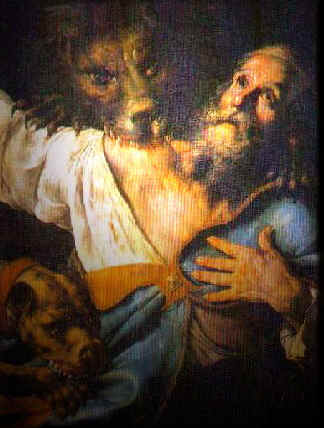


Too young to be punished, yet old enough for a martyr’s crown

Today’s Second Reading from the
Office of Readings (Liturgy of the Hours)
— Saint Agnes —
Ordinary Time Week 2: Wednesday

A Treatise on Virginiaty
Saint Ambrose of Milan
(pope and martyr)

Today is the birthday of a virgin; let us imitate her purity. It is the birthday of a martyr; let us offer ourselves in sacrifice. It is the birthday of Saint Agnes, who is said to have suffered martyrdom at the age of twelve. The cruelty that did not spare her youth shows all the more clearly the power of faith in finding one so young to bear it witness.

There was little or no room in that small body for a wound. Though she could scarcely receive the blow, she could rise superior to it. Girls of her age cannot bear even their parents’ frowns and, pricked by a needle, weep as for a serious wound. Yet she shows no fear of the blood-stained hands of her executioners. She stands undaunted by heavy, clanking chains. She offers her whole body to be put to the sword by fierce soldiers. She is too young to know of death, yet is ready to face it. Dragged against her will to the altars, she stretches out her hands to the Lord in the midst of the flames, making the triumphant sign of Christ the victor on the altars of sacrilege. She puts her neck and hands in iron chains, but no chain can hold fast her tiny limbs.

A new kind of martyrdom! Too young to be punished, yet old enough for a martyr’s crown; unfitted for the contest, yet effortless in victory, she shows herself a master in valor despite the handicap of youth. As a bride she would not be hastening to join her husband with the same joy she shows as a virgin on her way to punishment, crowned not with flowers but with holiness of life, adorned not with braided hair but with Christ himself.

In the midst of tears, she sheds no tears herself. The crowds marvel at her recklessness in throwing away her life untasted, as if she had already lived life to the full. All are amazed that one not yet of legal age can give her testimony to God. So she succeeds in convincing others of her testimony about God, though her testimony in human affairs could not yet be accepted. What is beyond the power of nature, they argue, must come from its creator.

What menaces there were from the executioner, to frighten her; what promises made, to win her over; what influential people desired her in marriage! She answered: “To hope that any other will please me does wrong to my Spouse. I will be his who first chose me for himself. Executioner, why do you delay? If eyes that I do not want can desire this body, then let it perish.” She stood still, she prayed, she offered her neck.

You could see fear in the eyes of the executioner, as if he were the one condemned; his right hand trembled, his face grew pale as he saw the girl’s peril, while she had no fear for herself. One victim, but a twin martyrdom, to modesty and to religion; Agnes preserved her virginity, and gained a martyr’s crown.


Glory to the Father
and to the Son
and to the Holy Spirit:
as it was in the beginning,
is now, and will be forever. Amen


— Saint Agnes —
Ordinary Time Week 2: Wednesday
 

“Without father, mother, or ancestry, without beginning of days or end of life, thus made to resemble the Son of God, he remains a priest forever.” (Hebrews 7:3)

Saint Ambrose of Milan offers the following insight on this verse from today’s First Reading:

Let no one claim Divinity resides in an order established by human beings when he encounters such an order. For the church does not consider even Melchizedek, by whose office Abraham offered sacrifice, an angel. It rather considers him a holy man and priest of God who, prefiguring our Lord, is described as “without father or mother, without history of his descent, without beginning and without end.” It does this in order to show beforehand the coming into this world of the eternal Son of God who was likewise incarnate and then brought forth without any father, begotten as God without mother, and was without his tory of descent. For it is written: “Who shall declare his generation?”

This Melchizedek, then, we have received as a priest of God based upon the model of Christ. However, the one we regard as the type, the other as the original. Now, a type is a shadow of the truth. We have accepted the royalty of the one [Melchizedek] in the name of a single city [Jerusalem], but that of the other [Jesus] as shown in the reconciliation of the whole world. For it is written: “God was in Christ, reconciling the world to himself,” that is to say, the eternal Godhead was in Christ. Or, if the Father is in the Son, even as the Son is in the Father, then their unity in both nature and operation is plainly not denied.” (On the Christian Faith, 3)


Collect
Almighty ever-living God,
Who choose what is weak in the world
to confound the strong,
mercifully grant, that we,
who celebrate the heavenly birthday
of Your Martyr Saint Agnes,
may follow her constancy in the faith.
Through our Lord Jesus Christ, Your Son,
Who lives and reigns with You
in the unity of the Holy Spirit,
one God, for ever and ever. Amen.


Glory to the Father
and to the Son
and to the Holy Spirit:
as it was in the beginning,
is now, and will be forever. Amen


Ordinary Time Week 2: Tuesday
 

“This we have as an anchor of the soul, sure and firm, which reaches into the interior behind the veil, where Jesus has entered on our behalf as forerunner, becoming high priest forever according to the order of Melchizedek.” (1 Hebrews 6:19-20)

In commenting on these verses from today’s First Reading, Saint John Chrysostom writes:

“Paul shows that while we are still in the world and not yet departed from this life, we are already living amid God’s promises. For through hope we are already in heaven. As the anchor, dropped from the vessel, does not allow it to be carried about even if ten thousand winds agitate it but, being depended upon, makes it steady, so also does hope.

Note what a fitting image he has chosen. He did not speak of a foundation, which would not be suitable, but of an anchor. For that which is on the tossing sea and seems not to be very firmly fixed stands on the water as upon land and is shaken and yet is not moved. For in regard to those who are very firm and who love the truth, Christ with good reason spoke of one who “has built his house on a rock.”16 But in respect of those who are giving way and who ought to be carried through by hope, Paul has more suitably set down this metaphor. For the surge and the great storm toss the boat, but hope does not permit it to be carried back and forth, although winds innumerable agitate it, so that, unless we had this hope we should long ago have been sunk. Nor is it only in things spiritual, but also in the affairs of this life, that one may find the power of hope great. Whatever it may be, in merchandise, in husbandry, in a military expedition, unless one sets this before him, he would not even touch the work. But he said not simply “anchor,” but “sure and steadfast,” not shaken.” (On the Epistle to the Hebrews, 11)


Collect
Almighty ever-living God,
who govern all things,
both in heaven and on earth,
mercifully hear the pleading of your people
and bestow your peace on our times.
Through our Lord Jesus Christ, your Son,
Who lives and reigns with You
in the unity of the Holy Spirit,
one God, for ever and ever. Amen.


Glory to the Father
and to the Son
and to the Holy Spirit:
as it was in the beginning,
is now, and will be forever. Amen
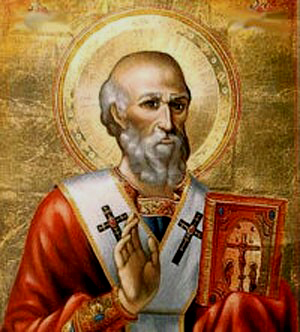


Have Faith in Christ, and Love

Today’s Second Reading from the
Office of Readings (Liturgy of the Hours)
Ordinary Time Week 2: Monday

The Letter to the Ephesians
Saint Ignatius of Antioch
(bishop, martyr and Father of the Church)

Try to gather together more frequently to give thanks to God and to praise him. For when you come together frequently, Satan’s powers are undermined, and the destruction that he threatens is done away with in the unanimity of your faith. Nothing is better than peace, in which all warfare between heaven and earth is brought to an end.

None of this will escape you if you have perfect faith and love toward Jesus Christ. These are the beginning and the end of life: faith the beginning, love the end. When these two are found together, there is God, and everything else concerning right living follows from them. No one professing faith sins: no one possessing love hates. A tree is known by its fruit. So those who profess to belong to Christ will be known by what they do. For the work we are about is not a matter of words here and now, but depends on the power of faith and on being found faithful to the end.

It is better to remain silent and to be than talk and not be. Teaching is good if the speaker also acts. Now there was one teacher who spoke, and it was made, and even what he did in silence is worthy of the Father. He who has the word of Jesus can truly listen also to his silence, in order to be perfect, that he may act through his speech and be known by his silence. Nothing is hidden from the Lord, but even our secrets are close to him. Let us then do everything in the knowledge that he is dwelling within us that we may be his temples, and he God within us. He is, and will reveal himself, in our sight, according to the love we bear him in holiness.

Make no mistake, my brothers: those who corrupt families will not inherit the kingdom of God. If those who do these things in accordance with the flesh have died, how much worse will it be if one corrupts through evil doctrine the faith of God for which Jesus Christ was crucified? Such a person, because he is defiled, will depart into the unquenchable fire, as will anyone who listens to him.

For the Lord received anointing on his head in order that he might breathe incorruptibility on the Church. Do not be anointed with the evil odor of the teachings of the prince of this world, that he may not lead you captive away from the life that is set before you. But why is it that we are not all wise when we have received the knowledge of God, which is Jesus Christ? Why do we perish in our stupidity, not knowing the gift the Lord has truly sent us?

My spirit is given over to the humble service of the cross which is a stumbling block to unbelievers but to us salvation and eternal life.


Glory to the Father
and to the Son
and to the Holy Spirit:
as it was in the beginning,
is now, and will be forever. Amen


Ordinary Time Week 2: Monday

“... declared by God high priest according to the order of Melchizedek.” (Hebrews 5:10)

Pseudo Dionysius the Areopogite offers the following insight on this verse from today’s First Reading:

“The rites of consecration and those being consecrated denote the mystery that the performer of consecration in love of God is the exponent of the choice of the divinity. It is not by virtue of any personal worth that the hierarch summons those about to be consecrated, but rather it is God who inspires him in every hierarchic sanctification. Thus Moses, the consecrator in the hierarchy of the law, did not confer a clerical consecration on Aaron, who was his brother, whom he knew to be a friend of God and worthy of the priesthood, until God himself commanded him to do so, thereby permitting him to bestow, in the name of God who is the source of all consecration, the fullness of a clerical consecration. And yet our own first and divine consecrator — for Jesus in his endless love for us took on this task — “did not exalt himself,” as Scripture declares. Rather, the consecrator was the one “who said to him ‘You are a priest for ever after the order of Melchizedek.’” (Ecclesiastical Hierarchy, 5)


Collect
Almighty ever-living God,
who govern all things,
both in heaven and on earth,
mercifully hear the pleading of your people
and bestow your peace on our times.
Through our Lord Jesus Christ, your Son,
Who lives and reigns with You
in the unity of the Holy Spirit,
one God, for ever and ever. Amen.


Glory to the Father
and to the Son
and to the Holy Spirit:
as it was in the beginning,
is now, and will be forever. Amen


The Harmony of Unity

Today’s Second Reading from the
Office of Readings (Liturgy of the Hours)
Ordinary Time Week 2: Sunday

The Letter to the Ephesians
Saint Ignatius of Antioch
(bishop, martyr and Father of the Church)

It is right for you to give glory in every way to Jesus Christ who has given glory to you; you must be made holy in all things by being united in perfect obedience, in submission to the bishop and the presbyters.

I am not giving you orders as if I were a person of importance. Even if I am a prisoner for the name of Christ, I am not yet made perfect in Jesus Christ. I am now beginning to be a disciple and I am speaking to you as my fellow disciple. It is you who should be strengthening me by your faith, your encouragement, your patience, your serenity. But since love will not allow me to be silent about you, I am taking the opportunity to urge you to be united in conformity with the mind of God. For Jesus Christ, our life, without whom we cannot live, is the mind of the Father, just as the bishops, appointed over the whole earth, are in conformity with the mind of Jesus Christ.

It is fitting, therefore, that you should be in agreement with the mind of the bishop as in fact you are. Your excellent presbyters, who are a credit to God, are as suited to the bishop as strings to a harp. So in your harmony of mind and heart the song you sing is Jesus Christ. Every one of you should form a choir, so that, in harmony of sound through harmony of hearts, and in unity taking the note from God, you may sing with one voice through Jesus Christ to the Father. If you do this, he will listen to you and see from your good works that you are members of his Son. It is then an advantage to you to live in perfect unity, so that at all times you may share in God.

If in a short space of time I have become so close a friend of your bishop—in a friendship not based on nature but on spiritual grounds—how much more blessed do I judge you to be, for you are as united with him as the Church is to Jesus Christ, and Jesus Christ to the Father, so that all things are in harmony through unity. Let no one make any mistake: unless a person is within the sanctuary, he is deprived of God’s bread. For if the prayer of one or two has such power, how much more has the prayer of the bishop and the whole Church.


Glory to the Father
and to the Son
and to the Holy Spirit:
as it was in the beginning,
is now, and will be forever. Amen


— The Lord’s Day —
Ordinary Time Week 2: Sunday
 

“... He ran to Eli and said, “Here I am. You called me.” “I did not call you,” Eli answered. “Go back to sleep.” So he went back to sleep.” (I Samuel 3:5)

John Cassian comments on this verse from the First Reading proclaimed at Mass today:

“And therefore by no means let the ignorance or shallowness of one old man or of a few deter you and cut you off from that salutary path about which we have spoken and from the traditions of our forebears. The clever enemy misuses their gray hairs to deceive the young. But everything should be revealed to the elders without any obfuscating embarrassment, and from them one may confidently receive both healing for one’s wounds and examples for one’s way of life. Thanks to them we shall experience the same assistance and a like result if we strive to aim at nothing whatsoever by our own judgment and presumption.

Finally, it is evident that this understanding is greatly pleasing to God, for not without reason do we find this same instruction even in holy Scripture. Thus, the Lord did not desire of himself to teach the boy Samuel through divine speech, once he had been chosen by his own decision, but he was obliged to return twice to the old man. He willed that one whom he was calling to an intimate relationship with himself should even be instructed by a person who had offended God, because he was an old man. And he desired that one whom he judged most worthy to be selected by himself should be reared by an old man so that the humility of him who was called to a divine ministry might be tested and so that the pattern of this subjection might be offered as an example to young men.” (Conferences, 2)


Collect
Almighty ever-living God,
who govern all things,
both in heaven and on earth,
mercifully hear the pleading of your people
and bestow your peace on our times.
Through our Lord Jesus Christ, your Son,
Who lives and reigns with You
in the unity of the Holy Spirit,
one God, for ever and ever. Amen.


Glory to the Father
and to the Son
and to the Holy Spirit:
as it was in the beginning,
is now, and will be forever. Amen


Saint Anthony receives his vocation

Today’s Second Reading from the
Office of Readings (Liturgy of the Hours)

The Life of Saint Anthony
Saint Athanasius
(bishop and Father of the Church)

When Anthony was about eighteen or twenty years old, his parents died, leaving him with an only sister. He cared for her as she was very young, and also looked after their home.

Not six months after his parents’ death, as he was on his way to church for his usual visit, he began to think of how the apostles had left everything and followed the Savior, and also of those mentioned in the book of Acts who had sold their possessions and brought the apostles the money for distribution to the needy. He reflected too on the great hope stored up in heaven for such as these. This was all in his mind when, entering the church just as the Gospel was being read, he heard the Lord’s words to the rich man: If you want to be perfect, go and sell all you have and give the money to the poor–you will have riches in heaven. Then come and follow me.

It seemed to Anthony that it was God who had brought the saints to his mind and that the words of the Gospel had been spoken directly to him. Immediately he left the church and gave away to the villagers all the property he had inherited, about 200 acres of very beautiful and fertile land, so that it would cause no distraction to his sister and himself. He sold all his other possessions as well, giving to the poor the considerable sum of money he collected. However, to care for his sister he retained a few things.

The next time he went to church he heard the Lord say in the Gospel: Do not be anxious about tomorrow. Without a moment’s hesitation he went out and gave the poor all that he had left. He placed his sister in the care of some well-known and trustworthy virgins and arranged for her to be brought up in the convent. Then he gave himself up to the ascetic life, not far from his own home. He kept a careful watch over himself and practiced great austerity. He did manual work because he had heard the words: If anyone will not work, do not let him eat. He spent some of his earnings on bread and the rest he gave to the poor.

Having learned that we should always be praying, even when we are by ourselves, he prayed without ceasing. Indeed, he was so attentive when Scripture was read that nothing escaped him and because he retained all he heard, his memory served him in place of books.

Seeing the kind of life he lived, the villagers and all the good men he knew called him the friend of God, and they loved him as both son and brother.


Glory to the Father
and to the Son
and to the Holy Spirit:
as it was in the beginning,
is now, and will be forever. Amen


Ordinary Time Week 1: Saturday
— Saint Anthony, Abbot —
 

“Therefore, since we have a great high priest who has passed through the heavens, Jesus, the Son of God, let us hold fast to our confession.” (Hebrews 4:14)

Origen of Alexandria comments on these verses from the Gospel proclaimed at Mass today:

“I think that the saints, as they depart from this life, will remain in some place situated on the earth that the divine scripture calls “paradise.” This will be a place of instruction and, so to speak, a lecture room or school for souls, in which they may be taught about all that they had seen on earth. They may also receive some indications of what is to follow in the future, just as . . . in this life they had obtained certain indications of the future, seen indeed “through a glass darkly” and truly “in part,” which are revealed more clearly and brightly to the saints in their proper times and places. If any are “pure in heart” and of unpolluted mind and well-trained understanding, they will make swifter progress and quickly ascend to the region of the air until they reach the kingdom of the heavens, passing through the series of those “rooms,” if I may so call them, which the Greeks have termed spheres, that is, globes, but which the divine Scripture calls heavens. In each of these they will first observe all that happens there and then learn the reason why it happens; and thus they will proceed in order through each stage, following him who has “passed through the heavens, Jesus the Son of God,” and who has said, “I desire that they also may be with me where I am.” Further, he alludes to this diversity of places when he says, “In my Father’s house are many rooms.” He himself, however, is everywhere and runs through all things. And we are no longer to think of him as being confined within those narrow limits in which he once lived for our sakes, that is, in that circumscribed condition which was his when he dwelt on earth among humans in a body like ours, so that it was then possible to think of him as being enclosed in some one place.” (On First Principles, 2)


Collect
O God,
Who brought the Abbot Saint Anthony
to serve you by a wondrous way of life in the desert,
grant, through his intercession,
that, denying ourselves,
we may always love you above all things.
Through our Lord Jesus Christ, your Son,
Who lives and reigns with You
in the unity of the Holy Spirit,
one God, for ever and ever. Amen.


Glory to the Father
and to the Son
and to the Holy Spirit:
as it was in the beginning,
is now, and will be forever. Amen


May I Serve You by Making You Known

Today’s Second Reading from the
Office of Readings (Liturgy of the Hours)

A Sermon on the Trinity
Saint Hilary
(bishop and Father of the Church)

I am well aware, almighty God and Father, that in my life I owe you a most particular duty. It is to make my every thought and word speak of you.

In fact, you have conferred on me this gift of speech, and it can yield no greater return than to be at your service. It is for making you known as Father, the Father of the only-begotten God, and preaching this to the world that knows you not and to the heretics who refuse to believe in you.

In this matter the declaration of my intention is only of limited value. For the rest, I need to pray for the gift of your help and your mercy. As we spread our sails of trusting faith and public avowal before you, fill them with the breath of your Spirit, to drive us on as we begin this course of proclaiming your truth. We have been promised, and he who made the promise is trustworthy: Ask, and it will be given to you; seek, and you will find; knock, and it will be opened to you.

Yes, in our poverty we will pray for our needs. We will study the sayings of your prophets and apostles with unflagging attention, and knock for admittance wherever the gift of understanding is safely kept. But yours it is, Lord, to grant our petitions, to be present when we seek you and to open when we knock.

There is an inertia in our nature that makes us dull; and in our attempt to penetrate your truth we are held within the bounds of ignorance by the weakness of our minds. Yet we do comprehend divine ideas by earnest attention to your teaching and by obedience to the faith which carries us beyond mere human apprehension.

So we trust in you to inspire the beginnings of this ambitious venture, to strengthen its progress, and to call us into a partnership in the spirit with the prophets and the apostles. To that end, may we grasp precisely what they meant to say, taking each word in its real and authentic sense. For we are about to say what they already have declared as part of the mystery of revelation: that you are the eternal God, the Father of the eternal, only-begotten God; that you are one and not born from another; and that the Lord Jesus is also one, born of you from all eternity. We must not proclaim a change in truth regarding the number of gods. We must not deny that he is begotten of you who are the one God; nor must we assert that he is other than the true God, born of you who are truly God the Father.

Impart to us, then, the meaning of the words of Scripture and the light to understand it, with reverence for the doctrine and confidence in its truth. Grant that we may express what we believe. Through the prophets and apostles we know about you, the one God the Father, and the one Lord Jesus Christ. May we have the grace, in the face of heretics who deny you, to honor you as God, who is not alone, and to proclaim this as truth.

 
Glory to the Father
and to the Son
and to the Holy Spirit:
as it was in the beginning,
is now, and will be forever. Amen


The Word of God on High, Fountain of Wisdom

Today’s Second Reading from the
Office of Readings (Liturgy of the Hours)

The Letter to the Corinthians
Saint Clement I
(pope and martyr)

For his chosen ones scattered throughout the world, we shall make our constant prayer to the Creator of the universe. May he allow none of them to fall away, but preserve them all through his beloved Son, Jesus Christ, through whom he called us out of darkness into light, out of ignorance to the knowledge of his glorious name.

Give us grace, Lord, to hope in your Name, to which all creatures owe their being. Open the eyes of our heart to know you alone, the Most High in the highest heavens, the holy One, whose dwelling is in the holy. You abase the arrogance of the proud, frustrate the designs of the godless, exalt the lowly and humble the lofty. You give men wealth and take it away; you slay them, save them and give them new life. Alone the Benefactor of spirits and God of all flesh, your gaze penetrates the depths, you observe the doings of men. Helper of those in peril, Savior of those in despair, you created and still keep watch over all that draws breath. You cause the peoples on the earth to multiply, and from them all choose those who love you through Jesus Christ, your beloved Son. Through him you have instructed us, sanctified us, honored us.

Lord, we entreat you to help us. Come to the aid of the afflicted, pity the lowly, raise up the fallen, show your face to the needy, heal the sick, convert the wayward, feed the hungry, deliver the captives, support the weak, encourage the fainthearted. Let all nations know that you alone are God; Jesus Christ is your Son, and we are your people and the sheep of your pasture.

Lord, you created the world according to the eternal decree now revealed in your works. Faithful throughout all generations you are just in judgment, wonderful in power and majesty. You formed your creation with wisdom, established it with prudence. Everything we see proclaims your goodness. You are kind and compassionate, and never fail those who put their trust in you. Forgive us for our failings and for our sins.

Do not hold all the transgressions of your servants against them, but purify us by your truth, and so guide our footsteps that by walking in holiness and justice and simplicity of heart we may do what is good and pleasing in your sight and in the sight of our leaders.

Lord, let the light of your face shine upon us, so that we may enjoy your blessings in peace, protected by your strong hand, and freed from all sin by your outstretched arm; and deliver us from those who hate us unjustly.

Give peace and concord to us and to all mankind, even as you gave it to our ancestors when they devoutly called upon you in faith and truth. Lord, you alone are able to bestow these and even greater benefits upon us. We praise you through Jesus Christ, our high priest and the champion of our souls. Through him be glory and majesty to you now and throughout all generations, for ever and ever. Amen.


Glory to the Father
and to the Son
and to the Holy Spirit:
as it was in the beginning,
is now, and will be forever. Amen


Ordinary Time Week 1: Monday
 

“... who is the refulgence of his glory, the very imprint of his being, and who sustains all things by his mighty word. When he had accomplished purification from sins, he took his seat at the right hand of the Majesty on high ...” (Hebrews 1:3)

Saint Gregory of Nyssa (part 2 of the background of Saint Gregory of Nyssa is found here) offers the following insight on this verse from today’s First Reading:

“The majesty of the Father is expressly imaged in the greatness of the power of the Son, that the one may be believed to be as great as the other is known to be. Again, as the radiance of light sheds its brilliance from the whole of the sun’s disk . . . so too all the glory which the Father has is shed from its whole by means of the brightness that comes from it, that is, by the true Light. Even as the ray is of the sun — for there would be no ray if the sun were not — the sun is never conceived as existing by itself without the ray of brightness that is shed from it. So the apostle delivered to us the continuity and eternity of that existence which the Only Begotten has of the Father, calling the Son “the brightness of God’s glory.” (Against Eunomius, 8)


Collect
Attend to the pleas of Your people
with heavenly care,
O Lord, we pray,
that they may see what must be done
and gain strength to do what they have seen.
Through our Lord Jesus Christ, Your Son,
Who lives and reigns with You
in the unity of the Holy Spirit,
one God, for ever and ever. Amen.


Glory to the Father
and to the Son
and to the Holy Spirit:
as it was in the beginning,
is now, and will be forever. Amen


The Baptism of Christ

Today’s Second Reading from the
Office of Readings (Liturgy of the Hours)

On Holy Light
(Oration 39)
Saint Gregory of Nazianzus
(bishop and Father of the Church)

Christ is bathed in light; let us also be bathed in light. Christ is baptized; let us also go down with him, and rise with him.

John is baptizing when Jesus draws near. Perhaps he comes to sanctify his baptizer; certainly he comes to bury sinful humanity in the waters. He comes to sanctify the Jordan for our sake and in readiness for us; he who is spirit and flesh comes to begin a new creation through the Spirit and water.

The Baptist protests; Jesus insists. Then John says: I ought to be baptized by you. He is the lamp in the presence of the sun, the voice in the presence of the Word, the friend in the presence of the Bridegroom, the greatest of all born of woman in the presence of the firstborn of all creation, the one who leapt in his mother’s womb in the presence of him who was adored in the womb, the forerunner and future forerunner in the presence of him who has already come and is to come again. I ought to be baptized by you: we should also add, “and for you,” for John is to be baptized in blood, washed clean like Peter, not only by the washing of his feet.

Jesus rises from the waters; the world rises with him. The heavens like Paradise with its flaming sword, closed by Adam for himself and his descendants, are rent open. The Spirit comes to him as to an equal, bearing witness to his Godhead. A voice bears witness to him from heaven, his place of origin. The Spirit descends in bodily form like the dove that so long ago announced the ending of the flood and so gives honor to the body that is one with God.

Today let us do honor to Christ’s baptism and celebrate this feast in holiness. Be cleansed entirely and continue to be cleansed. Nothing gives such pleasure to God as the conversion and salvation of men, for whom his every word and every revelation exist. He wants you to become a living force for all mankind, lights shining in the world. You are to be radiant lights as you stand beside Christ, the great light, bathed in the glory of him who is the light of heaven. You are to enjoy more and more the pure and dazzling light of the Trinity, as now you have received—though not in its fullness—a ray of its splendor, proceeding from the one God, in Christ Jesus our Lord, to whom be glory and power for ever and ever. Amen.


Glory to the Father
and to the Son
and to the Holy Spirit:
as it was in the beginning,
is now, and will be forever. Amen


The Lord’s Day
— Baptism of the Lord —
Christmas Season

“So shall my word be that goes forth from my mouth; It shall not return to me empty, but shall do what pleases me, achieving the end for which I sent it.” (Isaiah 55:11)

Saint Jerome offers the following insight on this verse from today’s First Reading:

“For my thoughts are not like the thoughts of human beings, and as far as the heaven is from the earth, so much are my thoughts separated from the thoughts of human beings. For I am extremely gracious and very much for forgiving — so that once I have promised and it has come out of my mouth, it will not be void, but everything will be completed through its efficacy.” According to the anagogical sense, there is a double meaning here, because the Word of the Lord or he about whom it is written, “In the beginning was the Word, and the Word was with God, and God was the Word.”16 God’s word does not return to him void, only through his doing the will of his Father as he filled all things on account of which he had become embodied and reconciled the world to God. He is the One who is said to proceed out of his mouth and out of the womb and vulva, not that God has bodily parts like that but so that we learn the nature of the Lord through our words. Or it indeed could be said that the word of gospel teaching may be called “rainstorms” and the rain that the spiritual clouds pour over the good earth, where the truth of God has reached.” (Commentary on Isaiah, 15)


Collect
Almighty ever-living God,
Who, when Christ had been baptized
in the River Jordan
and as the Holy Spirit descended upon Him,
solemnly declared him Your Beloved Son,
grant that Your children by adoption,
reborn of water and the Holy Spirit,
may always be well pleasing to You.
Through our Lord Jesus Christ, your Son,
Who lives and reigns with You
in the unity of the Holy Spirit,
one God, for ever and ever.


Glory to the Father
and to the Son
and to the Holy Spirit:
as it was in the beginning,
is now, and will be forever. Amen


The Marriage of Christ and the Church

Today’s Second Reading from the
Office of Readings (Liturgy of the Hours)

On Epiphany
(Sermon 5)
Faustus of Riez, bishop

On the third day there was a wedding. What wedding can this be but the joyful marriage of man’s salvation, a marriage celebrated by confessing the Trinity or by faith in the resurrection. That is why the marriage took place “on the third day,” a reference to the sacred mysteries which this number symbolizes.

Hence, too, we read elsewhere in the Gospel that the return of the younger son, that is, the conversion of the pagans, is marked by song, and music and wedding garments.

Like a bridegroom coming from his marriage chamber our God descended to earth in his incarnation, in order to be united to his Church which was to be formed of the pagan nations. To her he gave a pledge and a dowry: a pledge when God was united to man; a dowry when he was sacrificed for man’s salvation. The pledge is our present redemption; the dowry, eternal life.

To those who see only with the outward eye, all these events at Cana are strange and wonderful; to those who understand, they are also signs. For, if we look closely, the very water tells us of our rebirth in baptism. One thing is turned into another from within, and in a hidden way a lesser creature is changed into a greater. All this points to the hidden reality of our second birth. There water was suddenly changed; later it will cause a change in man.

By Christ’s action in Galilee, then, wine is made, that is, the law withdraws and grace takes its place; the shadows fade and truth becomes present; fleshly realities are coupled with spiritual, and the old covenant with its outward discipline is transformed into the new. For, as the Apostle says: The old order has passed away; now all is new! The water in the jars is not less than it was before, but now begins to be what it had not been; so too the law is not destroyed by Christ’s coming, but is made better than it was.

When the wine fails, new wine is served: the wine of the old covenant was good, but the wine of the new is better. The old covenant, which Jews follow, is exhausted by its letter; the new covenant, which belongs to us, has the savor of life and is filled with grace.

The good wine, that is, good precepts, refers to the law; thus we read: You shall love your neighbor but hate your enemy. But the Gospel is a better and stronger wine: My command to you is: love your enemies, pray for your persecutors.


Glory to the Father
and to the Son
and to the Holy Spirit:
as it was in the beginning,
is now, and will be forever. Amen


— Christmas Season—
Friday after Epiphany
 

“We know that we belong to God, and the whole world is under the power of the evil one. ” (1 John 5:19)

Saint Bede the Venerable comments on this verse from today’s First Reading:

“We know that we are of God because we have been born again by grace and baptism through faith, and we know too that we shall persevere in that faith to the very end. But those who love the world are subjected to the enemy, and there is no water of regeneration which can deliver them from that subjection, especially if they sin again after their baptism. Nor is it just the lovers of the world who are in this state, because it applies also to those who are newly born and who have inherited the guilt of original sin, although they cannot yet tell the difference between good and evil. Such people are in the power of the enemy, unless by the power of a loving Creator they are taken out of the power of darkness and placed in the kingdom of the Son of his love.” (On 1 John)


Collect
Almighty ever-living God,
who through Your Only Begotten Son
have made us a new creation for Yourself,
grant, we pray,
that by Your grace we may be found
in the likeness of Him,
in Whom our nature is united to You.
Who lives and reigns with You
in the unity of the Holy Spirit,
one God, for ever and ever.


Glory to the Father
and to the Son
and to the Holy Spirit:
as it was in the beginning,
is now, and will be forever. Amen

 
  —

The Mystery of the Lord’s Baptism

Today’s Second Reading from the
Office of Readings (Liturgy of the Hours)

On Holy Epiphany
(Sermon 100)
Saint Maximus of Turin, bishop

The Gospel tells us that the Lord went to the Jordan River to be baptized and that he wished to consecrate himself in the river by signs from heaven.

Reason demands that this feast of the Lord’s baptism, which I think could be called the feast of his birthday, should follow soon after the Lord’s birthday, during the same season, even though many years intervened between the two events.

At Christmas he was born a man; today he is reborn sacramentally. Then he was born from the Virgin; today he is born in mystery. When he was born a man, his mother Mary held him close to her heart; when he is born in mystery, God the Father embraces him with his voice when he says: This is my beloved Son in whom I am well pleased: listen to him. The mother caresses the tender baby on her lap; the Father serves his Son by his loving testimony. The mother holds the child for the Magi to adore; the Father reveals that his Son is to be worshiped by all the nations.

That is why the Lord Jesus went to the river for baptism, that is why he wanted his holy body to be washed with Jordan’s water.

Someone might ask, “Why would a holy man desire baptism?” Listen to the answer: Christ is baptized, not to be made holy by the water, but to make the water holy, and by his cleansing to purify the waters which he touched. For the consecration of Christ involves a more significant consecration of the water.

For when the Savior is washed all water for our baptism is made clean, purified at its source for the dispensing of baptismal grace to the people of future ages. Christ is the first to be baptized, then, so that Christians will follow after him with confidence.

I understand the mystery as this. The column of fire went before the sons of Israel through the Red Sea so they could follow on their brave journey; the column went first through the waters to prepare a path for those who followed. As the apostle Paul said, what was accomplished then was the mystery of baptism. Clearly it was baptism in a certain sense when the cloud was covering the people and bringing them through the water.

But Christ the Lord does all these things: in the column of fire he went through the sea before the sons of Israel; so now, in the column of his body, he goes through baptism before the Christian people. At the time of the Exodus the column provided light for the people who followed; now it gives light to the hearts of believers. Then it made a firm pathway through the waters; now it strengthens the footsteps of faith in the bath of baptism.


Glory to the Father
and to the Son
and to the Holy Spirit:
as it was in the beginning,
is now, and will be forever. Amen


— Christmas Season—
Friday after Epiphany
 

“...the Spirit, the water, and the blood, and the three are of one accord.” (1 John 5:8)

Saint Bede the Venerable comments on this verse from today’s First Reading:

“The Spirit bore witness that Jesus is the truth when he descended on him at his baptism. If Jesus were not the truth, the Spirit would not have done that. The water and the blood bore witness that Jesus is the truth when they both flowed from his side at the time he was crucified. That would not have been possible if he had not had a genuine human nature. All three are independent of each other, but their testimony is one and the same, because Christ’s divinity is not to be believed in apart from his humanity, nor is his humanity to be accepted apart from his divinity. And all three are present also in us, not in their natural form but by the mystical union of our souls with him. The Spirit makes us children of God by adoption, the water of the sacred font cleanses us, and the blood of the Lord redeems us. They are invisible in themselves, but in the sacraments they are made visible for our benefit.” (On 1 John)


Collect
Grant, we ask, almighty God,
that the Nativity of the Savior of the world,
made known by the guidance of a star,
may be revealed ever more fully to our minds.
Through our Lord Jesus Christ, your Son,
Who lives and reigns with You
in the unity of the Holy Spirit,
one God, for ever and ever.


Glory to the Father
and to the Son
and to the Holy Spirit:
as it was in the beginning,
is now, and will be forever. Amen

 
  —