The Fifth Day in
The Octave of Christmas
 

“Whoever says he is in the light, yet hates his brother, is still in the darkness..” (1 John 2:9)

Saint Bede the Venerable comments on this verse from today’s First Reading:

“The Lord told us to love our enemies, so if someone claims to be a Christian and hates his brother, he is still dead in his sins. It is good that John added the word still here, because everyone is born in the darkness of sin and remains there until he is enlightened through Christ by the grace of baptism. But the person who comes to the font or to the Lord’s Supper with hatred towards his brother is still in the darkness, even if he thinks that he has been enlightened by God, nor can he get rid of the shadows of sin unless he begins to love.” (On 1 John)


Collect
Almighty and invisible God,
who dispersed the darkness of this world
by the coming of your light,
look, we pray, with serene countenance upon us,
that we may acclaim with fitting praise
the greatness of the
Nativity of your Only Begotten Son.
Who lives and reigns with You
in the unity of the Holy Spirit,
one God, for ever and ever.


Glory to the Father
and to the Son
and to the Holy Spirit:
as it was in the beginning,
is now, and will be forever. Amen


In the fullness of time
the fullness of divinity appeared
 

On the Epiphany of the Lord
Sermon 1
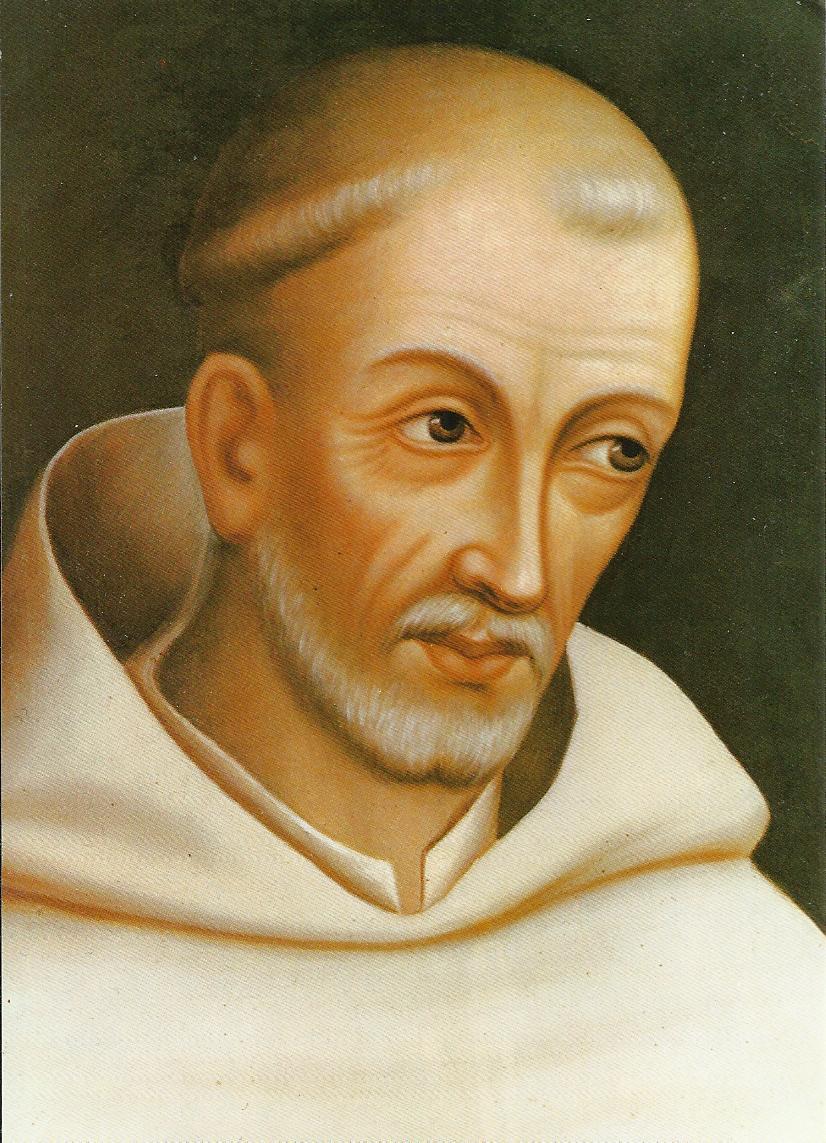
Saint Bernard, abbot

The goodness and humanity of God our Savior have appeared in our midst. We thank God for the many consolations he has given us during this sad exile of our pilgrimage here on earth. Before the Son of God became man his goodness was hidden, for God’s mercy is eternal, but how could such goodness be recognized? It was promised, but it was not experienced, and as a result few have believed in it. Often and in many ways the Lord used to speak through the prophets. Among other things, God said: I think thoughts of peace and not of affliction. But what did men respond, thinking thoughts of affliction and knowing nothing of peace? They said: Peace, peace, there is no peace. This response made the angels of peace weep bitterly, saying: Lord, who has believed our message? But now men believe because they see with their own eyes, and because God’s testimony has now become even more credible. He has gone so far as to pitch his tent in the sun so even the dimmest eyes see him.

Notice that peace is not promised but sent to us; it is no longer deferred, it is given; peace is not prophesied but achieved. It is as if God the Father sent upon the earth a purse full of his mercy. This purse was burst open during the Lord’s passion to pour forth its hidden contents—the price of our redemption. It was only a small purse, but it was very full. As the Scriptures tell us: A little child has been given to us, but in him dwells all the fullness of the divine nature. The fullness of time brought with it the fullness of divinity. God’s Son came in the flesh so that mortal men could see and recognize God’s kindness. When God reveals his humanity, his goodness cannot possibly remain hidden. To show his kindness what more could he do beyond taking my human form? My humanity, I say, not Adam’s—that is, not such as he had before his fall.

How could he have shown his mercy more clearly than by taking on himself our condition? For our sake the Word of God became as grass. What better proof could he have given of his love? Scripture says: Lord, what is man that you are mindful of him; why does your heart go out to him? The incarnation teaches us how much God cares for us and what he thinks and feels about us. We should stop thinking of our own sufferings and remember what he has suffered. Let us think of all the Lord has done for us, and then we shall realize how his goodness appears through his humanity. The lesser he became through his human nature the greater was his goodness; the more he lowered himself for me, the dearer he is to me. The goodness and humanity of God our Savior have appeared, says the Apostle.

Truly great and manifest are the goodness and humanity of God. He has given us a most wonderful proof of his goodness by adding humanity to his own divine nature.


Octave of Christmas
The Holy Family of
— Jesus, Mary and Joseph —
 

“Abram put his faith in the LORD, who attributed it to him as an act of righteousness.” (Genesis 15:6)

In commenting upon this verse from today’s First Reading, Saint John Chrysostom writes:

“Accordingly let us learn, I beseech you, a lesson for ourselves as well from the patriarch: Let us believe in the words of God and trust in his promise. Let us not apply the yardstick of our own reasoning but give evidence of deep gratitude. This, you see, will succeed in making us also be seen to be righteous and will quickly cause us to attain to the promise made by him. In Abraham’s case, however, the promise was made that a complete multitude would develop from his descendants. The effect of the promise was beyond the limits of nature and human logic. Hence faith in God won righteousness for him. In our case, if we are alert enough to see it, he promised much more. We are able in great measure to transcend human reasoning, provided we believe in the power of the One who promises, in order that we may gain also righteousness from faith and attain to the good things promised.” (Homilies on Genesis, 36)
 
 
Collect
O God, who were pleased to give us
the shining example of the Holy Family,
graciously grant that we may imitate them
in practicing the virtues of family life
and in the bonds of charity,
and so, in the joy of your house,
delight one day in eternal rewards.
Through our Lord Jesus Christ, your Son,
Who lives and reigns with You
in the unity of the Holy Spirit,
one God, for ever and ever. Amen.


Glory to the Father
and to the Son
and to the Holy Spirit:
as it was in the beginning,
is now, and will be forever. Amen


Nazareth: a Model

From an address by Blessed Paul VI, pope
Nazareth, 5 January 1964

Nazareth is a kind of school where we may begin to discover what Christ’s life was like and even to understand his Gospel. Here we can observe and ponder the simple appeal of the way God’s Son came to be known, profound yet full of hidden meaning. And gradually we may even learn to imitate him.

Here we can learn to realize who Christ really is. And here we can sense and take account of the conditions and circumstances that surrounded and affected his life on earth: the places, the tenor of the times, the culture, the language, religious customs, in brief, everything which Jesus used to make himself known to the world. Here everything speaks to us, everything has meaning. Here we can learn the importance of spiritual discipline for all who wish to follow Christ and to live by the teachings of his Gospel.

How I would like to return to my childhood and attend the simple yet profound school that is Nazareth! How wonderful to be close to Mary, learning again the lesson of the true meaning of life, learning again God’s truths. But here we are only on pilgrimage. Time presses and I must set aside my desire to stay and carry on my education in the Gospel, for that education is never finished. But I cannot leave without recalling, briefly and in passing; some thoughts I take with me from Nazareth.

First, we learn from its silence. If only we could once again appreciate its great value. We need this wonderful state of mind, beset as we are by the cacophony of strident protests and conflicting claims so characteristic of these turbulent times. The silence of Nazareth should teach us how to meditate in peace and quiet, to reflect on the deeply spiritual, and to be open to the voice of God’s inner wisdom and the counsel of his true teachers. Nazareth can teach us the value of study and preparation, of meditation, of a well-ordered personal spiritual life, and of silent prayer that is known only to God.

Second, we learn about family life. May Nazareth serve as a model of what the family should be. May it show us the family’s holy and enduring character and exemplify its basic function in society: a community of love and sharing, beautiful for the problems it poses and the rewards it brings, in sum, the perfect setting for rearing children—and for this there is no substitute.

Finally, in Nazareth, the home of a craftsman’s son, we learn about work and the discipline it entails. I would especially like to recognize its value—demanding yet redeeming—and to give it proper respect. I would remind everyone that work has its own dignity. On the other hand, it is not an end in itself. Its value and free character, however, derive not only from its place in the economic system, as they say, but rather from the purpose it serves.

In closing, may I express my deep regard for people everywhere who work for a living. To them I would point out their great model, Christ their brother, our Lord and God, who is their prophet in every cause that promotes their well-being.


Octave of Christmas
— Saint Stephen, the First Martyr —
 

“Now Stephen, filled with grace and power, was working great wonders and signs among the people....” (Acts 6:8)

In commenting upon this verse from today’s Mass Readings, Saint John Chrysostom writes:

“See how even among the seven there was one who was preeminent and who won the first prize. For although the ordination was common to all seven, he drew upon himself greater grace. And notice how he worked no [signs and wonders] before this, but only when he became publicly known. This was to show that the gift of preaching alone is not sufficient and that there is also need of the ordination. Thus was the assistance of the Spirit gained. For if they were full of the Spirit, clearly it came from the bath of baptism.” (Homilies on the Acts of the Apostles, 15)
 
 
Collect
Grant, Lord, we pray,
that we may imitate what we worship,
and so learn to love even our enemies,
for we celebrate the heavenly birthday
of a man who knew
how to pray even for his persecutors.
Through our Lord Jesus Christ, your Son,
Who lives and reigns with You
in the unity of the Holy Spirit,
one God, for ever and ever. Amen.


Glory to the Father
and to the Son
and to the Holy Spirit:
as it was in the beginning,
is now, and will be forever. Amen


The Birth of the Rebel, Jesus

The sounds are characteristic of the Season. As soon as the melody of any number of Christmas carols chime, the lyrics fill our minds and once again remind us of the uniqueness of ‘the most wonderful time of the year.’ Occasionally a song comes along that we have not heard and we ask, ‘Is this a Christmas song?’ Back in the 1970’s, composer and musician Jackson Browne wrote “The Rebel Jesus” and it appeared on the Chieftans’ Christmas album, “The Bells of Dublin” a decade later. Consider the following stanzas:

We guard our world with locks and guns
And we guard our fine possessions
And once a year when Christmas comes
We give to our relations
And perhaps we give a little to the poor
If the generosity should seize us
But if any one of us should interfere
In the business of why they are poor
They get the same as the rebel Jesus

But please forgive me if I seem
To take the tone of judgment
For I’ve no wish to come between
This day and your enjoyment
In this life of hardship and of earthly toil
We have need for anything that frees us
So I bid you pleasure
And I bid you cheer
From a heathen and a pagan
On the side of the rebel Jesus.


Jesus, a rebel? Let’s face it, it is not one of the words we typically use to describe the Person and His work, especially at this time of the Year. Many of our images of Jesus unfortunately have ‘tamed’ or ‘domesticated’ Him into being nothing more than a nice man who looks like one of the Bee Gees and taught people to be nice. (Consider a previous post on the nostalgia of the manger.) We have lost the ‘sting’ that much of His teaching brought to humanity and as such we have refashioned a Jesus Who is comfortable and easy-going. With a refashioned Jesus even the celebration of His Nativity has been re-written. ‘Christmas is (fill in the blank). Christmas is for (fill in the blank).’


The reality is that no other person in recorded history has left such a mark on humanity. His birth, while legitimately celebrated with family, friends, gifts, food and good cheer, is actually a most inconvenient event for humanity. Why is Jesus’ birth an inconvenience? Essentially, His birth challenges the status quo of self-serving entitlement and mediocrity calling us to take a stand as He in fact did throughout His life with and among us.

Biblically, “to rebel” is not always a bad action. In the languages of both Testaments, “to rebel” means “to stand for, to stand with” or “to stand against.” Is this not precisely what Jesus the Rebel did when He walked the Earth? Throughout His ministry, He continuously “stood for” doing His Father’s will. Doing the Father’s will is adoring, worshipping and living in right-relationship with God our Father, each other and all of creation. It is “standing for” the Father’s will in all things, not just the issues or actions I choose. It is “standing for” the right actions that reverences life, feeds the hungry, shelters the homeless and consoles the sorrowing, to name only a few (see Matthew 25:31-45 for more on the Corporal Works of Mercy as well as their complement, the Spiritual Works of Mercy). The Rebel Jesus “stands with” His people, never abandoning them in times of difficulty or adversity. The Rebel Jesus ‘runs into’ situations to be with the suffering and sorrowing, not running away to seek individual relief and comfort. The Rebel Jesus most inconveniently “stands against” sin, oppression, selfishness and arrogance expressed in any form that demeans the dignity and sacredness of the human person. The Rebel Jesus challenges structures of society – both civil and religious – when authority is abused to make one’s life comfortable at the expense of another.

In many of his addresses (most especially at Christmas Mass), Pope Francis has exhorted all of us to permit Jesus to find each of us in the encounter He [Jesus] desires. As God, Jesus took on a full, complete human nature in all things but sin so that we in turn may be free from sin and live as sons and daughters of our Loving Father. What a Gift we have been given in His birth, a birth that challenges us to be rebels like Him in standing for His Kingdom and His way of living.

May this Christmas be the moment to act and to stand ‘for, and with’ Jesus; and to act and to stand ‘against’ everything that is not of Him.


— Nativity of the Lord —
Mass during the Day
 

“How beautiful upon the mountains are the feet of him who brings glad tidings, announcing peace, bearing good news, announcing salvation, and saying to Zion, “Your God is King!”” (Isaiah 11:1)

Saint Jerome offers the following insight on this verse from today’s First Reading:

“Christ brought peace to all things in heaven and earth through the blood of his cross. He said to the apostles, “My peace I give to you, my peace I leave to you,” and he announced good things to us, not that which is called “indifference” by philosophers, but things which are truly good, which the Father gives to those seeking him — that is all the graces of the Holy Spirit.

Paul, following the sense of the Hebrew truth in the epistle to the Romans puts it, “How beautiful are the feet of those proclaiming good news, proclaiming peace,” meaning the apostles whose feet the Lord washed, that they are clean and fair for preaching and to run through the world, quickly filling the globe with the doctrine of Christ. Following the Septuagint and the ambi guity of the Greek word, hōra means either “time” or “beauty.” If “beauty” is meant, then we might refer to what is said in the psalm, “Beautiful in appearance before the sons of men” — for what is more beautiful than for the form of a servant to become the form of God and to sit and reign with Christ in heaven?.” (Commentary on Isaiah, 14)


Collect
O God,
Who wonderfully created
the dignity of human nature
and still more wonderfully restored it,
grant, we pray,
that we may share in the divinity of Christ,
Who humbled Himself to share in our humanity.
Who lives and reigns with You
in the unity of the Holy Spirit,
one God, for ever and ever.


Glory to the Father
and to the Son
and to the Holy Spirit:
as it was in the beginning,
is now, and will be forever. Amen


Nativity of the Lord
Mass During the Night
2014
 

Antiphon
The Lord said to me: You are my Son. It is I Who has begotten You today. (cf Psalm 2:7).

Collect
O God,
Who have made this most sacred night
radiant with the splendor of the true light,
grant, we pray, that we,
who have known the mysteries
of His light on earth,
may also delight in His gladness in heaven.
Who lives and reigns with You
in the Unity of the Holy Spirit,
on God for ever and ever. Amen.

Responsorial Psalm
Today is born our Savior, Christ the Lord. (cf. Luke 2:11, Psalm 96).

Scripture Excerpt
“While they were there, the time came for her to have her child, and she gave birth to her firstborn son. She wrapped him in swaddling clothes and laid him in a manger (ἐν φάτνῃ, en phatne), because there was no room for them in the inn. Now there were shepherds in that region living in the fields and keeping the night watch over their flock. The angel of the Lord appeared to them and the glory of the Lord shone around them, and they were struck with great fear. The angel said to them, “Do not be afraid; for behold, I proclaim to you good news of great joy that will be for all the people. For today in the city of David a savior has been born for you who is Messiah and Lord. And this will be a sign (σημεῖον, semeion) for you: you will find an infant wrapped in swaddling clothes and lying in a manger (ἐν φάτνῃ, en phatne).” (Luke 2:6-12).”


Reflection
In the Christian world, the Nativity scene is a staple of this Sacred Season. Nativity sets, as some refer to them, come in all sorts of shapes, sizes, colors, textures and occasionally appear living, complete with a newborn infant and various animals. Rooted probably in the ministry and preaching of Saint Francis of Assisi, the Nativity scene that appeared in the 13th century was intended to convey the historic reality of the Savior's birth and thereby teach the goodness of human nature and indeed all creation. Over the years, various artistic renderings of the Bethlehem event have taken on a life of its own and one might venture that some distance has grown between the typical Nativity set and life in first-century Bethlehem.

Take, for example, the usual depiction of the manger. Generally you see clean-sawed wood that is smooth to the touch, devoid of splinters and rough spots. Many mangers are small, just big enough to cradle a newborn infant (how convenient) with hay or straw that is not only clean, but nicely ‘quaffed’ for a great picture.

In the first-century, the φάτνη (phatne) was as a feeding trough for all the animals. It could be wooden or stone and in either case, it had to be big enough and sturdy enough to service the needs of one’s animals. For the Evangelist Saint Luke, the striking point about the φάτνη (phatne) is what goes into it: food — AND — food for all. As a source of food, animals were smart enough to be drawn to the φάτνη (phatne) for their daily sustenance. No doubt, the φάτνη (phatne) certainly was not a sterile environment, to say the least. With all the animals helping themselves to what was in the φάτνη (phatne), things were bound to get a bit messy and smelly; plus the animals needed ‘to learn’ how to co-exist with one another at the φάτνη (phatne) — not at all an easy task.


Grasping the significance of the φάτνη (phatne) is a vital task of the Christmas event. No less than an “angel of the Lord” (someone you do not want to mess around with in Sacred Scripture!) reveals to shepherds that the φάτνη (phatne) is part of a σημεῖον (sēmeíon, sign). Saint Luke's use of σημεῖον (sēmeíon) recalls words of the Prophet Isaiah to Ahaz (“But Ahaz answered, “I will not ask! I will not tempt the LORD!” Then he said: Listen, O house of David! Is it not enough for you to weary men, must you also weary my God? Therefore the Lord himself will give you this sign: the virgin shall be with child, and bear a son, and shall name him Immanuel.” (Isaiah 7:11-14)” Why did Ahaz protest a sign? Why didn’t he want a sign? It seems so contrary to human nature. Even in our day, we cry out in our prayers “Give me a sign, O God!” As corrupt as he was, Ahaz knew that to receive a σημεῖον (sēmeíon) from God required action and change on his part. Biblically, a σημεῖον (sēmeíon) is not passive. Biblical signs are not ‘take-it or leave-it realities.’ The σημεῖον (sēmeíon) calls forth a response from the person or persons to whom the sign is given and often time the response involves some aspect of ongoing conversion on the part of the recipient.

Thus the φάτνη (phatne) of Bethlehem - a σημεῖον (sēmeíon) given by an “angel of the Lord” - is not a nice, warm, fluffy nostalgic ‘take-it’ or ‘leave-it’ object that conjures up memories of Christmas past. “Today is born our Savior, Christ the Lord,” we chant following the Isaian proclamation. Notice the word today. We gather today to celebrate an event is not confined or locked in the past. Yes, we celebrate a historic event, most definitely - AND - we celebrate an event that is also most present: God-in-the-flesh Who is Emmanuel: God-with-us. What exactly does that mean for each disciple of Jesus? The ‘answer’ to that question requires each to imitate the shepherds who went in haste (Luke 2:16) to Bethlehem (the city whose name in Hebrew means “House (or home) of Bread”). In other words, the shepherds did not procrastinate. The shepherds did not permit their attention to wander off point. The angel said go, and go they did! To go to Bethlehem is to encounter the σημεῖον (sēmeíon) and to be changed. Bethlehem for us is as close as the Altar of our parish Church. It is going to that φάτνη (phatne) where we will be given “our daily Bread” Who transforms our lives by filling them with His joy.


Advent: 24 December
(Morning Mass)
 

“... when your days have been completed and you rest with your ancestors, I will raise up your offspring after you, sprung from your loins, and I will establish his kingdom.” (2 Samuel 7:12)

Saint Basil the Great offers the following insight on this verse from today's First Reading:

“However, the tribe of Judah did not fail until he came for whom it was reserved, who did not himself sit upon a material throne, for the kingdom of Judea had now been transferred to Herod, the son of Antipater, the Ascalonite, and to his sons, who divided Judea into four provinces when Pilate was governor and Tiberius held the power over the whole Roman province. But his indestructible kingdom he calls the throne of David on which the Lord sat. He himself is “the expectation of nations,” not of the least part of the world. “For there will be the root of Jesse,” it is said, “and he who rises up to rule the Gentiles, in him the Gentiles will hope.” “For I have placed you for a covenant of the people, for a light of the Gentiles.” “And I shall establish,” it is said, “his seed forever, and his throne as the days of the heavens.” (Letter 236)


Collect
Come quickly, we pray, Lord Jesus,
and do not delay,
that those who trust in your compassion
may find solace and relief in your coming.
Who lives and reigns with You
in the unity of the Holy Spirit,
one God, for ever and ever. Amen.


Glory to the Father
and to the Son
and to the Holy Spirit:
as it was in the beginning,
is now, and will be forever. Amen


Advent: 23 December
O Emmanuel, our King and Lawgiver
 

“Now I am sending my messenger — he will prepare the way before me; and the lord whom you seek will come suddenly to his temple; the messenger of the covenant whom you desire — see, he is coming! says the LORD of hosts.” (1 Malachi 3:1)

Saint Augustine of Hippo comments on this verse from the First Reading proclaimed at Mass today:

“Speaking further of Christ in the same vein, Malachi says, “Behold, I send my angel, and he shall prepare the way before my face. And presently the Lord, whom you seek, and the angel of the testament whom you desire, shall come into the temple. Behold, he comes, says the Lord of hosts. And who shall be able to think of the day of his coming? And who shall stand to see him?” In this text he foretells both comings of Christ, the first and the second — the first where he says, “And presently the Lord shall come into his temple.” This refers to Christ’s body, of which he himself said in the Gospel, “Destroy this temple, and in three days I will raise it up.”1 His second coming is foretold in these words: “‘Behold, he comes,’ says the Lord of hosts. ‘And who shall be able to think of the day of his coming? And who shall stand to see him?’” (City of God, 18)


Collect
Almighty ever-living God,
as we see how the Nativity of your Son
according to the flesh draws near,
we pray that to us, your unworthy servants,
mercy may flow from your Word,
who chose to become flesh of the Virgin Mary
and establish among us his dwelling,
Jesus Christ our Lord.
Who lives and reigns with You
in the unity of the Holy Spirit,
one God, for ever and ever. Amen.


Glory to the Father
and to the Son
and to the Holy Spirit:
as it was in the beginning,
is now, and will be forever. Amen


Advent: 22 December
— O King of the Nations —
 

“Once he was weaned, she brought him up with her, along with a three-year-old bull, an ephah of flour, and a skin of wine, and presented him at the house of the LORD in Shiloh.” (1 Samuel 1:24)

Saint Augustine of Hippo comments on this verse from the First Reading proclaimed at Mass today:

“Considering all these things, and whatever else the Lord shall have made known to you in this matter, which either does not occur to me or would take too much time to state here, strive in prayer to overcome this world: pray in hope, pray in faith, pray in love, pray earnestly and patiently, pray as a widow belonging to Christ. For although prayer is, as he has taught, the duty of all his members, that is, of all who believe in him and are united to his body, a more assiduous attention to prayer is found to be specially enjoined in Scripture upon those who are widows. Two women of the name of [Hannah] are honorably named there — the one, Elkanah’s wife, who was the mother of holy Samuel; the other, the widow who recognized the Most Holy One when he was yet a babe. [Hannah], though married, prayed with sorrow of mind and brokenness of heart because she had no sons; and she obtained Samuel and dedicated him to the Lord, because she vowed to do so when she prayed for him.” (Letter 130)


Collect
O God,
Who, seeing the human race fallen into death,
willed to redeem it
by the coming of Your Only Begotten Son,
grant, we pray,
that those who confess His Incarnation
with humble fervor
may merit His company as their Redeemer.
Who lives and reigns with You
in the unity of the Holy Spirit,
one God, for ever and ever. Amen.


Glory to the Father
and to the Son
and to the Holy Spirit:
as it was in the beginning,
is now, and will be forever. Amen


— The Lord’s Day —
Advent: 21 December
 
O Dawn of the East,
Brightness of the Light Eternal
 

“... when your days have been completed and you rest with your ancestors, I will raise up your offspring after you, sprung from your loins, and I will establish his kingdom.” (2 Samuel 7:12)

Saint Basil the Great offers the following insight on this verse from today's First Reading:

“However, the tribe of Judah did not fail until he came for whom it was reserved, who did not himself sit upon a material throne, for the kingdom of Judea had now been transferred to Herod, the son of Antipater, the Ascalonite, and to his sons, who divided Judea into four provinces when Pilate was governor and Tiberius held the power over the whole Roman province. But his indestructible kingdom he calls the throne of David on which the Lord sat. He himself is “the expectation of nations,” not of the least part of the world. “For there will be the root of Jesse,” it is said, “and he who rises up to rule the Gentiles, in him the Gentiles will hope.” “For I have placed you for a covenant of the people, for a light of the Gentiles.” “And I shall establish,” it is said, “his seed forever, and his throne as the days of the heavens.” (Letter 236)


Collect
Pour forth, we beseech you, O Lord,
your grace into our hearts,
that we, to whom the Incarnation of Christ your Son
was made known by the message of an Angel,
may by his Passion and Cross
be brought to the glory of his Resurrection.
Who lives and reigns with You
in the unity of the Holy Spirit,
one God, for ever and ever. Amen.


Glory to the Father
and to the Son
and to the Holy Spirit:
as it was in the beginning,
is now, and will be forever. Amen


Advent: 20 December
O Key of David and Sceptre of the house of Israel
 

“Therefore the Lord himself will give you a sign; the young woman, pregnant and about to bear a son, shall name him Emmanuel.” (Isaiah 7:14)

Saint Gregory of Nazianzus reflects on this verse from today’s First Reading:

“Humanity was blended with God, and he was one. The more powerful predominated in order that I might become god just as he became human. Although he was already begotten, he was born of a woman, who was a virgin. Because his birth was from a woman, it was human. Because she was a virgin, it was divine. He had neither a human father nor a divine mother.” (On the Son (Theological Oration), 3)


Collect
O God, eternal majesty, Whose ineffable Word
the immaculate Virgin received
through the message of an Angel
and so became the dwelling-place of divinity,
filled with the light of the Holy Spirit,
grant, we pray, that by her example
we may in humility hold fast to Your will.
Through our Lord Jesus Christ, Your Son,
Who lives and reigns with You
in the unity of the Holy Spirit,
one God, for ever and ever. Amen.


Glory to the Father
and to the Son
and to the Holy Spirit:
as it was in the beginning,
is now, and will be forever. Amen


Advent: 19 December
 

“There was a certain man from Zorah, of the clan of the Danites, whose name was Manoah. His wife was barren and had borne no children.” (Judges 13:2)

Saint Ambrose of Milan offers the following insight on this verse from today’s First Reading:

When the spirit of the Hebrews had been so crushed by long and injurious subjection that no one with manly vigor dared to encourage them to freedom, there arose in their behalf a great hero, Samson, whose destiny was ordained by God’s words. He was not numbered with the many, but outstanding among the few; he was without question easily reckoned as surpassing all in bodily strength. We must regard him with great admiration from the very beginning, not because he gave great evidence of temperance and sobriety from boyhood by abstaining from wine, nor because as a Nazarite he was ever faithful to guard his sacred trust, with locks unshorn, but because from his youth — a period of softness in others, but truly remarkable in him — he worked amazing deeds of strength, perfect beyond the measure of human nature. By his deeds he soon gained credence for that divine prophecy. For no slight cause had such great graces preceded him that an angel came down to foretell to his parents his unexpected birth, the leadership he would hold and the protection he would give his people who had been tormented so long by the oppressive rule of the Philistines.

His godfearing father was of the tribe of Dan, of no low station in life, preeminent among others. His mother, a barren woman, was not unfruitful in the virtues of the soul. She was worthy to receive into the dwelling of her soul the vision of an angel, whose command she obeyed and whose words she fulfilled. She did not permit herself to know even the secrets of God without her husband’s sharing of them; she told him that a man of God had appeared to her, of wondrous beauty, bringing her a prophecy that a child would be born. Because she trusted his promises she shared with her husband her trust in these heavenly pledges.” (Letter 35)


Collect
O God,
Who through the child-bearing of the holy Virgin
graciously revealed the radiance
of Your glory to the world,
grant, we pray,
that we may venerate with integrity of faith
the mystery of so wondrous an Incarnation
and always celebrate it with due reverence.
Through our Lord Jesus Christ, your Son,
Who lives and reigns with You
in the unity of the Holy Spirit,
one God, for ever and ever. Amen.


Glory to the Father
and to the Son
and to the Holy Spirit:
as it was in the beginning,
is now, and will be forever. Amen


Advent: 18 December
 

“See, days are coming when I will raise up a righteous branch for David; As king he shall reign and govern wisely, he shall do what is just and right in the land.” (Jeremiah 23:5)

Pope Saint Leo the Great offers the following insight on these verses from today’s Gospel:

“There was only one remedy in the secret of the divine plan that could help the fallen living in the general ruin of the entire human race. This remedy was that one of the sons of Adam should be born free and innocent of original transgression, to prevail for the rest by his example and by his merits. This was not permitted by natural generation. There could be no clean offspring from our faulty stock by this seed. The Scripture says, “Who can make a clean thing conceived of an unclean seed? Isn’t it you alone?” David’s Lord was made David’s Son, and from the fruit of the promised branch sprang. He is one without fault, the twofold nature coming together into one person. By this one and the same conception and birth sprung our Lord Jesus Christ, in whom was present both true Godhead for the performance of mighty works and true manhood for the endurance of sufferings.” (Sermon 28)


Collect
Grant, we pray, almighty God,
that we, who are weighed down from of old
by slavery beneath the yoke of sin,
may be set free by the newness
of the long-awaited Nativity
of Your Only Begotten Son.
Who lives and reigns with You
in the unity of the Holy Spirit,
one God, for ever and ever.


Glory to the Father
and to the Son
and to the Holy Spirit:
as it was in the beginning,
is now, and will be forever. Amen


Advent: 17 December
 

“You, Judah, shall your brothers praise your hand on the neck of your enemies; the sons of your father shall bow down to you. Judah is a lion’s cub, you have grown up on prey, my son. He crouches, lies down like a lion, like a lioness—who would dare rouse him?” (Genesis 49:8-9)

Saint Ambrose of Milan offers the following insight on this verse from today’s Gospel:

“A lion’s whelp is Judah.” Isn’t it clear that he represented the Father and manifested the Son? Is there any clearer way to teach that God the Son is of one nature with the Father? The one is the lion, the other the lion’s whelp. By this paltry comparison, their unity in the same nature and power is perceived. King proceeds from king, a strong one from one who is strong. Because Jacob foresaw that there would be those to claim that the Son was younger in age, he replied to them by adding, “From my seed you have come up to me. Resting you have slept like a lion and like a whelp.” And in a different passage you find that the whelp is himself “the lion of the tribe of Judah.” But the Son is not being named in such a way as to be separated from the Father. Jacob, who confesses the Son, also esteems him equal.

Moreover, he represented the Son’s incarnation in a wonderful fashion when he said, “From my seed you have come up to me.” For Christ sprouted in the womb of the Virgin like a shrub upon the earth; like a flower of pleasing fragrance, he was sent forth in the splendor of new light and came up from his mother’s vitals for the redemption of the entire world. Just so, Isaiah says, “There shall come forth a rod out of the root of Jesse, and a flower shall come up out of the root.” The root is the household of the Jews, the rod is Mary, the flower of Mary is Christ. She is rightly called a rod, for she is of royal lineage, of the house and family of David. Her flower is Christ, who destroyed the stench of worldly pollution and poured out the fragrance of eternal life. ”

Therefore you have become acquainted with the incarnation; learn of the passion. “Resting, you have slept like a lion.” When Christ lay at rest in the tomb, it was as if he were in a kind of bodily sleep, as he himself says, “I have slept and have taken my rest and have risen up, because the Lord will sustain me.” On this account also Jacob says, “Who will arouse him?” that is, him whom the Lord will take up. Who else is there to rouse him again, unless he rouses himself by his own power and the power of the Father? I see that he was born by his own authority, I see that he died by his own will; I see that he sleeps by his own power. He did all things by his own dominion; will he need the help of someone else to rise again? Therefore he is the author of his own resurrection, he is the judge of his death; he is expected by the nations. (The Patriarchs, 4)


Collect
O God, Creator and Redeemer of human nature,
who willed that your Word should take flesh
in an ever-virgin womb,
look with favor on our prayers,
that your Only Begotten Son,
having taken to himself our humanity,
may be pleased to grant us a share in his divinity
Who lives and reigns with You
in the unity of the Holy Spirit,
one God, for ever and ever. Amen.


Glory to the Father
and to the Son
and to the Holy Spirit:
as it was in the beginning,
is now, and will be forever. Amen


Advent Week 3: Tuesday

“From beyond the rivers of Ethiopia and as far as the recesses of the North, they shall bring me offerings.” (Zephaniah 3:10)

Origen of Alexandria comments on these verses from the Gospel proclaimed at Mass today:

“f anyone is able, insofar as he found that Israel is saved “after the full number of pagan nations,” let him consider having passed over by reason the remaining period, when it is that “all serve God under a single yoke,” according to what is said in Zephaniah, “And from the ends of Ethiopia they offer sacrifices to him,” when, as it is said in the sixty-seventh psalm, “Ethiopia stretches forth its hand to God,” and “to the kings of the earth” the word commands, saying, “Sing to the Lord, raise a psalm to the God of Jacob.” (Homilies on Jeremiah, 5)


Collect
O God,
Who through Your Only Begotten Son
have made us a new creation,
look kindly, we pray,
on the handiwork of Your mercy,
and at Your Son’s coming
cleanse us from every stain of the old way of life.
Through our Lord Jesus Christ, your Son,
Who lives and reigns with You
in the unity of the Holy Spirit,
one God, for ever and ever. Amen.


Glory to the Father
and to the Son
and to the Holy Spirit:
as it was in the beginning,
is now, and will be forever. Amen


Advent Week 3: Monday
 

“I see him, though not now; I behold him, though not near: A star shall advance from Jacob, and a staff shall rise from Israel, That shall smite the brows of Moab, and the skulls of all the Shuthites...” (Numbers 24:17)

In commenting upon this verse from today’s Mass Readings, Saint John Chrysostom writes:

“Listen to the Evangelist’s words about Caiaphas, the high priest of the Jews: “He did not give this as a personal opinion, but in his capacity of high priest that year he prophesied that Jesus was destined to die, not for the person alone but to bring together into one also the nations that had been scattered.” You will find something like it occurring again in the story of Balaam also: When urged to curse the people, he not merely did not curse them but even prophesied great and wonderful things, not merely about the people but also about the coming of the Savior.” (Homilies on Genesis, 21)
 
 
Collect
Incline a merciful ear to our cry,
we pray, O Lord,
and,
casting light on the darkness of our hearts,
visit us with the grace of your Son.
Who lives and reigns with You
in the unity of the Holy Spirit,
one God, for ever and ever. Amen.


Glory to the Father
and to the Son
and to the Holy Spirit:
as it was in the beginning,
is now, and will be forever. Amen


— The Lord’s Day —
Advent Week 3: Sunday
 

“The spirit of the Lord GOD is upon me, because the LORD has anointed me; He has sent me to bring good news to the afflicted, to bind up the brokenhearted, To proclaim liberty to the captives, release to the prisoners. To announce a year of favor from the LORD and a day of vindication by our God.” (Isaiah 61:1-2)

Saint Cyril of Alexandria reflects on these verses from today’s First Reading:

“Being God by nature, the Only Begotten is the holy of holies, and he sanctifies all creation and so originates from the holy Father with the Holy Spirit proceeding from him and sending in the power from above to those on earth who recognize him. How was he sanctified? For he is God and man equally; he gives the Spirit to creation but receives the Spirit on account of being human.

“Acceptable” is that year in which we were received, when we took kinship with him, having our sins washed away through holy baptism and becoming partakers of the divine nature through the sharing of the Holy Spirit. Or “acceptable” is the year in which he revealed his glory through the divine miracle attesting the message. We received the time for salvation gladly — the day of reckoning is none other than the time of his dwelling among us in which the reckoning has been given by him to those believing in him through the promise in hope. For the Savior himself said, “Now is the judgment of this world, now is the prince of the world cast out.” The time of reckoning, then, is in this manner, when Christ illuminated the world.” (Commentary on Isaiah, 5)


Collect
O God, who see how your people
faithfully await the feast of the Lord’s Nativity,
enable us, we pray,
to attain the joys of so great a salvation
and to celebrate them always
with solemn worship and glad rejoicing.
Through our Lord Jesus Christ, Your Son,
Who lives and reigns with You
in the unity of the Holy Spirit,
one God, for ever and ever. Amen.


Glory to the Father
and to the Son
and to the Holy Spirit:
as it was in the beginning,
is now, and will be forever. Amen


— Saint Lucy —
Advent Week 2: Saturday
 

“Until like fire a prophet appeared, his words a flaming furnace.” (Sirach 48:1)

Origen of Alexandria offers the following insight on this verse from today’s Gospel:

“If we understand what it means to be subject to Christ, especially in light of the passage, “And when everything is subject, he also, the Son, will subject himself to him who made everything subject to him,” then we will understand the lamb of God who takes on himself the sin of the world in a way worthy of the goodness of the God of the universe. And yet the lamb does not take on himself the sins of all, if they do not suffer and experience torment until their sins are taken from them. There are in fact thorns that are not merely loose but firmly stuck in the hands of whoever is so drunk with vice as to even forget the state of sobriety, as it says in Proverbs, “Thorns are hidden in the hands of a drunkard.” Must we spend words describing what troubles such implanted evils cause to the one who accepts them in the body of his soul? One who has accepted moral evil so deeply in his soul as to become a land that produces thorns needs to be deeply cut by the living Logos of God, which is “effective and sharper than any two-edged sword,” hotter than any fire. Into a soul reduced to this state, that fire must be sent that is capable of finding the thorns and getting at them in virtue of its divinity, without setting fire to the stems and ears of the fields. Many are the ways in which the Lamb of God takes away the sins of the world, in the first place through the sacrifice of himself. Some of these ways can be shown to the many, while others are hidden to them and known only to those considered worthy of the divine wisdom.” (Commentary on the Gospel of Luke, 6.)


Collect
May the glorious intercession
of the Virgin and Martyr Saint Lucy
give us new heart, we pray, O Lord,
so that we may celebrate her heavenly birthday
in this present age
and so behold things eternal.
Through our Lord Jesus Christ, your Son,
who lives and reigns with You
in the unity of the Holy Spirit,
one God, for ever and ever.


Glory to the Father
and to the Son
and to the Holy Spirit:
as it was in the beginning,
is now, and will be forever. Amen


— Our Lady of Guadalupe —
Advent Week 2: Friday
 

“And coming to her, he [Gabriel] said, “Hail, favored one! The Lord is with you.” (Luke 1:28)

Origen of Alexandria offers the following insight on this verse from today’s Gospel:

“The angel greeted Mary with a new address, which I could not find anywhere else in Scripture. I ought to explain this expression briefly. The angel says, "Hail, full of grace." I do not remember having read this word elsewhere in Scripture. An expression of this kind, "Hail, full of grace," is not addressed to a male. This greeting was reserved for Mary alone. Mary knew the Law; she was holy, and had learned the writings of the prophets by meditating on them daily. If Mary had known that someone else had been greeted by words like these, she would never have been frightened by this strange greeting. Hence the angel says to her, "Do not be afraid, Mary! You have found grace in God’s eyes. Behold, you will conceive in your womb. You will bear a son, and you will name him ‘Jesus.’ He will be great, and will be called ‘Son of the Most High.’” (Homilies on the Gospel of Luke, 6.)


Collect
O God, Father of mercies,
who placed your people
under the singular protection
of your Son’s most holy Mother,
grant that all who invoke
the Blessed Virgin of Guadalupe,
may seek with ever more lively faith
the progress of peoples
in the ways of justice and of peace.
Through our Lord Jesus Christ, your Son,
who lives and reigns with You
in the unity of the Holy Spirit,
one God, for ever and ever.


Glory to the Father
and to the Son
and to the Holy Spirit:
as it was in the beginning,
is now, and will be forever. Amen


Advent Week 2: Thursday
 

“For I am the LORD, your God, who grasp your right hand; It is I who say to you, Do not fear, I will help you.” (Isaiah 41:13)

Saint Cyril of Alexandria reflects on this verse from today’s Gospel, writes:

“There are many who think of the holy mysteries and the saving message in disrespectful ways, but they amount to nothing, and such impious adversaries will perish. For those who oppose the divine agents of preaching are doing no less than fighting against the teachings of godliness. For thousands will make war against God’s ministers, but these will end up as though they never existed and will clearly be brought low, falling under the machinery of the wrath of God. [Isaiah] tells them to quit relying on human strength and their own foolhardiness, saying, “I am your God who strengthens your arm,” that is, I am the one who supports you and makes you prevail in any test. I say to you, “Do not be afraid, O little Israel.” (Commentary on Isaiah, 3)


Collect
Stir up our hearts, O Lord,
to make ready the paths
of Your Only Begotten Son,
that through His coming,
we may be found worthy to serve You
with minds made pure.
Through our Lord Jesus Christ, Your Son,
Who lives and reigns with You
in the unity of the Holy Spirit,
one God, for ever and ever. Amen.


Glory to the Father
and to the Son
and to the Holy Spirit:
as it was in the beginning,
is now, and will be forever. Amen