God established a time for his promises and a time for their fulfillment


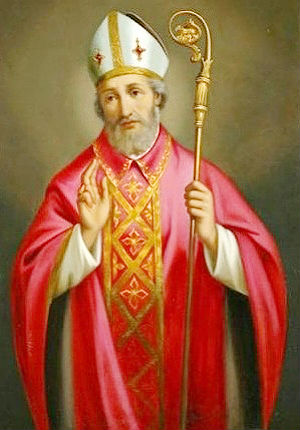
Bishop and Great Western Father of the Church

An excerpt his On the Psalms

Wednesday of the Second Week of Advent

The time for promises was in the time of the prophets, until John the Baptist; from John until the end is the time of fulfillment.

God, who is faithful, put himself in our debt, not by receiving anything but by promising so much. A promise was not sufficient for him; he chose to commit himself in writing as well, as it were making a contract of his promises. He wanted us to be able to see the way in which his promises were redeemed when he began to discharge them. And so the time of the prophets was, as we have often said, the foretelling of the promises.

He promised eternal salvation, everlasting happiness with the angels, an immortal inheritance, endless glory, the joyful vision of his face, his holy dwelling in heaven, and after resurrection from the dead no further fear of dying. This is as it were his final promise, the goal of all our striving. When we reach it, we shall ask for nothing more. But as to the way in which we are to arrive at our final goal, he has revealed this also, by promise and prophecy.

He has promised men divinity, mortals immortality, sinners justification, the poor a rising to glory.

But, brethren, because God’s promises seemed impossible to men — equality with the angels in exchange for mortality, corruption, poverty, weakness, dust and ashes — God not only made a written contract with men, to win their belief but also established a mediator of his good faith, not a prince or angel or archangel, but his only Son. He wanted, through his Son, to show us and give us the way he would lead us to the goal he has promised.

It was not enough for God to make his Son our guide to the way; he made him the way itself, that you might travel with him as leader, and by him as the way.

Therefore, the only Son of God was to come among men, to take the nature of men, and in this nature to be born as a man. He was to die, to rise again, to ascend into heaven, to sit at the right hand of the Father, and to fulfill his promises among the nations, and after that to come again, to exact now what he had asked for before, to separate those deserving his anger from those deserving his mercy, to execute his threats against the wicked, and to reward the just as he had promised.

All this had therefore to be prophesied, foretold, and impressed on us as an event in the future, in order that we might wait for it in faith, not find it a sudden and dreadful reality.

Glory to the Father
and to the Son
and to the Holy Spirit:
as it was in the beginning,
is now, and will be forever. Amen


Tuesday of the Second Week of Advent


“What is your opinion? If a man has a hundred sheep and one of them goes astray, will he not leave the ninety-nine in the hills and go in search of the stray?” (Matthew 18:12.)

Saint Jerome offers the following insight on this verse from today’s Gospel proclamation:

““See that you do not despise one of these little ones,” he is calling us to be merciful. Then he adds the parable of the ninety-nine sheep left in the mountains and the one stray that because of its great weakness could not walk. The good shepherd carried it on his shoulders to the rest of the flock. This, some say, is the shepherd “who, though he was in the form of God, did not count equality with God a thing to be grasped but emptied himself, taking the form of a servant, being born in the likeness of men. And being found in human form he humbled himself and became obedient unto death, even death on a cross.” For that reason he descended to earth: to save the one sheep that had perished, that is, the human race. Others think that by the ninety-nine sheep should be understood the number of the righteous and by the one sheep the number of the sinners, according to what he said in another place: “I have come not to call the righteous but the sinners; for it is not the healthy who have need of the physician but those who are ill.”” (Commentary on Matthew, 3.)


Collect
O God,
Who have shown forth Your salvation
to all the ends of the earth,
grant, we pray,
that we may look forward in joy
to the glorious Nativity of Christ.
Who lives and reigns with You
in the unity of the Holy Spirit,
God, for ever and ever.


Glory to the Father
and to the Son
and to the Holy Spirit:
as it was in the beginning,
is now, and will be forever. Amen


Top


The eschatological character
of the pilgrim Church


Second Vatican Council

An excerpt from Lumen Gentium, 48.

Tuesday of the Second Week of Advent

The Church, to which we are all called in Christ Jesus and in which we acquire holiness through the grace of God, will reach its perfection only in the glory of heaven, when the time comes for the renewal of all things, and the whole world, which is intimately bound up with man and reaches its perfection through him, will, along with the human race, be perfectly restored in Christ.

Lifted above the earth, Christ drew all things to himself. Rising from the dead, he sent his life-giving Spirit upon his disciples, and through the Spirit established his Body, which is the Church, as the universal sacrament of salvation. Seated at the right hand of the Father, he works unceasingly in the world, to draw men into the Church and through it to join them more closely to himself, nourishing them with his own body and blood, and so making them share in his life of glory.

The promised renewal that we look for has already begun in Christ. It is continued in the mission of the Holy Spirit. Through the Spirit it goes on developing in the Church: there we are taught by faith about the meaning also of our life on earth as we bring to fulfilment—with hope in the blessings that are to come—the work that has been entrusted to us in the world by the Father, and so work out our salvation.

The end of the ages is already with us. The renewal of the world has been established, and cannot be revoked. In our era it is in a true sense anticipated: the Church on earth is already sealed by genuine, if imperfect, holiness. Yet, until a new heaven and a new earth are built as the dwelling place of justice, the pilgrim Church, in its sacraments and institutions belonging to this world of time, bears the likeness of this passing world. It lives in the midst of a creation still groaning and in travail as it waits for the sons of God to be revealed in glory.


Glory to the Father
and to the Son
and to the Holy Spirit:
as it was in the beginning,
is now, and will be forever. Amen


Solemnity of the Immaculate Conception of the Blessed Virgin Mary


“And coming to her [Mary], he [Gabriel] said, “Hail, favored one! The Lord is with you.” (Luke 1:28)

Origen of Alexandria (part 2 of Pope Benedict’s reflections on Origen) comments on this verse from the Gospel proclaimed at Mass today:

“The angel greeted Mary with a new address, which I could not find anywhere else in Scripture. I ought to explain this expression briefly. The angel says, “Hail, full of grace.” I do not remember having read this word elsewhere in Scripture. An expression of this kind, “Hail, full of grace,” is not addressed to a male. This greeting was reserved for Mary alone. Mary knew the Law; she was holy, and had learned the writings of the prophets by meditating on them daily. If Mary had known that someone else had been greeted by words like these, she would never have been frightened by this strange greeting. Hence the angel says to her, “Do not be afraid, Mary! You have found grace in God’s eyes. Behold, you will conceive in your womb. You will bear a son, and you will name him ‘Jesus.’ He will be great, and will be called ‘Son of the Most High.’” (Homilies on the Gospel of Luke, 6.)


Collect
O God,
Who by the Immaculate Conception
of the Blessed Virgin prepared a worthy dwelling
for Your Son, grant, we pray,
that, as You preserved her from every stain
by virtue of the Death of Your Son,
which You foresaw,
so, through her intercession, we, too,
may be cleansed and admitted to Your presence.
Through our Lord Jesus Christ, Your Son,
Who lives and reigns with You
in the unity of the Holy Spirit,
God, for ever and ever.


Prayer Over the Gifts
Graciously accept the saving sacrifice
which we offer You, O Lord,
on the solemnity of the
Immaculate Conception of the Blessed Virgin Mary,
and grant that, as we profess her,
on account of Your prevenient grace,
to be untouched by any stain of sin, so,
through her intercession,
we may be delivered from all our faults.
Through Christ our Lord.


Glory to the Father
and to the Son
and to the Holy Spirit:
as it was in the beginning,
is now, and will be forever. Amen


Top


Virgin Mary, all nature is blessed by you


Bishop, Abbot and Doctor of the Church

An excerpt from Oration 52

Solemnity of the Immaculate Conception of the Blessed Virgin Mary

Blessed Lady, sky and stars, earth and rivers, day and night — everything that is subject to the power or use of man — rejoice that through you they are in some sense restored to their lost beauty and are endowed with inexpressible new grace. All creatures were dead, as it were, useless for men or for the praise of God, who made them. The world, contrary to its true destiny, was corrupted and tainted by the acts of men who served idols. Now all creation has been restored to life and rejoices that it is controlled and given splendor by men who believe in God. The universe rejoices with new and indefinable loveliness. Not only does it feel the unseen presence of God himself, its Creator, it sees him openly, working and making it holy. These great blessings spring from the blessed fruit of Mary’s womb.

Through the fullness of the grace that was given you, dead things rejoice in their freedom, and those in heaven are glad to be made new. Through the Son who was the glorious fruit of your virgin womb, just souls who died before his life-giving death rejoice as they are freed from captivity, and the angels are glad at the restoration of their shattered domain.

Lady, full and overflowing with grace, all creation receives new life from your abundance. Virgin, blessed above all creatures, through your blessing all creation is blessed, not only creation from its Creator, but the Creator himself has been blessed by creation.

To Mary God gave his only-begotten Son, whom he loved as himself. Through Mary God made himself a Son, not different but the same, by nature Son of God and Son of Mary. The whole universe was created by God, and God was born of Mary. God created all things, and Mary gave birth to God. The God who made all things gave himself form through Mary, and thus he made his own creation. He who could create all things from nothing would not remake his ruined creation without Mary.

God, then, is the Father of the created world and Mary the mother of the re-created world. God is the Father by whom all things were given life, and Mary the mother through whom all things were given new life. For God begot the Son, through whom all things were made, and Mary gave birth to him as the Savior of the world. Without God’s Son, nothing could exist; without Mary’s Son, nothing could be redeemed.

Truly the Lord is with you, to whom the Lord granted that all nature should owe as much to you as to himself.


Glory to the Father
and to the Son
and to the Holy Spirit:
as it was in the beginning,
is now, and will be forever. Amen


Second Sunday of Advent


“But a shoot shall sprout from the stump of Jesse, and from his roots a bud shall blossom.” (Isaiah 11:1.)

Saint Jerome offers the following insight on this verses from today’s First Reading:

“Until the beginning of the vision, or the burden of Babylon, which Isaiah the son of Amos saw, his entire prophecy was about Christ, a prophecy that we want to explain piecemeal lest the ideas and discussions thereof together confuse the reader’s memory. The Jews interpreted the branch and the flower from the root of Jesse to be the Lord himself because the power of his governance is demonstrated in the branch and his beauty in the flower. But we understand the branch from the root of Jesse to be the holy Virgin Mary, who had no shoot connatural to herself. About her we read above: “Behold, a virgin will conceive and bear a son.” And the flower is the Lord our Savior, who said in the Song of Songs, “I am the flower of the field and the lily of the valleys.” In place of “root,” which only the Septuagint translated, the Hebrew text has geza, which Aquila and Symmachus and Theodotus interpret as kormon, that is, “stem.” And they translated “flower,” which the Hebrew text calls nēṣer, as “bud” to show that after a long time in Babylonian captivity, no longer possessing any glory from the sprout of the old kingdom of David, Christ would rise from Mary as though from her stem. The educated of the Hebrews believe that what all the ecclesiastics sought in the Gospel of Matthew but could not find, where it was written “Because he will be called a Nazarene,” was taken from this place. But it should be noted that nēṣer was written here with the [Hebrew] letter ṣade [צ], the peculiar sound of which—somewhere between z and s—the Latin language does not express.” (Commentary on Isaiah, 4.)


Collect
Almighty and merciful God,
may no earthly undertaking hinder those
who set out in haste to meet your Son,
but may our learning of heavenly wisdom
gain us admittance into his company.
Who lives and reigns with You
in the unity of the Holy Spirit,
one God, for ever and ever.


Glory to the Father
and to the Son
and to the Holy Spirit:
as it was in the beginning,
is now, and will be forever. Amen


Top


Preparing to face
... a wondrous, graced Advent work


εὐαγγελίζω (euaggelizo)
“to announce the Good News of victory in battle”

“John the Baptist appeared,
preaching in the desert of Judea and saying,
“Repent, for the kingdom of heaven is at hand!”
It was of him that the prophet Isaiah
had spoken when he said:
A voice of one crying out in the desert,
Prepare the way of the Lord,
make straight his paths.”


θεωρέω (theoreo)
(“to perceive, discover, ponder a deeper meaning”)

“Prepare!” When one ponders the meaning of Advent, prepare is often one of the words at the top of the list, describing this Season as a way of living. Together with the command and action “make straight,” the command “prepare” stand at the forefront of the wildly hope-filled Isaian text, employed by the evangelist Saint Matthew, declaring (not simply wishing) that God is about a mighty work, some might even say a ‘re-creation,’ that will transform captivity into freedom. Hymns, oratorios, Broadway plays and even a flash mob have enshrined this powerful prophetic text that all Evangelists use (the Evangelist John begins the Isaian citation with the command “make straight” omitting “prepare the way of the Lord”) at some point early in each Gospel to describe the person, John the Baptist, as well as his work ‘to prepare the way’ for his kinsman and Savior, Jesus.
To do list
Initially, the word prepare is usually associated with actions that will “make ready.” A particular event or celebration, to name only two, require specific tasks be accomplished in order for the future event to happen with a reasonable expectation of success. For the super-organized among us, one might even have an app that will meticulously track and document everything on the “to-do” or “honey-do” list as well as generate progress reports to keep everyone on track. This sense of ‘making ready’ by completing necessary steps or task does convey the meaning of the Greek verb ἑτοιμάζω (hetoimazo) as used by the Evangelist, Saint Matthew. With Advent’s two-fold meaning of preparing for Jesus’ Second Coming as well as for the commemoration of His first coming to us in Bethlehem, there are legitimate ‘tasks’ to accomplish as a response to the Grace of this Season. Time spent pondering the Word of God, silent prayer, the Sacrament of Penance, deepening awareness and reverence for Our Lord’s Real Presence in the Most Blessed Sacrament as well as the spiritual and corporal works of mercy are noble tasks accomplished by the power and presence of the Holy Spirit given to each of us as Gift. All of these ready each of us for Jesus’ presence and action in the world and in our lives. But there is more, as the Word of God is always abundantly rich in its life-giving message of Salvation.

ἑτοιμάζω (hetoimazo), the Greek verb “to prepare,” is itself a translation of a Hebrew verb that appears in the Septuagint (the Greek translation of the Hebrew Scriptures that began in the mid-third century BC and was completed around the year 150 BC). ἑτοιμάζω (hetoimazo) translates the Hebrew verb פָּנָה (panah) and in terms of its usage this Sunday in the Gospel according to Saint Matthew, appears in Isaiah 40:3 which is part of ‘the prologue of hope’ delivered to the Israelites while captive in Babylon. During their captivity, the Israelites became painfully aware that their plight as captives, not to mention a destroyed city and Temple, were the result of their own selfishness. Despite the repeated pleas of prophets, many in Israel choose to gaze only upon that which satisfied self in the present moment. Whether it was sins of anger, envy, gluttony, greed, lust, pride or sloth, Israel knew she turned her gaze from the One God to elements of creation in a failed attempt for some delight or satisfaction. Isaiah’s command to this captive and now deeply depressed people was “Prepare [פָּנָה (panah)]!” While not excluding specific actions that must be accomplished, פָּנָה (panah) concretely describes the action of “turning to face the other” to establish a connection with that person or persons. In other words, the Isaian command פָּנָה (panah) is essentially relational as the Ancient Near Eastern cultures ‘viewed’ the “face” as the sum-total of a person. While the Covenant imperative to avoid sinful anger, envy, gluttony, greed, lust, pride or sloth is necessary and valid, these are but the summation of what must be avoided in order to live in proper relationship with God, others, the true self and all creation — what the Old Testament enshrines as sadiq (often translated in the New Testament as “just” or “righteous” and applied to a select few such as Saint Joseph [Matthew 1:19.]). For Isaiah, the path home (preparing) rested in ‘turning to face the Lord.’ Specific and necessary tasks flowed first and foremost from gazing upon the Face of the Lord.

The implication of the iconic Isaian Text for Christians is not only obvious but urgently imperative. The ‘holy work’ of Advent is not the completion of self-generated tasks, as noble and as good as they may seem to each of us. As the Sacred Tradition knows quite well, our ‘good intentions’ or ‘good works’ can stymie the work of the Holy Spirit; simply consult Saint Augustine as he responded to the ‘good intentions’ and ‘good works’ of Pelagius. All that we are and all that we do MUST be the fruit (product) of heeding the movement of the Holy Spirit to ‘turn our faces to Jesus.’ Being turned to gaze on the Face of Jesus Christ and to permit ‘connecting with Him’ is precisely what that Wildman of the Jordan – John the Baptist — was doing. As people were intrigued by the prophetic word he spoke, he intended that people – including himself – be connected to Jesus. Beholding the Face of Jesus, gazing into His eyes – being captivated and held by Him is the deeply preparatory work of Advent and indeed how we are to live. When the posture of our lives faces Him, He writes the ‘to-do list’ for life. ‘Be prepared,’ ‘be ready’ for a surprise as to what He writes on the list!


The voice in the wilderness


Ancient Christian Writer

An excerpt from his Commentary on Isaiah

Second Sunday of Advent

The voice of one crying in the wilderness: Prepare the way of the Lord, make straight the paths of our God. The prophecy makes clear that it is to be fulfilled, not in Jerusalem but in the wilderness: it is there that the glory of the Lord is to appear, and God’s salvation is to be made known to all mankind.

It was in the wilderness that God’s saving presence was proclaimed by John the Baptist, and there that God’s salvation was seen. The words of this prophecy were fulfilled when Christ and his glory were made manifest to all: after his baptism the heavens opened, and the Holy Spirit in the form of a dove rested on him, and the Father’s voice was heard, bearing witness to the Son: This is my beloved Son, listen to him.

The prophecy meant that God was to come to a deserted place, inaccessible from the beginning. None of the pagans had any knowledge of God, since his holy servants and prophets were kept from approaching them. The voice commands that a way be prepared for the Word of God: the rough and trackless ground is to be made level, so that our God may find a highway when he comes. Prepare the way of the Lord: the way is the preaching of the Gospel, the new message of consolation, ready to bring to all mankind the knowledge of God’s saving power.

Climb on a high mountain, bearer of good news to Zion. Lift up your voice in strength, bearer of good news to Jerusalem. These words harmonize very well with the meaning of what has gone before. They refer opportunely to the evangelists and proclaim the coming of God to men, after speaking of the voice crying in the wilderness. Mention of the evangelists suitably follows the prophecy on John the Baptist.

What does Zion mean if not the city previously called Jerusalem? This is the mountain referred to in that passage from Scripture: Here is mount Zion, where you dwelt. The Apostle says: You have come to mount Zion. Does not this refer to the company of the apostles, chosen from the former people of the circumcision?

This is the Zion, the Jerusalem, that received God’s salvation. It stands aloft on the mountain of God, that is, it is raised high on the only-begotten Word of God. It is commanded to climb the high mountain and announce the word of salvation. Who is the bearer of the good news but the company of the evangelists? What does it mean to bear the good news but to preach to all nations, but first of all to the cities of Judah, the coming of Christ on earth?


Also worth pondering this Sunday is a reflection on the Hebrew verb «to prepare


Glory to the Father
and to the Son
and to the Holy Spirit:
as it was in the beginning,
is now, and will be forever. Amen




Saturday of the First Week of Advent


“Then he said to his disciples, “The harvest is abundant but the laborers are few...” (Matthew 9:37.)

Saint Jerome offers the following insight on this verse from today’s Gospel Proclamation:

“An abundant harvest signified the multitude of people. The few laborers signified the dearth of teachers. He commands them to ask the Lord of the harvest to send out laborers into his harvest. These are the laborers of whom the psalmist speaks: “May those who sow in tears reap with shouts of joy! He that goes forth weeping, bearing the seed for sowing, shall come home with shouts of joy, bringing his sheaves with him.” And that I may speak in broader terms: an abundant harvest represents all the believing multitude. The few laborers imply the apostles and their imitators who are sent to the harvest.” (Commentary on Matthew)


Collect
O God,
Who sent Your Only Begotten Son into this world
to free the human race
from its ancient enslavement,
bestow on those who devoutly await Him
the grace of Your compassion from on high,
that we may attain the prize of true freedom.
Through our Lord Jesus Christ, Your Son,
Who lives and reigns with You
in the unity of the Holy Spirit,
God, for ever and ever.


Glory to the Father
and to the Son
and to the Holy Spirit:
as it was in the beginning,
is now, and will be forever. Amen


Top


We hope for what we do not see


Bishop, Father of the Church and Martyr

An excerpt from his On the Value of Patience

Saturday of the First Week of Advent

Patience is a precept for salvation given us by our Lord, our teacher: Whoever endures to the end will be saved. And again: If you persevere in my word, you will truly be my disciples; you will know the truth, and the truth will set you free.

Dear brethren, we must endure and persevere if we are to attain the truth and freedom we have been allowed to hope for; faith and hope are the very meaning of our being Christians, but if faith and hope are to bear their fruit, patience is necessary.

We do not seek glory now, in the present, but we look for future glory, as Saint Paul instructs us when he says: By hope we were saved. Now hope which is seen is not hope; how can a man hope for what he sees? But if we hope for what we do not see, we wait for it in patience. Patient waiting is necessary if we are to be perfected in what we have begun to be, and if we are to receive from God what we hope for and believe.

In another place the same Apostle instructs and teaches the just, and those active in good works, and those who store up for themselves treasures in heaven through the reward God gives them. They are to be patient also, for he says: Therefore while we have time, let us do good to all, but especially to those who are of the household of the faith. But let us not grow weary in doing good, for we shall reap our reward in due season.

Paul warns us not to grow weary in good works through impatience, not to be distracted or overcome by temptations and so give up in the midst of our pilgrimage of praise and glory, and allow our past good deeds to count for nothing because what was begun falls short of completion.

Finally, the Apostle, speaking of charity, unites it with endurance and patience. Charity, he says, is always patient and kind; it is not jealous, is not boastful, is not given to anger, does not think evil, loves all things, believes all things, hopes all things, endures all things. He shows that charity can be steadfast and persevering because it has learned how to endure all things.

And in another place he says: Bear with one another lovingly, striving to keep the unity of the Spirit in the bond of peace. He shows that neither unity nor peace can be maintained unless the brethren cherish each other with mutual forbearance and preserve the bond of harmony by means of patience.

Glory to the Father
and to the Son
and to the Holy Spirit:
as it was in the beginning,
is now, and will be forever. Amen