Mary and the Church


Cistercian Monk

An excerpt from his Sermon 51

Saturday of the Second Week of Advent

The Son of God is the first-born of many brothers. Although by nature he is the only-begotten, by grace he has joined many to himself and made them one with him. For to those who receive him he has given the power to become the sons of God.

He became the Son of man and made many men sons of God, uniting them to himself by his love and power, so that they became as one. In themselves they are many by reason of their human descent, but in him they are one by divine rebirth.

The whole Christ and the unique Christ—the body and the head—are one: one because born of the same God in heaven, and of the same mother on earth. They are many sons, yet one son. Head and members are one son, yet many sons; in the same way, Mary and the Church are one mother, yet more than one mother; one virgin, yet more than one virgin.

Both are mothers, both are virgins. Each conceives of the same Spirit, without concupiscence. Each gives birth to a child of God the Father, without sin. Without any sin, Mary gave birth to Christ the head for the sake of his body. By the forgiveness of every sin, the Church gave birth to the body, for the sake of its head. Each is Christ’s mother, but neither gives birth to the whole Christ without the cooperation of the other.

In the inspired Scriptures, what is said in a universal sense of the virgin mother, the Church, is understood in an individual sense of the Virgin Mary, and what is said in a particular sense of the virgin mother Mary is rightly understood in a general sense of the virgin mother, the Church. When either is spoken of, the meaning can be understood of both, almost without qualification.

In a way, every Christian is also believed to be a bride of God’s Word, a mother of Christ, his daughter and sister, at once virginal and fruitful. These words are used in a universal sense of the Church, in a special sense of Mary, in a particular sense of the individual Christian. They are used by God’s Wisdom in person, the Word of the Father.

This is why Scripture says: I will dwell in the inheritance of the Lord. The Lord’s inheritance is, in a general sense, the Church; in a special sense, Mary; in an individual sense, the Christian. Christ dwelt for nine months in the tabernacle of Mary’s womb. He dwells until the end of the ages in the tabernacle of the Church’s faith. He will dwell for ever in the knowledge and love of each faithful soul.


Glory to the Father
and to the Son
and to the Holy Spirit:
as it was in the beginning,
is now, and will be forever. Amen


Friday of the Second Week of Advent


“If only you would attend to my commandments, your peace would be like a river, your vindication like the waves of the sea ...” (Isaiah 48:18.)

Saint Ambrose of Milan offers the following insight on this verse from today’s First Reading from the Prophet Isaiah:

“Set before yourself any river. It springs from its fountain but is of one nature, of one brightness and beauty. And you assert rightly that the Holy Spirit is of one substance, brightness and glory with the Son of God and with God the Father. I will sum up everything in the oneness of the qualities without any dispute over degrees of greatness. For in this point also Scripture has provided for us. For the Son of God says, “Whoever shall drink of the water that I will give him, it shall become in him a well of water springing up unto everlasting life.” This well is clearly the grace of the Spirit, a stream proceeding from the living Fountain. The Holy Spirit, then, is also the fountain of eternal life.

You observe, then, from his words that the unity of the divine greatness is pointed out and that Christ cannot be denied to be a fountain even by heretics, since the Spirit, too, is called a fountain. The Spirit is called a river, too, just as the Father said, “Behold, I come down on you like a river of peace, and like a stream overflowing the glory of the Gentiles.” And who can doubt that the Son of God is the river of life from whom the streams of eternal life flowed forth?” (On the Holy Spirit, 1)


Collect
Grant that Your people,
we pray, almighty God,
may be ever watchful
for the coming of Your Only Begotten Son,
that, as the Author of our salvation
Himself has taught us,
we may hasten, alert and with lighted lamps,
to meet Him when He comes.
Who lives and reigns with You
in the unity of the Holy Spirit,
God, for ever and ever. Amen.


Glory to the Father
and to the Son
and to the Holy Spirit:
as it was in the beginning,
is now, and will be forever. Amen


Eve and Mary


Bishop, Father of the Church and Martyr

An excerpt from his Against Heresies (Book 5)

Friday of the Second Week of Advent

The Lord, coming into his own creation in visible form, was sustained by his own creation which he himself sustains in being. His obedience on the tree of the cross reversed the disobedience at the tree in Eden; the good news of the truth announced by an angel to Mary, a virgin subject to a husband, undid the evil lie that seduced Eve, a virgin espoused to a husband.

As Eve was seduced by the word of an angel and so fled from God after disobeying his word, Mary in her turn was given the good news by the word of an angel, and bore God in obedience to his word. As Eve was seduced into disobedience to God, so Mary was persuaded into obedience to God; thus the Virgin Mary became the advocate of the virgin Eve.

Christ gathered all things into one, by gathering them into himself. He declared war against our enemy, crushed him who at the beginning had taken us captive in Adam, and trampled on his head, in accordance with God’s words to the serpent in Genesis: I will put enmity between you and the woman, and between your seed and her seed; he shall lie in wait for your head, and you shall lie in wait for his heel.

The one lying in wait for the serpent’s head is the one who was born in the likeness of Adam from the woman, the Virgin. This is the seed spoken of by Paul in the letter to the Galatians: The law of works was in force until the seed should come to whom the promise was made.

He shows this even more clearly in the same letter when he says: When the fullness of time had come, God sent his Son, born of a woman. The enemy would not have been defeated fairly if his vanquisher had not been born of a woman, because it was through a woman that he had gained mastery over man in the beginning, and set himself up as man’s adversary.

That is why the Lord proclaims himself the Son of Man, the one who renews in himself that first man from whom the race born of woman was formed; as by a man’s defeat our race fell into the bondage of death, so by a man’s victory we were to rise again to life.

Glory to the Father
and to the Son
and to the Holy Spirit:
as it was in the beginning,
is now, and will be forever. Amen
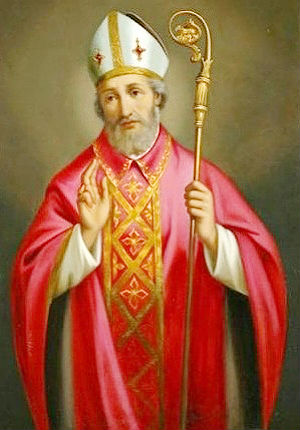


Thursday of the Second Week of Advent


“In the wilderness I will plant the cedar, acacia, myrtle, and olive; in the wasteland I will set the cypress, together with the plane tree and the pine ...” (Isaiah 41:19.)

Saint Jerome offers the following insight on this verses from today’s First Reading:

“All these [types of trees] are equally placed in solitude, lest even one chord from the harp of the Lord and any virtue of the graces of the church seem to be missing. They are planted in the desert so that all might understand and recognize with a common mind that the hand of the Lord has accomplished all these things, so that in the desert of the nations there came rivers of virtues and in a land once a desert and full of salty water the cedar and cypress and other trees may grow, whose height and stature rush to the skies. The olive tree is the same tree that supplies both light and relaxation after working.” (Commentary on Isaiah, 12.)


Collect
Stir up our hearts, O Lord,
to make ready the paths
of Your Only Begotten Son,
that through His coming,
we may be found worthy to serve You
with minds made pure.
Through our Lord Jesus Christ, your Son,
Who lives and reigns with You
in the unity of the Holy Spirit,
one God, for ever and ever. Amen.


Glory to the Father
and to the Son
and to the Holy Spirit:
as it was in the beginning,
is now, and will be forever. Amen


Top


Love desires to see God


Bishop

An excerpt from his Sermon 147

Thursday of the Second Week of Advent

When God saw the world falling to ruin because of fear, he immediately acted to call it back to himself with love. He invited it by his grace, preserved it by his love, and embraced it with compassion. When the earth had become hardened in evil, God sent the flood both to punish and to release it. He called Noah to be the father of a new era, urged him with kind words, and showed that he trusted him; he gave him fatherly instruction about the present calamity, and through his grace consoled him with hope for the future. But God did not merely issue commands; rather with Noah sharing the work, he filled the ark with the future seed of the whole world. The sense of loving fellowship thus engendered removed servile fear, and a mutual love could continue to preserve what shared labor had effected.

God called Abraham out of the heathen world, symbolically lengthened his name, and made him the father of all believers. God walked with him on his journeys, protected him in foreign lands, enriched him with earthly possessions, and honored him with victories. He made a covenant with him, saved him from harm, accepted his hospitality, and astonished him by giving him the offspring he had despaired of. Favored with so many graces and drawn by such great sweetness of divine love, Abraham was to learn to love God rather that fear him, and love rather than fear was to inspire his worship.

God comforted Jacob by a dream during his flight, roused him to combat upon his return, and encircled him with a wrestler’s embrace to teach him not to be afraid of the author of the conflict, but to love him. God called Moses as a father would, and with fatherly affection invited him to become the liberator of his people.

In all the events we have recalled, the flame of divine love enkindled human hearts and its intoxication overflowed into men’s senses. Wounded by love, they longed to look upon God with their bodily eyes. Yet how could our narrow human vision apprehend God, whom the whole world cannot contain? But the law of love is not concerned with what will be, what ought to be, what can be. Love does not reflect; it is unreasonable and knows no moderation. Love refuses to be consoled when its goal proves impossible, despises all hindrances to the attainment of its object. Love destroys the lover if he cannot obtain what he loves; love follows its own promptings, and does not think of right and wrong. Love inflames desire which impels it toward things that are forbidden. But why continue?

It is intolerable for love not to see the object of its longing. That is why whatever reward they merited was nothing to the saints if they could not see the Lord. A love that desires to see God may not have reasonableness on its side, but it is the evidence of filial love. It gave Moses the temerity to say: If I have found favor in your eyes, show me your face. It inspired the psalmist to make the same prayer: Show me your face. Even the pagans made their images for this purpose: they wanted actually to see what they mistakenly revered.


Glory to the Father
and to the Son
and to the Holy Spirit:
as it was in the beginning,
is now, and will be forever. Amen


Solemnity of the Immaculate Conception of the Blessed Virgin Mary


“And coming to her [Mary], he [Gabriel] said, “Hail, favored one! The Lord is with you.” (Luke 1:28)

Origen of Alexandria (part 2 of Pope Benedict’s reflections on Origen) comments on this verse from the Gospel proclaimed at Mass today:

“The angel greeted Mary with a new address, which I could not find anywhere else in Scripture. I ought to explain this expression briefly. The angel says, “Hail, full of grace.” I do not remember having read this word elsewhere in Scripture. An expression of this kind, “Hail, full of grace,” is not addressed to a male. This greeting was reserved for Mary alone. Mary knew the Law; she was holy, and had learned the writings of the prophets by meditating on them daily. If Mary had known that someone else had been greeted by words like these, she would never have been frightened by this strange greeting. Hence the angel says to her, “Do not be afraid, Mary! You have found grace in God’s eyes. Behold, you will conceive in your womb. You will bear a son, and you will name him ‘Jesus.’ He will be great, and will be called ‘Son of the Most High.’” (Homilies on the Gospel of Luke, 6.)


Collect
O God,
Who by the Immaculate Conception
of the Blessed Virgin prepared a worthy dwelling
for your Son, grant, we pray,
that, as you preserved her from every stain
by virtue of the Death of your Son,
which you foresaw,
so, through her intercession, we, too,
may be cleansed and admitted to your presence.
Through our Lord Jesus Christ, Your Son,
Who lives and reigns with You
in the unity of the Holy Spirit,
God, for ever and ever.


Glory to the Father
and to the Son
and to the Holy Spirit:
as it was in the beginning,
is now, and will be forever. Amen


Top


Virgin Mary, all nature is blessed by you


Priest, Abbot and Doctor of the Church

An excerpt from Oration 52

Solemnity of the Immaculate Conception of the Blessed Virgin Mary

Blessed Lady, sky and stars, earth and rivers, day and night — everything that is subject to the power or use of man — rejoice that through you they are in some sense restored to their lost beauty and are endowed with inexpressible new grace. All creatures were dead, as it were, useless for men or for the praise of God, who made them. The world, contrary to its true destiny, was corrupted and tainted by the acts of men who served idols. Now all creation has been restored to life and rejoices that it is controlled and given splendor by men who believe in God. The universe rejoices with new and indefinable loveliness. Not only does it feel the unseen presence of God himself, its Creator, it sees him openly, working and making it holy. These great blessings spring from the blessed fruit of Mary’s womb.

Through the fullness of the grace that was given you, dead things rejoice in their freedom, and those in heaven are glad to be made new. Through the Son who was the glorious fruit of your virgin womb, just souls who died before his life-giving death rejoice as they are freed from captivity, and the angels are glad at the restoration of their shattered domain.

Lady, full and overflowing with grace, all creation receives new life from your abundance. Virgin, blessed above all creatures, through your blessing all creation is blessed, not only creation from its Creator, but the Creator himself has been blessed by creation.

To Mary God gave his only-begotten Son, whom he loved as himself. Through Mary God made himself a Son, not different but the same, by nature Son of God and Son of Mary. The whole universe was created by God, and God was born of Mary. God created all things, and Mary gave birth to God. The God who made all things gave himself form through Mary, and thus he made his own creation. He who could create all things from nothing would not remake his ruined creation without Mary.

God, then, is the Father of the created world and Mary the mother of the re-created world. God is the Father by whom all things were given life, and Mary the mother through whom all things were given new life. For God begot the Son, through whom all things were made, and Mary gave birth to him as the Savior of the world. Without God’s Son, nothing could exist; without Mary’s Son, nothing could be redeemed.

Truly the Lord is with you, to whom the Lord granted that all nature should owe as much to you as to himself.


Glory to the Father
and to the Son
and to the Holy Spirit:
as it was in the beginning,
is now, and will be forever. Amen


Memorial of Saint Ambrose, Bishop and Doctor of the Church


“What is your opinion? If a man has a hundred sheep and one of them goes astray, will he not leave the ninety-nine in the hills and go in search of the stray?” (Matthew 18:12.)

Saint Jerome offers the following insight on this verse from today’s Gospel proclamation:

““See that you do not despise one of these little ones,” he is calling us to be merciful. Then he adds the parable of the ninety-nine sheep left in the mountains and the one stray that because of its great weakness could not walk. The good shepherd carried it on his shoulders to the rest of the flock. This, some say, is the shepherd “who, though he was in the form of God, did not count equality with God a thing to be grasped but emptied himself, taking the form of a servant, being born in the likeness of men. And being found in human form he humbled himself and became obedient unto death, even death on a cross.” For that reason he descended to earth: to save the one sheep that had perished, that is, the human race. Others think that by the ninety-nine sheep should be understood the number of the righteous and by the one sheep the number of the sinners, according to what he said in another place: “I have come not to call the righteous but the sinners; for it is not the healthy who have need of the physician but those who are ill.”” (Commentary on Matthew, 3.)


Collect
O God,
Who made the Bishop Saint Ambrose
a teacher of the Catholic faith
and a model of apostolic courage,
raise up in Your Church
men after Your own heart
to govern her with courage and wisdom.
Through our Lord Jesus Christ, Your Son
Who lives and reigns with You
in the unity of the Holy Spirit,
one God, for ever and ever.


Glory to the Father
and to the Son
and to the Holy Spirit:
as it was in the beginning,
is now, and will be forever. Amen


By the grace of your words win over your people


Bishop and Great Latin Father of the Church

An excerpt from Letter 2

Memorial of Saint Ambrose, Bishop and Doctor of the Church

You have entered upon the office of bishop. Sitting at the helm of the Church, you pilot the ship against the waves. Take firm hold of the rudder of faith so that the severe storms of this world cannot disturb you. The sea is mighty and vast, but do not be afraid, for as Scripture says: he has founded it upon the seas, and established it upon the waters.

The Church of the Lord is built upon the rock of the apostles among so many dangers in the world; it therefore remains unmoved. The Church’s foundation is unshakeable and firm against the assaults of the raging sea. Waves lash at the Church but do not shatter it. Although the elements of this world constantly beat upon the Church with crashing sounds, the Church possesses the safest harbor of salvation for all in distress. Although the Church is tossed about on the sea, it rides easily on rivers, especially those rivers that Scripture speaks of: The rivers have lifted up their voice. These are the rivers flowing from the heart of the man who is given drink by Christ and who receives from the Spirit of God. When these rivers overflow with the grace of the Spirit, they lift up their voice.

There is also a stream which flows down on God’s saints like a torrent. There is also a rushing river giving joy to the heart that is at peace and makes for peace. Whoever has received from the fullness of this river, like John the Evangelist, like Peter and Paul, lifts up his voice. Just as the apostles lifted up their voices and preached the Gospel throughout the world, so those who drink these waters begin to preach the good news of the Lord Jesus.

Drink, then, from Christ, so that your voice may also be heard. Store up in your mind the water that is Christ, the water that praises the Lord. Store up water from many sources, the water that rains down from the clouds of prophecy.

Whoever gathers water from the mountains and leads it to himself or draws it from springs, is himself a source of dew like the clouds. Fill your soul, then, with this water, so that your land may not be dry, but watered by your own springs.

He who reads much and understands much, receives his fill. He who is full, refreshes others. So Scripture says: If the clouds are full, they will pour rain upon the earth.

Therefore, let your words be rivers, clean and limpid, so that in your exhortations you may charm the ears of your people. And by the grace of your words win them over to follow your leadership. Let your sermons be full of understanding. Solomon says: The weapons of the understanding are the lips of the wise; and in another place he says: Let your lips be bound with wisdom. That is, let the meaning of your words shine forth, let understanding blaze out. See that your addresses and expositions do not need to invoke the authority of others, but let your words be their own defence. Let no word escape your lips in vain or be uttered without depth of meaning.


Glory to the Father
and to the Son
and to the Holy Spirit:
as it was in the beginning,
is now, and will be forever. Amen


Monday of the Second Week of Advent


“Then the scribes* and Pharisees began to ask themselves, “Who is this who speaks blasphemies? Who but God alone can forgive sins?”” (Luke 5:17)

Saint Ephrem the Syrian offers the following insight on these verses from today’s Gospel:

“While the Pharisee doubted that our Lord was a prophet, he was unwittingly pledging himself to the truth by thinking, “If this man were a prophet, he would know that this woman is a sinner.” Therefore, if our Lord indeed knows that she is a sinner, then, Pharisee, by your own reasoning he indeed is a prophet. And so our Lord did not hesitate to point out not only that she was a sinner but also that she had sinned very much, so that the testimony of his own mouth would trap the accuser. [The Pharisee] was one of those who had said, “Who can forgive sins but God alone?” Our Lord took this testimony from them, that whoever is able to forgive sin is God. From this point on, the struggle was for our Lord to show them whether or not he was able to forgive sin. And so he quickly healed the parts [of the body] that were visible, to confirm that he had forgiven the sins which were not visible.” (Homily on Our Lord, 21.)


Collect
May our prayer of petition
rise before You, we pray, O lord,
that, with purity unblemished,
we, your servants, may come, as we desire, to celebrate the great mystery
of the Incarnation of Your only Begotten Son.
Who lives and reigns with You
in the unity of the Holy Spirit,
God, for ever and ever. Amen.


Glory to the Father
and to the Son
and to the Holy Spirit:
as it was in the beginning,
is now, and will be forever. Amen