The performance of our ministry


(Bishop of Rome and Father of the Church)
An excerpt from Homily 17: On the Gospels


Let us listen to what the Lord says as he sends the preachers forth: The harvest is great but the laborers are few. Pray therefore the Lord of the harvest to send laborers into his harvest. We can speak only with a heavy heart of so few laborers for such a great harvest, for although there are many to hear the good news there are only a few to preach it. Look about you and see how full the world is of priests, yet in God’s harvest a laborer is rarely to be found; for although we have accepted the priestly office, we do not fulfill its demands.

Beloved brothers, consider what has been said: Pray the Lord of the harvest to send laborers into his harvest. Pray for us so that we may have the strength to work on your behalf, that our tongue may not grow weary of exhortation, and that after we have accepted the office of preaching, our silence may not condemn us before the just judge. For frequently the preacher’s tongue is bound fast on account of his own wickedness; while on the other hand it sometimes happens that because of the people’s sins, the word of preaching is withdrawn from those who preside over the assembly. With reference to the wickedness of the preacher, the psalmist says: But God asks the sinner: Why do you recite my commandments? And with reference to the latter, the Lord tells Ezekiel: I will make your tongue cleave to the roof of your mouth, so that you shall be dumb and unable to reprove them, for they are a rebellious house. He clearly means this: the word of preaching will be taken away from you because as long as this people irritates me by their deeds, they are unworthy to hear the exhortation of truth. It is not easy to know for whose sinfulness the preacher’s word is withheld, but it is indisputable that the shepherd’s silence while often injurious to himself will always harm his flock.

There is something else about the life of the shepherds, dearest brothers, which discourages me greatly. But lest what I claim should seem unjust to anyone, I accuse myself of the very same thing, although I fall into it unwillingly—compelled by the urgency of these barbarous times. I speak of our absorption in external affairs; we accept the duties of office, but by our actions we show that we are attentive to other things. We abandon the ministry of preaching and, in my opinion, are called bishops to our detriment, for we retain the honorable office but fail to practice the virtues proper to it. Those who have been entrusted to us abandon God, and we are silent. They fall into sin, and we do not extend a hand of rebuke.

But how can we who neglect ourselves be able to correct someone else? We are wrapped up in worldly concerns, and the more we devote ourselves to external things, the more insensitive we become in spirit.

For this reason the Church rightfully says about her own feeble members: They made me keeper of the vineyards, but my own vineyard I have not kept. We are set to guard the vineyards but do not guard our own, for we get involved in irrelevant pursuits and neglect the performance of our ministry.


Glory to the Father
and to the Son
and to the Holy Spirit:
as it was in the beginning,
is now, and will be forever. Amen


ORDINARY TIME


Friday of Week XXVII


“Gird yourselves and lament, you priests! wail, ministers of the altar! Come, spend the night in sackcloth, ministers of my God! For the grain offering and the libation are withheld from the house of your God.” (Joel 1:13.)

Saint Gregory of Nazianzus reflects on this verse from today’s First Reading:

“Joel again summons us wailing and will have the ministers of the altar lament under the conditions of famine. He does not allow us to revel in the misfortunes of others. After sanctifying a fast, calling a solemn assembly and gathering the old men, the children, and those of tender age, we ourselves must further haunt the temple in sackcloth and ashes, prostrated humbly on the ground, because the field is wasted and the meat offering and the drink offering is cut off from the house of the Lord, till we draw down mercy by our humiliation.” (In Defense of His Flight to Pontus (Oration 2)


Collect
Almighty ever-living God,
who in the abundance of your kindness
surpass the merits and the desires
of those who entreat you,
pour out your mercy upon us
to pardon what conscience dreads
and to give what prayer does not dare to ask.
Through our Lord Jesus Christ, Your Son,
who lives and reigns with You
in the unity of the Holy Spirit,
one God, for ever and ever.


Glory to the Father
and to the Son
and to the Holy Spirit:
as it was in the beginning,
is now, and will be forever. Amen


The development of doctrine


(Monk and Priest)
An excerpt from his First Instruction


Is there to be no development of religion in the Church of Christ? Certainly, there is to be development and on the largest scale.

Who can be so grudging to men, so full of hate for God, as to try to prevent it? But it must truly be development of the faith, not alteration of the faith. Development means that each thing expands to be itself, while alteration means that a thing is changed from one thing into another.

The understanding, knowledge and wisdom of one and all, of individuals as well as of the whole Church, ought then to make great and vigorous progress with the passing of the ages and the centuries,but only along its own line of development, that is, with the same doctrine, the same meaning and the same import.

The religion of souls should follow the law of development of bodies. Though bodies develop and unfold their component parts with the passing of the years, they always remain what they were. There is a great difference between the flower of childhood and the maturity of age, but those who become old are the very same people who were once young. Though the condition and appearance of one and the same individual may change, it is one and the same nature, one and the same person.

The tiny members of unweaned children and the grown members of young men are still the same members. Men have the same number of limbs as children. Whatever develops at a later age was already present in seminal form; there is nothing new in old age that was not already latent in childhood.

There is no doubt, then, that the legitimate and correct rule of development, the established and wonderful order of growth, is this: in older people the fullness of years always brings to completion those members and forms that the wisdom of the Creator fashioned beforehand in their earlier years.

If, however, the human form were to turn into some shape that did not belong to its own nature, or even if something were added to the sum of its members or subtracted from it, the whole body would necessarily perish or become grotesque or at least be enfeebled. In the same way, the doctrine of the Christian religion should properly follow these laws of development, that is, by becoming firmer over the years, more ample in the course of time, more exalted as it advances in age.

In ancient times our ancestors sowed the good seed in the harvest field of the Church. It would be very wrong and unfitting if we, their descendants, were to reap, not the genuine wheat of truth but the intrusive growth of error.

On the contrary, what is right and fitting is this: there should be no inconsistency between first and last, but we should reap true doctrine from the growth of true teaching, so that when, in the course of time, those first sowings yield an increase it may flourish and be tended in our day also.

Glory to the Father
and to the Son
and to the Holy Spirit:
as it was in the beginning,
is now, and will be forever. Amen


ORDINARY TIME


Thursday of Week XXVII


“Your words are too much for me, says the LORD. You ask, “What have we spoken against you?” (Malachi 4:13.)

Saint Augustine of Hippo comments on this verse from the First Reading proclaimed at Mass today:

“Those who are spiritually immature put much stock in temporal promises and serve God with an eye to such remunerations. Then, when the people of evil life prosper, they are very much upset. For their enlightenment, Malachi goes on to differentiate the eternal blessedness of the New Testament, which only the good shall win, from the purely earthly good fortune of the old that as often as not comes to the wicked. He says, “‘Your words have been insufferable to me,’ says the Lord. And you have said, ‘What have we spoken against you?’ You have said, ‘He labors in vain that serves God, and what profit is it that we have kept ordinances and that we have walked sorrowfully before the Lord of hosts?’ Therefore now we call the proud people happy, for they that work wickedness are built up, and they have tempted God and prospered. Then they that feared the Lord spoke everyone with his neighbor, and the Lord gave ear and heard it, and a book of remembrance was written before him for them that fear the Lord and think of his name.” The book in question is, of course, again the New Testament. Now let us hear the rest. “‘And they shall be my special possession,’ says the Lord of hosts, ‘in the day that I do judgment; and I will spare the man as a man spares his son who serves him. And you shall return and shall see the difference between the just and the wicked, and between him that serves God and him that serves not. For behold, the day shall come kindled as a furnace, and all the proud and all that do wickedly shall be as stubble, and the day that comes shall set them on fire,’ says the Lord of hosts.” That day in question is, of course, the day of the last judgment, concerning which I will have a great deal more to say, God willing, when the proper time comes.” (City of God, 28.)


Collect
Almighty ever-living God,
who in the abundance of your kindness
surpass the merits and the desires
of those who entreat you,
pour out your mercy upon us
to pardon what conscience dreads
and to give what prayer does not dare to ask.
Through our Lord Jesus Christ, Your Son,
who lives and reigns with You
in the unity of the Holy Spirit,
one God, for ever and ever.


Glory to the Father
and to the Son
and to the Holy Spirit:
as it was in the beginning,
is now, and will be forever. Amen


Top


One bishop with the presbyters and deacons


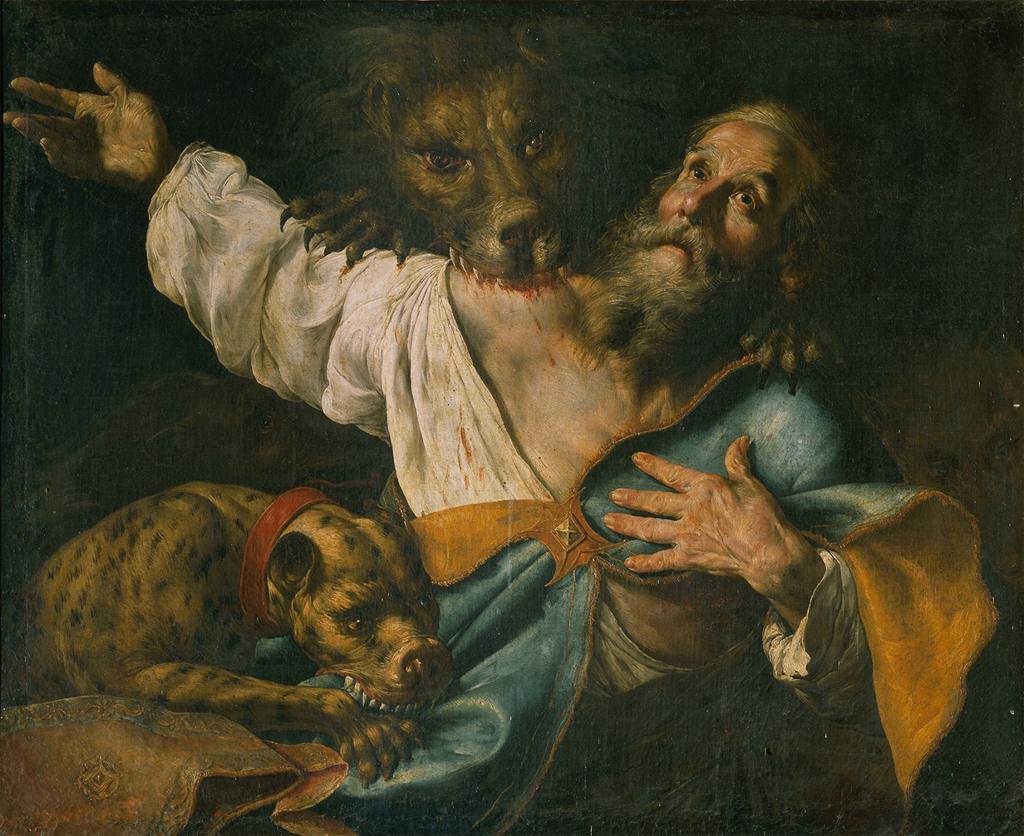
(Bishop, Apostolic Father of the Church and Martyr)
An excerpt from his Letter to the Philadelphians


Ignatius, also called Theophorus, to the church of God the Father and the Lord Jesus Christ located at Philadelphia in the province of Asia. You have found mercy and have been strengthened in the peace of God; you are now filled with gladness because of the passion of our Lord, and by his mercy you are made believers in his resurrection. I greet you in the blood of Jesus Christ. You are my abiding and unshakeable joy, especially if your members remain united with the bishop and with his presbyters and deacons, all appointed in accordance with the mind of Christ who by his own will has strengthened them in the firmness which the Spirit gives.

I know that this bishop has obtained his ministry, which serves the community, neither by his own efforts, nor from men nor even out of vainglory, but from the love of God the Father and of the Lord Jesus Christ. I am deeply impressed by his gentleness, and by his silence he is more effective than the empty talkers. He is in harmony with the commandments as is a lute with its strings. I call him blessed, then, for his sentiments toward God, since I know these to be virtuous and perfect, and for his stability and calm, in which he imitates the gentleness of the living God.

As sons of the light of truth, flee divisions and evil doctrines; where your shepherd is, follow him as his flock.

For all who belong to God and Jesus Christ are with the bishop; all who repent and return to the unity of the Church will also belong to God, that they may live according to Jesus Christ. Do not be deceived, my brothers. If anyone follows a schismatic, he will not obtain the inheritance of God’s kingdom; if anyone lives by an alien teaching, he does not assent to the passion of the Lord.

Be careful, therefore, to take part only in the one eucharist; for there is only one flesh of our Lord Jesus Christ and one cup to unite us with his blood, one altar and one bishop with the presbyters and deacons, who are his fellow servants. Then, whatever you do, you will do according to God.

My brothers, I overflow with love for you and with a joyous heart I make you strong—although it is not so much I but Jesus Christ. Although imprisoned for his sake, I fear more because of my imperfection. But your prayers will perfect me in the eyes of God so that I might yet receive the inheritance promised me by the merciful God. I seek refuge in the person of Christ through the Gospels and I appeal to the true ministry of the Church through the apostles.

Glory to the Father
and to the Son
and to the Holy Spirit:
as it was in the beginning,
is now, and will be forever. Amen


MEMORIAL


Our Lady of the Rosary


“And should I not be concerned over the great city of Nineveh, in which there are more than a hundred and twenty thousand persons who cannot know their right hand from their left, not to mention all the animals?” (Jonah 4:11.)

Saint Ambrose of Milan offers the following insight on this verse from today’s First Reading:

“The next day the book of Jonah was read according to custom, and when it was finished I began this sermon: Brothers, a book has been read in which it is prophesied that sinners shall return to repentance. It is understood to mean that they may hope for the future in the present. I added that the just man had been willing to receive even blame, so as not to see or prophesy destruction for the city. And because that sentence was mournful, he grew sad when the vine withered. God said to the prophet, “Are you sad over the vine?” Jonah answered, “I am sad.” The Lord said that if he was grieving because the vine had withered, how much greater should his care be for the salvation of so many people! And, in fact, he did away with the destruction that had been prepared for the entire city.” (Letter 60)


Collect
Pour forth, we beseech you, O Lord,
your grace into our hearts,
that we,
to whom the Incarnation of Christ your Son
was made known by the message of an Angel,
may, through the intercession of
the Blessed Virgin Mary,
by his Passion and Cross
be brought to the glory of his Resurrection.
Who lives and reigns with You
in the unity of the Holy Spirit,
one God, for ever and ever. Amen.


Glory to the Father
and to the Son
and to the Holy Spirit:
as it was in the beginning,
is now, and will be forever. Amen


We should meditate
on the mysteries of salvation


(Abbot and Doctor of the Church)
An excerpt from his Sermo de Aquaeductu

The child to be born of you will be called holy, the Son of God, the fountain of wisdom, the Word of the Father on high. Through you, blessed Virgin, this Word will become flesh, so that even though, as he says: I am in the Father and the Father is in me, it is still true for him to say: “I came forth from God and am here.”

In the beginning was the Word. The spring was gushing forth, yet still within himself. Indeed, the Word was with God, truly dwelling in inaccessible light. And the Lord said from the beginning: I think thoughts of peace and not of affliction. Yet your thought was locked within you, and whatever you thought, we did not know; for who knew the mind of the Lord, or who was his counselor?

And so the idea of peace came down to do the work of peace: The Word was made flesh and even now dwells among us. It is by faith that he dwells in our hearts, in our memory, our intellect and penetrates even into our imagination. What concept could man have of God if he did not first fashion an image of him in his heart? By nature incomprehensible and inaccessible, he was invisible and unthinkable, but now he wished to be understood, to be seen and thought of.

But how, you ask, was this done? He lay in a manger and rested on a virgin’s breast, preached on a mountain, and spent the night in prayer. He hung on a cross, grew pale in death, and roamed free among the dead and ruled over those in hell. He rose again on the third day, and showed the apostles the wounds of the nails, the signs of victory; and finally in their presence he ascended to the sanctuary of heaven.

How can we not contemplate this story in truth, piety and holiness? Whatever of all this I consider, it is God I am considering; in all this he is my God. I have said it is wise to meditate on these truths, and I have thought it right to recall the abundant sweetness, given by the fruits of this priestly root; and Mary, drawing abundantly from heaven, has caused this sweetness to overflow for us.

Glory to the Father
and to the Son
and to the Holy Spirit:
as it was in the beginning,
is now, and will be forever. Amen


ORDINARY TIME


Tuesday of Week XXVII


“... the people of Nineveh believed God; they proclaimed a fast and all of them, great and small, put on sackcloth.” (Jonah 3:5.)

Saint Gregory of Nazianzus reflects on this verse from today’s First Reading:

“Let us sow in tears, so that we may reap in joy. Let us show ourselves people of Nineveh, not of Sodom. Let us amend our wickedness, lest we be consumed with it. Let us listen to the preaching of Jonah, lest we be overwhelmed by fire and brimstone. And if we have departed from Sodom, let us escape to the mountain. Let us flee to Zoar. Let us enter it as the sun rises. Let us not stay in all the plain. Let us not look around us, lest we be frozen into a pillar of salt, a really immoral pillar, to accuse the soul that returns to wickedness.” (On His Father’s Silence (Oration 16))


Collect
Almighty ever-living God,
who in the abundance of your kindness
surpass the merits and the desires
of those who entreat you,
pour out your mercy upon us
to pardon what conscience dreads
and to give what prayer does not dare to ask.
Through our Lord Jesus Christ, Your Son,
who lives and reigns with You
in the unity of the Holy Spirit,
one God, for ever and ever.


Glory to the Father
and to the Son
and to the Holy Spirit:
as it was in the beginning,
is now, and will be forever. Amen


— Prayer for the Synod —


O Lord,
Ruler and Guardian of Your Church,
pour out, we pray, upon Your servants
a spirit of truth, understanding and peace,
that they may strive with all their heart
to know what is pleasing to You
and then pursue it with all their strength.
Through our Lord Jesus Christ, Your Son,
who lives and reigns with You
in the unity of the Holy Spirit,
one God, for ever and ever.

From Roman Missal,
«Masses and Prayers for Various Needs and Occasions»
For a Council or a Synod

ORDINARY TIME


Monday of Week XXVII


“But Jonah made ready to flee to Tarshish, away from the LORD. He went down to Joppa, found a ship going to Tarshish, paid the fare, and went down in it to go with them to Tarshish, away from the LORD.” (Jonah 1:3.)

Saint Gregory of Nazianzus reflects on this verse from today’s First Reading:

“But there Jonah calls upon God, and marvelous as it is, on the third day, he, like Christ, is delivered…. In my own case, what could be said? What defense could be made if I remained unsettled and rejected the yoke of ministry, which, though I know not whether to call it light or heavy, had at any rate been laid upon me. On this account I had much toilsome consideration to discover my duty, being set in the middle between two fears, of which the one held me back and the other urged me on. For a long while I was at a loss between them. After wavering from side to side, and, like a current driven by inconstant winds, inclining first in this direction then in that, I at last yielded to the stronger. The fear of disobedience overcame me.” (In Defense of His Flight to Pontus, 2)


Collect
Almighty ever-living God,
who in the abundance of your kindness
surpass the merits and the desires
of those who entreat you,
pour out your mercy upon us
to pardon what conscience dreads
and to give what prayer does not dare to ask.
Through our Lord Jesus Christ, Your Son,
who lives and reigns with You
in the unity of the Holy Spirit,
one God, for ever and ever.


Glory to the Father
and to the Son
and to the Holy Spirit:
as it was in the beginning,
is now, and will be forever. Amen