Pray especially for the whole body
of the Church


(Bishop and Father of the Church)
An excerpt from his work, On Cain and Abel, Book 1


Offer God a sacrifice of praise and fulfill your vows to the Most High. If you praise God you offer your vow and fulfill the promise you have made. So the Samaritan leper, healed by the Lord’s word of command, gained greater credit than the other nine; he alone returned to Christ, praising God and giving thanks. Jesus said of him: There was no one to come back and thank God except this foreigner. He tells him: Stand up and go on your way, for your faith has made you whole.

The Lord Jesus, in his divine wisdom, taught you about the goodness of the Father, who knows how to give good things, so that you might ask for the things that are good from Goodness itself. He urges you to pray earnestly and frequently, not offering long and wearisome prayers, but praying often, and with perseverance. Lengthy prayers are usually filled with empty words, while neglect of prayer results in indifference to prayer.

Again, Christ urges you, when you ask forgiveness for yourself, to be especially generous to others, so that your actions may commend your prayer. The Apostle, too, teaches you how to pray; you must avoid anger and contentiousness, so that your prayer may be serene and wholesome. He tells you also that every place is a place of prayer, though our Savior says: Go into your room.

But by “room” you must understand, not a room enclosed by walls that imprison your body, but the room that is within you, the room where you hide your thoughts, where you keep your affections. This room of prayer is always with you, wherever you are, and it is always a secret room, where only God can see you.

You are told to pray especially for the people, that is, for the whole body, for all its members, the family of your mother the Church; the badge of membership in this body is love for each other. If you pray only for yourself, you pray for yourself alone. If each one prays for himself, he received less from God’s goodness than the one who prays on behalf of others. But as it is, because each prays for all, all are in fact praying for each one.

To conclude, if you pray only for yourself, you will be praying, as we said, for yourself alone. But if you pray for all, all will pray for you, for you are included in all. In this way there is a great recompense; through the prayers of each individual, the intercession of the whole people is gained for each individual. There is here no pride, but an increase of humility and a richer harvest from prayer.

Glory to the Father
and to the Son
and to the Holy Spirit:
as it was in the beginning,
is now, and will be forever. Amen


ORDINARY TIME


— The Lord’s Day —


Sunday Week XXVI


Pondering Jesus’ victorious Word


εὐαγγελίζω (euaggelizo)
“to announce the Good News of victory in battle”

“But [δὲ (de)] from the beginning of creation...”


θεωρέω (theoreo)
(“to perceive, discover, ponder a deeper meaning”)

Many lexicons of biblical and classical Greek state that δὲ (de) is among the most common particle used to join clauses together by continuing or amplifying the point of one clause with the following clause. δὲ (de) is also used to join clauses together by contrasting the point of one clause with the following clause. In English, this is apparent in the use of and or but. When and is used, the reader knows clearly that elements are joined together either to continue or to intensify the thought. When but is used, the reader knows clearly that a contrast is presented often times negating the first premise or clause in light of the second. In Greek, especially Biblical Greek, δὲ (de) functions both in continuing and contrasting a premise. So how does one determine a proper reading of δὲ (de)? The simple yet challenging answer: context.


The Sunday proclamation of God’s holy Word presents a challenge. When the Gospel and other Scripture Texts are proclaimed, we listen to a particular episode or event. In the case of the Gospels, the episode often narrates a word of deed of Jesus during His Public Ministry. Jesus’ particular action or word gives an insight or instruction for living as His disciple in the Kingdom of God. Generally, the episode proclaimed offers a ‘self-contained’ message that we can take away and use to respond more fully to Jesus’ call, “come, follow Me.” However, it is imperative that at all times one approach Sacred Scripture recognizing “the content and unity of the whole of Scripture.” (Dei Verbum, 12, paragraph 3). As valid as the message is for the particular episode, that episode is connected to a much larger life reality — and — that larger life reality is the Person, Jesus. Even before analyzing and researching the historic background information (what biblical scholars call the sitz im Leben), we start with the fact that these are the saving words of Jesus: Son of God, Son of Mary given to us as a gift for our salvation.

The Evangelist Saint Mark records Jesus’ pronouncements in a section that a number of scholars consider the core of the Marcan Gospel (cf previous blog entry). It begins (8:22) and ends (10:52) with accounts of Jesus restoring sight to the blind. Between the ‘bookends’ of restored sight are lessons on discipleship, healings, Jesus’ Transfiguration, parables and 3 predictions of His passion and death. Essentially, all words and deeds in this section (and indeed the whole of the Gospel and Christian living) MUST be seen and lived in the context of the sacrifice of Jesus’ passion and death. To put matters bluntly, as the Evangelist Mark is wont to do, all the words and deeds of Jesus MUST be viewed through the lens of His self-surrendering, self-sacrificing and love-defining death on the Cross. Jesus, the crucified King, is the context for all that unfolds in Christian living and specifically in this section of the Marcan Gospel.

With that context in place, Jesus is drawn into His day’s debate on marriage. Contrary to what our contemporary culture holds as Jesus’ silence on the matter of marriage and related dimensions on life, He does speak and speaks clearly on the matter: “But from the beginning of creation …” These are His words in response to the controversy of His day AND our day. His but [δὲ (de)] is a response of contrast. The vision of humanity articulated in Genesis 1:26-31 and 2:4-25 as far as Jesus is concerned is the foundation upon which life unfolds. With the Fall (Genesis 3), ‘all changed, changed utterly …’ and what was born was a terrible ugliness of a tendency to selfishness (concupiscence) and an axial disruption of the beauty of living in relationship with the Divine Persons Who desired nothing more than a life of love with humanity.

In the debates of His day, Jesus more than implies that the Pharisees and others have lost sight - have become blinded to humanity’s original constitution; an affect and effect of Original Sin. Jesus’ work ultimately will contrast humanity’s approach to life and thus result in not just restoring humanity to the original harmony of the Garden but will re-create humanity as children of His Father. To accomplish this, His selfless, surrendering, sacrificial love manifested in His passion and death is vital to the meaning of marriage, love and life. His Cross is vital for humanity and therefore must be embraced because the Cross, minimally, is the lesson in what it means to be selfless. When the Cross is removed from life, whether casually or deliberately, humanity will then attempt to redefine reality based on mere feeling, emotion, ignorance, ease, convenience or misguided desire. The theology and anthropology of Genesis chapters 1 through 11, which presently are weak and anemic because of generations looking improperly at Genesis as ‘just a story,’ offers humanity way of living that — in Jesus the Christ — offers a remedy for the inclination to sin and a restoration of proper relational living with the Divine Persons: God Who is love.

ORDINARY TIME


— The Lord’s Day —


Sunday Week XXVII


Saint Ephrem the Syrian
“So the LORD God cast a deep sleep on the man, and while he was asleep, he took out one of his ribs and closed up its place with flesh.” (Genesis 2:21)

Saint Ephrem the Syrian offers the following insight on these verses from today’s First Reading:

“That man, awake, anointed with splendor, and who did not yet know sleep, fell on the earth naked and slept. It is likely that Adam saw in his dream what was done to him as if he were awake. After Adam’s rib had been taken out in the twinkling of an eye, God closed up the flesh in its place in the blink of an eyelash. The bare bone took on the full appearance and all the beauty of a woman. God then brought her to Adam, who was both one and two. He was one in that he was Adam, and he was two because he had been created male and female.” (Commentary on Genesis, 2.)

Thoughts on this Sunday’s Gospel.


Collect
Almighty ever-living God,
who in the abundance of your kindness
surpass the merits and the desires
of those who entreat you,
pour out your mercy upon us
to pardon what conscience dreads
and to give what prayer does not dare to ask.
Through our Lord Jesus Christ, Your Son,
who lives and reigns with You
in the unity of the Holy Spirit,
one God, for ever and ever.


Glory to the Father
and to the Son
and to the Holy Spirit:
as it was in the beginning,
is now, and will be forever. Amen


Let the pastor be discreetly silent,
and to the point when he speaks


(Bishop of Rome and Father of the Church)
An excerpt from his Pastoral Guide


A spiritual guide should be silent when discretion requires and speak when words are of service. Otherwise he may say what he should not or be silent when he should speak. Indiscreet speech may lead men into error and an imprudent silence may leave in error those who could have been taught. Pastors who lack foresight hesitate to say openly what is right because they fear losing the favor of men. As the voice of truth tells us, such leaders are not zealous pastors who protect their flocks, rather they are like mercenaries who flee by taking refuge in silence when the wolf appears.

The Lord reproaches them through the prophet: They are dumb dogs that cannot bark. On another occasion he complains: You did not advance against the foe or set up a wall in front of the house of Israel, so that you might stand fast in battle on the day of the Lord. To advance against the foe involves a bold resistance to the powers of this world in defense of the flock. To stand fast in battle on the day of the Lord means to oppose the wicked enemy out of love for what is right.

When a pastor has been afraid to assert what is right, has he not turned his back and fled by remaining silent? Whereas if he intervenes on behalf of the flock, he sets up a wall against the enemy in front of the house of Israel. Therefore, the Lord again says to his unfaithful people: Your prophets saw false and foolish visions and did not point out your wickedness, that you might repent of your sins. The name of prophet is sometimes given in the sacred writings to teachers who both declare the present to be fleeting and reveal what is to come. The word of God accuses them of seeing false visions because they are afraid to reproach men for their faults and thereby lull the evildoer with an empty promise of safety. Because they fear reproach, they keep silent and fail to point out the sinner’s wrongdoing.

The word of reproach is a key that unlocks a door, because reproach reveals a fault of which the evildoer is himself often unaware. That is why Paul says of the bishop: He must be able to encourage men in sound doctrine and refute those who oppose it. For the same reason God tells us through Malachi: The lips of the priest are to preserve knowledge, and men shall look to him for the law, for he is the messenger of the Lord of hosts. Finally, that is also the reason why the Lord warns us through Isaiah: Cry out and be not still; raise your voice in a trumpet call.

Anyone ordained a priest undertakes the task of preaching, so that with a loud cry he may go on ahead of the terrible judge who follows. If, then, a priest does not know how to preach, what kind of cry can such a dumb herald utter? It was to bring this home that the Holy Spirit descended in the form of tongues on the first pastors, for he causes those whom he has filled, to speak out spontaneously.

Thoughts on this Sunday’s Gospel.


Glory to the Father
and to the Son
and to the Holy Spirit:
as it was in the beginning,
is now, and will be forever. Amen


ORDINARY TIME


Saturday of Week XXVI


“For you provoked your Maker with sacrifices to demons and not to God; ...” (Baruch 4:7.)

In commenting on these verses from today’s First Reading, Saint John Chrysostom writes:

“And my people has not understood me.” They have not understood me, he says, that I am more brilliant than the sun. “Woe to a sinful people.” This also is typical of the prophets, to grieve over one who is sick with an incurable illness. Jeremiah does this in many places, and Christ as well, saying, “Woe to you, Chorazin, woe to you, Bethsaida,” because this also is a form of instruction. In fact, one who has not been brought back by reasoning can often be corrected by someone’s grief. “People full of sins.” Another accusation: all are so, and gravely. “Perverse race.” He does not accuse their birth but indicates that their wickedness began from the earliest age. Just as John, when he said, “serpents, children of vipers,” did not depreciate their nature (otherwise he would not have said, “Produce fruit, then, worthy of repentance,” if they had been such by nature and by birth), so also here, in saying “Perverse race,” the prophet does not accuse their birth. “Lawless children.” He did not say, “outside of the law,” but “without law,” with a disposition in no way better than those who had received no law at all, thus showing that the difference is in their previous choice. “You have abandoned the Lord, angering him.” He said this expressively: the name of God would have been enough to establish the accusation. It is what Jeremiah reproves, saying, “Since they have departed from him and are drawn near to demons.” “The Holy One of Israel.” This is the culmination of the accusation, by the fact that though he was the common Lord of all, it was to them that he had made himself known.” (Commentary on Isaiah, 1.)


Collect
O God,
Who manifest your almighty power
above all by pardoning and showing mercy,
bestow, we pray, your grace abundantly upon us
and make those hastening to attain your promises
heirs to the treasures of heaven.
Through our Lord Jesus Christ, your Son,
Who lives and reigns with You
in the unity of the Holy Spirit,
one God, for ever and ever. Amen.


Glory to the Father
and to the Son
and to the Holy Spirit:
as it was in the beginning,
is now, and will be forever. Amen


Top


MEMORIAL


The Holy Guardian Angels


“Do not remember against us the iniquities of our forefathers; let your compassion move quickly ahead of us, for we have been brought very low.” (Psalm 79, 8.)

Saint Clement of Alexandria offers the following insight on this verse from today’s Psalm:

“But God’s righteousness cried out, “If you will come to me righteous, I will deal with you justly. If you walk treacherously, I will do so also, says the Lord of hosts.” He is suggesting that he will punish the treacherous ways of hardened sinners. The righteousness that is his by nature is indicated by the iota of the name Jesus. His goodness to those who believe out of obedience is immoveable and unwavering. “Since I called and you did not obey,” the Lord says, “you have disregarded my advice and have not heeded my reprimand.” The Lord’s reprimand is very beneficial. The Lord also says, through David, that these people are “an unjust and rebellious generation, a generation that does not set its heart straight and whose spirit does not trust in God. They did not keep God’s covenant and did not want to walk according to his law.” These are the reasons for his frustration and why he will come as a judge to pass judgment on those who do not want to choose to live a good life. On account of this he treats them quite severely in the hope of thwarting their march toward death. At any rate, through David he states very clearly his reason for his threat: “They did not believe in his wondrous deeds. When he killed them, they sought him and returned and came straight to God. They remembered that God was their helper and the most high God their redeemer.” In this way, he knew that they repented because of fear after they scorned his love for humankind. As a rule, people who have little regard for what is good behave kindly and remember to love humankind out of fear of justice.” (Christ the Educator, 1)


Collect
O God,
Who in Your unfathomable providence
are pleased to send Your holy Angels to guard us,
hear our supplication as we cry to You,
that we may always be defended by their protection
and rejoice eternally in their company
Through our Lord Jesus Christ, Your Son,
who lives and reigns with You
in the unity of the Holy Spirit,
one God, for ever and ever.


Glory to the Father
and to the Son
and to the Holy Spirit:
as it was in the beginning,
is now, and will be forever. Amen


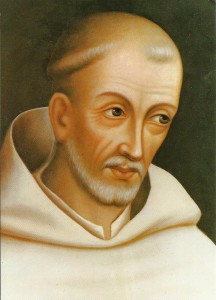
That they might guard you in all your ways


MEMORIAL
The Holy Guardian Angels 
(Abbot and Doctor of the Church)

An excerpt from a Sermon 12

He has given his angels charge over you to guard you in all your ways. Let them thank the Lord for his mercy; his wonderful works are for the children of men. Let them give thanks and say among the nations, the Lord has done great things for them. O Lord, what is man that you have made yourself known to him, or why do you incline your heart to him? And you do incline your heart to him; you show him your care and your concern. Finally, you send your only Son and the grace of your Spirit, and promise him a vision of your countenance. And so, that nothing in heaven should be wanting in your concern for us, you send those blessed spirits to serve us, assigning them as our guardians and our teachers.

He has given his angels charge over you to guard you in all your ways. These words should fill you with respect, inspire devotion and instill confidence; respect for the presence of angels, devotion because of their loving service, and confidence because of their protection. And so the angels are here; they are at your side, they are with you, present on your behalf. They are here to protect you and to serve you. But even if it is God who has given them this charge, we must nonetheless be grateful to them for the great love with which they obey and come to help us in our great need.

So let us be devoted and grateful to such great protectors; let us return their love and honor them as much as we can and should. Yet all our love and honor must go to him, for it is from him that they receive all that makes them worthy of our love and respect.

We should then, my brothers, show our affection for the angels, for one day they will be our co-heirs just as here below they are our guardians and trustees appointed and set over us by the Father. We are God’s children although it does not seem so, because we are still but small children under guardians and trustees, and for the present little better than slaves.

Even though we are children and have a long, a very long and dangerous way to go, with such protectors what have we to fear? They who keep us in all our ways cannot be overpowered or led astray, much less lead us astray. They are loyal, prudent, powerful. Why then are we afraid? We have only to follow them, stay close to them, and we shall dwell under the protection of God’s heaven.

Glory to the Father
and to the Son
and to the Holy Spirit:
as it was in the beginning,
is now, and will be forever. Amen


MEMORIAL


Saint Thérèse of the Child Jesus


“Now when the seventh month came, the whole people gathered as one in the square in front of the Water Gate, and they called upon Ezra the scribe to bring forth the book of the law of Moses which the LORD had commanded for Israel.” (Nehemiah 8:1.)

Saint Bede the Venerable comments on this verse from today’s First Reading:

“As Nehemiah was seeking to make plans and decide who should reside in the city that they had built, the seventh month arrived, for it was not far off. For since the wall had been completed on the twenty-fifth day of the sixth month, not more than five days remained until the beginning of the seventh month. The whole of this seventh month, from its first day until the twenty-second, was consecrated with ceremonies prescribed by the Law; when these had been duly celebrated, only then did he return with the leaders and common people to decide who should be residents of the rebuilt city. The point to note here is the devotion and also the like-mindedness of the people who as one person (that is, with one and the same faith and love) came together at the Lord’s temple; and they themselves asked their pontifex to bring the book and recount for them the commandments of the Law that they must observe, so that along with the rebuilt city, a structure of good works pleasing to God might spring up in case, just as before, neglect of religion should lead to the ruination of the city as well. And it is appropriate that the city was completed in the sixth month and that the people gathered in it to hear the Law in the seventh; for in the Law there are six days for working and a seventh for resting. And this, after we have done good work, is the form of our rest that is most beloved and most acceptable to the Lord: to abstain from servile work (that is, from sin) and devote ourselves to hearing and fulfilling his commandments with due diligence. This is why the Feast of Trumpets, by whose blast the people, amid their prayers and offerings, were more fervently moved to remembrance of the divine law, was placed in the beginning of this seventh month also.

Even today too, according to the spiritual meaning, the construction of the holy city should be followed by divine reading and the frequent sounding of trumpets, no doubt because it is necessary that when a people has been initiated into the heavenly sacraments they should also, as occasion requires, be carefully instructed by divine discourses how they should live. Now he says that the people assembled “in the square that is before the Water Gate.” I think that by the Water Gate is meant the gate in the courtyard of the priests that surrounded the temple on all its sides in a square, especially on the temple’s eastern side, where there was the bronze sea for washing the hands and feet of those going into the temple, the ten bronze washbasins for washing the victims and the altar of burnt offering between which and the temple Zechariah son of Berechiah was stoned to death. The people did not have permission to enter inside the gate of this court but only the priests and ministers of the Lord; the people were accustomed to stand outside of this gate and especially in the square that was at its eastern side, in order to listen to the word or to pray. Therefore, it is appropriate that the people gathered before the Water Gate, because they were to be given spiritual drink by their high priest from the streams of Scripture.” (On Ezra and Nehemiah, 3.)


Collect
O God,
Who open your Kingdom
to those who are humble and to little ones,
lead us to follow trustingly
in the little way of Saint Thérèse,
so that through her intercession
we may see your eternal glory revealed.
Through our Lord Jesus Christ, your Son,
Who lives and reigns with You
in the unity of the Holy Spirit,
one God, for ever and ever. Amen.


Glory to the Father
and to the Son
and to the Holy Spirit:
as it was in the beginning,
is now, and will be forever. Amen


In the heart of the Church I will be love


(Doctor of the Church)
An excerpt from her autobiography


Since my longing for martyrdom was powerful and unsettling, I turned to the epistles of Saint Paul in the hope of finally finding an answer. By chance the twelfth and thirteenth chapters of the first epistle to the Corinthians caught my attention, and in the first section I read that not everyone can be an apostle, prophet or teacher, that the Church is composed of a variety of members, and that the eye cannot be the hand. Even with such an answer revealed before me, I was not satisfied and did not find peace.

I persevered in the reading and did not let my mind wander until I found this encouraging theme: Set your desires on the greater gifts. And I will show you the way which surpasses all others. For the Apostle insists that the greater gifts are nothing at all without love and that this same love is surely the best path leading directly to God. At length I had found peace of mind.

When I had looked upon the mystical body of the Church, I recognized myself in none of the members which Saint Paul described, and what is more, I desired to distinguish myself more favorably within the whole body. Love appeared to me to be the hinge for my vocation. Indeed I knew that the Church had a body composed of various members, but in this body the necessary and more noble member was not lacking; I knew that the Church had a heart and that such a heart appeared to be aflame with love. I knew that one love drove the members of the Church to action, that if this love were extinguished, the apostles would have proclaimed the Gospel no longer, the martyrs would have shed their blood no more. I saw and realized that love sets off the bounds of all vocations, that love is everything, that this same love embraces every time and every place. In one word, that love is everlasting.

Then, nearly ecstatic with the supreme joy in my soul, I proclaimed: O Jesus, my love, at last I have found my calling: my call is love. Certainly I have found my place in the Church, and you gave me that very place, my God. In the heart of the Church, my mother, I will be love, and thus I will be all things, as my desire finds its direction.


Glory to the Father
and to the Son
and to the Holy Spirit:
as it was in the beginning,
is now, and will be forever. Amen


MEMORIAL


Saint Jerome of Bethlehem


“In the month Nisan of the twentieth year of King Artaxerxes, when the wine was in my charge, I took some and offered it to the king. Because I had never before been sad in his presence,” (Nehemiah 2:1.)

Saint Bede the Venerable comments on this verse from today’s First Reading:

“We have plainly learned from the teaching of Isaiah how Cyrus, the first king of the Persians, represents a figure of the Lord Savior because he ended the captivity of the people of God and decreed that the temple be restored. So too, we can properly take the successor of this same empire, Artaxerxes, who with the same devotion ordered that the city of Jerusalem be rebuilt, as a type of the Lord, who builds a city for himself from living stones (that is, the one church made from all the elect) through the service of preachers. Thus it is appropriate that the name Artaxerxes means “a light that tests silently.” For the Lord is indeed the light of life who tests the hearts of his faithful silently, at times illuminating them with the sweetness of celestial grace, at others clouding them with the burdens of this life, so that, instructed by temporal adversities, they might desire eternal goods more ardently.” (On Ezra and Nehemiah, 3.)


Collect
O God,
who gave the Priest Saint Jerome
a living and tender love for Sacred Scripture,
grant that your people
may be ever more fruitfully nourished by your Word
and find in it the fount of life.
Through our Lord Jesus Christ, your Son,
Who lives and reigns with You
in the unity of the Holy Spirit,
one God, for ever and ever. Amen.


Glory to the Father
and to the Son
and to the Holy Spirit:
as it was in the beginning,
is now, and will be forever. Amen