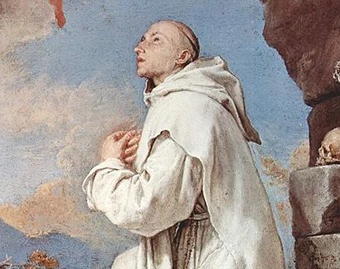
I am a Christian as well as a leader


An excerpt from his sermon «On Pastors»
(Bishop and Father of the Church)

You have often learned that all our hope is in Christ and that he is our true glory and our salvation. You are members of the flock of the Good Shepherd, who watches over Israel and nourishes his people. Yet there are shepherds who want to have the title of shepherd without wanting to fulfil a pastor’s duties; let us then recall what God says to his shepherds through the prophet. You must listen attentively; I must listen with fear and trembling.

The word of the Lord came to me and said: Son of man, prophesy against the shepherds of Israel and speak to the shepherds of Israel. We just heard this reading a moment ago, my brothers, and I have decided to speak to you on this passage. The Lord will help me to speak the truth if I do not speak on my own authority. For if I speak on my own authority, I will be a shepherd nourishing myself and not the sheep. However, if my words are the Lord’s, then he is nourishing you no matter who speaks. Thus says the Lord God: Shepherds of Israel, who have been nourishing only themselves! Should not the shepherds nourish the sheep? In other words, true shepherds take care of their sheep, not themselves. This is the principle reason why God condemns those shepherds: they took care of themselves rather than their sheep. Who are they who nourish themselves? They are the shepherds the Apostle described when he said: They all seek what is theirs and not what is Christ’s.

I must distinguish carefully between two aspects of the role the Lord has given me, a role that demands a rigorous accountability, a role based on the Lord’s greatness rather than on my own merit. The first aspect is that I am a Christian; the second, that I am a leader. I am a Christian for my own sake, whereas I am a leader for your sake; the fact that I am a Christian is to my own advantage, but I am a leader for your advantage.

Many persons come to God as Christians but not as leaders. Perhaps they travel by an easier road and are less hindered since they bear a lighter burden. In addition to the fact that I am a Christian and must give God an account of my life, I as a leader must give him an account of my stewardship as well.

Glory to the Father
and to the Son
and to the Holy Spirit:
as it was in the beginning,
is now, and will be forever. Amen


Saturday of Week XXIII


“This saying is trustworthy and deserves full acceptance: Christ Jesus came into the world to save sinners. Of these I am the foremost.” (1 Timothy 1:15.)

Origen of Alexandria (part 2 of Pope Benedict’s reflections on Origen) comments on this verse from the First Reading proclaimed at Mass today:

“Moreover, Paul says in the Epistle to Timothy, even though he himself had later become an apostle of Jesus, “this is a faithful saying, that Christ Jesus came into the world to save sinners, of whom I am chief.” For some unknown reason he [Celsus] forgot or did not think of saying anything about Paul, who after Jesus established the churches in Christ. Why then is it outrageous if Jesus, wanting to show mankind the extent of his ability to heal souls, chose infamous and most wicked men and led them on so far that they were an example of the purest moral character to those who were converted by them to the gospel of Christ?” (Against Celsus, 1.)


Collect
O God,
by Whom we are redeemed and receive adoption,
look graciously upon
Your beloved sons and daughters,
that those who believe in Christ
may receive true freedom
and an everlasting inheritance.
Through our Lord Jesus Christ, your Son,
Who lives and reigns with You
in the unity of the Holy Spirit,
one God, for ever and ever. Amen.

Glory to the Father
and to the Son
and to the Holy Spirit:
as it was in the beginning,
is now, and will be forever. Amen


Top


You gave us life in the beginning;
give us new life


An excerpt from On the Incarnation of the Word
(Bishop and Father of the Church)

God, the Word of the all-good Father, did not disregard the human race, his own creation, when it was sinking back into corruption, but rather by the offering of his own body he destroyed the death men had incurred, and by his teaching he corrected their negligence. So he restored by his power all that belongs to man’s estate.

Anyone can find confirmation of this from the Savior’s own disciples who spoke of him, for in their writings one reads: The charity of Christ constrains us as we judge that if one died on behalf of all, then all died; and he died for all in order that we may live no longer for ourselves but for him who died for us and rose from the dead, our Lord Jesus Christ. And again: We see Jesus, who for a little while was made lower than the angels, crowned with glory and honor because he suffered death, that by God’s grace he might taste death for everyone. Then the writer goes on to show why it had to be God the Word and no other who became man: Indeed it was fitting that in bringing many sons to glory, God, for whom and through whom all things exist, should make perfect the one who leads them to salvation. By this he means that the task of bringing men back from the corruption into which they had fallen belonged to no other save God the Word who had made them in the beginning. Further, Scripture shows that the Word assumed a body for the purpose of offering it in sacrifice on behalf of other bodies like his own, for the writer continues: Since the children have blood and flesh in common, he likewise shared in them himself so that by his own death he might destroy the one who had power over death, that is, the devil, and might deliver those who all their life long were enslaved by fear of death.

For by the sacrifice of his own body he both put an end to the law that stood against us and made a new beginning of life for us by giving us the hope of resurrection. Hence Paul, the Christbearer, declares: As through a man came death, so through a man has come the resurrection of the dead. For as all died in Adam, so also in Christ all shall be made to live.

No longer, then, do we die as men condemned, but as men being raised even now, we await the general resurrection of all, which God, whose work and gift it is, will reveal at the appointed time.

Glory to the Father
and to the Son
and to the Holy Spirit:
as it was in the beginning,
is now, and will be forever. Amen


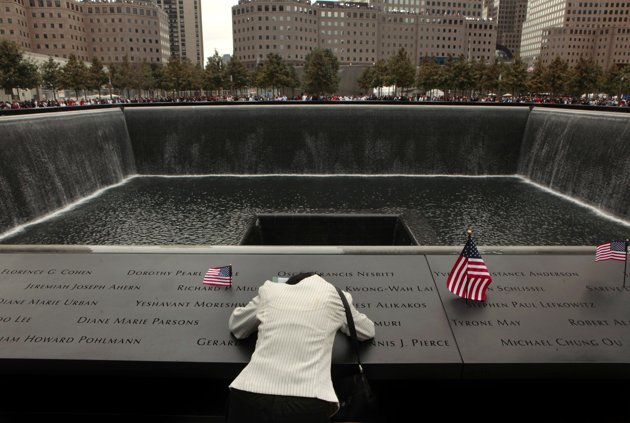
A Prayer on 11 September


O God, merciful and strong,
who crush wars and cast down the proud,
be pleased to banish violence swiftly from our midst
and to wipe away all tears,
so that we may all truly deserve to be called your children.
Through our Lord Jesus Christ, your Son,
who lives and reigns with you in the unity of the Holy Spirit,
one God, for ever and ever.

Or:

O God, author and lover of peace,
to know you is to live, to serve you is to reign;
defend against every attack those who cry to you,
so that we, who trust in your protection,
may not fear the weapons of any foe.
Through our Lord Jesus Christ, your Son,
who lives and reigns with you in the unity of the Holy Spirit,
one God, for ever and ever.

(From Roman Missal, “In Time of War or Civil Disturbance”)


Pope-Emeritus Benedict at Ground Zero


O God of love, compassion, and healing,
look on us, people of many different faiths and traditions,
who gather today at this site,
the scene of incredible violence and pain.


We ask you in your goodness
to give eternal light and peace
to all who died here—
the heroic first-responders:
our fire fighters, police officers,
emergency service workers, and Port Authority personnel,
along with all the innocent men and women
who were victims of this tragedy
simply because their work or service
brought them here on September 11, 2001.

We ask you, in your compassion
to bring healing to those
who, because of their presence here that day,
suffer from injuries and illness.
Heal, too, the pain of still-grieving families
and all who lost loved ones in this tragedy.
Give them strength
to continue their lives with courage and hope.

We are mindful as well
of those who suffered death, injury, and loss
on the same day at
the Pentagon and in Shanksville, Pennsylvania.
Our hearts are one with theirs
as our prayer embraces their pain and suffering.

God of peace, bring your peace to our violent world:
peace in the hearts of all men and women
and peace among the nations of the earth.
Turn to your way of love
those whose hearts and minds
are consumed with hatred.

God of understanding,
overwhelmed by the magnitude of this tragedy,
we seek your light and guidance
as we confront such terrible events.
Grant that those whose lives were spared
may live so that the lives lost here
may not have been lost in vain.
Comfort and console us,
strengthen us in hope,
and give us the wisdom and courage
to work tirelessly for a world
where true peace and love reign
among nations and in the hearts of all.


Friday of Week XXIII


“I am grateful to him who has strengthened me, Christ Jesus our Lord, because he considered me trustworthy in appointing me to the ministry.” (1 Timothy 1:12.)

In commenting on these verses from today’s First Reading, Saint John Chrysostom writes:

“If you have sinned and God has pardoned your sin, receive your pardon and give thanks. But do not be forgetful of your sin. It is not that you should fret over the thought of it, but that you may school your soul not to grow lax or relapse again into the same snares. This is what Paul did, not hiding his actions as a blasphemer, persecutor and injurer. It is as if he were saying: “Let the life of your servant be openly exposed, so that the loving kindness of the Lord might be all the more apparent. For although I have received the remission of sins, I do not reject the memory of those sins.” And this not only made transparent the loving kindness of the Lord but made the man himself the more remarkable. For when you have learned who he was before, then you will be the more astonished at him. When you see what he came to be out of what he was, then you will commend him the more. So if you have greatly sinned, you yourself upon being changed will hope all the more by seeing him. Such an example comforts those who are in despair and causes them again to stand tall.” (Homilies Concerning the Statues, 12.)


Collect
O God,
by Whom we are redeemed and receive adoption,
look graciously upon Your beloved sons and daughters,
that those who believe in Christ
may receive true freedom
and an everlasting inheritance.
Through our Lord Jesus Christ, your Son,
Who lives and reigns with You
in the unity of the Holy Spirit,
one God, for ever and ever. Amen.


Glory to the Father
and to the Son
and to the Holy Spirit:
as it was in the beginning,
is now, and will be forever. Amen


Christ will forgive no sin without the Church


Friday of Week XXIII in Ordinary Time
(Abbot)

An excerpt from a Sermon 11

The prerogative of receiving the confession of sin and the power to forgive sin are two things that belong properly to God alone. We must confess our sins to him and look to him for forgiveness. Since only he has the power to forgive sins, it is to him that we must make our confession. But when the Almighty, the Most High, wedded a bride who was weak and of low estate, he made that maid-servant a queen. He took her from her place behind him, at his feet, and enthroned her at his side. She had been born from his side, and therefore he betrothed her to himself. And as all that belongs to the Father belongs also to the Son because by nature they are one, so also the bridegroom gave all he had to the bride and he shared in all that was hers. He made her one both with himself and with the Father. Praying for his bride, the Son said to the Father: I want them to be one with us, even as you and I are one.

And so the bridegroom is one with the Father and one with the bride. Whatever he found in his bride alien to her own nature he took from her and nailed to his cross when he bore her sins and destroyed them on the tree. He received from her and clothed himself in what was hers by nature and gave her what belonged to him as God. He destroyed what was diabolical, took to himself what was human, and conferred on her what was divine. So all that belonged to the bride was shared in by the bridegroom, and he who had done no wrong and on whose lips was found no deceit could say: Have pity on me, Lord, for I am weak. Thus, sharing as he did in the bride’s weakness, the bridegroom made his own her cries of distress, and gave his bride all that was his. Therefore, she too has the prerogative of receiving the confession of sin and the power to forgive sin, which is the reason for the command: Go, show yourself to the priest.

The Church is incapable of forgiving any sin without Christ, and Christ is unwilling to forgive any sin without the Church. The Church cannot forgive the sin of one who has not repented, who has not been touched by Christ; Christ will not forgive the sin of one who despises the Church. What God has joined together, man must not separate. This is a great mystery, but I understand it as referring to Christ and the Church.

Do not destroy the whole Christ by separating head from body, for Christ is not complete without the Church, nor is the Church complete without Christ. The whole and complete Christ is head and body. This is why he said: No one has ever ascended into heaven except the Son of Man whose home is in heaven. He is the only man who can forgive sin.


Glory to the Father
and to the Son
and to the Holy Spirit:
as it was in the beginning,
is now, and will be forever. Amen


Thursday of Week XXIII


“And over all these put on love, that is, the bond of perfection.” (Colossians 3:14.)

In commenting on these verses from today’s First Reading, Saint John Chrysostom writes:

“Now what Paul wishes to say is that there is no benefit in those things, for all those things fall apart, unless they are done with love. This is the love that binds them all together. Whatever good thing it is that you mention, if love be absent, it is nothing, it melts away. The analogy is like a ship; though its rigging be large, yet if it lacks girding ropes, it is of no service. Or it is similar to a house; if there are no tie beams, of what use is the house? Think of a body. Though its bones be large, if it lacks ligaments, the bones cannot support the body. In the same way, whatever good our deeds possess will vanish completely if they lack love.” (Homilies On Colossians, 9.)


Collect
O God,
by Whom we are redeemed and receive adoption,
look graciously upon
Your beloved sons and daughters,
that those who believe in Christ
may receive true freedom
and an everlasting inheritance.
Through our Lord Jesus Christ, your Son,
Who lives and reigns with You
in the unity of the Holy Spirit,
one God, for ever and ever. Amen.

Glory to the Father
and to the Son
and to the Holy Spirit:
as it was in the beginning,
is now, and will be forever. Amen


If I should forget you Jerusalem


Wednesday of Week XXIII in Ordinary Time
(Priest)

An excerpt from a Discourse on Psalm 83

How beautiful are your tabernacles! My soul longs to reach the courts of the Lord, the fullness of the heavenly Jerusalem, the city of the Lord. He then explains why he desires to enter the courts of the Lord. It is because they are blessed who dwell in your house, the heavenly Jerusalem, Lord, God of the heavenly powers, my King and my God. It is as if he were to say: Who does not long to enter your courts since you are God, the Creator and King and Lord of hosts, and all who dwell in your house are blessed? For him courts and house are the same. When he says blessed, he means that they enjoy as much happiness as can be conceived. Clearly they are blessed because out of their devoted love they will praise you for ever, that is, for all eternity. For they would not offer praise for all eternity unless they were blessed for all eternity.

Now even though we may have faith, hope and love, none of us can attain this state of blessedness by ourselves. Rather, blessed is the man—he alone attains blessedness—whose help is from you in rising to the heights of happiness on which he has set his heart. In other words, he alone can be said to come to true blessedness who, having resolved in his heart to rise to this state of happiness by the many stages of the virtues and good works, receives the help of your grace. No one can rise up by himself as the Lord testifies: No one ascends into heaven, of his own power, except the Son of Man who is in heaven.

Thus he contemplates this journey, living as he does in a vale of tears, for this life is lowly and full of tears and sorrow. The life of heaven, by contrast, is called a mountain of joy.

But since the psalmist said: Blessed is the man whose help comes from you, someone might ask: Does God really help us in this? And the answer is that God does help the blessed. For our lawgiver Christ, who gave us the law, gives now and will continue to give his blessings, the abundant gifts of grace, by which he will bless his own, that is, raise them to beatitude. By these blessings, then, they will rise from strength to strength. One day in the heavenly Zion they will see Christ as the God of gods, as the one who, being God, will deify his own. Or, again, those who are to be the new Zion will see in spirit the God of gods—the Trinity. In other words, then their minds will see God, who cannot be seen in this life. For then God will be all in all.


Glory to the Father
and to the Son
and to the Holy Spirit:
as it was in the beginning,
is now, and will be forever. Amen


MEMORIAL (in USA)


Saint Peter Claver


“If then you were raised with Christ, seek what is above, where Christ is seated at the right hand of God.” (Colossians 3:1.)

Origen of Alexandria (part 2 of Pope Benedict’s reflections on Origen) comments on this verse from the First Reading proclaimed at Mass today:

“But he who keeps the commandments not in perfect love, but in dread of future torment and in fear of punishments is indeed also himself a son of Abraham; he too receives gifts, that is, the reward of his work nevertheless he is inferior to that person who is perfected not in slavish fear, but in the freedom of love…. “Leaving the word of the first principles of Christ,” he is borne to perfection. “Seeking the things that are above, where Christ is sitting at the right hand of God, not the things that are on the earth,” he “looks not at the things which are seen, but at the things which are not seen.” In the divine Scriptures he does not follow “the letter which kills” but “the spirit which quickens.” From those things he will doubtless be one who does not receive “the spirit of bondage again in fear, but the spirit of adoption, whereby they cry, Abba, Father.” (Homilies on Genesis, 7.)


Collect
O God,
Who made Saint Peter Claver a slave of slaves
and strengthened him
with wonderful charity and patience
as he came to their help,
grant, through his intercession,
that, seeking the things of Jesus Christ,
we may love our neighbor in deeds and in truth.
Through our Lord Jesus Christ, your Son,
Who lives and reigns with You
in the unity of the Holy Spirit,
one God, for ever and ever. Amen.

Glory to the Father
and to the Son
and to the Holy Spirit:
as it was in the beginning,
is now, and will be forever. Amen