My Lord and my God

Today’s Second Reading from the
Office of Readings (Liturgy of the Hours)

Feast
Saint Thomas, Apostle

An excerpt from:
Homily 26
Saint Gregory the Great
(pope and Father of the Church)

Thomas, one of the twelve, called the Twin, was not with them when Jesus came. He was the only disciple absent; on his return he heard what had happened but refused to believe it. The Lord came a second time; he offered his side for the disbelieving disciple to touch, held out his hands, and showing the scars of his wounds, healed the wound of his disbelief.

Dearly beloved, what do you see in these events? Do you really believe that it was by chance that this chosen disciple was absent, then came and heard, heard and doubted, doubted and touched, touched and believed? It was not by chance but in God’s providence. In a marvelous way God’s mercy arranged that the disbelieving disciple, in touching the wounds of his master’s body, should heal our wounds of disbelief. The disbelief of Thomas has done more for our faith than the faith of the other disciples. As he touches Christ and is won over to belief, every doubt is cast aside and our faith is strengthened. So the disciple who doubted, then felt Christ’s wounds, becomes a witness to the reality of the resurrection.

Touching Christ, he cried out: My Lord and my God. Jesus said to him: Because you have seen me, Thomas, you have believed. Paul said: Faith is the guarantee of things hoped for, the evidence of things unseen. It is clear, then, that faith is the proof of what can not be seen. What is seen gives knowledge, not faith. When Thomas saw and touched, why was he told: You have believed because you have seen me? Because what he saw and what he believed were different things. God cannot be seen by mortal man. Thomas saw a human being, whom he acknowledged to be God, and said: My Lord and my God. Seeing, he believed; looking at one who was true man, he cried out that this was God, the God he could not see.

What follows is reason for great joy: Blessed are those who have not seen and have believed. There is here a particular reference to ourselves; we hold in our hearts one we have not seen in the flesh. We are included in these words, but only if we follow up our faith with good works. The true believer practices what he believes. But of those who pay only lip service to faith, Paul has this to say: They profess to know God, but they deny him in their works. Therefore James says: Faith without works is dead.

Glory to the Father
and to the Son
and to the Holy Spirit:
as it was in the beginning,
is now, and will be forever. Amen


Ordinary Time
Thursday of the Thirteenth Week

“So Abraham took the wood for the burnt offering and laid it on his son Isaac, while he himself carried the fire and the knife. As the two walked on together...” (Genesis 22:6)

Origen of Alexandria (part 2 of Pope Benedict’s reflections on Origen) comments on this verse from the First Reading proclaimed at Mass today:

“That Isaac carries on himself “the wood for the burnt offering” is a figure, because Christ also “himself carried his own cross,” and yet to carry “the wood for the burnt offering” is the duty of a priest. He therefore becomes victim and priest. But what is added also is related to this: “And they both went off together.” For when Abraham carries the fire and knife as if to sacrifice, Isaac does not go behind him but with him, that he might be shown to contribute equally with the priesthood itself.” (Homilies on Genesis, 8)


Collect
O God,
Who through the grace of adoption
chose us to be children of light,
grant, we pray,
that we may not be wrapped in the darkness of error
but always be seen
to stand in the bright light of truth.
Through our Lord Jesus Christ, your Son,
Who lives and reigns with You
in the unity of the Holy Spirit,
one God, for ever and ever. Amen.


Glory to the Father
and to the Son
and to the Holy Spirit:
as it was in the beginning,
is now, and will be forever. Amen



Blessed Junipero Serra

“In Fray Juniper Serra, a priest of the Order of Friars Minor, we find a shining example of Christian virtue and the missionary spirit. His great goal was to bring the Gospel to the Native Peoples of America, so that they too might be “consecrated in the truth.” For many years he devoted himself to this task in Mexico, in the Sierra Gorda, and in California. He sowed the seeds of Christian faith amid the momentous changes wrought by the arrival of European settlers in the New World. It was a field of missionary endeavor that required patience, perseverance and humility, as well as vision and courage. Relying on the divine power of the message he proclaimed, Father Serra led the Native Peoples to Christ. He was well aware of their heroic virtues — as exemplified in the life of Blessed [sic. now St] Kateri Tekakwitha — and he sought to further their authentic human development on the basis of their new-found faith as per sons created and redeemed by God. He also had to admonish the powerful, in the spirit of our second reading from James, not to abuse and exploit the poor and the weak. In fulfilling this ministry, Father Serra showed himself to be a true son of Saint Francis. Today, his example inspires in a particular way the many Serra Clubs throughout the world, the members of which do so much praiseworthy work in fostering vocations.” (Acta Apostolicae Sedis, Commentarium Officiale, 165-166.)


Collect
O God,
Who by your ineffable mercy
have been pleased through the labors
of your priest Blessed Junípero Serra
to count many American peoples
within your Church,
grant by his intercession
that we may so join our hearts to you in love,
as to carry always and everywhere before all people
the image of your Only Begotten Son.
Who lives and reigns with You
in the unity of the Holy Spirit,
one God, for ever and ever. Amen.


Glory to the Father
and to the Son
and to the Holy Spirit:
as it was in the beginning,
is now, and will be forever. Amen


Blessed Junípero Serra

Ordinary Time
Wednesday of the Thirteenth Week

“The child grew and was weaned, and Abraham held a great banquet on the day of the child’s weaning.” (Genesis 21:8)

Origen of Alexandria (part 2 of Pope Benedict’s reflections on Origen) comments on this verse from the First Reading proclaimed at Mass today:

“Isaac, Scripture says, “grew” and became strong; that is, Abraham’s joy grew as he looked not at those things “which are seen but at the things which are not seen.” For Abraham did not rejoice about present things or about the riches of the world and the activities of the age. But do you wish to hear why Abraham rejoiced? Hear the Lord saying to the Jews: “Abraham your father desired to see my day, and he saw it and was glad.” In this way, therefore, “Isaac grew.” That vision of Abraham, in which he saw the day of Christ and the hope which is in Christ, were increasing his joys. And would that you too might be made Isaac and be a joy to your mother the church!” (Homilies on Genesis, 10)


Collect
O God,
Who by your ineffable mercy
have been pleased through the labors
of your priest Blessed Junípero Serra
to count many American peoples
within your Church,
grant by his intercession
that we may so join our hearts to you in love,
as to carry always and everywhere before all people
the image of your Only Begotten Son.
Who lives and reigns with You
in the unity of the Holy Spirit,
one God, for ever and ever. Amen.


Glory to the Father
and to the Son
and to the Holy Spirit:
as it was in the beginning,
is now, and will be forever. Amen


Your kingdom come

Today’s Second Reading from the
Office of Readings (Liturgy of the Hours)

Ordinary Time
Wednesday of the Thirteenth Week

An excerpt from:
Way of Perfection
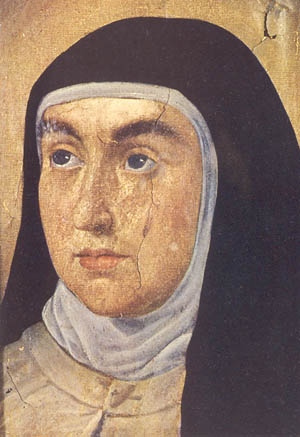
Saint Teresa of Avila
(Doctor of the Church)

When asking a favor of some person of importance would anyone be so ill-mannered and thoughtless as not first to consider how best to address him in order to make a good impression and give him no cause for offense? Surely he would think over his petition carefully and his reason for making it, especially if it were for something specific and important as our good Jesus tells us our petitions should be. It seems to me that this point deserves serious attention. My Lord, could you not have included all in one word by saying “Father, give us whatever is good for us?” After all, to one who understands everything so perfectly, what need is there to say more?

O Eternal Wisdom, between you and your Father that was enough; that was how you prayed in the garden. You expressed your desire and fear but surrendered yourself to his will. But as for us, my Lord, you know that we are less submissive to the will of your Father and need to mention each thing separately in order to stop and think whether it would be good for us, and otherwise not ask for it. You see, the gift our Lord intends for us may be by far the best, but if it is not what we wanted we are quite capable of flinging it back in his face. That is the kind of people we are; ready cash is the only wealth we understand.

Therefore, the good Jesus bids us repeat these words, this prayer for his kingdom to come in us: Hallowed be your name, your kingdom come. See how wise our Master is! But what do we mean when we pray for this kingdom? That is what I am going to consider now, for it is important that we should understand it. Our good Jesus placed these two petitions side by side because he realized that in our inadequacy we could never fittingly hallow, praise, exalt or glorify this holy name of the eternal Father unless he enabled us to do so by giving us his kingdom here on earth. But since we must know what we are asking for and how important it is to pray for it without ceasing and to do everything in our power to please him who is to give it to us, I should now like to give you my own thoughts on the matter.

Of the many joys that are found in the kingdom of heaven, the greatest seems to me to be the sense of tranquility and well-being that we shall experience when we are free from all concern for earthly things. Glad because others are glad and for ever at peace, we shall have the deep satisfaction of seeing that by all creatures the Lord is honored and praised, and his name blessed. No one ever offends him, for there everyone loves him. Loving him is the soul’s one concern. Indeed it cannot help but love him, for it knows him. Here below our love must necessarily fall short of that perfection and constancy, but even so how different it would be, how much more like that of heaven, if we really knew our Lord!

Glory to the Father
and to the Son
and to the Holy Spirit:
as it was in the beginning,
is now, and will be forever. Amen


Ordinary Time
Tuesday of the Thirteenth Week

“As dawn was breaking, the angels urged Lot on, saying, “Come on! Take your wife with you and your two daughters who are here, or you will be swept away in the punishment of the city.” (Genesis 19:15)

Origen of Alexandria (part 2 of Pope Benedict’s reflections on Origen) comments on this verse from the First Reading proclaimed at Mass today:

“When the angels who were sent to destroy Sodom desired to expedite the task with which they were charged, they first had concern for their host, Lot, that, in consideration of his hospitality, they might deliver him from the destruction of the imminent fire.

Hear these words, you who close your houses to strangers; hear these words, you who avoid a guest as an enemy. Lot was living in Sodom. We do not read of other good deeds of his. The hospitality alone occurring at that time is mentioned. He escapes the flames, he escapes the conflagration for this reason alone: because he opened his house to strangers. Angels entered the hospitable house; fire entered the houses closed to strangers.

Let us therefore see what the angels say to their host on account of his services of hospitality. “Save your life in the mountain,” the text says, “lest perchance you be included.” Lot was indeed hospitable. And, as the Scripture has borne testimony to him, he was hidden from destruction when the angels had been hospitably received. But he was not so perfect that immediately on departing from Sodom, he could ascend the mountain; for it belongs to the perfect to say, “I have lifted up my eyes to the mountains, whence help shall come to me.” He therefore was neither such that he should perish among the inhabitants of Sodom, nor was he so great that he could dwell with Abraham in the heights. For if he had been such, Abraham would never have said to him, “If you go to the right, I will go to the left, or if you go to the left I will go to the right,” nor would the dwellings of Sodom have pleased him. He was therefore somewhere in the middle between the perfect and the doomed. And knowing that it is not appropriate with his strength to ascend the mountain, he piously and humbly excuses himself saying, “I cannot be saved on the mountain, but, behold, this city is small. Here I shall be saved; and it is not small?” To be sure, when he entered the small city of Zoar he is saved in it. And after this he went up into the mountain with his daughters.

For there was no possibility of ascending from Sodom into the mountain, although it is written of the land of Sodom before it was overthrown, in that time when Lot chose it as his dwelling place, that “it was as the paradise of God and as the land of Egypt.” And yet, to digress slightly, what similarity does there appear to be with the paradise of God and the land of Egypt that Sodom should be compared fittingly with these? Now I think it is in this way: before Sodom sinned, when it still preserved the simplicity of the unstained life, it was “as the paradise of God,” but when it began to be discolored and to be darkened with the stains of sins it became “as the land of Egypt.”

But since indeed the prophet says, “Your sister Sodom shall be restored to her ancient state,” we inquire also whether her restoration also recovers this, that she be “as the paradise of God” or only “as the land of Egypt.” I, at least, doubt if the sins of Sodom can be diminished to such an extent and its evils purged to the point that its restoration be so great that it be compared not only with the land of Egypt but also with the paradise of God. Those, however, who wish to establish this will press us especially from that word that appears added to this counterpromise. For the Scripture did not say “Sodom will be restored,” and stop, but it says, “Sodom will be restored to its ancient state.” And they will assert strongly that its ancient state was not “as the land of Egypt” but “as the paradise of God.” (Homilies on Genesis, 5)


Collect
O God,
Who through the grace of adoption
chose us to be children of light,
grant, we pray,
that we may not be wrapped in the darkness of error
but always be seen
to stand in the bright light of truth.
Through our Lord Jesus Christ, your Son,
Who lives and reigns with You
in the unity of the Holy Spirit,
one God, for ever and ever. Amen.


Glory to the Father
and to the Son
and to the Holy Spirit:
as it was in the beginning,
is now, and will be forever. Amen


If I wanted to please men,
I would not be a servant of Christ

Today’s Second Reading from the
Office of Readings (Liturgy of the Hours)

Ordinary Time: Tuesday of the Thirteenth Week

An excerpt from: Sermon 47 (On Sheep))
Saint Augustine
(bishop and Father of the Church)

This is our glory: the witness of our conscience. There are men who rashly judge, who slander, whisper and murmur, who are eager to suspect what they do not see, and eager to spread abroad things they have not even a suspicion of. Against men of this sort, what defense is there save the witness of our own conscience?

My brothers, we do not seek, nor should we seek, our own glory even among those whose approval we desire. What we should seek is their salvation, so that if we walk as we should they will not go astray in following us. They should imitate us if we are imitators of Christ; and if we are not, they should still imitate him. He cares for his flock, and he alone is to be found with those who care for their flocks, because they are all in him.

And so we seek no advantage for ourselves when we aim to please men. We want to take our joy in men—and we rejoice when they take pleasure in what is good, not because this exalts us, but because it benefits them.

It is clear who is intended by the apostle Paul: If I wanted to please men, I would not be a servant of Christ. And similarly when he says: Be pleasing to all men in all things, even as I in all things please all men. Yet his words are as clear as water, limpid, undisturbed, unclouded. And so you should, as sheep, feed on and drink of his message; do not trample on it or stir it up.

You have listened to our Lord Jesus Christ as he taught his apostles: Let your actions shine before men so that they may see you good deeds, and give glory to your Father who is in heaven, for it is the Father who made you thus. We are the people of his pasture, the sheep of his hands. If then you are good, praise is due to him who made you so; it is no credit to you, for if you were left to yourself, you could only be wicked. Why then do you try to pervert the truth, in wishing to be praised when you do good, and blaming God when you do evil? For though he said: Let your works shine before men, in the same Sermon on the Mount he also said: Do not parade your good deeds before men. So if you think there are contradictions in Saint Paul, you will find the same in the Gospels; but if you refrain from troubling the waters of your heart, you will recognize here the peace of the Scriptures and with it you will have peace.

And so, my brothers, our concern should be not only to live as we ought, but also to do so in the sight of men; not only to have a good conscience but also, so far as we can in our weakness, so far as we can govern our frailty, to do nothing which might lead our weak brother into thinking evil of us. Otherwise, as we feed on the good pasture and drink the pure water, we may trample on God’s meadow, and weaker sheep will have to feed on trampled grass and drink from troubled waters.

Glory to the Father
and to the Son
and to the Holy Spirit:
as it was in the beginning,
is now, and will be forever. Amen


Solemnity
Saint Peter and Paul

“On the very night before Herod was to bring him to trial, Peter, secured by double chains, was sleeping between two soldiers, while outside the door guards kept watch on the prison.” (Acts of the Apostles 12:6.)

In commenting on these verses from today’s First Reading, Saint John Chrysostom writes:

“See how Peter slept and was not in anguish or fear. In the very night when he was about to be brought before the court he slept, leaving everything to God. Indeed the multitude becomes powerful when virtue is present. And it had such a power that even though the doors were closed, chains bound the apostle and the jailers slept at both his sides, virtue delivered him and saved him from all those difficulties. So if virtue is present the multitude has great strength, but if vice is present it makes no benefit.” (Catena on the Acts of the Apostles, 12.)


Collect
O God,
Who on the Solemnity of the Apostles Peter and Paul
give us the noble and holy joy of this day,
grant, we pray, that Your Church
may in all things follow the teaching
of those through whom she received
the beginnings of right religion.
Through our Lord Jesus Christ, Your Son,
Who lives and reigns with You
in the unity of the Holy Spirit,
one God, for ever and ever. Amen.


Glory to the Father
and to the Son
and to the Holy Spirit:
as it was in the beginning,
is now, and will be forever. Amen


Ordinary Time
Saturday of the Twelfth Week

“Looking up, he saw three men standing near him. When he saw them, he ran from the entrance of the tent to greet them; and bowing to the ground ...” (Genesis 18:2.)

Saint Ambrose of Milan offers the following insight on this verse from today’s First Reading:

“Hospitality is a good thing, and it has its recompense: first of all the recompense of human gratitude and then, more importantly, the divine reward. In this earthly abode we are all guests; here we have only a temporary dwelling place. We depart from it in haste. Let us be careful not to be discourteous or neglectful in receiving guests, lest we be denied entrance into the dwelling place of the saints at the end of our life. For this reason, the Savior said in the Gospel, “Make friends for yourselves by means of unrighteous mammon, so that when it fails they may receive you into the eternal habitations.” Moreover, while we are in this body, there often arises the necessity of traveling. Therefore that which you will have denied to others, you will have decided against yourself. You must show yourself worthy of that which you will have offered to others. If all decided not to receive guests, where would those who are traveling find rest? Then we would have to abandon human habitations and seek out the dens of the wild beasts.” (On Abraham, 1.)


Collect
Grant, O Lord,
that we may always revere and love
Your holy name,
for You never deprive of Your guidance
those You set firm
on the foundation of Your love.
Through our Lord Jesus Christ, your Son,
Who lives and reigns with You
in the unity of the Holy Spirit,
one God, for ever and ever. Amen.


Glory to the Father
and to the Son
and to the Holy Spirit:
as it was in the beginning,
is now, and will be forever. Amen


Ordinary Time
Friday of the Twelfth Week

“Abraham fell face down and laughed as he said to himself, “Can a child be born to a man who is a hundred years old? Can Sarah give birth at ninety?”” (Genesis 17:17.)

Saint Ambrose of Milan offers the following insight on this verse from today’s First Reading:

“One should consider the fact that Abraham was uncircumcised when God called him, and he was still uncircumcised when he was promised a legitimate son as heir. You are hereby invited to believe that he is not only the father of the Jews, as they claim, but the progenitor, through faith, of all believers. Sarah also, before the circumcision of her husband and by the addition of one letter to her name, receives the blessing of no small gift, so that she might have the primacy of virtue and of grace. God promises that from her nations and kings of peoples will come, so that in her might be established the type not of the synagogue but of the church. The fact that Abraham laughed when he had been promised a son through her was an expression not of unbelief but of joy. Indeed, he “fell on his face” — in worship, which means he believed. And he added, “Shall a child be born to a man who is a hundred years old? Shall Sarah, who is ninety years old, bear a child?” And he said, “O that Ishmael might live in thy sight!” He is not incredulous with regard to the promises, nor is he greedy in what he asks for in prayer. “I have no doubt that you will come through, granting a son to an old man of a hundred years and that, as the author of nature, you will effectively stretch its limits. Blessed indeed is the one on whom this gift is bestowed; but I will be doubly favored if even this Ishmael here, whom I begot from the household slave, should live in your presence.” And so the Lord approved Abraham’s sentiments, did not deny his request and confirmed his own promises.” (On Abraham, 1.)


Collect
Grant, O Lord,
that we may always revere and love
Your holy name,
for You never deprive of Your guidance
those You set firm
on the foundation of Your love.
Through our Lord Jesus Christ, your Son,
Who lives and reigns with You
in the unity of the Holy Spirit,
one God, for ever and ever. Amen.


Glory to the Father
and to the Son
and to the Holy Spirit:
as it was in the beginning,
is now, and will be forever. Amen