Let your prayer come from a humble heart

Today’s Second Reading from the
Office of Readings (Liturgy of the Hours)

Ordinary Time: Sunday of the Eleventh Week

An excerpt from
On the Lord’s Prayer
Saint Cyprian of Carthage
(bishop and martyr)

When we pray, our words should be calm, modest and disciplined. Let us reflect that we are standing before God. We should please him both by our bodily posture and the manner of our speech. It is characteristic of the vulgar to shout and make a noise, not those who are modest. On the contrary, they should employ a quiet tone in their prayer.

Moreover, in the course of his teaching, the Lord instructed us to pray in secret. Hidden and secluded places, even our own rooms, give witness to our belief that God is present everywhere; that he sees and hears all; that in the fullness of his majesty, he penetrates hidden and secret places. This is the teaching of Jeremiah: Am I God when I am near, and not God when I am far away? Can anyone hide in a dark corner without my seeing him? Do I not fill heaven and earth? Another passage of Scripture says: The eyes of the Lord are everywhere, observing both good and wicked men.

The same modesty and discipline should characterize our liturgical prayer as well. When we gather to celebrate the divine mysteries with God’s priest, we should not express our prayer in unruly words; the petition that should be made to God with moderation is not to be shouted out noisily and verbosely. For God hears our heart not our voice. He sees our thoughts; he is not to be shouted at. The Lord showed us this when he asked: Why do you think evil in your hearts? The book of Revelation testifies to this also: And all the churches shall know that I am the one who searches the heart and the desires.

Anna maintained this rule; in her observance of it she is an image of the Church. In the First Book of Kings we are told that she prayed quietly and modestly to God in the recesses of her heart. Her prayer was secret but her faith was evident. She did not pray with her voice, but with her heart, for she knew that in this way the Lord would hear her. She prayed with faith and obtained what she sought. Scripture makes this clear in the words: She was speaking in her heart; her lips were moving but her voice could not be heard; and the Lord heard her prayer. The psalmist also reminds us: Commune within your own hearts, and in the privacy of your room express your remorse. This is the teaching of the Holy Spirit. Through Jeremiah he suggests this: Say in your hearts: Lord, it is you that we have to worship.

My friends, anyone who worships should remember the way in which the tax-collector prayed in the temple alongside the Pharisee. He did not raise his eyes immodestly to heaven or lift up his hands arrogantly. Instead he struck his breast and confessing the sins hidden within his heart he implored the assistance of God’s mercy. While the Pharisee was pleased with himself, the tax-collector deserved to be cleansed much more because of the manner in which he prayed. For he did not place his hope of salvation in the certainty of his own innocence; indeed, no one is innocent. Rather he prayed humbly, confessing his sins. And the Lord who forgives the lowly heard his prayer.

Glory to the Father
and to the Son
and to the Holy Spirit:
as it was in the beginning,
is now, and will be forever. Amen


Ordinary Time
Saturday of the Tenth Week

“He indeed died for all, so that those who live might no longer live for themselves but for him who for their sake died and was raised.” (II Corinthians, 5:15.)

Saint Basil the Great offers the following insight on this verse from today's First Reading:

“What is the mark of those who eat the bread and drink the cup of Christ? That they keep in perpetual remembrance him who died for us and rose again. What is the mark of those who keep such remembrance? That they live not for themselves but for him who died for them and rose again. What is the mark of a Christian? That his justice abound in all things more than that of the scribes and Pharisees, according to the rule of the doctrine which has been handed down in the Lord’s gospel. What is the mark of the Christian? That they love one another as Christ has loved us. What is the mark of the Christian? To set the Lord always in his sight. What is the mark of the Christian? To watch daily and hourly and stand prepared in that state of perfection which is pleasing to God, knowing that at what hour he thinks not, the Lord will come.” (The Morals, 22)


Collect
O God,
from whom all good things come,
grant that we, who call on You in our need,
may at Your prompting discern what is right,
and by Your guidance do it.
Through our Lord Jesus Christ, Your Son,
Who lives and reigns with You
in the unity of the Holy Spirit,
one God, for ever and ever. Amen.


Glory to the Father
and to the Son
and to the Holy Spirit:
as it was in the beginning,
is now, and will be forever. Amen


With you is the source of life

Today’s Second Reading from the
Office of Readings (Liturgy of the Hours)

Solemnity
Most Sacred Heart of Jesus

An excerpt from:
Work 3: Tree of Life

Saint Bonaventure
(Doctor of the Church)

Take thought now, redeemed man, and consider how great and worthy is he who hangs on the cross for you. His death brings the dead to life, but at his passing heaven and earth are plunged into mourning and hard rocks are split asunder.

It was a divine decree that permitted one of the soldiers to open his sacred side with a lance. This was done so that the Church might be formed from the side of Christ as he slept the sleep of death on the cross, and so that the Scripture might be fulfilled: They shall look on him whom they pierced. The blood and water which poured out at that moment were the price of our salvation. Flowing from the secret abyss of our Lord’s heart as from a fountain, this stream gave the sacraments of the Church the power to confer the life of grace, while for those already living in Christ it became a spring of living water welling up to life everlasting.

Arise, then, beloved of Christ! Imitate the dove that nests in a hole in the cliff, keeping watch at the entrance like the sparrow that finds a home. There like the turtledove hide your little ones, the fruit of your chaste love. Press your lips to the fountain, draw water from the wells of your Savior; for this is the spring flowing out of the middle of paradise, dividing into four rivers, inundating devout hearts, watering the whole earth and making it fertile.

Run with eager desire to this source of life and light, all you who are vowed to God’s service. Come, whoever you may be, and cry out to him with all the strength of your heart. “O indescribable beauty of the most high God and purest radiance of eternal light! Life that gives all life, light that is the source of every other light, preserving in everlasting splendor the myriad flames that have shone before the throne of your divinity from the dawn of time! Eternal and inaccessible fountain, clear and sweet stream flowing from a hidden spring, unseen by mortal eye! None can fathom your depths nor survey your boundaries, none can measure your breadth, nothing can sully your purity. From you flows the river which gladdens the city of God and makes us cry out with joy and thanksgiving in hymns of praise to you, for we know by our own experience that with you is the source of life, and in your light we see light.

Glory to the Father
and to the Son
and to the Holy Spirit:
as it was in the beginning,
is now, and will be forever. Amen


Memorial: Saint Barnabas, Apostle

Ordinary Time
Thursday of the Tenth Week

“Then he went to Tarsus to look for Saul ...” (Acts of the Apostles 11:25)

Origen of Alexandria (part 2 of Pope Benedict’s reflections on Origen) comments on this verse from the First Reading proclaimed at Mass today:

“Now it is good to read through the history what Jeremiah suffered among the people, in reference to whom he said, “I said: No more shall I speak or name the name of the Lord,” and again elsewhere, “I have unceasingly been an object of derision.” But whatever he also suffered at the hand of the reigning king of Israel has been written in his prophecy. But that those from among the people came frequently to stone even Moses has also been written, and the stones of that place were not his homeland, but those following him were, that is, the people, by whom he too was dishonored. And Isaiah is reported to have been cut up by the people. Now, if someone does not accept this report because it is found in the apocryphal Isaiah, let him believe in what is written in the letter to the Hebrews: “They were stoned, cut up, put to the test.” The “cut up” is referred to Isaiah, just as the verse “they were murdered by the sword” applies to Zechariah, who was murdered “between the temple and the altar,” as the Savior taught bearing witness, I believe, to a writing not contained in the shared and publicly accepted books but to one that is probably apocryphal. But they were dishonored by the Jews and went about “in sheepskins, in goatskins, impoverished, suffering tribulation” and the following. For “all who desire to live uprightly in Christ Jesus will suffer persecution.” Now it is probably because he learned that a prophet cannot have honor “in his homeland,” that Paul, having proclaimed the word in many other places, did not preach in Tarsus.” (Commentary Matthew, 10)


Collect
O God,
Who decreed that Saint Barnabas,
a man filled with faith and the Holy Spirit,
should be set apart to convert the nations,
grant that the Gospel of Christ,
which he strenuously preached,
may be faithfully proclaimed by word and by deed.
Through our Lord Jesus Christ, your Son,
Who lives and reigns with You
in the unity of the Holy Spirit,
one God, for ever and ever. Amen.


Glory to the Father
and to the Son
and to the Holy Spirit:
as it was in the beginning,
is now, and will be forever. Amen


You are the light of the world

Today’s Second Reading from the
Office of Readings (Liturgy of the Hours)

Ordinary Time: Thursday of the Tenth Week
Memorial: Saint Barnabas, Apostle

An excerpt from
A treatise on the Gospel of Saint Matthew
by
Saint Chromatius of Aquileia
(bishop and Ancient Christian Writer)


You are the light of the world. A city set on a hill cannot be hidden. Nor do men light a lamp only to put it under a bushel basket; they put it on a stand where it gives light to all in the house. The Lord called his disciples the salt of the earth because they seasoned with heavenly wisdom the hearts of men, rendered insipid by the devil. Now he calls them the light of the world as well, because they have been enlightened by him, the true and everlasting light, and have themselves become a light in the darkness.

Since he is the Sun of Justice, he fittingly calls his disciples the light of the world. The reason for this is that through them, as through shining rays, he has poured out the light of the knowledge of himself upon the entire world. For by manifesting the light of truth, they have dispelled the darkness of error from the hearts of men.

Moreover, we too have been enlightened by them. We have been made light out of darkness as the Apostle says: For once you were darkness, but now you are light in the Lord; walk as children of light. He says another time: For you are not sons of the night and of darkness, but you are all sons of light and of the day.

Saint John also rightly asserts in his letter: God is light, and whoever abides in God is in the light just as God himself is in the light. Therefore, because we rejoice in having been freed from the darkness of error, we should always walk in the light as children of light. This is why the Apostle says: Among them you shine as lights in the world, holding fast to the word of life.

If we fail to live in the light, we shall, to our condemnation and that of others, be veiling over and obscuring by our infidelity the light men so desperately need. As we know from Scripture, the man who received the talent should have made it produce a heavenly profit, but instead he preferred to hide it away rather than put it to work and was punished as he deserved.

Consequently, that brilliant lamp which was lit for the sake of our salvation should always shine in us. For we have the lamp of the heavenly commandment and spiritual grace, to which David referred: Your law is a lamp to my feet and a light to my path. Solomon also says this about it: For the command of the law is a lamp.

Therefore, we must not hide this lamp of law and faith. Rather, we must set it up in the Church, as on a lampstand, for the salvation of many, so that we may enjoy the light of truth itself and all believers may be enlightened.

Glory to the Father
and to the Son
and to the Holy Spirit:
as it was in the beginning,
is now, and will be forever. Amen


Ordinary Time
Wednesday of the Tenth Week

“Such confidence we have through Christ toward God.” (II Corinthians 3:4)

Saint Jerome offers the following insight on this verse from today’s First Reading:

“The apostle Paul, after describing in a few words the benefits of God, states in conclusion: “And for such offices, who is sufficient?” Whence he also says in another place: “Such is the assurance we have through Christ toward God. Not that we are sufficient of ourselves to think anything, as from ourselves, but our sufficiency is from God. He also it is who made us fit ministers of the new covenant, not of the letter but of the spirit; for the letter kills, but the spirit gives life.” Do we still dare to boast about the free will and treat with insult the benefits of God the Giver, when the chosen vessel [Paul] also writes very clearly: “But we carry this treasure in vessels of clay, to show that the abundance of our power is God’s and not ours?” (Against the Pelagians, 3)


Collect
O God,
from whom all good things come,
grant that we, who call on You in our need,
may at Your prompting discern what is right,
and by Your guidance do it.
Through our Lord Jesus Christ, your Son
Who lives and reigns with You
in the unity of the Holy Spirit,
one God, for ever and ever. Amen.


Glory to the Father
and to the Son
and to the Holy Spirit:
as it was in the beginning,
is now, and will be forever. Amen


The crossing of the Jordan

Today’s Second Reading from the
Office of Readings (Liturgy of the Hours)

Ordinary Time: Wednesday of the Tenth Week

An excerpt from:
Homily on Joshua
Origen of Alexandria
(priest and Ancient Christian Writer)

The ark of the covenant led the people of God across the Jordan. The priests and the Levites halted, and the waters, as though out of reverence to the ministers of God, stopped flowing. They piled up in a single mass, thus allowing the people of God to cross in safety. As a Christian, you should not be amazed to hear of these wonders performed for men of the past. The divine Word promises much greater and more lofty things to you who have passed through Jordan’s stream by the sacrament of baptism: he promises you a passage even through the sky. Listen to what Paul says concerning the just: We shall be caught up in the clouds to meet Christ in heaven, and so we shall always be with the Lord. There is absolutely nothing for the just man to fear; the whole of creation serves him. Listen to another promise that God makes him through the prophet: If you pass through fire, the flame shall not burn you, for I am the Lord your God. The just man is everywhere welcome, and everything renders him due service.

So you must not think that these events belong only to the past, and that you who now hear the account of them do not experience anything of the kind. It is in you that they all find their spiritual fulfilment. You have recently abandoned the darkness of idolatry, and you now desire to come and hear the divine law. This is your departure from Egypt. When you became a catechumen and began to obey the laws of the Church, you passed through the Red Sea; now at the various stops in the desert, you give time every day to hear the law of God and to see the face of Moses unveiled by the glory of God. But once you come to the baptismal font and, in the presence of the priests and deacons, are initiated into those sacred and august mysteries which only those know who should, then, through the ministry of the priests, you will cross the Jordan and enter the promised land. There Moses will hand you over to Jesus, and He himself will be your guide on your new journey.

Mindful, then, of all the mighty works of God, remembering that he divided the sea for you and held back the waters of the river, you will turn to them and say: Why was it, sea, that you fled? Jordan, why did you turn back? Mountains, why did you skip like rams, and you hills, like young sheep? And the word of the Lord will reply: The earth is shaken at the face of the Lord, at the face of the God of Jacob, who turns stones into a pool and rock into springs of water.

Glory to the Father
and to the Son
and to the Holy Spirit:
as it was in the beginning,
is now, and will be forever. Amen


Ordinary Time
Tuesday of the Tenth Week

“... he has also put his seal upon us and given the Spirit in our hearts as a first installment.” (II Corinthians 1:22)

Saint Cyril of Jerusalem comments on this verse from the First Reading proclaimed at Mass today:

“To realize that Paul was filled with the Holy Spirit, and like him all the apostles, and all who after them believe in Father, Son and Holy Spirit, pay attention to the clear words of Paul himself. “God who also stamped us with his seal and gave us the Spirit as a pledge.” (The Catechetical Lectures, 17)


Collect
O God,
from whom all good things come,
grant that we, who call on You in our need,
may at Your prompting discern what is right,
and by Your guidance do it.
Through our Lord Jesus Christ, your Son
Who lives and reigns with You
in the unity of the Holy Spirit,
one God, for ever and ever. Amen.


Glory to the Father
and to the Son
and to the Holy Spirit:
as it was in the beginning,
is now, and will be forever. Amen


My earthly desires have been crucified

Today’s Second Reading from the
Office of Readings (Liturgy of the Hours)

Ordinary Time: Tuesday of the Tenth Week

An excerpt from:
Letter to the Romans

Saint Ignatius of Antioch
(bishop, Apostolic Father of the Church and martyr)


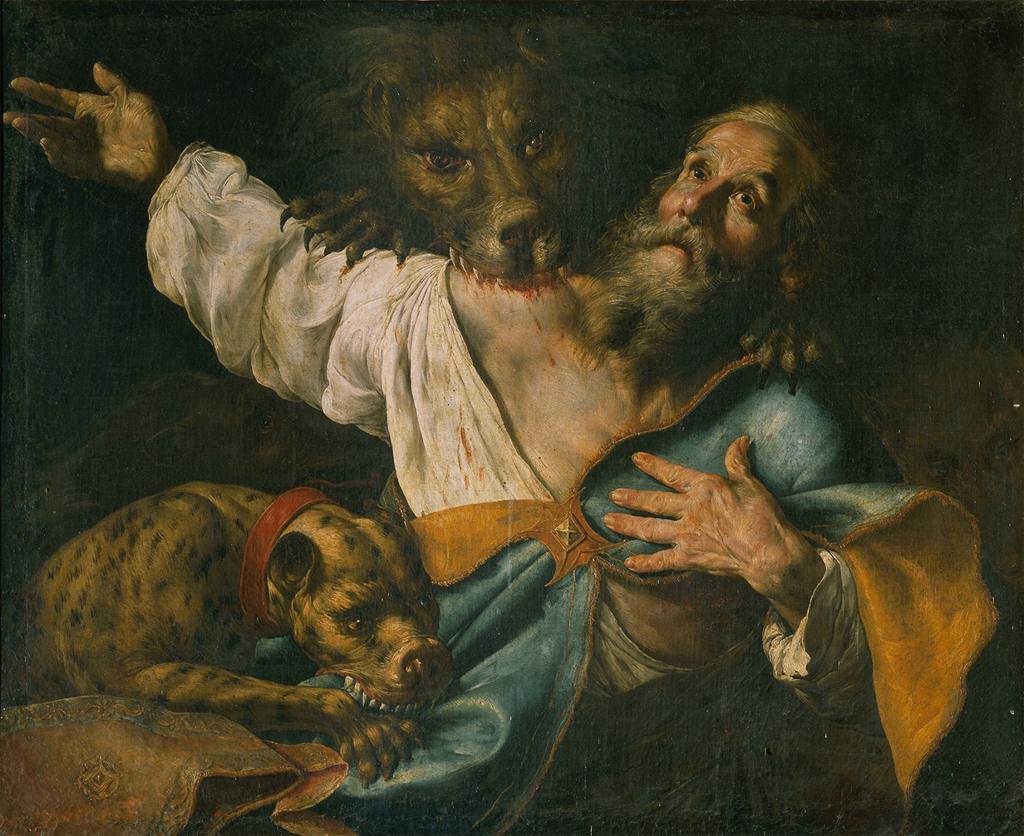
The delights of this world and all its kingdoms will not profit me. I would prefer to die in Jesus Christ than to rule over all the earth. I seek him who died for us, I desire him who rose for us. I am in the throes of being born again. Bear with me, my brothers; do not keep me from living, do not wish me to die. I desire to belong to God; do not give me over to the world, and do not seduce me with perishable things. Let me see the pure light; when I am there, I shall be truly a man at last. Let me imitate the sufferings of my God. If anyone has God in him, let him understand what I want and have sympathy for me, knowing what drives me on.

The prince of this world would snatch me away and destroy my desire to be with God. So let none of you who will be there give him help; side rather with me, that is, with God. Do not have Jesus Christ on your lips and the world in your hearts. Give envy no place among you. And if, when I get there, I should beg for your intervention, pay no attention to me; no, believe instead what I am writing to you now. For I write to you while I yet live, but I long for death. My earthly desires have been crucified, and there no longer burns in me the love of perishable things, but a living water speaks within me, saying: “Come to the Father.”

I take no delight in corruptible food or in the pleasures of this life. I want the bread of God, which is the flesh of Jesus Christ, who was of David’s seed, and for drink I want his blood, the sign of his imperishable love.

I no longer wish to live, as men count life. And I shall have my way, if you wish it so. Wish it, then, so that you too may have God’s favor. With these few words I beg you to believe me. Jesus Christ will make plain to you the Father’s truth. Pray for me that I may reach my goal. I have written to you not prompted by merely human feelings and values, but by God’s purpose for me. If I am to suffer, it will be because you loved me well; if I am rejected, it will be because you hated me.

Remember in your prayers the church of Syria: it now has God for its shepherd instead of me. Jesus Christ alone will be its bishop, along with your love. For myself, I am ashamed to be counted among its members, for I do not deserve it, being the least of all, born out of due time. I greet you from my heart, and so do the churches that have welcomed me in love not as a mere passerby but as the representative of Jesus Christ. Yes, even the churches that were not on my route humanly speaking, though spiritually on the same journey, were there to meet me in city after city.

Glory to the Father
and to the Son
and to the Holy Spirit:
as it was in the beginning,
is now, and will be forever. Amen


From a letter to the Romans by Saint Ignatius of Antioch, bishop and martyr (6, 1-9, 3; Funk 1, 219-223)

Orindary Time
Monday of the Tenth Week

“Blessed be the God and Father of our Lord Jesus Christ, the Father of compassion and God of all encouragement...” (II Corinthians 1:3)

Saint Cyril of Jerusalem reflects on this verse from the First Reading proclaimed at Mass today:

“Blessed be the God and Father of our Lord Jesus Christ.” For in the thought of God, let the thought of Father be included, so that the glory which we ascribe to the Father and the Son with the Holy Spirit may be perfectly free from difference. For the Father has not one glory and the Son another, but their glory is one and the same, since the Son is the Father’s sole-begotten. When the Father is glorified, the Son shares in enjoyment of his glory, because the Son draws his glory from the honoring of the Father. Again, whenever the Son is glorified, the Father of so excellent a Son is greatly honored.” (The Catechetical Lectures, 6)


Collect
O God,
from whom all good things come,
grant that we, who call on You in our need,
may at Your prompting discern what is right,
and by Your guidance do it.
Through our Lord Jesus Christ, your Son
Who lives and reigns with You
in the unity of the Holy Spirit,
one God, for ever and ever. Amen.


Glory to the Father
and to the Son
and to the Holy Spirit:
as it was in the beginning,
is now, and will be forever. Amen