Lent: Tuesday of the Fifth Week

“Accordingly Moses made a bronze serpent and mounted it on a pole, and whenever the serpent bit someone, the person looked at the bronze serpent and recovered.” (Numbers 21:9)

Saint Gregory of Nazianzus reflects on this verse from today’s First Reading:

“That brazen serpent was hung up as a remedy for the biting serpents, not as a type of him that suffered for us but as a contrast. It saved those that looked upon it, not because they believed it to live but because it was killed, and killed with it were the powers that were subject to it, being destroyed as it deserved. And what is the fitting epitaph for it from us? “O death, where is your sting? O grave, where is your victory?” You are overthrown by the cross. You are slain by him who is the giver of life. You are without breath, dead, without motion, even though you keep the form of a serpent lifted up high on a pole.” (Oration 45)


Collect
Grant us, we pray, O Lord,
perseverance in obeying your will,
that in our days
the people dedicated to your service
may grow in both merit and number.
Through our Lord Jesus Christ, your Son,
Who lives and reigns with You
in the unity of the Holy Spirit,
one God, for ever and ever.


Glory to the Father
and to the Son
and to the Holy Spirit:
as it was in the beginning,
is now, and will be forever. Amen


The cross of Christ
is the source of all blessings,
the cause of all graces

Today’s Second Reading from the
Office of Readings (Liturgy of the Hours)
Lent: Tuesday of the Fifth Week

An excerpt from: On the Passion of Our Lord (Sermon 8)
Pope Saint Leo the Great
(pope and Father of the Church)


Our understanding, which is enlightened by the Spirit of truth, should receive with purity and freedom of heart the glory of the cross as it shines in heaven and on earth. It should see with inner vision the meaning of the Lord’s words when he spoke of the imminence of his passion: The hour has come for the Son of Man to be glorified. Afterward he said: Now my soul is troubled, and what am I to say? Father, save me from this hour. But it was for this that I came to this hour. Father, glorify your Son. When the voice of the Father came from heaven, saying, I have glorified him, and will glorify him again, Jesus said in reply to those around him: It was not for me that this voice spoke, but for you. Now is the judgment of the world, now will the prince of this world be cast out. And I, if I am lifted up from the earth, will draw all things to myself.

How marvellous the power of the cross; how great beyond all telling the glory of the passion: here is the judgment-seat of the Lord, the condemnation of the world, the supremacy of Christ crucified.

Lord, you drew all things to yourself so that the devotion of all peoples everywhere might celebrate, in a sacrament made perfect and visible, what was carried out in the one temple of Judea under obscure foreshadowings.

Now there is a more distinguished order of Levites, a greater dignity for the rank of elders, a more sacred anointing for the priesthood, because your cross is the source of all blessings, the cause of all graces. Through the cross the faithful receive strength from weakness, glory from dishonor, life from death.

The different sacrifices of animals are no more: the one offering of your body and blood is the fulfillment of all the different sacrificial offerings, for you are the true Lamb of God: you take away the sins of the world. In yourself you bring to perfection all mysteries, so that, as there is one sacrifice in place of all other sacrificial offerings, there is also one kingdom gathered from all peoples.

Dearly beloved, let us then acknowledge what Saint Paul, the teacher of the nations, acknowledged so exultantly: This is a saying worthy of trust, worthy of complete acceptance: Christ Jesus came into this world to save sinners.

God’s compassion for us is all the more wonderful because Christ died, not for the righteous or the holy but for the wicked and the sinful, and, though the divine nature could not be touched by the sting of death, he took to himself, through his birth as one of us, something he could offer on our behalf.

The power of his death once confronted our death. In the words of Hosea the prophet: Death, I shall be your death; grave, I shall swallow you up. By dying he submitted to the laws of the underworld; by rising again he destroyed them. He did away with the everlasting character of death so as to make death a thing of time, not of eternity. As all die in Adam, so all will be brought to life in Christ.

Glory to the Father
and to the Son
and to the Holy Spirit:
as it was in the beginning,
is now, and will be forever. Amen


If anyone has sinned,
we have an advocate with the Father

Today’s Second Reading from the
Office of Readings (Liturgy of the Hours)
Lent: Monday of the Fifth Week

An excerpt from: Commentary on the Psalms
Saint John Fisher
(bishop and martyr)

Our high priest is Christ Jesus, our sacrifice is his precious body which he immolated on the altar of the cross for the salvation of all men.

The blood that was poured out for our redemption was not that of goats and calves (as in the old law) but that of the most innocent lamb, Christ Jesus our Savior.

The temple in which our high priest offered sacrifice was not one made by hands but built by the power of God alone. For he shed his blood in the sight of the world, a temple fashioned by the hand of God alone.

This temple, however, has two parts. The first is the earth, which we now inhabit. The second is as yet unknown to us mortals.

Christ offered sacrifice here on earth, when he underwent his most bitter death. Then, clothed in the new garment of immortality, with his own blood he entered into the holy of holies, that is, into heaven. There he also displayed before the throne of the heavenly Father that blood of immeasurable price which he had poured out seven times on behalf of all men subject to sin.

This sacrifice is so pleasing and acceptable to God that as soon as he has seen it he must immediately have pity on us and extend clemency to all who are truly repentant.

Moreover, it is eternal. It is offered not only each year (as with the Jews) but also each day for our consolation, and indeed at every hour and moment as well, so that we may have the strongest reason for comfort. That is why the Apostle adds: He has secured an eternal redemption.

All who have embarked on true contrition and penance for the sins they have committed, and are firmly resolved not to commit sins again for the future but to persevere constantly in that pursuit of virtues which they have now begun, all these become sharers in this holy and eternal sacrifice.

Saint John sets this before us in these words: My little children, I am writing this to you so that you may not sin. But if anyone does sin we have an advocate with the Father, Jesus Christ the righteous one. And he is the propitiation for our sins, and not only for our sins but also for those of the whole world.

Glory to the Father
and to the Son
and to the Holy Spirit:
as it was in the beginning,
is now, and will be forever. Amen


Lent: Monday of the Fifth Week

“... Yet it is better for me not to do it and to fall into your power than to sin before the Lord.” (Daniel 13:23)

Saint Augustine of Hippo comments on this verse from the First Reading proclaimed at Mass today:

“t is better for me not to escape your hands than to sin in front of God.” She refused the proposals she heard because she feared him who she could not see and to whose divine gaze, however, she was very visible. Because she did not happen, in fact, to see God does not mean that God did not see her. God saw what he was building up: he inspected his work, inhabited his temple. He was there; he was answering their insidious trap. If the giver of chastity had abandoned her, chastity also would have been extinguished. Therefore she said, “I am trapped on every side.” But she waited for the one who would save her from weakness of spirit and from the fury of the false witnesses who were like stormy winds. Between these winds and that storm, however, chastity did not suffer shipwreck because the Lord guided the route. She screamed. People came. The process began, and the case came up for judgment. The servants of Susanna believed what the imposter elders said against their mistress. It seemed to them that it would be against their religion not to believe the elders, even though the innocent and stainless life Susanna had led up to this point seemed to offer valid testimony of her chastity. No such chatter had been made on her account. There they were, false witnesses, but God noticed. The household believed one thing; God saw another. But what God saw, human beings did not know, and it seemed right to believe the elders. Therefore she had to die, but if her flesh were to die, her chastity still would have triumphed. Instead, the Lord was present to whom she prayed, and he heard because he knew her.” (Sermon 343)


Collect
O God,
by Whose wondrous grace
we are enriched with every blessing,
grant us so to pass
from former ways to newness of life,
that we may be made ready
for the glory of the heavenly Kingdom.
Through our Lord Jesus Christ, Your Son,
Who lives and reigns with You
in the unity of the Holy Spirit,
one God, for ever and ever. Amen.


Glory to the Father
and to the Son
and to the Holy Spirit:
as it was in the beginning,
is now, and will be forever. Amen


— The Lord’s Day —
Lent: Sunday of the Fifth Week

“Yet I was like a trusting lamb led to slaughter, not knowing that they were hatching plots against me: “Let us destroy the tree in its vigor; let us cut him off from the land of the living, so that his name will no longer be remembered.” (Jeremiah 11:19)

Origen of Alexandria (part 2 of Pope Benedict’s reflections on Origen) comments on this verse from the First Reading proclaimed at Mass today:

“In Jeremiah, too, he likens himself to a lamb, as thus: “I was as a gentle lamb that is led to the slaughter.” These and other similar sayings he applies to himself.

If we examine the declaration about Jesus who is pointed out by John in the words, “This is the Lamb of God who takes away the sin of the world,” from the standpoint of the dispensation itself of the bodily sojourn of the Son of God in the life of people, we will assume that the lamb is none other than his humanity. For he was “led as a sheep to the slaughter and was dumb as a lamb before its shearer,” saying, “I was as an innocent lamb being led to be sacrificed. (Commentary on the Gospel of John, 6)


Collect
By your help, we beseech you, Lord our God,
may we walk eagerly in that same charity
with which, out of love for the world,
your Son handed himself over to death.
Through our Lord Jesus Christ, Your Son,
Who lives and reigns with You
in the unity of the Holy Spirit,
one God, for ever and ever. Amen.


Glory to the Father
and to the Son
and to the Holy Spirit:
as it was in the beginning,
is now, and will be forever. Amen


We keep the coming feast of the Lord
through deeds, not words

Today’s Second Reading from the
Office of Readings (Liturgy of the Hours)
Lent: Sunday of the Fifth Week

An excerpt from: Letter 14 (Easter Letter)
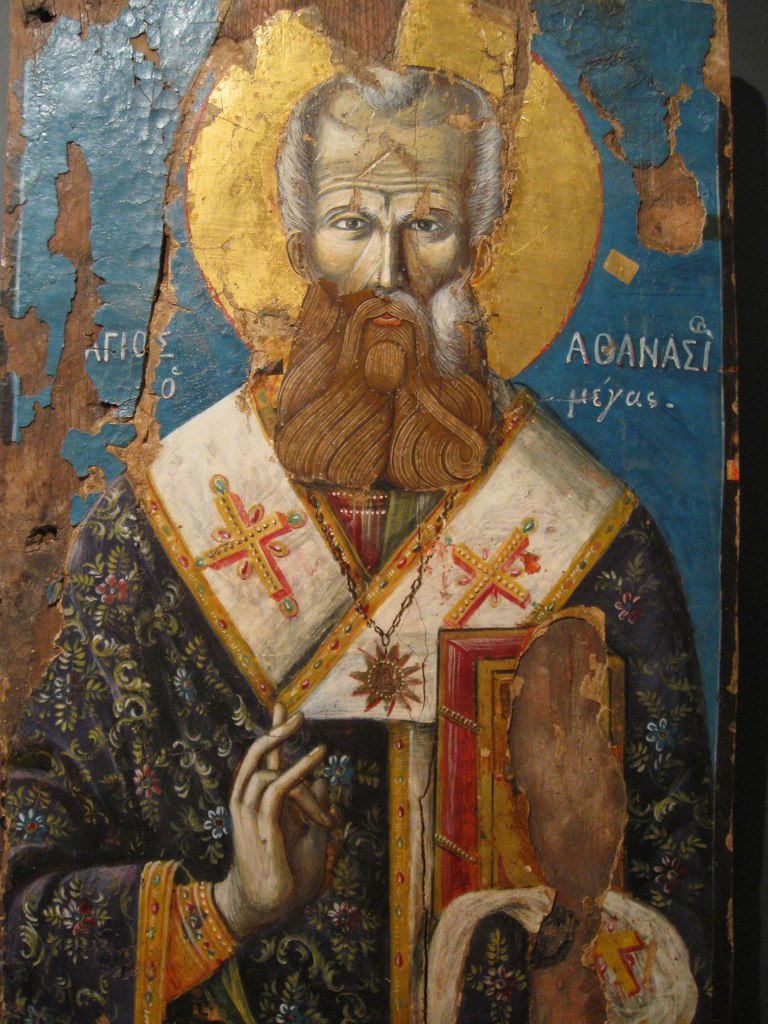
Saint Athanasius of Alexandria
(bishop and Father of the Church)

The Word who became all things for us is close to us, our Lord Jesus Christ who promises to remain with us always. He cries out, saying: See, I am with you all the days of this age. He is himself the shepherd, the high priest, the way and the door, and has become all things at once for us. In the same way, he has come among us as our feast and holy day as well. The blessed Apostle says of him who was awaited: Christ has been sacrificed as our Passover. It was Christ who shed his light on the psalmist as he prayed: You are my joy, deliver me from those surrounding me. True joy, genuine festival, means the casting out of wickedness. To achieve this one must live a life of perfect goodness and, in the serenity of the fear of God, practice contemplation in one’s heart.

This was the way of the saints, who in their lifetime and at every stage of life rejoiced as at a feast. Blessed David, for example, not once but seven times rose at night to win God’s favor through prayer. The great Moses was full of joy as he sang God’s praises in hymns of victory for the defeat of Pharaoh and the oppressors of the Hebrew people. Others had hearts filled always with gladness as they performed their sacred duty of worship, like the great Samuel and the blessed Elijah. Because of their holy lives they gained freedom, and now keep festival in heaven. They rejoice after their pilgrimage in shadows, and now distinguish the reality from the promise.

When we celebrate the feast in our own day, what path are we to take? As we draw near to this feast, who is to be our guide? Beloved, it must be none other than the one whom you will address with me as our Lord Jesus Christ. He says: I am the way. As blessed John tells us: it is Christ who takes away the sin of the world. It is he who purifies our souls, as the prophet Jeremiah says: Stand upon the ways; look and see which is the good path, and you will find in it the way of amendment for your souls.

In former times the blood of goats and the ashes of a calf were sprinkled on those who were unclean, but they were able to purify only the body. Now through the grace of God’s Word everyone is made abundantly clean. If we follow Christ closely we shall be allowed, even on this earth, to stand as it were on the threshold of the heavenly Jerusalem, and enjoy the contemplation of that everlasting feast, like the blessed apostles, who in following the Savior as their leader, showed, and still show, the way to obtain the same gift from God. They said: See, we have left all things and followed you. We too follow the Lord, and we keep his feast by deeds rather than by words.

Glory to the Father
and to the Son
and to the Holy Spirit:
as it was in the beginning,
is now, and will be forever. Amen


Lent: Saturday of the Fourth Week

“I knew it because the LORD informed me: at that time you showed me their doings.” (Jeremiah 11:18)

Saint Jerome offers the following insight on these verses from today’s First Reading:

“It is the consensus of all the church that these words are spoken by Christ through the person of Jeremiah. For the Father made it known to him how he should speak — he who was led like a lamb to the slaughter, not opening his mouth and not knowing. But the word sin is implicitly added to this last phrase, in agreement with what was said by the apostle: “When he did not know sin, he was made to be sin on our account.” And they said, “Let us put wood on his bread,” clearly referring to the cross on the body of the Savior, for he is the one who said, “I am the bread that descended from heaven.”

They also said “let us destroy (or eradicate) him from the land of the living.” And they conceived the evil in their soul that they would delete his name forever. In response to this, from the sacrament of the assumed body, the Son speaks to the Father and invokes his judgment while praising his justice and acknowledging him as the God who inspects the interior and the heart. He asks that the Father would return to the people what they deserve, saying, “Let me see your vengeance on them,” obviously referring only to those who continue in sin, not to those who repent. Concerning the latter, he said on the cross: “Father forgive them, for they do not realize what they are doing.” He also “disclosed his cause” to the Father, that he was crucified not because he deserved it but for the sins of the people, as he declared: “Behold, the prince of the world came and found nothing against me.” (Six Books on Jeremiah, 2)


Collect
May the working of your mercy,
O Lord, we pray,
direct our hearts aright,
for without your grace
we cannot find favor in your sight.
Through our Lord Jesus Christ, your Son,
Who lives and reigns with You
in the unity of the Holy Spirit,
one God, for ever and ever.


Glory to the Father
and to the Son
and to the Holy Spirit:
as it was in the beginning,
is now, and will be forever. Amen


All human activity is to find its purification
in the paschal mystery

Today’s Second Reading from the
Office of Readings (Liturgy of the Hours)
Lent: Saturday of the Fourth Week

An excerpt from:
Pastoral Constitution on the Church in the Modern World
Vatican Council II


Holy Scripture, with which the experience of the ages is in agreement, teaches the human family that human progress, though it is a great blessing for man, brings with it a great temptation. When the scale of values is disturbed and evil becomes mixed with good, individuals and groups consider only their own interests, not those of others.

The result is that the world is not yet a home of true brotherhood, while the increased power of mankind already threatens to destroy the human race itself.

If it is asked how this unhappy state of affairs can be set right, Christians state their belief that all human activity, in daily jeopardy through pride and inordinate self-love, is to find its purification and its perfection in the cross and resurrection of Christ.

Man, redeemed by Christ and made a new creation in the Holy Spirit, can and must love the very things created by God. For he receives them from God, and sees and reveres them as coming from the hand of God.

As he gives thanks for them to his Benefactor, and uses and enjoys them in a spirit of poverty and freedom, he enters into true possession of the world, as one having nothing and possessing all things. For all things are yours, and you are Christ’s, and Christ is God’s.

The Word of God, through whom all things were made, himself became man and lived in the world of men. As perfect man he has entered into the history of the world, taking it up into himself and bringing it into unity as its head. He reveals to us that God is love, and at the same time teaches us that the fundamental law of human perfection, and therefore of the transformation of the world, is the new commandment of love.

He assures those who have faith in God’s love that the way of love is open to all men, and that the effort to restore universal brotherhood is not in vain. At the same time he warns us that this love is not to be sought after only in great things but also, and above all, in the ordinary circumstances of life.

He suffered death for us all, sinners as we are, and by his example he teaches us that we also have to carry that cross which the flesh and the world lay on the shoulders of those who strive for peace and justice.

Constituted as the Lord by his resurrection, Christ, to whom all power in heaven and on earth has been given, is still at work in the hearts of men through the power of his Spirit. Not only does he awaken in them a longing for the world to come, but by that very fact he also inspires, purifies and strengthens those generous desires by which the human family seeks to make its own life more human and to achieve the same goal for the whole world.

The gifts of the Spirit are manifold. He calls some to bear open witness to the longing for a dwelling place in heaven, and to keep this fresh in the minds of all mankind; he calls others to dedicate themselves to the service of men here on earth, preparing by this ministry the material for the kingdom of heaven.

Yet he makes all free, so that, by denying their love of self and taking up all earth’s resources into the life of man, all may reach out to the future, when humanity itself will become an offering acceptable to God.

Glory to the Father
and to the Son
and to the Holy Spirit:
as it was in the beginning,
is now, and will be forever. Amen


Lent: Friday of the Fourth Week

“Let us condemn him to a shameful death; for according to his own words, God will take care of him.” (Wisdom 2:20)

Origen of Alexandria (part 2 of Pope Benedict’s reflections on Origen) comments on this verse from the First Reading proclaimed at Mass today:

“My Lord Jesus Christ, when he assumed the flesh of the Virgin for our salvation, was surely glorified, because “he came to seek what was lost,” though he was not “glorified gloriously.” In fact, it is said precisely of him, “We saw him, and he had neither beauty nor splendor, and his face was more to be despised than all the sons of mortals.” He was glorified also when he went to the cross and suffered death. Do you know why he was glorified? He said, “Father, the hour has come; glorify your Son, so that your Son may glorify you.” For him, therefore, even the passion of the cross was glory. This glory was not glorious, however, but humble. Finally, it is said of him, “He humbled himself even to death, death on a cross,” and of this also the prophet had foretold, “Let us condemn him to a shameful death.” But Isaiah also says of him, “He bore his judgment in humiliation.” Thus in all these events the Lord was glorified, but humbly, so to speak. He was not “glorified gloriously.” (Homilies on Exodus, 6)


Collect
O God, Who have prepared
fitting helps for us in our weakness,
grant, we pray, that we may receive
their healing effects with joy
and reflect them in a holy way of life.
Through our Lord Jesus Christ, Your Son,
Who lives and reigns with You
in the unity of the Holy Spirit,
one God, for ever and ever. Amen.


Glory to the Father
and to the Son
and to the Holy Spirit:
as it was in the beginning,
is now, and will be forever. Amen


The paschal sacrament
brings together in unity of faith
those physically separated from each other

Today’s Second Reading from the
Office of Readings (Liturgy of the Hours)
Lent: Friday of the Fourth Week

An excerpt from: Letter 5 (Easter Letter)
Saint Athanasius of Alexandria
(bishop and Father of the Church)

Brethren, how fine a thing it is to move from festival to festival, from prayer to prayer, from holy day to holy day. The time is now at hand when we enter on a new beginning: the proclamation of the blessed Passover, in which the Lord was sacrificed. We feed as on the food of life, we constantly refresh our souls with his precious blood, as from a fountain. Yet we are always thirsting, burning to be satisfied. But he himself is present for those who thirst and in his goodness invites them to the feast day. Our Savior repeats his words: If anyone thirsts, let him come to me and drink.

He quenched the thirst not only of those who came to him then. Whenever anyone seeks him he is freely admitted to the presence of the Savior. The grace of the feast is not restricted to one occasion. Its rays of glory never set. It is always at hand to enlighten the mind of those who desire it. Its power is always there for those whose minds have been enlightened and who meditate day and night on the holy Scriptures, like the one who is called blessed in the holy psalm: Blessed is the man who has not followed the counsel of the wicked, or stood where sinners stand, or sat in the seat of the scornful, but whose delight is in the law of the Lord, and who meditates on his law day and night.

Moreover, my friends, the God who first established this feast for us allows us to celebrate it each year. He who gave up his Son to death for our salvation, from the same motive gives us this feast, which is commemorated every year. This feast guides us through the trials that meet us in this world. God now gives us the joy of salvation that shines out from this feast, as he brings us together to form one assembly, uniting us all in spirit in every place, allowing us to pray together and to offer common thanksgiving, as is our duty on the feast. Such is the wonder of his love: he gathers to this feast those who are far apart, and brings together in unity of faith those who may be physically separated from each other.

Glory to the Father
and to the Son
and to the Holy Spirit:
as it was in the beginning,
is now, and will be forever. Amen