— Saint Joseph —
The faithful foster-father and guardian

Today’s Second Reading from the
Office of Readings (Liturgy of the Hours)
Solemnity
SAINT JOSEPH
Spouse of the Blessed Virgin Mary

An excerpt from: Sermon 2 On Saint Joseph
Saint Bernadine of Siena
(priest)

There is a general rule concerning all special graces granted to any human being. Whenever the divine favor chooses someone to receive a special grace, or to accept a lofty vocation, God adorns the person chosen with all the gifts of the Spirit needed to fulfill the task at hand.

This general rule is especially verified in the case of Saint Joseph, the foster-father of our Lord and the husband of the Queen of our world, enthroned above the angels. He was chosen by the eternal Father as the trustworthy guardian and protector of his greatest treasures, namely, his divine Son and Mary, Joseph’s wife. He carried out this vocation with complete fidelity until at last God called him, saying: Good and faithful servant, enter into the joy of your Lord.

What then is Joseph’s position in the whole Church of Christ? Is he not a man chosen and set apart? Through him and, yes, under him, Christ was fittingly and honorably introduced into the world. Holy Church in its entirety is indebted to the Virgin Mother because through her it was judged worthy to receive Christ. But after her we undoubtedly owe special gratitude and reverence to Saint Joseph.

In him the Old Testament finds its fitting close. He brought the noble line of patriarchs and prophets to its promised fulfillment. What the divine goodness had offered as a promise to them, he held in his arms.

Obviously, Christ does not now deny to Joseph that intimacy, reverence and very high honor which he gave him on earth, as a son to his father. Rather we must say that in heaven Christ completes and perfects all that he gave at Nazareth.

Now we can see how the last summoning words of the Lord appropriately apply to Saint Joseph: Enter into the joy of your Lord. In fact, although the joy of eternal happiness enters into the soul of a man, the Lord preferred to say to Joseph: Enter into joy. His intention was that the words should have a hidden spiritual meaning for us. They convey not only that this holy man possesses an inward joy, but also that it surrounds him and engulfs him like an infinite abyss.

Remember us, Saint Joseph, and plead for us to your foster-child. Ask your most holy bride, the Virgin Mary, to look kindly upon us, since she is the mother of him who with the Father and the Holy Spirit lives and reigns eternally. Amen.

Glory to the Father
and to the Son
and to the Holy Spirit:
as it was in the beginning,
is now, and will be forever. Amen


— Saint Joseph —
Spouse of the Blessed Virgin Mary

“...when your days have been completed and you rest with your ancestors, I will raise up your offspring after you, sprung from your loins, and I will establish his kingdom..” (II Samuel 7:12)

Tertullian comments on this verse from the First Reading proclaimed at Mass today:

“That new dispensation, then, which is found in Christ now, will prove to be what the Creator then promised under the appellation of “the sure mercies of David,” which were Christ’s, inasmuch as Christ sprang from David, or rather his very flesh itself was David’s “sure mercies,” consecrated by religion, and “sure” after its resurrection. Accordingly the prophet Nathan, in the first [book] of Kings [Samuel], makes a promise to David for his seed, “which shall proceed,” he says, “from your own body.” Now, if you explain this simply of Solomon, you will send me into a fit of laughter. For David will evidently have brought forth Solomon! But is not Christ here designated the seed of David, as of that womb which was derived from David, that is, Mary’s? Now, because Christ rather than any other was to build the temple of God, that is to say, a holy manhood, wherein God’s Spirit might dwell as in a better temple, Christ rather than David’s son Solomon was to be looked for as the Son of God. Then, again, the throne forever with the kingdom forever is more suited to Christ than to Solomon, a mere temporal king.” (Against Marcion, 3)


Collect
Grant, we pray, almighty God,
that by Saint Joseph’s intercession
your Church may constantly watch over
the unfolding of the mysteries of human salvation,
whose beginnings you entrusted to his faithful care.
Through our Lord Jesus Christ, Your Son,
Who lives and reigns with You
in the unity of the Holy Spirit,
one God, for ever and ever. Amen.


Glory to the Father
and to the Son
and to the Holy Spirit:
as it was in the beginning,
is now, and will be forever. Amen


Lent: Wednesday of the Fourth Week

“Thus says the LORD: In a time of favor I answer you, on the day of salvation I help you; I form you and set you as a covenant for the people, To restore the land and allot the devastated heritages.” (Isaiah 49:8)

Origen of Alexandria (part 2 of Pope Benedict’s reflections on Origen) comments on this verse from the First Reading proclaimed at Mass today:

“God says through the prophet, “In an acceptable time I have heard you, and in a day of salvation I have helped you.” What other time, then, is more acceptable than when for piety toward God in Christ we are led under guard in procession before the world, celebrating a triumph rather than being led in triumph? For the martyrs in Christ disarm the principalities and powers with him, and they share his triumph as fellows of his sufferings, becoming in this way also fellows of the courageous deeds wrought in his sufferings. These deeds include triumphing over principalities and powers, which in a short time you will see conquered and put to shame. What other day is so much a day of salvation as the one when we gain such deliverance from them?” (Exhortation to Martyrdom, 42)


Collect
Grant, we pray, O Lord,
that, schooled through Lenten observance
and nourished by your word,
through holy restraint
we may be devoted to you with all our heart
and be ever united in prayer.
Through our Lord Jesus Christ, Your Son,
Who lives and reigns with You
in the unity of the Holy Spirit,
one God, for ever and ever. Amen.


Glory to the Father
and to the Son
and to the Holy Spirit:
as it was in the beginning,
is now, and will be forever. Amen


The mercy of God to the penitent

Today’s Second Reading from the
Office of Readings (Liturgy of the Hours)
Lent: Tuesday of the Fourth Week

An excerpt from: Letter 11
Saint Maximus the Confessor
(abbot)

God’s will is to save us, and nothing pleases him more than our coming back to him with true repentance. The heralds of truth and the ministers of divine grace have told us this from the beginning, repeating it in every age. Indeed, God’s desire for our salvation is the primary and pre-eminent sign of his infinite goodness. It was precisely in order to show that there is nothing closer to God’s heart that the divine Word of God the Father, with untold condescension, lived among us in the flesh, and did, suffered, and said all that was necessary to reconcile us to God the Father, when we were at enmity with him, and to restore us to the life of blessedness from which we had been exiled. He healed our physical infirmities by miracles; he freed us from our sins, many and grievous as they were, by suffering and dying, taking them upon himself as if he were answerable for them, sinless though he was. He also taught us in many different ways that we should wish to imitate him by our own kindness and genuine love for one another.

So it was that Christ proclaimed that he had come to call sinners to repentance, not the righteous, and that it was not the healthy who required a doctor, but the sick. He declared that he had come to look for the sheep that was lost, and that it was to the lost sheep of the house of Israel that he had been sent. Speaking more obscurely in the parable of the silver coin, he tells us that the purpose of his coming was to reclaim the royal image, which had been coated with the filth of sin. You can be sure there is joy in heaven, he said, over one sinner who repents.

To give the same lesson he revived the man who, having fallen into the hands of the brigands, had been left stripped and half-dead from his wounds; he poured wine and oil on the wounds, bandaged them, placed the man on his own mule and brought him to an inn, where he left sufficient money to have him cared for, and promised to repay any further expense on his return.

Again, he told of how that Father, who is goodness itself, was moved with pity for his profligate son who returned and made amends by repentance; how he embraced him, dressed him once more in the fine garments that befitted his own dignity, and did not reproach him for any of his sins.

So too, when he found wandering in the mountains and hills the one sheep that had strayed from God’s flock of a hundred, he brought it back to the fold, but he did not exhaust it by driving it ahead of him. Instead, he placed it on his own shoulders and so, compassionately, he restored it safely to the flock.

So also he cried out: Come to me, all you that toil and are heavy of heart. Accept my yoke, he said, by which he meant his commands, or rather, the whole way of life that he taught us in the Gospel. He then speaks of a burden, but that is only because repentance seems difficult. In fact, however, my yoke is easy, he assures us, and my burden is light.

Then again he instructs us in divine justice and goodness, telling us to be like our heavenly Father, holy, perfect and merciful. Forgive, he says, and you will be forgiven. Behave toward other people as you would wish them to behave toward you.

Glory to the Father
and to the Son
and to the Holy Spirit:
as it was in the beginning,
is now, and will be forever. Amen


Lent: Tuesday of the Fourth Week

“Then he brought me back to the entrance of the temple, and there! I saw water flowing out from under the threshold of the temple toward the east, for the front of the temple faced east. The water flowed out toward the right side of the temple to the south of the altar.” (Ezekiel 47:1)

Saint Jerome offers the following insight on these verses from today’s First Reading:

“The waters that flow forth from the threshold of the temple refer to the teaching of the church. . . . We can understand water up to the ankles as meaning first the human sins that are forgiven us who enter the waters of the Lord; they show the saving grace of baptism and are the beginnings of our progress.

We said a little time ago that the waters signify either the grace of baptism or the teaching of the gospel. If these waters go out from the threshold of the temple of the Lord and carry the teaching of the apostles, they have the power to make piles of gravel, sterile and infertile as they are, bear fruit, and they can irrigate every plain and every desert.” (Commentary on Ezekiel, 14)


Collect
May the venerable exercises of holy devotion
shape the hearts of your faithful, O Lord,
to welcome worthily the Paschal Mystery
and proclaim the praises of your salvation.
Through our Lord Jesus Christ, your Son,
Who lives and reigns with You
in the unity of the Holy Spirit,
one God, for ever and ever.


Glory to the Father
and to the Son
and to the Holy Spirit:
as it was in the beginning,
is now, and will be forever. Amen


Through me many peoples
have been reborn in God

Today’s Second Reading from the
Office of Readings (Liturgy of the Hours)
Lent: Tuesday of the Fourth Week

An excerpt from: Confessions
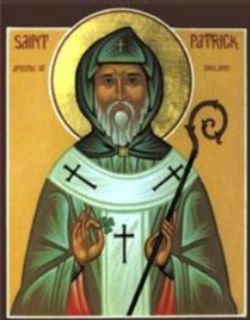
Saint Patrick
(bishop)

I give unceasing thanks to my God, who kept me faithful in the day of my testing. Today I can offer him sacrifice with confidence, giving myself as a living victim to Christ, my Lord, who kept me safe through all my trials. I can say now: Who am I, Lord, and what is my calling, that you worked through me with such divine power? You did all this so that today among the Gentiles I might constantly rejoice and glorify your name wherever I may be, both in prosperity and in adversity. You did it so that, whatever happened to me, I might accept good and evil equally, always giving thanks to God. God showed me how to have faith in him for ever, as one who is never to be doubted. He answered my prayer in such a way that in the last days, ignorant though I am, I might be bold enough to take up so holy and so wonderful a task, and imitate in some degree those whom the Lord had so long ago foretold as heralds of his Gospel, bearing witness to all nations.

How did I get this wisdom, that was not mine before? I did not know the number of my days, or have knowledge of God. How did so great and salutary a gift come to me, the gift of knowing and loving God, though at the cost of homeland and family? I came to the Irish peoples to preach the Gospel and endure the taunts of unbelievers, putting up with reproaches about my earthly pilgrimage, suffering many persecutions, even bondage, and losing my birthright of freedom for the benefit of others.

If I am worthy, I am ready also to give up my life, without hesitation and most willingly, for his name. I want to spend myself in that country, even in death, if the Lord should grant me this favor. I am deeply in his debt, for he gave me the great grace that through me many peoples should be reborn in God, and then made perfect by confirmation and everywhere among them clergy ordained for a people so recently coming to believe, one people gathered by the Lord from the ends of the earth. As God had prophesied of old through the prophets: The nations shall come to you from the ends of the earth, and say: “How false are the idols made by our fathers: they are useless.” In another prophecy he said: I have set you as a light among the nations, to bring salvation to the ends of the earth.

It is among that people that I want to wait for the promise made by him, who assuredly never tells a lie. He makes this promise in the Gospel: They shall come from the east and west, and sit down with Abraham, Isaac and Jacob. This is our faith: believers are to come from the whole world.


Collect
O God, Who chose the Bishop Saint Patrick
to preach Your glory to the peoples of Ireland,
grant, through his merits and intercession,
that those who glory in the name of Christian
may never cease to proclaim
Your wondrous deeds to all.
Through our Lord Jesus Christ, your Son,
Who lives and reigns with You
in the unity of the Holy Spirit,
one God, for ever and ever.

Glory to the Father
and to the Son
and to the Holy Spirit:
as it was in the beginning,
is now, and will be forever. Amen


Christ the High Priest
makes atonement for our sins

Today’s Second Reading from the
Office of Readings (Liturgy of the Hours)
Lent: Monday of the Fourth Week

An excerpt from: Homily 9 on Leviticus
Origen of Alexandria
(priest and Ancient Christian Writer)

Once a year the high priest, leaving the people outside, entered that place where no one except the high priest might enter. In it was the mercy-seat, and above the mercy-seat the cherubim, as well as the ark of the covenant and the altar of incense.

Let me turn to my true high priest, the Lord Jesus Christ. In our human nature he spent the whole year in the company of the people, the year that he spoke of when he said: He sent me to bring good news to the poor, to announce the acceptable year of the Lord, and the day of forgiveness. Notice how once in that year, on the day of atonement, he enters into the holy of holies. Having fulfilled God’s plan, he passes through the heavens and enters into the presence of the Father to make him turn in mercy to the human race and to pray for all who believe in him.

John the apostle, knowing of the atonement that Christ makes to the Father for all men, says this: Little children, I say these things so that you may not sin. But if we have sinned we have an advocate with the Father, Jesus Christ, the just one. He is the atonement for our sins In the same way Paul refers to this atonement when he says of Christ: God appointed him to be the atonement for our sins in his blood, through faith. We have then a day of atonement that remains until the world comes to an end.

God’s word tells us: The high priest shall put incense on the fire in the sight of the Lord. The smoke of the incense shall cover the mercy-seat above the tokens of the covenant, so that he may not die. He shall take some of the blood of the bull-calf and sprinkle it with his finger over the mercy-seat toward the east.

God taught the people of the old covenant how to celebrate the ritual offered to him in atonement for the sins of men. But you have come to Christ, the true high priest. Through his blood he has made God turn to you in mercy and has reconciled you with the Father. You must not think simply of ordinary blood but you must learn to recognize instead the blood of the Word. Listen to him as he tells you: This is my blood, which will be shed for you for the forgiveness of sins.

There is a deeper meaning in the fact that the high priest sprinkles the blood toward the east. Atonement comes to you from the east. From the east comes the one whose name is Dayspring, he who is mediator between God and men. You are invited then to look always to the east: it is there that the sun of righteousness rises for you, it is there that the light is always being born for you. You are never to walk in darkness; the great and final day is not to enfold you in darkness. Do not let the night and mist of ignorance steal upon you. So that you may always enjoy the light of knowledge, keep always in the daylight of faith, hold fast always to the light of love and peace.

Glory to the Father
and to the Son
and to the Holy Spirit:
as it was in the beginning,
is now, and will be forever. Amen


Lent: Monday of the Fourth Week

“For those who are led by the Spirit of God are children of God.” (Romans 8:14)

Origen of Alexandria (part 2 of Pope Benedict’s reflections on Origen) comments on this verse from the First Reading proclaimed at Mass today:

“The Spirit of God is the same as the Spirit of Christ and the same as the Holy Spirit. But he is also called the Spirit of adoption, as the apostle makes clear in this passage. David spoke of this Spirit also when he said: “Take not thy Holy Spirit from me.” There are many sons of God, as Scripture says: “You are gods, sons of the Most High, all of you,” but only one is the Son by nature, the only begotten of the Father, through whom all the rest are called sons.

Likewise there are many spirits but only one who truly proceeds from God himself and who bestows on all the others the grace of his name and his sanctification.” (Commentary on the Epistle to the Romans)


Collect
God our Father, who by sending into the world
the Word of truth and the Spirit of sanctification
made known to the human race your wondrous mystery,
grant us, we pray, that in professing the true faith,
we may acknowledge the Trinity of eternal glory
and adore your Unity, powerful in majesty.
Through our Lord Jesus Christ, Your Son,
Who lives and reigns with You
in the unity of the Holy Spirit,
one God, for ever and ever. Amen.


Glory to the Father
and to the Son
and to the Holy Spirit:
as it was in the beginning,
is now, and will be forever. Amen


— The Lord’s Day —
Lent: Sunday of the Fourth Week

“But how could we sing a song of the LORD in a foreign land?” (Psalms 137:4)

Saint Gregory of Nazianzus reflects on this verse from today’s Psalm:

“Certainly not, friends and brethren — I still call you “brethren,” though your attitude is not brotherly — do not let us accept such a view. We must not be like fiery, unruly horses, throwing reason our rider and spitting out the bit of discretion that so usefully restrains us, and running wide of the turning post. Let us conduct our debates within our fron tiers and not be carried away to Egypt or dragged off to Assyria. Let us not “sing the song of the Lord in a foreign land,” by which I mean before any and every audience, heathen or Christian, friend or foe, sympathetic or hostile: these keep all too close a watch on us, and they would wish that the spark of our dissensions might become a conflagration; they kindle it, they fan it, by means of its own draught they raise it to the skies, and without our knowing what they are up to, they make it higher than the flames of Babylon that blazed all around. Having no strength in their own teaching, they hunt for it in our weakness, and for this reason like flies settling on wounds, they settle on our misfortune — or should I say our mistakes? Let us be blind to our doings no longer, and let us not neglect the proprieties in these matters. If we cannot resolve our disputes outright, let us at least make this mutual concession, to utter spiritual truths with the restraint due to them, to discuss holy things in a holy manner and not be broadcast to profane hearing what is not to be divulged.” (Against the Eunomians [Theological Oration 1], 27)


Collect
O God,
Who through your Word
reconcile the human race
to Yourself in a wonderful way,
grant, we pray,
that with prompt devotion and eager faith
the Christian people may hasten
toward the solemn celebrations to come.
Through our Lord Jesus Christ, your Son,
Who lives and reigns with You
in the unity of the Holy Spirit,
one God, for ever and ever.


Glory to the Father
and to the Son
and to the Holy Spirit:
as it was in the beginning,
is now, and will be forever. Amen


Christ is the way
to the light, the truth, and the life

Today’s Second Reading from the
Office of Readings (Liturgy of the Hours)
Lent: Sunday of the Fourth Week

An excerpt from: On John (Treatise 34)
Saint Augustine
(bishop and Father of the Church)


The Lord tells us: I am the light of the world; he who follows me will not walk in darkness, but will have the light of life. In these few words he gives a command and makes a promise. Let us do what he commands so that we may not blush to covet what he promises and to hear him say on the day of judgment: “I laid down certain conditions for obtaining my promises. Have you fulfilled them?” If you say: “What did you command, Lord our God?” he will tell you: “I commanded you to follow me. You asked for advice on how to enter into life. What life, if not the life about which it is written: With you is the fountain of life?”

Let us do now what he commands. Let us follow in the footsteps of the Lord. Let us throw off the chains that prevent us from following him. Who can throw off these shackles without the aid of the one addressed in these words: You have broken my chains? Another psalm says of him: The Lord frees those in chains, the Lord raises up the downcast.

Those who have been freed and raised up follow the light. The light they follow speaks to them: I am the light of the world; he who follows me will not walk in darkness. The Lord gives light to the blind. Brethren, that light shines on us now, for we have had our eyes anointed with the eye-salve of faith. His saliva was mixed with earth to anoint the man born blind. We are of Adam’s stock, blind from our birth; we need him to give us light. He mixed saliva with earth, and so it was prophesied: Truth has sprung up from the earth. He himself has said: I am the way, the truth, and the life.

We shall be in possession of the truth when we see face to face. This is his promise to us. Who would dare to hope for something that God in his goodness did not choose to promise or bestow?

We shall see face to face. The Apostle says: Now I know in part, now obscurely through a mirror, but then face to face. John the apostle says in one of his letters: Dearly beloved, we are now children of God, and it has not yet been revealed what we shall be. We know that when he is revealed we shall be like him, for we shall see him as he is. This is a great promise.

If you love me, follow me. “I do love you,” you protest, “but how do I follow you?” If the Lord your God said to you: “I am the truth and the life,” in your desire for truth, in your love for life, you would certainly ask him to show you the way to reach them. You would say to yourself: “Truth is a great reality, life is a great reality; if only it were possible for my soul to find them!”

Glory to the Father
and to the Son
and to the Holy Spirit:
as it was in the beginning,
is now, and will be forever. Amen