A Samaritan woman came to draw water

Today’s Second Reading from the
Office of Readings (Liturgy of the Hours)
Lent: Sunday of the Third Week

An excerpt from: On John
Saint Augustine of Hippo
(bishop and Father of the Church)
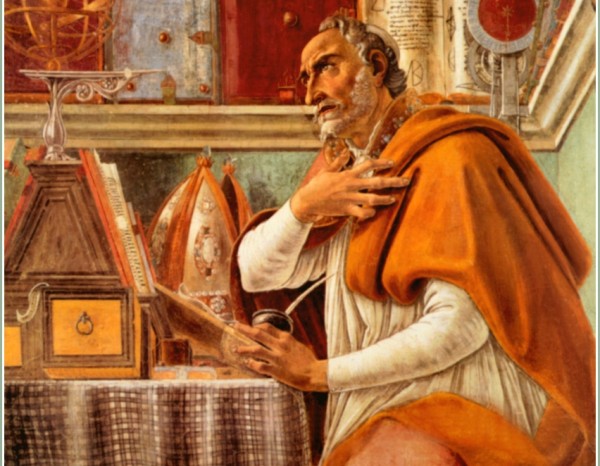
A woman came. She is a symbol of the Church not yet made righteous but about to be made righteous. Righteousness follows from the conversation. She came in ignorance, she found Christ, and he enters into conversation with her. Let us see what it is about, let us see why a Samaritan woman came to draw water. The Samaritans did not form part of the Jewish people: they were foreigners. The fact that she came from a foreign people is part of the symbolic meaning, for she is a symbol of the Church. The Church was to come from the Gentiles, of a different race from the Jews.

We must then recognize ourselves in her words and in her person, and with her give our own thanks to God. She was a symbol, not the reality; she foreshadowed the reality, and the reality came to be. She found faith in Christ, who was using her as a symbol to teach us what was to come. She came then to draw water. She had simply come to draw water, in the normal way of man or woman.

Jesus says to her: Give me water to drink. For his disciples had gone to the city to buy food. The Samaritan woman therefore says to him: How is it that you, though a Jew, ask me for water to drink, though I am a Samaritan woman? For Jews have nothing to do with Samaritans.

The Samaritans were foreigners; Jews never used their utensils. The woman was carrying a pail for drawing water. She was astonished that a Jew should ask her for a drink of water, a thing that Jews would not do. But the one who was asking for a drink of water was thirsting for her faith.

Listen now and learn who it is that asks for a drink. Jesus answered her and said: If you knew the gift of God, and who it is that is saying to you, “Give me a drink,” perhaps you might have asked him and he would have given you living water.

He asks for a drink, and he promises a drink. He is in need, as one hoping to receive, yet he is rich, as one about to satisfy the thirst of others. He says: If you knew the gift of God. The gift of God is the Holy Spirit. But he is still using veiled language as he speaks to the woman and gradually enters into her heart. Or is he already teaching her? What could be more gentle and kind than the encouragement he gives? If you knew the gift of God, and who it is that is saying to you, “Give me a drink,” perhaps you might ask and he would give you living water.

What is this water that he will give if not the water spoken of in Scripture: With you is the fountain of life? How can those feel thirst who will drink deeply from the abundance in your house?

He was promising the Holy Spirit in satisfying abundance. She did not yet understand. In her failure to grasp his meaning, what was her reply? The woman says to him, Master, give me this drink, so that I may feel no thirst or come here to draw water. Her need forced her to this labor, her weakness shrank from it. If only she could hear those words: Come to me, all who labor and are burdened, and I will refresh you. Jesus was saying this to her, so that her labors might be at an end; but she was not yet able to understand.

Glory to the Father
and to the Son
and to the Holy Spirit:
as it was in the beginning,
is now, and will be forever. Amen


Hold fast to God, the one true good

Today’s Second Reading from the
Office of Readings (Liturgy of the Hours)
Lent: Saturday of the Second Week

An excerpt from: Flight from the World
Saint Ambrose of Milan
(bishop and Father of the Church)

Where a man’s heart is, there is his treasure also. God is not accustomed to refusing a good gift to those who ask for one. Since he is good, and especially to those who are faithful to him, let us hold fast to him with all our soul, our heart, our strength, and so enjoy his light and see his glory and possess the grace of supernatural joy. Let us reach out with our hearts to possess that good, let us exist in it and live in it, let us hold fast to it, that good which is beyond all we can know or see and is marked by perpetual peace and tranquillity, a peace which is beyond all we can know or understand.

This is the good that permeates creation. In it we all live, on it we all depend. It has nothing above it; it is divine. No one is good but God alone. What is good is therefore divine, what is divine is therefore good. Scripture says: When you open your hand all things will be filled with goodness. It is through God’s goodness that all that is truly good is given us, and in it there is no admixture of evil.

These good things are promised by Scripture to those who are faithful: The good things of the land will be your food.

We have died with Christ. We carry about in our bodies the sign of his death, so that the living Christ may also be revealed in us. The life we live is not now our ordinary life but the life of Christ: a life of sinlessness, of chastity, of simplicity and every other virtue. We have risen with Christ. Let us live in Christ, let us ascend in Christ, so that the serpent may not have the power here below to wound us in the heel.

Let us take refuge from this world. You can do this in spirit, even if you are kept here in the body. You can at the same time be here and present to the Lord. Your soul must hold fast to him, you must follow after him in your thoughts, you must tread his ways by faith, not in outward show. You must take refuge in him. He is your refuge and your strength. David addresses him in these words: I fled to you for refuge, and I was not disappointed.

Since God is our refuge, God who is in heaven and above the heavens, we must take refuge from this world in that place where there is peace, where there is rest from toil, where we can celebrate the great sabbath, as Moses said: The sabbaths of the land will provide you with food. To rest in the Lord and to see his joy is like a banquet, and full of gladness and tranquility.

Let us take refuge like deer beside the fountain of waters. Let our soul thirst, as David thirsted, for the fountain. What is that fountain? Listen to David: With you is the fountain of life. Let my soul say to this fountain: When shall I come and see you face to face? For the fountain is God himself.

Glory to the Father
and to the Son
and to the Holy Spirit:
as it was in the beginning,
is now, and will be forever. Amen


Lent: Saturday of the Second Week

“And will again have compassion on us, treading underfoot our iniquities? You will cast into the depths of the sea all our sins...” (Micah 7:19)

Saint Basil the Great offers the following insight on this verse from today's First Reading:

“The Lord sits enthroned over the flood.” A flood is an overflow of water that causes all lying below it to disappear. It cleanses all that was previously filthy. Therefore he calls the grace of baptism a flood, so that the soul, being washed well of its sins and rid of the old person, is suitable henceforth as a dwelling place of God in the Spirit. Further, what is said in the twenty-first psalm agrees with this. For after he has said, “I have acknowledged my sin, and my injustice I have not concealed,” and also, “For this shall every one that is holy pray to you,” he then said, “And yet in a flood of many waters, they shall not come near him.” Indeed, sin shall not come near to one who received baptism for the remission of his transgressions through water and the Spirit. Something akin to this is found in the prophecy of Micah: “Because he delights in mercy, he will turn again and have mercy on us. He will put away our iniquities and will cast them into the bottom of the sea.” (Homilies on the Psalms, 28)


Collect
O God,
Who grant us by glorious healing
remedies while still on earth
to be partakers of the things of heaven,
guide us, we pray, through this present life
and bring us to that light in which you dwell.
Who lives and reigns with You
in the unity of the Holy Spirit,
one God, for ever and ever. Amen.


Glory to the Father
and to the Son
and to the Holy Spirit:
as it was in the beginning,
is now, and will be forever. Amen


Lent: Friday of the Second Week
 

“When his brothers saw that their father loved him best of all his brothers, they hated him so much that they could not say a kind word to him.” (Gensis 37:4)

In commenting on this verse from today’s First Reading, Saint John Chrysostom writes:

“Envy is a terrible passion, you see, and when it affects the soul, it does not leave it before bringing it to an extremely sorry state. [It damages] the soul that gives it birth and affect[s] the object of its envy in the opposite way to that intended, rendering him more conspicuous, more esteemed, more famous — which in turn proves another severe blow to the envious person. Notice at any rate in this instance how this remarkable man is depicted as ignorant of what was going on and conversing cheerfully in great simplicity with them as his brothers who had caused the same birth pangs as he …. They for their part were in the grip of the passion of envy and were thus brought to hate him. ” (Homilies on Genesis, 61)


Collect
Grant, we pray, almighty God,
that, purifying us
by the sacred practice of penance,
you may lead us in sincerity of heart
to attain the holy things to come.
Through our Lord Jesus Christ, your Son,
Who lives and reigns with You
in the unity of the Holy Spirit,
one God, for ever and ever. Amen.


Glory to the Father
and to the Son
and to the Holy Spirit:
as it was in the beginning,
is now, and will be forever. Amen


The Covenant of the Lord
 

Today’s Second Reading from the
Office of Readings (Liturgy of the Hours)
Lent: Friday of the Second Week

An excerpt from: Against Heresies
Saint Irenaeus
(bishop, Father of the Church and martyr)

In the book of Deuteronomy Moses says to the people: The Lord your God made a covenant on Horeb; he made this covenant, not with your fathers but with you. Why did God not make this covenant with their fathers? Because the law is not aimed at the righteous. Their fathers were righteous: they had the power of the Decalogue implanted in their hearts and in their souls. That is, they loved the God who made them and did nothing unjust against their neighbor. For this reason they did not need to be admonished by written rebukes: they had the righteousness of the law in their hearts.

When this righteousness and love for God had passed into oblivion and had been extinguished in Egypt, God had necessarily to reveal himself through his own voice, out of his great love for men. He led the people out of Egypt in power, so that man might once again become God’s disciple and follower. He made them afraid as they listened, to warn them not to hold their Creator in contempt.

He fed them with manna, that they might receive spiritual food. In the book of Deuteronomy Moses says: He fed you with manna, which your fathers did not know, that you might understand that man will not live by bread alone but by every word of God coming from the mouth of God.

He commanded them to love himself and trained them to practice righteousness toward their neighbor, so that man might not be unrighteous or unworthy of God. Through the Decalogue he prepared man for friendship with himself and for harmony with his neighbor. This was to man’s advantage, though God needed nothing from man.

This raised man to glory, for it gave him what he did not have, friendship with God. But it brought no advantage to God, for God did not need man’s love. Man did not possess the glory of God, nor could he attain it by any other means than through obedience to God. This is why Moses said to the people: Choose life, that you may live and your descendants too; love the Lord your God, hear his voice and hold fast to him, for this is life for you and length of days.

This was the life that the Lord was preparing man to receive when he spoke in person and gave the words of the Decalogue for all alike to hear. These words remain with us as well; they were extended and amplified through his coming in the flesh, but not annulled.

God gave to the people separately through Moses the commandments that enslave: these were precepts suited to their instruction or their condemnation. As Moses said: The Lord commanded me at that time to teach you precepts of righteousness and of judgment. The precepts that were given them to enslave and to serve as a warning have been cancelled by the new covenant of freedom.

The precepts that belong to man’s nature and to freedom and to all alike have been enlarged and broadened. Through the adoption of sons God had enabled man so generously and bountifully to know him as Father, to love him with his whole heart, and to follow his Word unfailingly.

Glory to the Father
and to the Son
and to the Holy Spirit:
as it was in the beginning,
is now, and will be forever. Amen


The meaning of “the fear of the Lord”

Today’s Second Reading from the
Office of Readings (Liturgy of the Hours)
Lent: Thursday of the Second Week

An excerpt from: On the Psalms
Saint Hilary of Poitiers
(bishop and Father of the Church)

Blessed are those who fear the Lord, who walk in his ways. Notice that when Scripture speaks of the fear of the Lord it does not leave the phrase in isolation, as if it were a complete summary of faith. No, many things are added to it, or are presupposed by it. From these we may learn its meaning and excellence. In the book of Proverbs Solomon tells us: If you cry out for wisdom and raise your voice for understanding, if you look for it as for silver and search for it as for treasure, then you will understand the fear of the Lord. We see here the difficult journey we must undertake before we can arrive at the fear of the Lord.

We must begin by crying out for wisdom. We must hand over to our intellect the duty of making every decision. We must look for wisdom and search for it. Then we must understand the fear of the Lord.

“Fear” is not to be taken in the sense that common usage gives it. Fear in this ordinary sense is the trepidation our weak humanity feels when it is afraid of suffering something it does not want to happen. We are afraid, or are made afraid, because of a guilty conscience, the rights of someone more powerful, an attack from one who is stronger, sickness, encountering a wild beast, suffering evil in any form. This kind of fear is not taught: it happens because we are weak. We do not have to learn what we should fear: objects of fear bring their own terror with them.

But of the fear of the Lord this is what is written: Come, my children, listen to me, I shall teach you the fear of the Lord. The fear of the Lord has then to be learned because it can be taught. It does not lie in terror, but in something that can be taught. It does not arise from the fearfulness of our nature; it has to be acquired by obedience to the commandments, by holiness of life and by knowledge of the truth.

For us the fear of God consists wholly in love, and perfect love of God brings our fear of him to its perfection. Our love for God is entrusted with its own responsibility: to observe his counsels, to obey his laws, to trust his promises. Let us hear what Scripture says: And now, Israel, what does the Lord your God ask of you except to fear the Lord your God and walk in all his ways and love him and keep his commandments, with your whole heart and your whole soul, so that it may be well for you?

The ways of the Lord are many, though he is himself the way. When he speaks of himself he calls himself the way and shows us the reason why he called himself the way: No one can come to the Father except through me.

We must ask for these many ways, to find the one that is good. That is, we shall find the one way of eternal life through the guidance of many teachers. These ways are found in the law, in the prophets, in the gospels, in the writings of the apostles, in the different good works by which we fulfill the commandments. Blessed are those who walk these ways in the fear of the Lord.

Glory to the Father
and to the Son
and to the Holy Spirit:
as it was in the beginning,
is now, and will be forever. Amen


Lent: Thursday of the Second Week
 

“He is like a barren bush in the wasteland that enjoys no change of season, But stands in lava beds in the wilderness, a land, salty and uninhabited. Blessed are those who trust in the LORD; the LORD will be their trust.” (Jeremiah 17:6-7)

Saint Jerome offers the following insight on these verses from today’s First Reading:

“It is not only the one who puts his hope in humankind that is accursed, but also the one who uses the flesh of his arm, that is, his strength and all that he does, not for the Lord of mercy but so that power will be thought to have come from him. For whoever does this withdraws his heart from the Lord by claiming himself to be capable when he is not capable. He will also be like the tamarisk in the desert, which, in Hebrew, is called an aroher, or, as translated by Symmacus, a fruitless plant, nor will he see goodness when it arrives and is seen by the multitude of nations, but he will live in a wasteland. All this is said about the Jewish people, who live in a desert and do not bear fruit and are located in an uninhabited salt land that produces no fruit and is a host neither to God, nor to the army of angels, nor to the grace of the Holy Spirit nor to the knowledge of teachers.” (Six Books on Jeremiah, 3)


Collect
O God, who delight in innocence and restore it,
direct the hearts of your servants to yourself,
that, caught up in the fire of your Spirit,
we may be found steadfast in faith
and effective in works.
Through our Lord Jesus Christ, your Son,
Who lives and reigns with You
in the unity of the Holy Spirit,
one God, for ever and ever.


Glory to the Father
and to the Son
and to the Holy Spirit:
as it was in the beginning,
is now, and will be forever. Amen


Through foreshadowing of the future, Israel was learning reverence for God and perseverance in his service

Today’s Second Reading from the
Office of Readings (Liturgy of the Hours)
Lent: Wednesday of the Second Week

An excerpt from: Against Heresies
Saint Irenaeus
(bishop, Father of the Church and martyr)

From the beginning God created man out of his own generosity. He chose the patriarchs to give them salvation. He took his people in hand, teaching them, unteachable as they were, to follow him. He gave them prophets, accustoming man to bear his Spirit and to have communion with God on earth. He who stands in need of no one gave communion with himself to those who need him. Like an architect he outlined the plan of salvation to those who sought to please him. By his own hand he gave food in Egypt to those who did not see him. To those who were restless in the desert he gave a law perfectly suited to them. To those who entered the land of prosperity he gave a worthy inheritance. He killed the fatted calf for those who turned to him as Father, and clothed them with the finest garment. In so many ways he was training the human race to take part in the harmonious song of salvation.

For this reason John in the book of Revelation says: His voice was as the voice of many waters. The Spirit of God is indeed a multitude of waters, for the Father is rich and great. As the Word passed among all these people he provided help in generous measure for those who were obedient to him, by drawing up a law that was suitable and fitting for every circumstance.

He established a law for the people governing the construction of the tabernacle and the building of the temple, the choice of Levites, the sacrifices, the offerings, the rites of purification and the rest of what belonged to worship.

He himself needs none of these things. He is always filled with all that is good. Even before Moses existed he had within himself every fragrance of all that is pleasing. Yet he sought to teach his people, always ready though they were to return to their idols. Through many acts of indulgence he tried to prepare them for perseverance in his service. He kept calling them to what was primary by means of what was secondary, that is, through foreshadowings to the reality, through things of time to the things of eternity, through things of the flesh to the things of the spirit, through earthly things to the heavenly things. As he said to Moses: You will fashion all things according to the pattern that you saw on the mountain.

For forty days Moses was engaged in remembering the words of God, the heavenly patterns, the spiritual images, the foreshadowings of what was to come. Saint Paul says: They drank from the rock that followed them, and the rock was Christ. After speaking of the things that are in the law he continues: All these things happened to them as symbols: they were written to instruct us, on whom the end of the ages has come.

Through foreshadowings of the future they were learning reverence for God and perseverance in his service. The law was therefore a school of instruction for them, and a prophecy of what was to come.

Glory to the Father
and to the Son
and to the Holy Spirit:
as it was in the beginning,
is now, and will be forever. Amen


Lent: Wednesday of the Second Week
 

“As Jesus was going up to Jerusalem, he took the twelve [disciples] aside by themselves, and said to them on the way...” (Matthew 20:17)

In an ancient work known as the Incomplete Work on Matthew, an anonymous Ancient Christian Writer (ACW) offers the following insight on these verses from today’s Gospel:

“Therefore, though a great crowd of the faithful followed him on the road, he took only the twelve disciples apart in private and to them alone announced the mystery of his death, because the more precious treasure is always stored in the better vases. There were many men with him, but they were weak on account of the smallness of their faith. There were many women, who, though strong in their faith, were yet less strong physically according to their feminine nature. If they had heard that Christ was going up to Jerusalem so as to be put to death, the men perhaps would be distressed because of the weakness of their faith and the women because of the predilection of their nature. For by nature the mind of woman is gentle and in such a business is quickly reduced to tears. Recall that when Peter himself heard about the death of Christ he was moved by grief and did not fear to rebuke the Lord himself, saying, “God forbid, Lord, this shall never happen to you!” If then Peter was so moved at Christ’s death, who else had faith that could sustain the grief of such an evil? If the immovable rock was almost moved, how could the earth bear the onslaught of the storm?” (Incomplete Work on Matthew, «Homily 35»)


Collect
Keep your family, O Lord,
schooled always in good works,
and so comfort them with your protection here
as to lead them graciously to gifts on high.
Through our Lord Jesus Christ, Your Son,
who lives and reigns with You
in the unity of the Holy Spirit,
one God, for ever and ever.


Glory to the Father
and to the Son
and to the Holy Spirit:
as it was in the beginning,
is now, and will be forever. Amen


Complete consecration of self, body and soul

Today’s Second Reading from the
Office of Readings (Liturgy of the Hours)
Lent: Tuesday of the Second Week

Feast in the Archdiocese of Philadelphia of
Saint Katharine Drexel
An excerpt from: An Instruction

The complete consecration of self, body and soul, is the distinctive grace of our vocation and consists in giving of self to God by an act of love which embraces our entire being and our whole life, and in acting thenceforth in the spirit of our consecration. We should strive to be unreservedly submissive to the holy will of God in all that concerns us in the present and in the future; to be instruments conducted to our Lord alone, who will manifest his will by the directions of those in authority, the movements of his grace and the occurrences of each instant.

Let us profit of Holy Mass to address to God our ardent prayers to draw upon ourselves and upon the Indian and Black peoples the graces that will save them (us), uniting ourselves to the Adorable Victim in the Holy Sacrifice: “By Him, with Him and in Him,” let us offer to the Blessed Trinity the homage of praise, reparation, thanksgiving and supplication to the Infinite Majesty of God.

“Ask and you shall receive,” is the exhortation of our Lord. We see the practical demonstration of this in his own life, for when he sat weary by the well of Jacob, hot and tired, he condescended to ask a Samaritan woman to give him to drink, but immediately leads her to ask of him the “living water.” All-powerful as he was, and thirsting for her salvation, he, the divine Word, would not give her the “living water” unless she asked it of him. We know him and are enabled by faith to pierce the veil and ask of him the “living water.” Our Lord in the Blessed Sacrament yearns no less now to give this “living water” to souls like that Samaritan woman.

Therefore, we pray for ourselves, for the community, for all its works: for the graces that will enable you to carry the teachings of our Lord to the Indian and Black Peoples; graces that will cause your word to fructify; graces that will make of you apostles imbued with a lively faith to animate those with whom you come in contact, and with an ardent love of God to enable you not only to love him personally, but to bring others to participate in this love for him.

Glory to the Father
and to the Son
and to the Holy Spirit:
as it was in the beginning,
is now, and will be forever. Amen