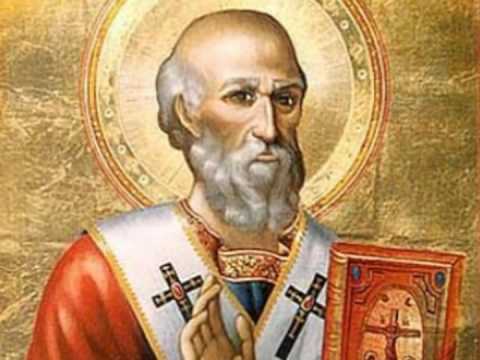
The Lord has made His Salvation
Known to the Whole World


On the Epiphany of the Lord, Sermon 3
Saint Leo the Great
Pope and Father of the Church

The loving providence of God determined that in the last days he would aid the world, set on its course to destruction. He decreed that all nations should be saved in Christ.

A promise had been made to the holy patriarch Abraham in regard to these nations. He was to have a countless progeny, born not from his body but from the seed of faith. His descendants are therefore compared with the array of the stars. The father of all nations was to hope not in an earthly progeny but in a progeny from above.

Let the full number of the nations now take their place in the family of the patriarchs. Let the children of the promise now receive the blessing in the seed of Abraham, the blessing renounced by the children of his flesh. In the persons of the Magi let all people adore the Creator of the universe; let God be known, not in Judea only, but in the whole world, so that his name may be great in all Israel.

Dear friends, now that we have received instruction in this revelation of God’s grace, let us celebrate with spiritual joy the day of our first harvesting, of the first calling of the Gentiles. Let us give thanks to the merciful God, who has made us worthy, in the words of the Apostle, to share the position of the saints in light, who has rescued us from the power of darkness, and brought us into the kingdom of his beloved Son. As Isaiah prophesied: the people of the Gentiles, who sat in darkness, have seen a great light, and for those who dwelt in the region of the shadow of death a light has dawned. He spoke of them to the Lord: The Gentiles, who do not know you, will invoke you, and the peoples, who knew you not, will take refuge in you.

This is the day that Abraham saw, and rejoiced to see, when he knew that the sons born of his faith would be blessed in his seed, that is, in Christ. Believing that he would be the father of the nations, he looked into the future, giving glory to God, in full awareness that God is able to do what he has promised.

This is the day that David prophesied in the psalms, when he said: All the nations that you have brought into being will come and fall down in adoration in your presence, Lord, and glorify your name. Again, the Lord has made known his salvation; in the sight of the nations he has revealed his justice.

This came to be fulfilled, as we know, from the time when the star beckoned the three wise men out of their distant country and led them to recognize and adore the King of heaven and earth. The obedience of the star calls us to imitate its humble service: to be servants, as best we can, of the grace that invites all men to find Christ.

Dear friends, you must have the same zeal to be of help to one another; then, in the kingdom of God, to which faith and good works are the way, you will shine as children of the light: through our Lord Jesus Christ, who lives and reigns with God the Father and the Holy Spirit for ever and ever. Amen.


Glory to the Father
and to the Son
and to the Holy Spirit:
as it was in the beginning,
is now, and will be forever. Amen


The Lord’s Day
— Epiphany of the Lord —
Christmas Season
 

“Arise! Shine, for your light has come, the glory of the LORD has dawned upon you.” (Isaiah 60:1)

Saint Cyril of Alexandria reflects on this verse from today’s First Reading:

“[Christ] made our poverty his own, and we see in Christ the strange and rare paradox of lordship in servant’s form and divine glory in human abasement. That which was under the yoke in terms of the limitations of manhood was crowned with royal dignities, and that which was humble was raised to the most supreme excellence. The Only Begotten, however, did not become man only to remain in the limits of that emptying. The point was that he who was God by nature should, in the act of selfemptying, assume everything that went along with it. This was how he would be revealed as ennobling the nature of humanity in himself by making it participate in his own sacred and divine honors. We shall find that even the saints call the Son of God the “glory” of God the Father, and King, and Lord, even when he became a man. Isaiah, for example, says in one place. “Shine forth, Jerusalem, for your light has come, and the glory of the Lord has risen on you. Behold, darkness and gloom may cover the earth, but over you the Lord shall be made manifest, and his glory shall be seen on you.”” (On the Unity of Christ,)


Collect
O God, who on this day
revealed your Only Begotten Son to the nations
by the guidance of a star,
grant in your mercy
that we, who know you already by faith,
may be brought to behold
the beauty of your sublime glory
Through our Lord Jesus Christ, Your Son,
Who lives and reigns with You
in the unity of the Holy Spirit,
one God, for ever and ever. Amen.


Glory to the Father
and to the Son
and to the Holy Spirit:
as it was in the beginning,
is now, and will be forever. Amen


The Baptism of Christ

Oration 39: On Holy Light
Saint Gregory of Nazianzus
Bishop and Father of the Church

Christ is bathed in light; let us also be bathed in light. Christ is baptized; let us also go down with him, and rise with him.

John is baptizing when Jesus draws near. Perhaps he comes to sanctify his baptizer; certainly he comes to bury sinful humanity in the waters. He comes to sanctify the Jordan for our sake and in readiness for us; he who is spirit and flesh comes to begin a new creation through the Spirit and water.

The Baptist protests; Jesus insists. Then John says: I ought to be baptized by you. He is the lamp in the presence of the sun, the voice in the presence of the Word, the friend in the presence of the Bridegroom, the greatest of all born of woman in the presence of the firstborn of all creation, the one who leapt in his mother’s womb in the presence of him who was adored in the womb, the forerunner and future forerunner in the presence of him who has already come and is to come again. I ought to be baptized by you: we should also add, and for you, for John is to be baptized in blood, washed clean like Peter, not only by the washing of his feet.

Jesus rises from the waters; the world rises with him. The heavens like Paradise with its flaming sword, closed by Adam for himself and his descendants, are rent open. The Spirit comes to him as to an equal, bearing witness to his Godhead. A voice bears witness to him from heaven, his place of origin. The Spirit descends in bodily form like the dove that so long ago announced the ending of the flood and so gives honor to the body that is one with God.

Today let us do honor to Christ’s baptism and celebrate this feast in holiness. Be cleansed entirely and continue to be cleansed. Nothing gives such pleasure to God as the conversion and salvation of men, for whom his every word and every revelation exist. He wants you to become a living force for all mankind, lights shining in the world. You are to be radiant lights as you stand beside Christ, the great light, bathed in the glory of him who is the light of heaven. You are to enjoy more and more the pure and dazzling light of the Trinity, as now you have received—though not in its fullness—a ray of its splendor, proceeding from the one God, in Christ Jesus our Lord, to whom be glory and power for ever and ever. Amen.


Glory to the Father
and to the Son
and to the Holy Spirit:
as it was in the beginning,
is now, and will be forever. Amen


Christmas Weekday
Saturday before Epiphany
 

“Beloved, we are God’s children now; what we shall be has not yet been revealed. We do know that when it is revealed we shall be like him, for we shall see him as he is.” (1 John 3:2)

Saint Bede the Venerable comments on this verse from today’s First Reading:

“The believer in Christ has already died to his old life and has been born again by faith, but it is not yet clear what the full extent of that new life will be. However, we do at least know that we shall be immortal and unchanging, because we shall enjoy the contemplation of God’s eternity. Because we shall be blessed we shall be like Christ, yet at the same time we shall be unlike him because he is our Creator and we are only creatures. It seems that this verse applies most obviously to our resurrection body, which will be immortal. In that case we shall be like God after the likeness of his Son, who alone among the persons of the Trinity took a human body in which he died and rose again and which he then took with him into heaven. We shall see God as he is, but this does not mean that we shall fully understand him. For it is one thing to see and another thing to see in such a way as to understand everything.” (On 1 John)


Collect
Almighty ever-living God,
who were pleased to shine forth with new light
through the coming of your Only Begotten Son,
grant, we pray,
that, just as he was pleased to share our bodily form
through the childbearing of the Virgin Mary,
so we, too, may one day merit
to become companions in his kingdom of grace.
Who lives and reigns with You
in the unity of the Holy Spirit,
one God, for ever and ever.


Glory to the Father
and to the Son
and to the Holy Spirit:
as it was in the beginning,
is now, and will be forever. Amen


The Cappadocia Fathers

O God,
Who were pleased to give light to Your Church
by the example and teaching
of the Bishops Saints Basil and Gregory,
grant, we pray,
that in humility we may learn Your Truth
and practice it faithfully in charity.
Through our Lord Jesus Christ, Your Son,
Who lives and reigns with You
in the unity of the Holy Spirit,
one God for ever and ever. Amen

With this Collect the Church commemorates the lives of Saint Basil the Great and Saint Gregory of Nazianzus. Both were very good friends and studied together in Athens long before becoming bishops. Their lives in the Church played out in the middle to late fourth century in the region of Cappadocia (now modern day Turkey), hence they are often referred to as the Cappadocian Fathers. However, in the Latin Rite, this commemoration is actually ‘2/3 Cappadocian Feast Day.’ Basil’s younger brother, Saint Gregory of Nyssa, is not reckoned on the Latin Rite calendar … yet (I am holding out hope for this day to eventually include ‘younger brother.’)


Basil, given the title “Great,” brought strong administrative and theological skills to his shepherding ministry as bishop. He is credited with establishing the communal form of monasticism in Eastern Christianity and establishing the first institutional operation of Church charity along with a hospital. Basil saw prayer, charity and healing as imperatives for the pastoral life of the Church because these were essential actions in the life of Jesus. Among Basil’s writings is his famous On the Holy Spirit in which he defends the Personhood and Divinity of Holy Spirit against the teachings and writings of Eunomius and others. Eunomius was a contemporary of Basil (as well as Gregory and Gregory) who vociferously taught and wrote against the distinctiveness of Divine Personhood claiming that ‘God’ is simply known by actions or functions: creating, redeeming and sanctifying and not the Names expressive of oneness, distinctiveness and Pershonhood: Father, Son and Holy Spirit. Eunomius’ teaching so gripped many places that the Baptismal formula morphed to baptism in the Creator, Redeemer and Sanctifier – an abuse and an error that the Council of Constantinople addressed and rectified in 381.

Gregory of Nazianzus, Basil’s close friend, bears the title “The Theologian” and sometimes also “The Poet.” While definitely more subdued in personality to the impressive and at times larger-than-life Basil, Gregory longed for the solitude of the monastery. He wrote of his own reluctance to accept priestly ordination and with that writing penned numerous pieces on pertinent theological and pastoral questions. 5 of those treatises are known as the “Theological Orations” as they dealt with Trinitarian Personhood against the writings of Eunomius.

Gregory of Nyssa, Basil’s younger brother, is known as “The Mystic.” Initially very reluctant to embrace Christianity and not blessed with the administrative skills of older brother Basil, Gregory of Nyssa came into his own after Basil’s rather untimely death at the age of 49. Gregory ended up providing theological depth to much of Basil’s initiatives. While early in his episcopal career many thought he was simply ‘completing’ or ‘building on’ Basil’s thought, Gregory soon proved to be a gifted speculative theological thinker who simultaneously sought to make connections with living a spiritual (actually virtuous, as it was termed then) life that disposed one to the transformation of the Holy Spirit. He too penned a voluminous work against Eunomius and also numerous works on the spiritual life. Among some of his more famous works are On the Making of Man (a great work on theological anthropology), The Great Catechetical Oration (among the first ‘catechisms’ ever written and used in the Eastern Church well into the 15th century), the Life of Moses, the Homilies on the Song of Songs, Homilies on the Beatitudes, Orations on the Lord’s Prayer, to name only a few all of which  offer deep insights into the spiritual life). Indebted to Origen of Alexandria for his pioneering work on biblical interpretation, Gregory wove together both the literal and spiritual senses of Sacred Scripture to express a pastoral and theological approach to life known as epektasis: a continuous being-drawn by the Holy Spirit to live the life of Jesus Christ culminating in eternal life with God the Father.

The Cappadocian Fathers lived in a time of theological passion and a time that was replete with all kinds of theological confusion and heretical movements, some of which were grounded in ‘hurt pride’ and an inability to humbly receive the Church’s teachings. Gregory of Nyssa captured a glimpse of this passion in an introduction to one of his works:

“A city [Constantinople] full of profound theological disputes, everyone talking and preaching in the squares, in the market places, at the crossroads, in the alleyways: old clothes men, money-changers, costermongers: they are all at it. If you ask a man to change a piece of silver, he informs you wherein the Son differs from the Father; and if you ask for the price of a loaf, you are told by the way of reply that the Son is the inferior of the Father; and if you inquire whether the bath is ready, the man solemnly informs you that the Son was made out of nothing! (Oratio de Deitate Filii et Spiritus Sancti (PG XLVI, 557: 20-28)”

The Cappadocians knew proper worship, theology and expressions of the Divine Mystery were indispensable for authentic Christian living. Their preaching, teaching and writing - at times very technical and highly nuanced - were always placed at the service of concrete virtuous living that mirrored Jesus Christ. One of their many theological legacies is that mystery and teachings are not about the abstract or ethereal, rather they are about a way of living. This way of living is about always being drawn-up to contemplate and to live divinely. The saintly Nyssian bishop summed it up well: “Let faith thunder loud and pure in the proclamation of the Most Holy Trinity and may life imitate the fruit of the pomegranate!”


On this day, I express gratitude for one of a number of mentors in my life, Fr Ambrogio Eßzer, OP who directed by doctoral studies in the Fathers of the Church and my dissertation on Saint Gregory of Nyssa. Fr. Eszer himself had studied under the great patristic scholar, Fr Irene Hausher and I am grateful for the many conversations in which Fr Eßzer ‘handed-on’ the great patristic legacy of the Church.

Eternal rest grant unto him,
O Lord,
and let perpetual light shine upon him.
May his soul and all the souls
of the faithfully departed
through the mercy of God
rest in peace. AMEN!


Glory to the Father
and to the Son
and to the Holy Spirit:
as it was in the beginning,
is now, and will be forever. Amen


Two bodies, but a single spirit

Oration 43: In Praise of Basil the Great
Saint Gregory of Nazianzus
Bishop and Father of the Church

Basil and I were both in Athens. We had come, like streams of a river, from the same source in our native land, had separated from each other in pursuit of learning, and were now united again as if by plan, for God so arranged it.

I was not alone at that time in my regard for my friend, the great Basil. I knew his irreproachable conduct, and the maturity and wisdom of his conversation. I sought to persuade others, to whom he was less well known, to have the same regard for him. Many fell immediately under his spell, for they had already heard of him by reputation and hearsay.

What was the outcome? Almost alone of those who had come to Athens to study he was exempted from the customary ceremonies of initiation for he was held in higher honor than his status as a first-year student seemed to warrant.

Such was the prelude to our friendship, the kindling of that flame that was to bind us together. In this way we began to feel affection for each other. When, in the course of time, we acknowledged our friendship and recognized that our ambition was a life of true wisdom, we became everything to each other: we shared the same lodging, the same table, the same desires the same goal. Our love for each other grew daily warmer and deeper.

The same hope inspired us: the pursuit of learning. This is an ambition especially subject to envy. Yet between us there was no envy. On the contrary, we made capital out of our rivalry. Our rivalry consisted, not in seeking the first place for oneself but in yielding it to the other, for we each looked on the other’s success as his own.

We seemed to be two bodies with a single spirit. Though we cannot believe those who claim that everything is contained in everything, yet you must believe that in our case each of us was in the other and with the other.

Our single object and ambition was virtue, and a life of hope in the blessings that are to come; we wanted to withdraw from this world before we departed from it. With this end in view we ordered our lives and all our actions. We followed the guidance of God’s law and spurred each other on to virtue. If it is not too boastful to say, we found in each other a standard and rule for discerning right from wrong. Different men have different names, which they owe to their parents or to themselves, that is, to their own pursuits and achievements. But our great pursuit, the great name we wanted, was to be Christians, to be called Christians.


Glory to the Father
and to the Son
and to the Holy Spirit:
as it was in the beginning,
is now, and will be forever. Amen


— Christmas Season —
Saint Basil the Great
Saint Gregory of Nazianzus
Bishops and Fathers of the Church
 

“No one who denies the Son has the Father, but whoever confesses the Son has the Father as well.” (1 John 2:23)

Saint Bede the Venerable comments on this verse from today’s First Reading:

“John is looking for a confession of faith which involves the heart, as well as confessing in both word and deed. He is saying the same thing as the apostle Paul when he wrote: “No one can say that Jesus is Lord, except by the Holy Spirit,” which means that unless the Holy Spirit gives us the power to do so, we cannot serve Christ with perfect faith and action.” (On 1 John)


Collect
O God,
Who were pleased to give light to Your Church
by the example and teaching
of the Bishops Saints Basil and Gregory,
grant, we pray,
that in humility we may learn Your truth
and practice it faithfully in charity.
Through our Lord Jesus Christ, your Son,
Who lives and reigns with You
in the unity of the Holy Spirit,
one God, for ever and ever.


Glory to the Father
and to the Son
and to the Holy Spirit:
as it was in the beginning,
is now, and will be forever. Amen


The Word took our nature from Mary

Letter to Epictetus
Saint Athanasius, bishop

The Apostle tells us: The Word took to himself the sons of Abraham, and so had to be like his brothers in all things. He had then to take a body like ours. This explains the fact of Mary’s presence: she is to provide him with a body of his own, to be offered for our sake. Scripture records her giving birth, and says: She wrapped him in swaddling clothes. Her breasts, which fed him, were called blessed. Sacrifice was offered because the child was her firstborn. Gabriel used careful and prudent language when he announced his birth. He did not speak of “what will be born in you” to avoid the impression that a body would be introduced into her womb from outside; he spoke of “what will be born from you” so that we might know by faith that her child originated within her and from her.

By taking our nature and offering it in sacrifice, the Word was to destroy it completely and then invest it with his own nature, and so prompt the Apostle to say: This corruptible body must put on incorruption; this mortal body must put on immortality.

This was not done in outward show only, as some have imagined. This is not so. Our Savior truly became man, and from this has followed the salvation of man as a whole. Our salvation is in no way fictitious, nor does it apply only to the body. The salvation of the whole man, that is, of soul and body, has really been achieved in the Word himself.

What was born of Mary was therefore human by nature, in accordance with the inspired Scriptures, and the body of the Lord was a true body: It was a true body because it was the same as ours. Mary, you see, is our sister, for we are all born from Adam.

The words of Saint John: The Word was made flesh, bear the same meaning, as we may see from a similar turn of phrase in Saint Paul: Christ was made a curse for our sake. Man’s body has acquired something great through its communion and union with the Word. From being mortal it has been made immortal; though it was a living body it has become a spiritual one; though it was made from the earth it has passed through the gates of heaven.

Even when the Word takes a body from Mary, the Trinity remains a Trinity, with neither increase nor decrease. It is for ever perfect. In the Trinity we acknowledge one Godhead, and thus one God, the Father of the Word, is proclaimed in the Church.


Glory to the Father
and to the Son
and to the Holy Spirit:
as it was in the beginning,
is now, and will be forever. Amen


The Octave Day of Christmas
— Solemnity of the Blessed Virgin Mary —
The Mother of God
 

“As proof that you are children, God sent the spirit of his Son into our hearts, crying out, “Abba, Father!” (Galatians 4:6)

Saint Augustine of Hippo comments on this verse from the Second Reading proclaimed at Mass today:

“He says “adoption” so that we may clearly understand that the Son of God is unique. For we are sons of God through his generosity and the condescension of his mercy, whereas he is Son by nature, sharing the same divinity with the Father.

There are two words that he has set down so that the former may be interpreted by the latter, “for Abba” means the same as “Father.” Now we see that he has elegantly, and not without reason, put together words from two languages signifying the same thing because of the whole people, which has been called from Jews and Gentiles into the unity of faith.” (Epistle to the Galatians, 30-31)


Collect
O God,
Who through the fruitful virginity of Blessed Mary
bestowed on the human race
the grace of eternal salvation,
grant, we pray,
that we may experience the intercession of her,
through whom we were found worthy
to receive the author of life,
our Lord Jesus Christ, your Son.
Who lives and reigns with You
in the unity of the Holy Spirit,
one God, for ever and ever. Amen.


Glory to the Father
and to the Son
and to the Holy Spirit:
as it was in the beginning,
is now, and will be forever. Amen


The Birthday of the Lord is the Birthday of Peace!

On the Nativity of Our Lord
Sermon 6 (chapter 10)
Saint Leo the Great, pope

Although the state of infancy, which the majesty of the Son of God did not disdain to assume, developed with the passage of time into maturity of manhood, and although after the triumph of the passion and the resurrection all his lowly acts undertaken on our behalf belong to the past, nevertheless today’s feast of Christmas renews for us the sacred beginning of Jesus’ life, his birth from the Virgin Mary. In the very act in which we are reverencing the birth of our Savior, we are also celebrating our own new birth. For the birth of Christ is the origin of the Christian people; and the birthday of the head is also the birthday of the body.

Though each and every individual occupies a definite place in this body to which he has been called, and though all the progeny of the church is differentiated and marked with the passage of time, nevertheless as the whole community of the faithful, once begotten in the baptismal font, was crucified with Christ in the passion, raised up with him in the resurrection and at the ascension placed at the right hand of the Father, so too it is born with him in this Nativity, which we are celebrating today.

For every believer regenerated in Christ, no matter in what part of the whole world he may be, breaks with that ancient way of life that derives from original sin, and by rebirth is transformed into a new man. Henceforth he is reckoned to be of the stock, not of his earthly father, but of Christ, who became Son of Man precisely that men could become sons of God; for unless in humility he had come down to us, none of us by our own merits could ever go up to him.

Therefore the greatness of the gift which he has bestowed on us demands an appreciation proportioned to its excellence; for blessed Paul the Apostle truly teaches: We have received not the spirit of this world, but the Spirit which is from God, that we might understand the gifts bestowed on us by God. The only way that he can be worthily honored by us is by the presentation to him of that which he has already given to us.

But what can we find in the treasure of the Lord’s bounty more in keeping with the glory of this feast than that peace which was first announced by the angelic choir on the day of his birth? For that peace, from which the sons of God spring, sustains love and mothers unity; it refreshes the blessed and shelters eternity; its characteristic function and special blessing is to join to God those whom it separates from this world.

Therefore, may those who were born, not of blood nor of the will of the flesh nor of the will of man, but of God, offer to the Father their harmony as sons united in peace; and may all those whom he has adopted as his members meet in the firstborn of the new creation who came not to do his own will but the will of the one who sent him; for the grace of the Father has adopted as heirs neither the contentious nor the dissident, but those who are one in thought and love. The hearts and minds of those who have been reformed according to one and the same image should be in harmony with one another.

The birthday of the Lord is the birthday of peace, as Paul the Apostle says: For he is our peace, who has made us both one; for whether we be Jew or Gentile, through him we have access in one Spirit to the Father.