— Saint Josaphat —
Ordinary Time Week 32: Wednesday
 

“And when he saw them, he said, “Go show yourselves to the priests.” As they were going they were cleansed.” (Luke 17:14)

Saint Cyril of Alexandria reflects on this verse from today’s Gospel, writes:

“Why did he not say, “I will, be cleansed,” as he did in the case of another leper, instead of commanding them to show themselves to the priests? It was because the law gave directions to this effect to those who were delivered from leprosy. It commanded them to show themselves to the priests and to offer a sacrifice for their cleansing. He commanded them to go as being already healed so that they might bear witness to the priests, the rulers of the Jews and always envious of his glory. They testified that wonderfully and beyond their hope, they had been delivered from their misfortune by Christ’s willing that they should be healed. He did not heal them first but sent them to the priests, because the priests knew the marks of leprosy and of its healing.” (Commentary on Luke, «Homily 113»)


Collect
Stir up in your Church, we pray, O Lord,
the Spirit that filled Saint Josaphat
as he laid down his life for the sheep,
so that through his intercession
we, too, may be strengthened by the same Spirit
and not be afraid to lay down our life for others.
Through our Lord Jesus Christ, Your Son,
Who lives and reigns with You
in the unity of the Holy Spirit,
one God, for ever and ever. Amen.


Glory to the Father
and to the Son
and to the Holy Spirit:
as it was in the beginning,
is now, and will be forever. Amen



— Saint Martin of Tours —
Ordinary Time Week 32: Tuesday
 

“So should it be with you. When you have done all you have been commanded, say, ‘We are unprofitable servants; we have done what we were obliged to do.” (Luke 17:10)

Saint John Chrysostom comments on this verse from today’s Gospel reading:

“He said, “When you have done everything, say, ‘We are unprofitable servants,’” to warn them in his wish that they keep themselves at great distance from that destructive passion. Dearly beloved, see how the person with his mouth open for human glory and performing the works of virtue on that account has no benefit from it. Despite practicing every example of virtue, if he seems to give himself credit for it, he ends up empty-handed and bereaved of everything.” (Homilies on Genesis, 31)


Collect
O God,
Who are glorified in the Bishop Saint Martin
both by his life and death,
make new, we pray,
the wonders of Your grace in our hearts,
that neither death nor life
may separate us from Your love.
Through our Lord Jesus Christ, Your Son,
Who lives and reigns with You
in the unity of the Holy Spirit,
one God, for ever and ever. Amen.


Glory to the Father
and to the Son
and to the Holy Spirit:
as it was in the beginning,
is now, and will be forever. Amen


— Pope Saint Leo the Great —
Ordinary Time Week 32: Monday
 

“Be on your guard! If your brother sins, rebuke him; and if he repents, forgive him.” (Luke 17:3)

Saint Ambrose of Milan offers the following insight on this verse from today’s Gospel:

“If your brother sins against you, reprove him.” After the parable of the rich man who was tortured in punishment, how fittingly he added the command of showing mercy to those indeed who repent of their error, for fear that despair might not recall someone from guilt! He is truly moderate, so that pardon is not difficult or leniency lax, fearing that harsh reproof might cast someone down or conspiracy might invite guilt! He fittingly said, “If your brother sins against you,” for it is not an equal condition to sin against people and against God. The apostle, who is a true interpreter of the divine prophecy, says, “After the first admonition, avoid a person that is a heretic,” because unbelief is not on a par with minor transgression. Since error very often surprises someone through ignorance, he commands that it should be rebuked, so that stubbornness is shunned and a mistake is corrected.” (Exposition on the Gospel of Luke, 8)


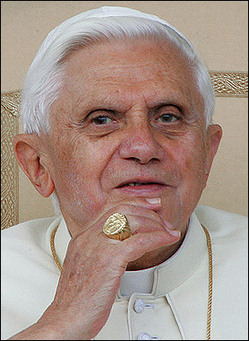
Pope Saint Leo the Great

On 8 March 2008, Pope-emeritus Benedict devoted his weekly Wednesday General Audience to the life and theology of this great Western Father of the Church:

“Continuing our journey through the Fathers of the Church, true stars that shine in the distance, at our meeting today we encounter a Pope who in 1754 Benedict XIV proclaimed a Doctor of the Church: St Leo the Great. more ...


Collect
Almighty and merciful God,
by whose gift Your faithful offer You
right and praiseworthy service,
grant, we pray,
that we may hasten without stumbling
to receive the things You have promised.
Through our Lord Jesus Christ, Your Son,
Who lives and reigns with You
in the unity of the Holy Spirit,
one God, for ever and ever. Amen.


Glory to the Father
and to the Son
and to the Holy Spirit:
as it was in the beginning,
is now, and will be forever. Amen


Feast of the
— Dedication of the Lateran Basilica —
in Rome

“He found in the temple area those who sold oxen, sheep, and doves, as well as the money-changers seated there.” (John 2:14)

Saint Augustine of Hippo comments on this verse from today’s Gospel:

“Nevertheless, in order to seek the mystery of the deed in the figurative meaning, who are they who sell the oxen? Who are they who sell the sheep and doves? They are those who seek their own interests in the church rather than those of Jesus Christ. Those who have no desire for redemption have everything for sale. They do not want to be bought; they want to sell. Yet surely it is for their good that they be redeemed by the blood of Christ so that they may attain the peace of Christ. For what profit is there in acquiring anything temporal or transitory in this world — whether it be money, or gorging oneself on food or achieving high honors from your fellow human beings? Are not all things smoke and wind? Do not all things pass on in a moment? And woe to those who want to hang on to passing things, for they pass with them! ... My brothers, those who seek such things sell them. For Simon [Magus] too wanted to buy the Holy Spirit for that very reason — because he wanted to sell the Holy Spirit — and he thought that the apostles were the kind of merchants that the Lord drove out of the temple with a scourge. But he was the one who was actually such a merchant, wanting to buy what he might sell. He was of those who sell doves. For the Holy Spirit appeared in the form of a dove. Therefore, brothers, who are those who sell doves — who are they except those who say, “We give the Holy Spirit”? Why do they say this and at what price do they sell? At the price of their own honor. They receive for a time bishops’ seats as their price, that they may seem to sell doves. Let them beware of the scourge of ropes. The dove is not for sale; it is given gratis, for it is called grace.” (Tractates on the Gospel of John, 10)


History

On this day in 324, lands and buildings that originally belonged to the Roman Laterani family were formally dedicated as the Cathedral Church of Rome by Pope Sylvester I.

During the reign of Emperor Nero, the Laterani family lost the property to the Emperor when a family member was accused of some unknown impropriety against Nero. From the the time of Nero to the early years of the fourth century, the ‘ownership history’ is somewhat sketchy with the property eventually passing to Constantine's wife, Fausta.

What is clear is that with the Edict of Toleration, the Roman Empire's relationship with the Church changed dramatically. Not only were bishops appointed civil magistrates by the emperor, Constantine also began an aggressive ‘renovation project’ taking existing Roman buildings and permitting the bishops to use them for places of worship and ecclesiastical gatherings/meetings. New buildings were also constructed during this time and dedicated as Churches to signal the Church’s clear visible presence in the Empire. Robin Jensen notes that this ‘church building campaign’ “symbolized the beginning of Christianity’s transition from a minority community adapting what it had available and expressing itself in familiar terms, to a powerful, wealthy and dominant segment of the population, now able to determine the forms and styles by which it expressed its own cultural identity. The imposing scale and potential grandeur of the basilica design well suited the gradually more elaborate liturgy, even as it reflected the changed social and political status of the church and became a definitive and monumental symbol of the church’s new self-understanding and cultural integration (Christianity: Origins to Constantine, page 585).”


Collect
O God,
Who from living and chosen stones
prepare an eternal dwelling for Your majesty,
increase in your Church
the spirit of grace you have bestowed,
so that by new growth your faithful people
may build up the heavenly Jerusalem.
Through our Lord Jesus Christ, your Son,
who lives and reigns with You
in the unity of the Holy Spirit,
one God, for ever and ever.


Glory to the Father
and to the Son
and to the Holy Spirit:
as it was in the beginning,
is now, and will be forever. Amen


Ordinary Time Week 31: Saturday
 

“I tell you, make friends for yourselves with dishonest wealth, so that when it fails, you will be welcomed into eternal dwellings.” (Luke 16:9)

Saint John Chrysostom comments on this verse from today’s Gospel reading:

“You know that many high standing people renege on repayment of a loan. They are either resistant with a bad attitude or unable to pay because of poverty, as it often happens. In the case of the Lord of all, there is no room for thinking this. On the contrary, the loan is proof against loss. He guarantees to return in good time one hundred percent of what was deposited, and he keeps life everlasting in reserve for us. In the future, what excuse will we have if we are negligent and fail to gain a hundredfold in place of the little we have, the future in place of the present, the eternal in place of the temporary? What excuse will we have if we heedlessly lock our money behind doors and barricades, and we prefer to leave it lying idle? Instead, we should make it available to the needy now, so that in the future we may count on support from them. Remember that Scripture says, “Make friends with ill-gotten gains so that, when you go down in the world, they may welcome you into their eternal dwellings.” (Homilies on Genesis, 3)


Collect
Almighty and merciful God,
by whose gift Your faithful offer You
right and praiseworthy service,
grant, we pray,
that we may hasten without stumbling
to receive the things You have promised.
Through our Lord Jesus Christ, Your Son,
Who lives and reigns with You
in the unity of the Holy Spirit,
one God, for ever and ever. Amen.


Glory to the Father
and to the Son
and to the Holy Spirit:
as it was in the beginning,
is now, and will be forever. Amen


Ordinary Time Week 31: Friday
 

“Then to another he said, ‘And you, how much do you owe?’ He replied, ‘One hundred kors of wheat.’ He said to him, ‘Here is your promissory note; write one for eighty.’” (Luke 16:7)

Origen of Alexandria comments on this verse from the Gospel proclaimed at Mass today:

“What the Gospel of “the unjust steward” says is also an image of this matter. He says to the debtor [of one hundred measures of wheat], “Take your bill, sit down, and write eighty,” and the other things that are related. You see that he said to each man, “Take your bill.” It is evident from this that the documents of sin are ours, but God writes documents of justice. The apostle says, “For you are an epistle written not with ink, but with the Spirit of the living God; not in tables of stone, but in the fleshly tables of the heart.” You have in yourselves documents of God and documents of the Holy Spirit. If you transgress, you yourself write in yourselves the handwriting of sin. Notice that at any time when you have approached the cross of Christ and the grace of baptism, your handwriting is fastened to the cross and blotted out in the fountain of baptism. Do not rewrite later what has been blotted out or repair what has been destroyed. Preserve only the documents of God in yourself. Let only the scripture of the Holy Spirit remain in you.” (Homilies on Genesis, 13)


Collect
Almighty and merciful God,
by whose gift Your faithful offer You
right and praiseworthy service,
grant, we pray,
that we may hasten without stumbling
to receive the things You have promised.
Through our Lord Jesus Christ, Your Son,
Who lives and reigns with You
in the unity of the Holy Spirit,
one God, for ever and ever. Amen.


Glory to the Father
and to the Son
and to the Holy Spirit:
as it was in the beginning,
is now, and will be forever. Amen


Ordinary Time Week 31: Thursday
 

“So to them he addressed this parable...” (Luke 15:3)

Saint Ambrose of Milan offers the following insight on this verse from today’s Gospel:

“St. Luke did not idly present three parables in a row. By the parables of the sheep that strayed and was found, the coin which was lost and was found, and the son who was dead and came to life, we may cure our wounds, being encouraged by a threefold remedy. “A threefold cord will not be broken.” Who are the father, the shepherd and the woman? They are God the Father, Christ and the church. Christ carries you on his body, he who took your sins on himself. The church seeks, and the Father receives. The shepherd carries. The mother searches. The father clothes. First mercy comes, then intercession, and third reconciliation. Each complements the other. The Savior rescues, the church intercedes, and the Creator reconciles. The mercy of the divine act is the same, but the grace differs according to our merits. The weary sheep is recalled by the shepherd, the coin which was lost is found, the son retraces his steps to his father and returns, guilty of error but totally repentant.”

Let us rejoice that the sheep that had strayed in Adam is lifted on Christ. The shoulders of Christ are the arms of the cross. There, I laid down my sins. I rested on the neck of that noble yoke. The sheep is one in kind, not in appearance, because “we are all one body” but many members. It is written, “You are the body of Christ, and members individually.” “The Son of man came to seek and save what was lost.” He sought all, because “as in Adam all men die, so also in Christ shall all be made alive.” (Exposition on the Gospel of Luke, 7)


Collect
Almighty and merciful God,
by whose gift Your faithful offer You
right and praiseworthy service,
grant, we pray,
that we may hasten without stumbling
to receive the things You have promised.
Through our Lord Jesus Christ, Your Son,
Who lives and reigns with You
in the unity of the Holy Spirit,
one God, for ever and ever. Amen.


Glory to the Father
and to the Son
and to the Holy Spirit:
as it was in the beginning,
is now, and will be forever. Amen


Ordinary Time Week 31: Wednesday
 

“Which of you wishing to construct a tower does not first sit down and calculate the cost to see if there is enough for its completion?” (Luke 14:28)

Saint Gregory of Nyssa (part 2 of the background of Saint Gregory of Nyssa is found here) offers the following insight on this verse from today’s Gospel:

“The Gospel somewhere says that a person who begins to build a tower but stops with the foundations and never completes it is ridiculous. What do we learn from this parable? We learn that we should work to bring every aspiration to a conclusion, completing the work of God by an elaborate building up of his commandments. One stone does not make a complete tower, nor does one commandment bring the perfection of the soul to its desired measure. It is necessary to both erect the foundation and, as the apostle says, “to lay upon it a foundation of gold and precious stones.” That is what the products of the commandments are called by the prophet when he says, “I have loved your commandment more than gold and much precious stone.” (On Virginity, 18)


Collect
Almighty and merciful God,
by whose gift Your faithful offer You
right and praiseworthy service,
grant, we pray,
that we may hasten without stumbling
to receive the things You have promised.
Through our Lord Jesus Christ, Your Son,
Who lives and reigns with You
in the unity of the Holy Spirit,
one God, for ever and ever. Amen.


Glory to the Father
and to the Son
and to the Holy Spirit:
as it was in the beginning,
is now, and will be forever. Amen


— Election Day (USA) —
4 November 2014

As citizens in the United States of America vote today in midterm elections, may the Lord’s blessing be upon our land and indeed the entire world.


SCRIPTURE
“His help is near for those who fear Him and His glory will dwell in our land. Psalm 85Click for full Psalm.

COLLECT
(This prayer is taken from The Roman Missal, “Masses and Prayers for Various Needs and Occasions, #21: For the Nation or State”)

O God,
Who arrange all things according
to a wonderful design,
graciously receive the prayers
we pour out to You for our country,
that, through the wisdom of its leaders and
the integrity of its citizens,
harmony and justice may be assured
and lasting prosperity come with peace.
Through our Lord Jesus Christ, Your Son
Who lives and reigns with You
in the unity of the Holy Spirit,
One God, for ever and ever.

— Saint Charles Borromeo —
Ordinary Time Week 31: Tuesday
 

“But one by one, they all began to excuse themselves. The first said to him, ‘I have purchased a field and must go to examine it; I ask you, consider me excused.’” (Luke 14:18)

Saint Cyril of Alexandria reflects on this verse from today’s Gospel, writes:

““They began,” it says, “all of them at once to make excuse,” that is, as with one purpose, without any delay, they made excuse…. By senselessly giving themselves up to these earthly matters, they cannot see things spiritual. Conquered by the love of the flesh, they are far from holiness. They are covetous and greedy after wealth. They seek things that are below but make no account in the slightest degree of the hopes that are stored up with God. It would be far better to gain the joys of paradise instead of earthly fields and temporary furrows.” (Commentary on Luke, «Homily 104»)


Collect
Preserve in the midst of your people,
we ask, O Lord, the spirit with which you filled
the Bishop Saint Charles Borromeo,
that your Church may be constantly renewed
and, by conforming herself to the likeness of Christ,
may show his face to the world.
Who lives and reigns with You
in the unity of the Holy Spirit,
one God, for ever and ever. Amen.


Glory to the Father
and to the Son
and to the Holy Spirit:
as it was in the beginning,
is now, and will be forever. Amen