The Most Sacred Heart of Jesus 2014

“Take my yoke upon you and learn from me, for I am meek and humble of heart; and you will find rest for yourselves.” (Matthew 11:29)

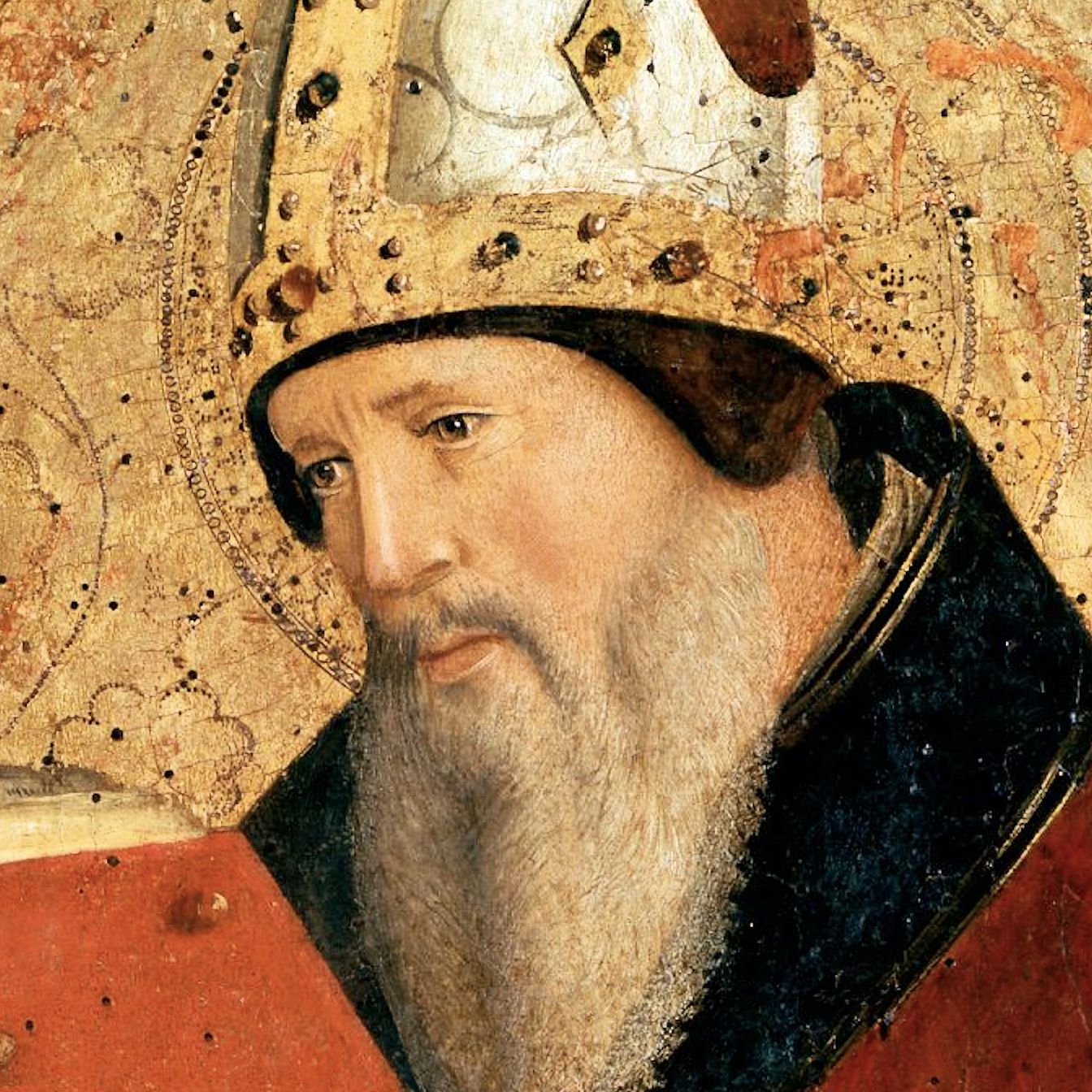
Saint Augustine of Hippo comments on this verse from the Gospel proclaimed at Mass today:

”You are to “take my yoke upon you, and learn from me.” You are not learning from me how to refashion the fabric of the world, nor to create all things visible and invisible, nor to work miracles and raise the dead. Rather, you are simply learning of me: “that I am meek and lowly in heart.” If you wish to reach high, then begin at the lowest level. If you are trying to construct some mighty edifice in height, you will begin with the lowest foundation. This is humility. However great the mass of the building you may wish to design or erect, the taller the building is to be, the deeper you will dig the foundation. The building in the course of its erection rises up high, but he who digs its foundation must first go down very low. So then, you see even a building is low before it is high and the tower is raised only after humiliation.” (Sermon 69)


Collect
Grant, we pray, almighty God,
that we, who glory in the Heart of your beloved Son
and recall the wonders of his love for us,
may be made worthy to receive
an overflowing measure of grace
from that fount of heavenly gifts.
Through our Lord Jesus Christ, Your Son,
Who lives and reigns with You
in the unity of the Holy Spirit,
one God, for ever and ever. Amen.

Alternate Collect
O God, who in the Heart of your Son,
wounded by our sins,
bestow on us in mercy
the boundless treasures of your love,
grant, we pray,
that, in paying him the homage of our devotion,
we may also offer worthy reparation.
Through our Lord Jesus Christ, Your Son,
Who lives and reigns with You
in the unity of the Holy Spirit,
one God, for ever and ever. Amen.


Glory to the Father
and to the Son
and to the Holy Spirit:
as it was in the beginning,
is now, and will be forever. Amen


Ordinary Time Week 12: Thursday

“Everyone who listens to these words of mine and acts on them will be like a wise man who built his house on rock.” (Matthew 7:24)

Saint John Chrysostom comments on this verse from today’s Gospel reading:

“Whereas his teaching has up to now largely focused on the future kingdom, its unspeakable rewards and its consolations, now he shifts his focus to the present life, its current fruits and how great is the strength of virtue within it. What then is its strength? It is living with security, not being easily overcome by any of life’s terrors and standing above all those who treat others maliciously. What could be as good as this? For not even the one who wears the royal crown would be able to furnish this for himself. But one who pursues the way of excellence can have this stability, for that one alone is possessed of this equilibrium in full abundance. In the crashing surf of the present circumstances such a one experiences a calm sea. This is amazing. It is when the storm is violent, the upheaval great and the temptations continual that such a person is not shaken in the slightest. This is not a way of living that applies to fair weather only. For he says, “The rain came down, the floods came, the winds blew, and they beat against that house. And it did not fall because it was founded upon the rock.”
In referring to rain, floods and winds Jesus is speaking about all those human circumstances and misfortunes, such as false accusations, plots, bereavements, deaths, loss of family members, insults from others, and all the horrid things in life about which one could speak. Jesus says that a soul that pursues the way of excellence does not give in to any of these potential disasters. And the cause of this is that this soul has been founded upon the rock.
Now “rock” refers to the reliability of Jesus’ teaching. For his commands are stronger than any rock. They place one quite above all the human waves of life. For the one who guards these commands with care will excel not only over human beings when treated maliciously but even over the demons themselves in their plots. ” (The Gospel of Matthew, «Homily 24»)


Collect
Grant, O Lord,
that we may always revere and love Your Holy Name,
for You never deprive of Your guidance
those You set firm on the foundation of Your love.
Through our Lord Jesus Christ, Your Son,
Who lives and reigns with You
in the unity of the Holy Spirit,
one God, for ever and ever. Amen.


Glory to the Father
and to the Son
and to the Holy Spirit:
as it was in the beginning,
is now, and will be forever. Amen


Ordinary Time Week 12: Wednesday

“By their fruits you will know them. Do people pick grapes from thornbushes, or figs from thistles?” (Matthew 7:16)

Saint John Chrysostom comments on this verse from today’s Gospel reading:

“It does not seem to me that “false prophets” here refers to the heretics but rather to persons who live morally corrupt lives while wearing a mask of virtue. They are usually called frauds by most people. For this reason Jesus continued by saying, “By their fruits you will know them.” For it is possible to find some virtuous persons living among heretics. But among the corrupted of whom I speak it is in no way possible. “So what difference does it make,” Jesus says in effect, “if even among these false prophets some do put on a hypocritical show of virtue? Certainly they will soon be detected easily.” The nature of this road upon which he commanded us to walk is toilsome and hard. The hypocrite would seldom choose to toil but would prefer only to make a show. For this very reason the hypocrite is easily detected. When Jesus notes that “there are few who find it,” he distinguishes these from those who do not find the way yet pretend to find it. So do not look to the mask but to the behavioral fruits of those who pursue the narrow way.” (The Gospel of Matthew, «Homily 23»)


Grant, O Lord,
that we may always revere and love Your Holy Name,
for You never deprive of Your guidance
those You set firm on the foundation of Your love.
Through our Lord Jesus Christ, Your Son,
Who lives and reigns with You
in the unity of the Holy Spirit,
one God, for ever and ever. Amen.


Glory to the Father
and to the Son
and to the Holy Spirit:
as it was in the beginning,
is now, and will be forever. Amen


Birth of John the Baptist 2014

“Immediately his mouth was opened, his tongue freed, and he spoke blessing God.” (Luke 1:64)

Saint Maximus of Turin offers the following insight on this verse from today's Gospel:

“When John his son was born, among his neighbors there was concern about what name he should be given. Writing tablets were offered to his father so that he himself could put down the name that he had decided upon, so that he might express in writing what he could not in speech. Then, in a wonderful manner, when he had taken the tablets in order to begin writing, his tongue was loosened, the written word gave way to speech, and he did not write “John” but spoke it. Consider, then, the merit of the holy Baptist: he gave his father back his voice, he restored the faculty of speech to the priest. Consider, I say, his merit: John unloosed the mouth that the angel had bound. What Gabriel had closed the little child unlocked. When John is born the father suddenly becomes a prophet or priest, speech attains its use, love receives an offspring, the office recognizes the priest.” (Sermon 6)


Collect
O God, who raised up Saint John the Baptist
to make ready a nation fit for Christ the Lord,
give your people, we pray,
the grace of spiritual joys
and direct the hearts of all the faithful
into the way of salvation and peace.
Through our Lord Jesus Christ, Your Son,
Who lives and reigns with You
in the unity of the Holy Spirit,
one God, for ever and ever. Amen.


Glory to the Father
and to the Son
and to the Holy Spirit:
as it was in the beginning,
is now, and will be forever. Amen


Ordinary Time Week 12: Monday

“Stop judging, that you may not be judged.” (Matthew 7:1)

Saint Augustine of Hippo comments on this verse from the Gospel proclaimed at Mass today:

”This carries the same intent as another passage, “Pass no judgment before the time, until the Lord comes, who will both bring to light the hidden things of darkness and reveal the thoughts of the heart; and then everyone will have his praise from God.” Some actions are indifferent, and, since we do not know with what intention they are performed, it would be rash for any to pass judgment on them and most rash to condemn them. The time for judging these actions will come later, when the Lord “will bring to light the hidden things of darkness and reveal the thoughts of the heart.” And in another passage the same apostle also says, “Some sins are manifest even before the judgment, but some sins afterward.” When it is clear with what intention they are committed, he calls them manifest sins, and these sins precede judgment. This means that if judgment follows them at once, it will not be rash judgment. But concealed sins follow judgment, because not even these will remain hidden in their proper time. And this is to be understood about good works as well, for he thus continues: “In like manner also the good works are manifest, and whatever things are otherwise cannot be hidden.” On things that are manifest, therefore, let us pass judgment, but with regard to hidden things, let us leave the judgment to God. For whether the works themselves be bad or good, they cannot remain hidden when the time comes for them to be revealed.” (Sermon on the Mount, 2)


Collect
Grant, O Lord,
that we may always revere and love your holy name,
for you never deprive of your guidance
those you set firm on the foundation of your love.
Through our Lord Jesus Christ, Your Son,
Who lives and reigns with You
in the unity of the Holy Spirit,
one God, for ever and ever. Amen.


Glory to the Father
and to the Son
and to the Holy Spirit:
as it was in the beginning,
is now, and will be forever. Amen


Most Holy Body and Blood of Christ 2014

“I am the living bread that came down from heaven; whoever eats this bread will live forever; and the bread that I will give is my flesh for the life of the world.” (John 6:51).”

Saint Clement of Alexandria offers the following insight on this verse from today’s Gospel:

“God elaborates on a suitable and wholesome new diet for the newly-formed and newborn babe. He says it consists of the one who nourishes and who is the Father of all that are generated and regenerated—just as manna, the celestial food of angels, flowed down from heaven on the ancient Hebrews. But when our kind and loving Father rained down the Word, he himself became spiritual nourishment to the good. This is a truly amazing mystery, because this is the kind of diet the Lord administers: he offers his flesh and pours out his blood so that nothing is lacking for his children’s growth. This is almost too much to take in! And then we are to throw out the old and carnal corruption, our old diet, receiving in exchange a totally new diet—Christ himself as we ingest him for him to remain hidden there. Then, with our Savior enshrined in our souls, as it were, we can correct the affections of our flesh.” (Christ the Educator, 1)


Collect
O God, Who in this wonderful Sacrament
have left us a memorial of Your Passion,
grant us, we pray,
so to revere the sacred mysteries of
Your Body and Blood
that we may always experience in ourselves
the fruits of Your redemption.
Who lives and reigns with God the Father
in the unity of the Holy Spirit,
one God, for ever and ever. Amen.


Glory to the Father
and to the Son
and to the Holy Spirit:
as it was in the beginning,
is now, and will be forever. Amen


Ordinary Time Week 11: Saturday
— Saint Aloysius Gonzaga —

“Do not worry about tomorrow; tomorrow will take care of itself. Sufficient for a day is its own evil.” (Matthew 6:34)

Saint Augustine of Hippo comments on this verse from the Gospel proclaimed at Mass today:

”With a single heart, therefore, and exclusively for the sake of the kingdom of heaven, we ought to do good to all. And in this well-doing we ought not to think about temporal rewards, either exclusively or conjointly with the kingdom of God. For it is with reference to all these temporal things that the Lord used the word tomorrow when he said, “Do not think about tomorrow.” For that word is not used except in the realm of time, where the future succeeds the past. Therefore, when we perform any good deed, let us think about eternal things and pay no heed to the temporal. Then our deed will be not only good but also perfect. “For tomorrow,” he says, “will have anxieties of its own.” By this he means that you are to take food or drink or clothing when it is fitting that you do so. When the need for them is pressing, these things will be at hand; our Father knows that we need all these things. “For sufficient for the day,” he says, “is its own evil.” In other words, when the need is urgent, we have sufficient reason for using these things. I suppose that this necessity is called evil because it partakes of the nature of punishment for us since it is part of the frailty and mortality that we have merited by committing sin. To this penalty of temporal necessity, therefore, do not add something more troublesome.” (Sermon on the Mount, 2)


Sanctoral Collect
O God, giver of heavenly gifts,
who in Saint Aloysius Gonzaga
joined penitence to a wonderful innocence of life,
grant, through his merits and intercession,
that, though we have failed to follow him in innocence,
we may imitate him in penitence.
Through our Lord Jesus Christ, Your Son,
Who lives and reigns with You
in the unity of the Holy Spirit,
one God, for ever and ever. Amen.


Ordinary Time Collect
O God, strength of those who hope in you,
graciously hear our pleas,
and, since without you mortal frailty can do nothing,
grant us always the help of your grace,
that in following your commands
we may please you by our resolve and our deeds.
Through our Lord Jesus Christ, Your Son,
Who lives and reigns with You
in the unity of the Holy Spirit,
one God, for ever and ever. Amen.


Glory to the Father
and to the Son
and to the Holy Spirit:
as it was in the beginning,
is now, and will be forever. Amen


Ordinary Time Week 11: Friday

“But store up treasures in heaven, where neither moth nor decay destroys, nor thieves break in and steal.” (Matthew 6:20)

Saint Augustine of Hippo comments on this verse from the Gospel proclaimed at Mass today:

”Let us not think that in this text the word heaven signifies the universe of heavenly bodies, for the word earth includes every kind of body, for one ought to disregard the whole world when laying up treasure in heaven. Therefore the reference is to that heaven of which it is said, “The heaven of heaven is the Lord’s.” Moreover, since we ought to fix our treasure and our heart on that which will abide forever and not on something which will pass away, the heaven here mentioned means the spiritual firmament, for “heaven and earth will pass away.”” (Sermon on the Mount, 2)


Ordinary Time Collect
O God, strength of those who hope in you,
graciously hear our pleas,
and, since without you mortal frailty can do nothing,
grant us always the help of your grace,
that in following your commands
we may please you by our resolve and our deeds.
Through our Lord Jesus Christ, Your Son,
Who lives and reigns with You
in the unity of the Holy Spirit,
one God, for ever and ever. Amen.


Glory to the Father
and to the Son
and to the Holy Spirit:
as it was in the beginning,
is now, and will be forever. Amen


Ordinary Time Week 11: Thursday

“Give us today our daily bread; ...” (Matthew 6:11)

Origen of Alexandria comments on this verse from the Gospel proclaimed at Mass today:

”Since some understand from this that we are commanded to pray for material bread, it will be well to refute their error here and to establish the truth about the epiousios (supersubstantial) bread. We must ask them how it could be that he who commanded us to ask for great and heavenly favors should command us to intercede with the Father for what is small and of the earth, as if he had forgotten — so they would have it — what he had taught. For the bread that is given to our flesh is neither heavenly, nor is the request for it a great request.

We, on our part, following the Master himself who teaches us about the bread, shall treat the matter explicitly. In the Gospel according to John he says to those who had come to Capernaum seeking for him: “Amen, amen, I say to you, you seek me, not because you have seen miracles but because you did eat of the loaves and were filled.” One who has eaten of the bread blessed by Jesus and is filled with it tries all the more to understand the Son of God more perfectly and hastens to him. Hence his admirable command: “Labor not for the meat that perishes but for that which endures to life ever-lasting, which the Son of Man will give you.” The “true bread” is that which nourishes the true humanity, the person created after the image of God.” (On Prayer, 27)


Ordinary Time Collect
O God, strength of those Who hope in You,
graciously hear our pleas,
and, since without You mortal frailty can do nothing,
grant us always the help of Your grace,
that in following Your commands
we may please You by our resolve and our deeds.
Through our Lord Jesus Christ, Your Son,
Who lives and reigns with You
in the unity of the Holy Spirit,
one God, for ever and ever. Amen.


Glory to the Father
and to the Son
and to the Holy Spirit:
as it was in the beginning,
is now, and will be forever. Amen


Ordinary Time Week 10: Friday 
— Saint Anthony of Padua —

“If your right eye causes you to sin, tear it out and throw it away.s It is better for you to lose one of your members than to have your whole body thrown into Gehenna.” (Matthew 5:29)

Saint Hiliary of Poitiers comments on this verse from the Gospel proclaimed at Mass today:

“As the degree of innocence increases, faith becomes more advanced. For we are advised to be free not only from our own particular faults but also from those things that affect us outwardly. For is it not because of sin that the bodily members were condemned in the first place? The right eye is no less sinister than the left. It is pointless to chastise a foot that is unaware of lust and thus involves no grounds for punishment. But our members indeed do differ from each other while we are all one body. We are here being advised to pluck out inordinate loves or friendships if they are the occasion that leads us further into wrongdoing. We would do well to not even have the benefit of a member, like an eye or a foot, if it furnishes the avenue by which one is drawn by excessive affections into a partnership with hell. Even the cutting away of a member might be beneficial if the heart (figuratively speaking) were also able to be cut away. But if the impulse of the heart is left unchanged, the cutting away of a member would be pointless.” (On Matthew, 4)


On 10 February 2010, Pope Benedict XVI devoted his Wednesday Audience to a reflection on Saint Anthony of Padua. Pope Benedict recalled Saint Anthony’s insights on prayer: “[he] speaks of prayer as of a loving relationship that impels man to speak gently with the Lord, creating an ineffable joy that sweetly enfolds the soul in prayer. Anthony reminds us that prayer requires an atmosphere of silence, which does not mean distance from external noise but rather is an interior experience that aims to remove the distractions caused by a soul's anxieties, thereby creating silence in the soul itself.”


Sanctoral Collect
Almighty ever-living God,
who gave Saint Anthony of Padua to your people
as an outstanding preacher
and an intercessor in their need,
grant that, with his assistance,
as we follow the teachings of the Christian life,
we may know your help in every trial.
Through our Lord Jesus Christ, Your Son,
Who lives and reigns with You
in the unity of the Holy Spirit,
one God, for ever and ever. Amen.


Ordinary Time Collect
O God, from whom all good things come,
grant that we, who call on You in our need,
may at Your prompting discern what is right,
and by Your guidance do it.
Through our Lord Jesus Christ, Your Son,
Who lives and reigns with You
in the unity of the Holy Spirit,
one God, for ever and ever. Amen.


Glory to the Father
and to the Son
and to the Holy Spirit:
as it was in the beginning,
is now, and will be forever. Amen