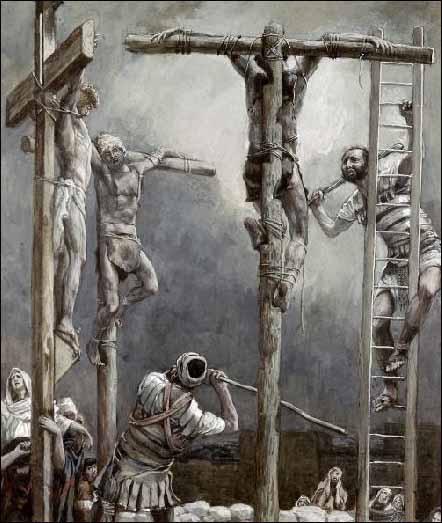
Pentecost

ANTIPHON
The Spirit of the Lord has filled the whole world and that which contains all things understands what is said, alleluia. (Wisdom 1:7)

COLLECT
O God, Who by the mystery of today's great feast
sanctify Your whole Church in every people and nation,
pour out, we pray, the gifts of the Holy Spirit
across the face of the earth
and, with the divine grace that was at work
when the Gospel was first proclaimed,
fill now once more the hearts of believers.
Through our Lord Jesus Christ, Your Son,
Who lives and reigns with You
in the unity of the Holy Spirit,
one God, for ever and ever. Amen.

RESPONSORIAL PSALM
Lord, send out your Spirit, and renew the face of the earth. (Psalm 104:30).

SCRIPTURE EXCERPT
Jesus said to his disciples:
“When the Advocate comes whom I will send you from the Father,
the Spirit of truth that proceeds from the Father,
he will testify (μαρτυρήσει) to me.
And you also testify,
because you have been with me from the beginning.

I have much more to tell you, but you cannot bear (βαστάζειν) it now.
But when he comes, the Spirit of truth,
he will guide (ὁδηγήσει, hodegesei) you to all truth (ἀληθείᾳ, aletheia).
He will not speak on his own,
but he will speak what he hears,
and will declare to you the things that are coming.
He will glorify me,
because he will take from what is mine and declare it to you.
Everything that the Father has is mine;
for this reason I told you that he will take from what is mine
and declare it to you.” (John 15:26-27; 16:12-15).”

REFLECTION

Saint Augustine, a fourth century Father of the Church, offers rich insight to this Sunday's Word in his work Tractates on the Gospel of John:


Beloved, you should not expect to hear from us what the Lord refrained from telling his disciples because they were still unable to bear them. Rather, seek to grow in the love that is shed abroad in your hearts by the Holy Spirit who is given to you so that, fervent in spirit and loving spiritual things, you may be able—not by any sign apparent to your bodily eyes or any sound striking on your bodily ears but by the inward eyesight and hearing—to become acquainted with that spiritual light and that spiritual word that carnal people are unable to bear. For that cannot be loved that is altogether unknown. But when what is known, in however small a measure, is also loved, by the same love, one is led on to a better and fuller knowledge. If, then, you grow in the love that the Holy Spirit spreads abroad in your hearts, “He will teach you all truth,” or, as other codices have it, “He will guide you in all truth”; as it is said, “Lead me in your way, O Lord, and I will walk in your truth.” So shall the result be, that not from outward teachers will you learn those things that the Lord at that time declined to utter, but you will all be taught by God, so that the very things that you have learned and believed by means of lessons and sermons supplied from without . . . your minds themselves may have the power to perceive.

Accordingly, when he says, “He will teach you all truth” or “will guide you into all truth,” I do not think the fulfillment is possible in anyone’s mind in this present life. For who is there, while living in this corruptible and soul oppressing body, that can know all truth when even the apostle says, “We know in part”? But it is effected by the Holy Spirit, of whom we have now received the promise, that we shall attain also to the actual fullness of knowledge that the same apostle references when he says, “But then face to face” and “Now I know in part, but then shall I know even as also I am known.” He is not talking about something he knows fully in this life but about something that would still be in the future when he would attain that perfection. This is what the Lord promised us through the love of the Spirit, when he said, “He will teach you all truth” or “will guide you unto all truth.” (Saint Augustine, Tractates on the Gospel of John)


PREFACE
It is truly right and just, our duty and our salvations,
always and everywhere to give You thanks,
Lord, holy Father, almighty and eternal God.

For, brining Your Paschal Mystery to completion,
You bestowed the Holy Spirit today
on those You made Your adopted children
by uniting them to Your Only Begotten Son.
This Same Spirit, as the Church came to birth,
opened to all peoples the knowledge of God
and brought together the many languages of the earth
in profession of the one faith.

There, overcome with paschal joy,
every land, every people exults in your praise
and even the heavenly Powers, with angelic hosts
sing together the unending hymn of Your glory,
as they acclaim:

A prayer to prepare for Pentecost

PENTECOST PRAYER

At the conclusion of his annual retreat, Pope Benedict penned the following prayer. May this prayer aide our preparation for the Solemnity of Pentecost.

Spirit of Life, who in the beginning alighted upon the abyss, help humanity in our time to understand that the exclusion of God leads us to lose ourselves in the desert of the world, and that only when we enter into faith do dignity and freedom flourish and society can be built up in justice.


Spirit of Pentecost, who makes one Body of the Church, restore unto us, the baptized, an authentic experience of communion; make of us a living sign of the presence of the Risen One in the world, a community of saints that lives in the service of love.

Holy Spirit, who enables our mission, allow us to recognize that, even in our time, many people are seeking the truth of their existence and of the world. Make us coworkers for their joy in proclaiming the Gospel of Jesus Christ, the grain of God's wheat, who makes our life's journey good and assures us the abundance of the harvest.

Amen.

Easter, the Seventh Sunday

ANTIPHON
O Lord, hear my voice, for I have called to You; of You my heart has spoken: Seek His face; hide not Your face from me, alleluia. (Psalm 27:7-9)

COLLECT
Graciously hear our supplications, O Lord,
so that we, who believe that the Savior of the human race
is with You in Your glory
may experience, as He promised,
until the end of the world,
His abiding presence among us.
Who lives and reigns with You
in the unity of the Holy Spirit,
one God, for ever and ever. Amen.

RESPONSORIAL PSALM
The Lord has set his throne in heaven. (Psalm 103:19).

SCRIPTURE EXCERPT
Lifting up his eyes to heaven, Jesus prayed saying: "Holy Father, keep them in your name that you have given me, so that they may be one just as we are one. When I was with them I protected them in your name that you gave me, and I guarded them, and none of them was lost except the son of destruction, in order that the Scripture might be fulfilled. But now I am coming to you. I speak this in the world so that they may share my joy completely. I gave them your word, and the world hated them, because they do not belong to the world any more than I belong to the world. I do not ask that you take them out of the world but that you keep them from the evil one. They do not belong to the world any more than I belong to the world. Consecrate them in the truth. Your word is truth. As you sent me into the world, so I sent them into the world. And I consecrate myself for them, so that they also may be consecrated in truth." (John 17:11-19).”


REFLECTION
Saint Gregory of Nyssa, a fourth century Father of the Church, offers rich insight to this Sunday's Word in Homily 15 of his Commentary on the Song of Songs.

When love has entirely cast out fear, and fear has been transformed into love, then the unity brought us by our savior will be fully realized, for all men will be united with one another through their union with the one supreme Good. They will possess the perfection ascribed to the dove, according to our interpretation of the text: One alone is my dove, my perfect one. She is the only child of her mother, her chosen one.

Our Lord’s words in the gospel bring out the meaning of this text more clearly. After having conferred all power on his disciples by his blessing, he obtained many other gifts for them by his prayer to the Father. Among these was included the greatest gift of all, which was that they were no longer to be divided in their judgment of what was right and good, for they were all to be united to the one supreme Good. As the Apostle says, they were to be bound together with the bonds of peace in the unity that comes from the Holy Spirit. They were to be made one body and one spirit by the one hope to which they were all called. We shall do better, however, to quote the sacred words of the gospel itself. I pray, the Lord says, that they all may be one; that as you, Father, are in me and I am in you, so they also may be one in us. Now the bond that creates this unity is glory. That the Holy Spirit is called glory no one can deny if he thinks carefully about the Lord’s words: The glory you gave to me, I have given to them. In fact, he gave this glory to his disciples when he said to them: Receive the Holy Spirit. Although he had always possessed it, even before the world existed, he himself received this glory when he put on human nature. Then, when his human nature had been glorified by the Spirit, the glory of the Spirit was passed on to all his kin, beginning with his disciples. This is why he said: The glory you gave to me, I have given to them, so that they may be one as we are one. With me in them and you in me, I want them to be perfectly one.

Whoever has grown from infancy to manhood and attained to spiritual maturity possesses the mastery over his passions and the purity that makes it possible for him to receive the glory of the Spirit. He is that perfect dove upon whom the eyes of the bridegroom rest when he says: One alone is my dove, my perfect one.

Easter, the Sixth Sunday

ANTIPHON
Proclaim a joyful sound and let it be heard; proclaim to the ends of the earth: the Lord has freed His people, alleluia. (Isaiah 48:20)

COLLECT
Grant, almighty God,
that we may celebrate with heartfelt devotion
these days of joy,
which we keep in honor of the Rise Lord
and that what we relive in remembrance
we may always hold to in what we do
Through our Lord Jesus Christ, Your Son,
Who lives and reigns with You
in the unity of the Holy Spirit,
one God, for ever and ever. Amen.

RESPONSORIAL PSALM
The Lord has revealed to the nations his saving power. (Psalm 98:2).

SCRIPTURE EXCERPT
Jesus said to his disciples: “As the Father loves (ἠγάπησέν) me, so I also love you (ἠγάπησα). Remain (μείνατε) in my love (ἐν τῇ ἀγάπῃ τῇ ἐμῇ). If you keep my commandments, you will remain in my love, just as I have kept my Father’s commandments and remain in his love.”

“I have told you this so that my joy (ἡ χαρὰ ἡ ἐμὴ) may be in you and your joy might be complete (πληρωθῇ). This is my commandment: love one another as I love you. No one has greater love than this, to lay down one’s life for one’s friends. You are my friends if you do what I command you. I no longer call you slaves, because a slave does not know what his master is doing. I have called you friends, because I have told you everything I have heard from my Father. It was not you who chose me, but I who chose you and appointed you to go and bear fruit that will remain, so that whatever you ask the Father in my name he may give you. This I command you: love one another (John 15:9-17).”


REFLECTION
Last week’s echo of “remain” still sounds boldly on this Sunday of Easter. That rich verb μένω (meno), translated here and throughout the Johannine Gospel as to remain, conveys a very engaging activity of building a place to live. μένω (meno) does not mean to remain in a static state of standing still or passively waiting around for something to happen out-of-the-blue. It rather paints a picture of someone single-mindedly working to prepare one’s home to receive a guest. The anticipation of the guest’s arrival and the thoughts of the guest spending time with the host fills everyone with joy. The anticipation of the visit also moves the host to change whatever is needed to accommodate the guest.

But what is the source of that joy? What causes one to engage in the active response-work of μένω (meno)? The answer, from the lips of Jesus, simply is to remain “in my love.” We need to take seriously this entire phrase and not simply the noun "love." Christian living is a qualified and specified love. Let’s face it, in all types of discussions about a whole range of human actions, love is often appealed to as a sort of mitigating license. Everything is OK so long as one loves. (It helps to have the Beatles mantra filling the air in the background to make the discussion sound even nicer and more appealing.) There are as many descriptions of love as there are people. Yet for Jesus, He not only speaks specifically about MY LOVE, He also demonstrates what (actually WHO) this love is in 2 exceptionally concrete ways: the first – keeping the Father’s Commandments; the second – laying down His life. What binds these 2 points together is sacrifice; sacrifice that flows from an act of the will. This is why Christianity contends that love is not a feeling, love is not an emotion – rather love is an act of the will whereby I choose the good of the other. Such an act requires sacrifice on my part. This sacrifice is not only in action, but thought and word as well. How often do I have to have the last word? How often have I plotted to get my own way by orchestrating my own agenda? We compound the matter by then stepping back and complimenting ourselves on a ‘professional job,’ an ‘efficient and equitable use of materials and personnel,’ or worse still – I did it all for love when in fact it has been nothing more than a profound act (or acts) of selfishness. Jesus' command to sacrificial love is creative. It summons one to a way of living that is about the essential good ("good" as used in Genesis) made possible by a free renunciation of self.


Saint Augustine offers a concluding reflection for this Sunday’s Gospel and he tackles a description of Christian love by linking that experience with faith and hope:

But when he said in this way here, “This is my commandment,” as if there were no other, what are we to think? Is, then, the commandment about that love with which we love one another his only one? Is there not another that is still greater, that we should love God? Or did God in truth give to us such a commandment about love alone that we have no need of searching for others? There are three things at least that the apostle commends when he says, “But now abide faith, hope, charity, these three. But the greatest of these is charity.” And although in charity, that is, in love, the two commandments are contained, yet it is here declared to be the greatest, not the only one. Accordingly, what a host of commandments are given to us about faith, what a multitude about hope! Who is there that could collect them together or suffice to number them? But let us ponder the words of the same apostle: “Love is the fulfillment of the law.” And so, where there is love, what can be lacking? And where it is not, what is there that can possibly be profitable? The devil believes but does not love: no one loves who does not believe. One may, indeed, hope for pardon who does not love, but he hopes in vain. But no one can despair who loves. Therefore, where there is love, there will necessarily be faith and hope. And where there is the love of our neighbor, there also will necessarily be the love of God. For one that does not love God, how does he love his neighbor as himself, seeing that he does not even love himself? Such a person is both impious and iniquitous. And he who loves iniquity clearly does not love but hates his own soul. Let us, therefore, hold fast to this precept of the Lord, to love one another, and then we will be doing all else that is commanded, for we have all else contained in this.

Easter, the Fifth Sunday

ANTIPHON
O sing a new song to the Lord, for He has worked wonders; in the sight of the nations He has shown His deliverance, alleluia. (Psalm 98:1-2)

COLLECT
Almighty ever-living God,
constantly accomplish the Paschal Mystery within us,
that those You were pleased to make new in Holy Baptism
may, under Your protective care, bear much fruit
and come to the joys of life eternal.
Through our Lord Jesus Christ, Your Son,
Who lives and reigns with You
in the unity of the Holy Spirit,
one God, for ever and ever. Amen.

RESPONSORIAL PSALM
I will praise you, Lord, in the assembly of your people. (Psalm 22:26).

SCRIPTURE EXCERPT
Remain (μείνατε, meinate) in me, as I remain in you. Just as a branch cannot bear fruit on its own unless it remains (μένῃ, mene) on the vine, so neither can you unless you remain (μένητε, menete) in me. I am the vine, you are the branches. Whoever remains (μένων, menon) in me and I in him will bear much fruit, because without me you can do nothing. Anyone who does not remain (μή … μένῃ) in me will be thrown out like a branch and wither; people will gather them and throw them into a fire and they will be burned. If you remain (μείνητε, meinte) in me and my words remain (μείνῃ, meine) in you, ask for whatever you want and it will be done for you. (John 15:4-7)”

REFLECTION
Saints Clement of Alexandrea and Augustine of Hippo offer some preliminary thoughts on this Sunday's Gospel text:

He who has the almighty God, the Word, lacks nothing and never is in dire straits for what he needs. For the Word is a possession that lacks nothing and is the cause of all abundance. If someone says that he has often seen the righteous person in need of food, this is rare, and it happens only where there is not another righteous person. Notwithstanding, let him read what follows: “For the righteous one shall not live by bread alone but by the word of the Lord,” who is the true bread, the bread of the heavens. The good person, then, can never be in difficulties so long as he keeps intact his confession toward God. For it belongs to him to ask and to receive whatever he requires from the Father of all and to enjoy what is his own if he keeps the Son. And he also should feel that he lacks nothing (Clement of Alexandra, Christ the Teacher).


“If you abide in me,” he says, “and my words abide in you, you shall ask what you will, and it shall be done unto you.” For when someone abides in Christ in this way, is there anything he or she can wish for besides what will be agreeable to Christ? When they abide in the Savior in this way, can they wish for anything that is inconsistent with salvation? Some things, indeed, we wish for because we are in Christ, and other things we desire because we are still in this world. For at times, in connection with our present living quarters, we are inwardly prompted to ask what we know would not be expedient for us to receive. But God forbid that such a thing should be given to us if we abide in Christ, who, when we ask, only does what will be for our advantage. Abiding in him when his words abide in us, we shall ask what we will, and it shall be done unto us. For if we ask, and the doing does not follow, what we ask must not be connected with our abiding in him or with his words that abide in us. Instead they must be connected with that craving and infirmity of the flesh that are not in him and do not have his words abiding in them. For to his words, at all events, belongs that prayer that he taught and in which we say, “Our Father, who art in heaven.” Let us only not fall away from the words and meaning of this prayer in our petitions, and whatever we ask shall be done unto us. For his words may only be said to abide in us when we do what he has commanded us and love what he has promised. But when his words abide only in the memory and have no place in your life, the branch is not in the vine because it does not draw its life from the root (Saint Augustine of Hippo, Tractate on John).


In more recent time, Fr Henri Nouwen was moved by the Gospel text to write: "Words for "home" are often used in the Old and New Testaments. The Psalms are filled with yearning to dwell in the house of God ... It is highly significant that John describes Jesus as the Word of God living among us (John 1:14), and in his farewell address, Jesus reveals himself as the new home: "Abide in me as I abide in you" (John 15:4). By making his home in us Jesus allows us to make our home in him. By entering into the intimacy of our innermost self he offers us the opportunity to enter into his own intimacy with God. By choosing us as his preferred dwelling place he invites us to choose him as our preferred dwelling place.This is the mystery of the Incarnation (Fr Henri Nouwen, Lifesigns)."

Easter, the Fourth Sunday

ANTIPHON
The merciful love of the Lord fills the earth;
by the Word of the Lord the heavens were made, alleluia. (Psalm 33:5-6).

COLLECT
Almighty ever-living God,
lead us to a share in the joys of heaven,
so that the humble flock may reach
where the brave Shepherd has gone before.
Through our Lord Jesus Christ, Your Son,
Who lives and reigns with You
in the unity of the Holy Spirit,
one God, for ever and ever. Amen.

RESPONSORIAL PSALM
The stone rejected by the builders has become the cornerstone. (Psalm 118:22).

SCRIPTURE EXCERPT
“Jesus said: "I am the good shepherd. A good shepherd lays down his life for the sheep. A hired man, who is not a shepherd and whose sheep are not his own, sees a wolf coming and leaves the sheep and runs away, and the wolf catches and scatters them. This is because he works for pay and has no concern for the sheep. I am the good shepherd, and I know mine and mine know me, just as the Father knows me and I know the Father; and I will lay down my life for the sheep. I have other sheep that do not belong to this fold. These also I must lead, and they will hear my voice, and there will be one flock, one shepherd. This is why the Father loves me, because I lay down my life in order to take it up again. No one takes it from me, but I lay it down on my own. I have power to lay it down, and power to take it up again. This command I have received from my Father (John 10:11-18.”

REFLECTION
To begin this Sunday, the words of Saint Gregory the Great are worth pondering:

"I am the good shepherd. I know my own—by which I mean, I love them—and my own know me. In plain words: those who love me are willing to follow me, for anyone who does not love the truth has not yet come to know it.
My dear brethren, you have heard the test we pastors have to undergo. Turn now to consider how these words of our Lord imply a test for yourselves also. Ask yourselves whether you belong to his flock, whether you know him, whether the light of his truth shines in your minds. I assure you that it is not by faith that you will come to know him, but by love; not by mere conviction, but by action. John the evangelist is my authority for this statement. He tells us that anyone who claims to know God without keeping his commandments is a liar.
Consequently, the Lord immediately adds: As the Father knows me and I know the Father; and I lay down my life for my sheep. Clearly he means that laying down his life for his sheep gives evidence of his knowledge of the Father and the Father’s knowledge of him. In other words, by the love with which he dies for his sheep he shows how greatly he loves his Father.
Again he says: My sheep hear my voice, and I know them; they follow me, and I give them eternal life. Shortly before this he had declared: If anyone enters the sheepfold through me he shall be saved; he shall go freely in and out and shall find good pasture. He will enter into a life of faith; from faith he will go out to vision, from belief to contemplation, and will graze in the good pastures of everlasting life.
So our Lord’s sheep will finally reach their grazing ground where all who follow him in simplicity of heart will feed on the green pastures of eternity. These pastures are the spiritual joys of heaven. There the elect look upon the face of God with unclouded vision and feast at the banquet of life for ever more.
Beloved brothers, let us set out for these pastures where we shall keep joyful festival with so many of our fellow citizens. May the thought of their happiness urge us on! Let us stir up our hearts, rekindle our faith, and long eagerly for what heaven has in store for us. To love thus is to be already on our way. No matter what obstacles we encounter, we must not allow them to turn us aside from the joy of that heavenly feast. Anyone who is determined to reach his destination is not deterred by the roughness of the road that leads to it. Nor must we allow the charm of success to seduce us, or we shall be like a foolish traveler who is so distracted by the pleasant meadows through which he is passing that he forgets where he is going."

Easter, the Third Sunday

ANTIPHON
Cry out with joy to God, all the earth; O sing to the glory of His Name. O render Him glorious praise (cf. Psalm 66:1-2).

COLLECT
May Your people exult for ever, O God, in renewed youthfulness of spirit, so that, rejoicing now in the restored glory of our adoption we may look forward in confident hope to the rejoicing of the day of Resurrection. Through our Lord Jesus Christ, Your Son, Who lives and reigns with You in the unity of the Holy Spirit, one God, for ever and ever. Amen.

RESPONSORIAL PSALM
Let Your face shine on us. (Psalm 4:7a).

“While they were still speaking about this, He stood in their midst and said to them, “Peace be with you.” But they were startled (πτοηθέντες, ptoethentes) and terrified (ἔμφοβοι, emphoboi) and thought that they were seeing a ghost. Then he said to them, “Why are you troubled (τεταραγμένοι, tetaragmenoi)? And why do questions (διαλογισμοὶ, dialogismoi) arise in your hearts? (Luke 24:36-38)” … Then he opened (διήνοιξεν, dienoizen) their minds to understand (συνιέναι, sunienai) the Scriptures (Luke 24:45).”

REFLECTION
In the end, the disciples really did not grasp Jesus’ teaching about His Resurrection. Even though He prepared them for the Cross and Resurrection, these teachings apparently never connected deeply in the hearts of the disciples. This is evident by their response to the Risen Lord: startled (πτοηθέντες, ptoethentes from πτοέω, ptoeo) and terrified (ἔμφοβοι, emphoboi from φόβος, phobos). Both πτοέω and φόβος signal a response to a perceived threat to life. Translated here as “startled,” πτοέω is a rather graphic verb indicating that one’s world is collapsing, and doing so rather quickly. All that a person has used to define existence no longer holds up to support life. All of the connections that one has formed unwind and render life uncertain and unsteady as stability crumbles into a pile of ruin. In such a precarious state, one has to decide: stay and fight the threat or flee with the intent of putting great distance between you and the threat. While the noun φόβος is commonly translated “fear,” in antiquity its verb-form part of a group of words that mean “to flee.” Fear, a response to that which is recognized as a threat to life, triggers – often automatically – some action involving fight or flight.

The Sacred text clearly presents the disciples “startled (πτοέω)” and “terrified (φόβος).” Yet examine Jesus’ question to them. He does not ask why are you “startled (πτοέω)”? He does not ask why are you “terrified (φόβος)”? He asks “Why are you troubled (τεταραγμένοι, tetaragmenoi from ταράσσω tarasso). Jesus knows that something is not right in the lives of the disciples. His question to them “Why are you troubled?” is actually a declaration to them that there is no threat to life. In asking “Why are you troubled?” Jesus is actually helping His disciples to perceive clearly the state of life. Life is not falling apart. There is no need to fight or flee. There is a need, however, “to understand (συνιέναι, sunienai from συνίημι suniemi).”

Being troubled as expressed by ταράσσω is a common response in many biblical episodes when God or an angel visits humanity. Early in Luke, both Zechariah and Mary are “troubled” by Gabriel’s visit and attempt to resolve the situation by asking questions. The disciples in the boat “are troubled” when Jesus comes walking to them on the water in Mark and Matthew. In John, Jesus directs his disciples ‘not to be troubled’ by having faith in Him. In the biblical era, ταράσσω conveyed the image of water being stirred up. As with any aqueous solution, when water is stirred or agitated, all of the particulate matter gets stirred up as well. What appeared to the senses as calm and clear is now a sea of confusion caused by the murky, gritty sediment swirling round and round. No wonder “troubled waters” became such a metaphor when confusion and uncertainty grip life.


Experience has often demonstrated that when clear water becomes cloudy, it will – many times – become clear again when the source of agitation is removed. For the disciples, their confused state requires ‘an opening that will lead to understanding.’ At the heart of “opening” their minds is literally the action of ‘giving birth.’ When Jesus opened (διήνοιξεν, dienoizen from διανοίγω dianoigo) their minds, this was not a casual planting of a thought or opinion. διανοίγω is used sometimes in antiquity to mean birth, particularly the birth of the biblical “first born.” In this sense, διανοίγω brings the struggle of birth imagery to convey the work that is involved in opening the mind. Yet once opened, the groundwork is then paved for an ongoing journey to and of understanding; for the understanding (συνιέναι, sunienai) that Jesus offers the disciples in their “troubled” state is actually “connecting.” Yes, that sounds awkward but the verb συνιέναι literally means “to put together.” These restored and new connections that Jesus makes for them not only transforms the “troubled” state of their lives, but will enable them to go out on mission filled with confidence to witness to Jesus, Risen Savior and thus allow a bit more of Easter joy to flood the cosmos.

Holy Saturday

Today’s Second Reading from the
Office of Readings (Liturgy of the Hours)
Holy Saturday

An excerpt from: A Homily on Holy Saturday
Unknown Ancient Christian Author

Something strange is happening -
there is a great silence on earth today,
a great silence and stillness.
The whole earth keeps silence because the King is asleep.
The earth trembled and is still
because God has fallen asleep in the flesh
and He has raised up all who have slept
ever since the world began.
God has died in the flesh, and hell trembles with fear.

He has gone to search for our first parent, as for a lost sheep.
Greatly desiring to visit those
who live in darkness and in the shadow of death,
He has gone to free from sorrow captive Adam and Eve,
He who is both God and the Son of Eve.
The Lord approached them bearing the cross,
the weapon that had won Him the victory.
At the sight of Him,
Adam (the first man He had created) struck his breast
and cried out to everyone:
"The Lord be with you all!"
Christ answered him, "And with your spirit!"
and took him by the hand and raised him up, saying:
"Awake, O sleeper, and rise from the dead,
and Christ will give you light!"

"I am your God,
who for your sake have become your Son.
Out of love for you and for your descendants,
I now by My own authority
command all who are held in bondage to come forth,
all who are in darkness to be enlightened,
all who are sleeping to arise.
I order you, O sleeper, to awake!
I did not create you to be held a prisoner in hell.
Rise from the dead,
for I am the life of the dead.
Rise up, work of My hands,
you who were created in My image.
Rise, let us leave this place,
for you are in Me and I am in you;
together we form only one person
and we cannot be separated.

For your sake I, your God, became your son;
I, the Lord, took the form of a slave;
I, whose home is above the heavens,
descended to the earth and beneath the earth.
For your sake, for the sake of mankind,
I became like a man without help, free among the dead.
For the sake of you, who left a garden,
I was betrayed in a garden,
and I was crucified in a garden.

See on My face the spittle I received
in order to restore to you the life I once breathed into you.
See there the marks of the blows I received
in order to refashion your warped nature in My image.
On My back, see the marks of the scourging I endured
to remove the burden of sin that weighs upon your back.
See My hands, nailed firmly to a tree,
for you who once wickedly stretched out your hands to a tree.

I slept on the cross
and a spear pierced My side
for you who slept in paradise
and brought forth Eve from your side.
My side has healed the pain in yours.
The spear that pierced Me
has sheathed the sword that was turned against you.

Rise, let us leave this place.
The enemy led you out of the earthly paradise.
I will not restore you to that paradise,
but I will enthrone you in heaven.
I forbade you the tree that was only a symbol of life,
but see, I who am Life Itself
am now one with you.
I appointed cherubim to guard you as slaves are guarded,
but now I make them worship you as God.
The throne formed by cherubim
awaits you, its bearers swift and eager.
The bridal chamber is adorned,
the banquet is ready,
the eternal dwelling places are prepared,
the treasure houses of all good things lie open.
The kingdom of heaven has been prepared for you from all eternity.
Glory to the Father
and to the Son
and to the Holy Spirit:
as it was in the beginning,
is now, and will be forever. Amen


Good Friday of the Passion of the Lord

From the Catecheses by Saint John Chrysostom

If we wish to understand the power of Christ’s blood, we should go back to the ancient account of its prefiguration in Egypt. “Sacrifice a lamb without blemish,” commanded Moses, “and sprinkle its blood on your doors”. If we were to ask him what he meant, and how the blood of an irrational beast could possibly save men endowed with reason, his answer would be that the saving power lies not in the blood itself, but in the fact that it is a sign of the Lord’s blood. In those days, when the destroying angel saw the blood on the doors he did not dare to enter, so how much less will the devil approach now when he sees, not that figurative blood on the doors, but the true blood on the lips of believers, the doors of the temple of Christ.

If you desire further proof of the power of this blood, remember where it came from, how it ran down from the cross, flowing from the Master’s side. The gospel records that when Christ was dead, but still hung on the cross, a soldier came and pierced his side with a lance and immediately there poured out water and blood. Now the water was a symbol of Baptism and the Blood, of the Holy Eucharist. The soldier pierced the Lord’s side, he breached the wall of the sacred temple, and I have found the treasure and made it my own. So also with the lamb: the Jews sacrificed the victim and I have been saved by it.


“There flowed from his side water and blood”. Beloved, do not pass over this mystery without thought; it has yet another hidden meaning, which I will explain to you. I said that water and blood symbolized baptism and the Holy Eucharist. From these two sacraments the Church is born: from baptism, “the cleansing water that gives rebirth and renewal through the Holy Spirit”, and from the Holy Eucharist. Since the symbols of baptism and the Eucharist flowed from his side, it was from his side that Christ fashioned the Church, as he had fashioned Eve from the side of Adam Moses gives a hint of this when he tells the story of the first man and makes him exclaim: “Bone from my bones and flesh from my flesh!” As God then took a rib from Adam’s side to fashion a woman, so Christ has given us blood and water from his side to fashion the Church. God took the rib when Adam was in a deep sleep, and in the same way Christ gave us the blood and the water after his own death.

Do you understand, then, how Christ has united his bride to himself and what food he gives us all to eat? By one and the same food we are both brought into being and nourished. As a woman nourishes her child with her own blood and milk, so does Christ unceasingly nourish with his own blood those to whom he himself has given life.

Palm Sunday of the Passion of the Lord

ANTIPHON
Hosanna to the Son of David; blessed is He who comes in the name of the Lord, the King of Israel. Hosanna in the highest. (Matthew 21:9).

COLLECT
Almighty ever-living God,
Who as an example of humility for
the human race to follow
caused our Savior to take flesh
and submit to the Cross,
graciously grant that we may heed
His lesson of patient suffering
and so merit a share in His Resurrection.
Who lives and reigns with You
in the unity of the Holy Spirit,
one God for ever and ever. Amen.

RESPONSORIAL PSALM
My God, my God, why have you abandoned me? (Psalm 22:2).

SCRIPTURE EXCERPT
“The veil of the sanctuary was torn in two from top to bottom. When the centurion who stood facing him saw how he breathed his last he said, "Truly this man was the Son of God!" There were also women looking on from a distance. Among them were Mary Magdalene, Mary the mother of the younger James and of Joses, and Salome. These women had followed him when he was in Galilee and ministered to him. There were also many other women who had come up with him to Jerusalem. (Mark 15:38-41).””

REFLECTION

The Scrutinies have been celebrated. The Creed and the Lord’s Prayer have been handed-over to the Elect. The faithful have responded in Grace to the Gospel imperatives of prayer, fasting and almsgiving. All is ready for the difficult journey from palm waving, to a Meal that has some twists and turns, to arrest - abandonment - excruciating pain - and death. The Body of Christ is ready for the journey to Calvary. But is each member of the Body ready?

Throughout the Gospels there is a constant tension between Christology and discipleship: Who Jesus is and the claim He sounds to follow Him. This is not an invitation to embrace an ideology or a particular philosophical outlook on life. His words and deeds, expressions of His very being, are meant to elicit a relationship, a commitment, a bonding with and to Him. As each Gospel unfolds, we are immersed in the drama of fellow human beings saying yes to this relationship, some no and far more remaining lukewarm: no commitment whatsoever, just hanging out on the sidelines like a spectator.

As the Marcan account of the Lord’s Passion seeks its way into our hearts this Sunday, the fidelity of the God-man Jesus stands in sharp contrast to disciples who one-by-one, leave Him alone and abandoned. There are some flickers of hope: an anonymous woman and yes – to a degree – Peter himself, not to mention an anonymous outsider: a Roman centurion. In a loving gesture that speaks to both His death and His messianic Kingship, Jesus is anointed with perfume. She ‘gets it.’ She knows Jesus as Messianic King whose Kingship is born from the dregs of death. Peter, known far and wide for the thrice denial of His friend, does follow Jesus in His Passion, but does so “at a distance” and apparently “at a distance” has an unfortunate limit. But then there is the Centurion – a gentile – who comes to faith and boldly proclaims: “Truly this man was the Son of God!”


These sacred days known as Holy Week are offered to us as a gift to experience deeply the authentic identity of the Crucified Son of God and our commitment to Him as one of His disciples. To this end, the words of a fourth-century Cappadocian Father are well worth pondering:

“If you are a Simon of Cyrene, take up your cross and follow Christ. If you are crucified beside him like one of the thieves, now, like the good thief, acknowledge your God. For your sake, and because of your sin, Christ himself was regarded as a sinner; for his sake, therefore, you must cease to sin. Worship him who was hung on the cross because of you, even if you are hanging there yourself. Derive some benefit from the very shame; purchase salvation with your death. Enter paradise with Jesus, and discover how far you have fallen. Contemplate the glories there, and leave the other scoffing thief to die outside in his blasphemy.

If you are a Joseph of Arimathea, go to the one who ordered his crucifixion, and ask for Christ’s body. Make you own the expiation for the sins of the whole world. If you are a Nicodemus, like the man who worshiped God by night, bring spices and prepare Christ’s body for burial. If you are one of the Marys, or Salome, or Joanna, weep in the early morning. Be the first to see the stone rolled back, and even the angels perhaps, and Jesus himself (Gregory of Nazianzus, Oratio 45).”

Lent, the Fourth Week

ANTIPHON (For the Second Scrutiny)
My eyes are always on the Lord, for He rescues my feet from the snare. Turn to me and have mercy on me, for I am alone and poor. (Psalm 25:15-16).

COLLECT (For the Second Scrutiny)
Almighty ever-living God,
give to Your Church an increase in spiritual joy,
so that those once born of earth
may be reborn as citizens of heaven.
Through our Lord Jesus Christ, Your Son,
Who lives and reigns with You
in the unity of the Holy Spirit,
one God for ever and ever. Amen.

RESPONSORIAL PSALM (For the Second Scrutiny)
The Lord is my shepherd; there is nothing I shall want. (Psalm 23:1).

SCRIPTURE EXCERPT (For the Second Scrutiny)
“When Jesus heard that they had thrown him out, he found him and said, “Do you believe (πιστεύεις, pisteueis) in the Son of Man?” He answered and said,  “Who is he, sir, that I may believe (πιστεύσω, pisteuso) in him?” Jesus said to him, “You have seen him, the one speaking with you is he.” He said, “I do believe (πιστεύω, pisteuo), Lord (κύριε, kyrie),” and he worshiped him (καὶ προσεκύνησεν αὐτῷ, kai prosekunesen auto). Then Jesus said, “I came into this world for judgment, so that those who do not see might see, and those who do see might become blind (John 9:35-41).””

REFLECTION (For the Second Scrutiny)

There are a number of sights and sounds that present and reinforce the Season of Lent. Ashes signal Lent’s beginning. Communal fasting and abstaining from food mark a number of Lenten days. Devotions such as Stations of the Cross and other Lenten prayers focus mind, heart and body on Our Savior’s Passion and Death. Individual resolutions to sacrifice along with acts of mortification help to detach us from all that is not necessary so as to have room to receive all that is necessary for life. Is there anything missing in the list? Certainly – the Rites that characterize Lent as a period of purification and enlightenment.

A person’s life journey that has drawn her or him to inquire about the ‘good things of God’ gently stirred the Gift of Faith to the point of listening to the Word of God as a catechumen. In listening to the Word, the catechumen discovered and was attracted to the Word-made-flesh Who offers water to not only refresh life’s aridity, but to slake the thirst for an eternity of Divine life and love with Father, Son and Holy Spirit in the Communion of Saints. Gratefully and humbly, the catechumen accepted the gift and invitation to be chosen; to be elected, to permit his or her life to be immersed in and configured to the One Who is Light shining in the darkness of chaos, confusion, uncertainty and sin. He Who is Light leads the way and reveals true life, for He is Life.

The journey then to Resurrection in Baptism-Confirmation-Holy Eucharist is a pivotal sight and sound of Lent. In fact, one might contend that the penitential aspect and practices of Lent make sense only within a Baptismal context – Initiation for the Elect, renewal of Baptismal Promised at Easter for the faithful. This point comes into sharper focus with the celebrations of the Scrutinies on the Third, Fourth and Fifth Sundays of Lent. “The Scrutinies are Rites for self-searching and repentance and have above all a spiritual purpose. The Scrutinies are meant to uncover, then heal all that is weak, defective or sinful in the hearts of the Elect; to bring out, then strengthen all that is upright, strong and good (Rite of Christian Initiation of Adults, 141).” But here is where many faithful experience a disconnect and loose sight of Lent’s baptismal character. Some would hold that while these Rites may be important for an unbaptized person,it really does not pertain to me. Once again, the wisdom of the Church instructs us: the Rites are to be celebrated “in such a way that the faithful in the assembly will also derive benefit from the Liturgy of the Scrutinies and join in intercessions for the Elect. (Rite of Christian Initiation of Adults, 145).” In other words, these Rites have benefit for all of us: the Elect and the Faithful. We are all in this together as members of One Body.

Consequently, as the Scrutinies are celebrated, “the celebrant first addresses the assembly of the faithful, inviting them to pray in silence and to ask that the Elect will be given a spirit of repentance, a sense of sin, and the true freedom of the children of God. (Rite of Christian Initiation of Adults, 166).” Here is Lent in a nutshell: spirit of repentance, a sense of sin and freedom of the children of God. But notice, we are asked to pray and to ask that these be given. A “spirit of repentance,” “a sense of sin” and “freedom of the children of God” are not products of our making. This is 1 of the points of Jesus’ dealings with the man-born-blind and all of the other characters connected to him. Left to ourselves, we have no “sense of sin.” Left to ourselves, “a spirit of repentance” is a nothing more than meager attempt to fix a relationship on my terms so that I can get something out of it. Left to ourselves, there is no “freedom of the children of God” only license to indulge whatever impulse strikes our fancy that results in sucking us deeper into a black hole of addictive slavery to the self and all of its wants.


“A spirit of repentance” (see last week’s blog entry on metanoia), “a sense of sin” and “freedom of the children of God” are gifts given that reveal our lives in the light of the Father’s mercy, not our own. We are, admittedly, blind to many aspects of our own weaknesses and sins. Repeatedly we make excuses like so many in this Sunday’s Gospel episode. As contemporary listeners to the events that Jesus is dealing with, we might be tempted to smirk at the lengths people went to in order to deny the healing of blindness. Yet we do the same by rationalizing behaviors or referring to specific sins as ‘developmental challenges’ characteristic of 1 of life’s many phases. The Scrutinies do challenge us to allow Divine Light to shine into all aspects of life so that sin may not rule life and keep anyone from all that is upright, strong and good in the Lord.

LENT


— The Lord’s Day —


Week 3: Sunday


Pondering Jesus’ victorious Word


ANTIPHON (For the First Scrutiny)
Come to the waters, you who are thirsty, says the Lord; you who have no money, come and drink joyfully. (Isaiah 55:1).

COLLECT (For the First Scrutiny)
Grant, we pray, O Lord
that these chosen ones may come worthily and wisely
to the confession of Your praise,
so that in accordance with that first dignity
which they lost by Original Sin
they may be fashioned anew through your glory.
Through our Lord Jesus Christ, Your Son,
Who lives and reigns with You in the unity of the Holy Spirit,
one God for ever and ever. Amen.

RESPONSORIAL PSALM (For the First Scrutiny)
If today you hear his voice, harden not your hearts. (Psalm 95:8).

SCRIPTURE EXCERPT (For the First Scrutiny)
“Many of the Samaritans of that town began to believe in Him. When the Samaritans came to Him, they invited Him to stay with them; and He stayed there two days. Many more began to believe in Him because of His word, and they said to the woman, "We no longer believe because of your word; for we have heard for ourselves, and we know that this is truly the savior of the world. (John 4:39-42)”

REFLECTION

Many Sunday reflections that appear on this blog take their cue from a word or two contained in the particular Sunday’s proclamation. Given the possibility that you may listen to God’s Word from a different Lectionary cycle this Sunday because of the First Scrutiny, I thought it appropriate to offer the following that will express a common insight among the Readings from the current Lectionary cycle (B) [and cycle C as well], Lectionary cycle A, the First Scrutiny and the Season of Lent.

A few weeks ago, ashes were imposed as the Gospel imperative was sounded before our very eyes: “Repent, and believe in the Gospel.” That same imperative had been proclaimed weeks earlier on the Third Sunday in Ordinary Time: “This is the time of fulfillment. The kingdom of God is at hand. Repent (μετανοεῖτε, metanoeite), and believe (πιστεύετε, pisteuete) in the Gospel (Mark 1:14-15).” These form Jesus’ first commandments and first actions in light of the announcement of the Kingdom (Reign) of God. Because the Kingdom of God is at hand, repenting and believing are not only appropriate actions, they are imperatives for the disciples of Jesus.

What can be said about repenting and believing? Volumes. On one hand, the fact that much can be said about repenting and believing is a good thing. There are all sorts of ways that the Lord draws us to Himself and we certainly want to be careful about any improper human restrictions on the Father’s mercy, forgiveness and the ways of believing. Yet on the other hand, because much can be said about repenting and believing, our language concerning these often degenerates to the point of using repenting to describe repenting because we really find it hard to express a core meaning. Along these lines there is also the concern of a meaning or description’s depth. Sometimes our approach to biblical challenges is superficial and surface-level; sometimes due to sloth but other times due to a lack of knowledge of a biblical word’s meaning in the context of the Sacred Text.

The command μετανοεῖτε is a compound of the Greek prefix μετα (meta, “beyond”) and the Greek noun νοος (noos, “mind”). Literally, μετάνοια is “going beyond the mind” suggesting an action “from the heart.” This is certainly the way of living that the Divine Lawgiver had in mind when the Decalogue was offered to the Chosen People (Year B readings). The 10 prescriptions of the Covenant were not intended to be a mindless checklist of do’s and don’ts that ‘earned points with God,’ but a norm for experiencing true peace and happiness lived from the heart. The season of Lent is not a time of begrudgingly ‘giving something up’ because it is Lent and that’s what I have always done. Lent’s echo of Jesus’ command to embrace μετάνοια is a summons to live the Kingdom from the heart. The woman of Samaria certainly undergoes μετάνοια as she is drawn from an attitude of hostility and indifference towards Jesus to becoming an evangelizer herself. In the Prayer over the Elect (First Scrutiny), the Church prays that each opens his/her heart to the Lord.


As important as “from the heart” is in exploring the depth of μετάνοια, I was fortunate to stumble upon a description of μετάνοια years ago put forth by the Jesuit philosopher-theologian, Bernard Lonergan in his work, Method in Theology. Over the years, I have – with due respect and deference to Fr Lonergan – tailored the description in view of additional patristic and theological insights. With that in mind, I have found the following helpful as a starting point to ponder Jesus’ summons to His followers:

μετάνοια is a Grace initiated and sustained response to the Kingdom of God that is a radical transformation actively engaging all dimensions and levels of human living. μετάνοια consciously acknowledges that life is an interlocking and interdependent series of changes and developments expressive of relational living with God, others, the true self and all of creation. μετάνοια further involves transforming apprehensions (how one sees the world), sensitizing conscience and moral criteria (values) all as a continuous straining forward to receive the ‘call up’ from God the Father in Christ Jesus Our Lord through the Grace of the Holy Spirit.

Yes there is much to ponder in the description of what seems is to be simple and “from the heart.” Yet the affects and effects of Original Sin often limit what we think needs to be done in terms of repenting … if I just change this or change that – I will be fine, I will be done. The truth is that this side of the grave the work of μετάνοια is never done. As the Lord’s Grace leads us onward and upward, μετάνοια is an affirmation not only of transformation that needs to occur, but more so the discovery of abundant riches of the Father’s loving mercy poured into our lives as Gift.

International Theological Commission Document


“In the wake of its document In Search of a Universal Ethic: A New Look at Natural Law (2009), the International Theological Commission, as part of its work of assisting the Holy See, and the Congregation for the Doctrine of the Faith in particular, to examine more important doctrinal questions, has today (8 March 2012) issued a new English-language document, entitled Theology Today: Perspectives, Principles and Criteria. It will be published on the International Theological Commission’s page on the Vatican website (www.vatican.va) and in the CNS documentary service Origins, as well as on the website of the United States Conference of Catholic Bishops. An Italian translation will shortly appear in La Civiltà Cattolica and translations into other major languages are also planned.

Work on the document began during the quinquennium (2004-2008) in the sub-commission headed by Father Santiago del Cura Elena. The text was drafted in the light of studies undertaken during the current quinquennium in the sub-commission headed by Msgr. Paul McPartlan.

The document examines a number of contemporary theological issues and sets forth, in light of the foundational principles of theology, methodological criteria which must be considered decisive for Catholic theology vis-à-vis other related disciplines, such as the religious sciences. The text is divided into three chapters: theology presupposes attentive listening to the word of God accepted in faith (chapter 1); it is practised in communion with the Church (chapter 2); and its aim is to ground a scientific approach to God’s truth within a horizon of authentic wisdom (chapter 3).”

Go to the document

Lent, Week 2

ANTIPHON
Of You my heart has spoken: Seek His face. It is Your face, O Lord, that I seek; hide not Your face from me. (Psalm 27:8-9).

COLLECT
O God, who have commanded us
to listen to Your beloved Son,
be pleased, we pray,
to nourish us inwardly by your word,
that, with spiritual sight made pure,
we may rejoice to behold Your glory.
Through our Lord Jesus Christ, Your Son,
Who lives and reigns with You
in the unity of the Holy Spirit,
one God for ever and ever. Amen.

RESPONSORIAL PSALM
I will walk before the Lord, in the land of the living. (Psalm 116:9).

SCRIPTURE EXCERPT
“Jesus took Peter, James, and John and led them up a high mountain apart by themselves. And he was transfigured (μετεμορφώθη, metemorphothe) before them, and his clothes became dazzling white, such as no fuller on earth could bleach them.” (Mark 9:2-3)”

REFLECTION
As with many episodes of Jesus’ Public Ministry that are proclaimed each Sunday, it helps to know what preceded a particular event to provide a context. Such is the case in Seasons such as Lent when the Gospel proclamation is not sequential from week to week.

Many scholars note Mark 8:22 through 10:52 is a particular unit within this Gospel. It opens in 8:22 with the healing of a blind man and closes in 10:52 with sight restored to another blind man, suggesting a lesson about disciples learning to see properly. Many key and challenging teachings of Jesus regarding Kingdom living are sounded in this part of the Gospel according to Mark, not the least of which are three specific teachings on Jesus’ impending passion, death and resurrection that elicits various responses from disciples who, at this point in their lives, are apparently blind to Kingdom living. Just before the transfiguring events atop a high mountain, Jesus taught his disciples at Caesarea Philippi: “Whoever wishes to come after me must deny himself, take up his cross, and follow me. For whoever wishes to save his life will lose it, but whoever loses his life for my sake and that of the gospel will save it. What profit is there for one to gain the whole world and forfeit his life? What could one give in exchange for his life? Whoever is ashamed of me and of my words in this faithless and sinful generation, the Son of Man will be ashamed of when he comes in his Father’s glory with the holy angels.” After this, 3 of the 12: Peter, James and John are led apart to follow Jesus up a high mountain.


One might consider that the events atop the high mountain were an extension of Jesus’ words and teaching at Caesarea Philippi. His disciples, especially in Mark, rarely if ever ‘get it.’ The disciples, at least at this point in their lives, have senses that are still rather dull to the demands of Jesus and the demands of Kingdom living. Many events in Jesus’ Public Ministry are punctuated by the disciples’ lack of understanding. Since they apparently did not ‘get it’ with His words, perhaps a visual coupled with His words would help.
Against this backdrop, Jesus’ Transfiguration is a glimpse of glory. Jesus’ “changed form (μεταμορφόω, meta [change, go beyond] and morphe [form, shape])” gave Peter, James and John a foretaste or a preview of the Cross’ purpose. The Cross is the necessary path to Kingdom glory. Why? For one reason, the Cross is the definitive antidote to selfishness that lies at the heart of all sin. “Missing the mark (the literal meaning of the Hebrew hatta which eventually is translated into English as sin)” is all about the 3 most disordered persons in the universe: me, myself and I. The addiction to the self is powerful and goes back to the Garden when we were bold enough to attempt grasping at being God.

This is one reason why today’s celebration of the Penitential Rite for those entering the Church this Easter is so appropriate. In the Rite, we pray that the Candidates (and all of us!) may come to know those areas of life that need to be transfigured by the Lord’s grace. It is not easy. We like the attachment to ourselves yet when we get of glimpse of the glory that lies ahead, the penitential work of Lent takes on a whole new meaning.

Ordinary Time, Week 7

ANTIPHON
O Lord, I trust in Your merciful love. My heart will rejoice in Your salvation. I will sing to the Lord Who has been bountiful with me. (Psalm 13:6).

COLLECT
Grant, we pray, almighty God,
that, always pondering spiritual things,
we may carry out in both word and deed
that which is pleasing to you.
Through our Lord Jesus Christ, Your Son,
Who lives and reigns with You
in the unity of the Holy Spirit,
one God for ever and ever. Amen.

RESPONSORIAL PSALM
Lord, heal my soul, for I have sinned against you.. (Psalm 41:5).

SCRIPTURE EXCERPT
“Now some of the scribes were sitting there asking themselves, “Why does this man speak that way? He is blaspheming. Who but God alone can forgive sins?” Jesus immediately knew in his mind what they were thinking to themselves, so he said, “Why are you thinking such things in your hearts? Which is easier, to say to the paralytic, ‘Your sins are forgiven (ἀφίενταί),’ or to say, ‘Rise (ἔγειρε), pick up your mat and walk?’ But that you may know that the Son of Man has authority to forgive sins on earth” – he said to the paralytic, “I say to you, rise, pick up your mat, and go (ὕπαγε) home.” He rose (ἔγειρε), picked up his mat at once, and went away in the sight of everyone. They were all astounded and glorified God, saying, “We have never seen anything like this (Mark 2:6-12).”

REFLECTION
What does it mean to forgive? Initially, one may wonder the point of the question. After all, everyone knows what it means to forgive, correct? When we tackle some of these essential experiences of Christianity in the classroom, I normally begin by asking – in this case – ‘has anyone not heard the term forgiveness?’ Normally, if a hand goes up, it is normally 1 or 2. The vast majority has heard the term. So I ask then, ‘what does the term mean?’ The students often are puzzled and the silence is broken by a comment, ‘I never really thought much about the meaning of forgiveness.’ Those who proffer a response general equate forgiveness with either forgetting or pretending that the hurt never occurred and somehow life moves on. At that point it is time to turn to the Sacred Text for instruction and formation in the ways of forgiveness.


The Greek verb “to forgive (ἀφίημι aphíēmi)” is a word synonymous with motion often conveyed as an imperative, urgent motion. Scholars note various English translations such as “to send away,” “to send forth,” “to go” or “to hurl along” noting a common underlying action of releasing that which (or who) was bound. This suggests, implicitly, that when the word of forgiveness is pronounced, it is hurled into a condition that has diminished or ceased moving. This line of understanding is supported by the Gospel episode of this pre-Lenten Sunday who presents a man incapable of self-locomotion. Whatever has paralyzed him also has arrested his ability to move, to mention only 1 dilemma in his life. A mat supports his motionless body. Friends are his only means of travel; an image interestingly used by the Fathers of the Church as a metaphor for the Body of Christ, the Church.

ἀφίημι (aphíēmi)’s varied translation into English with an underlying sense of “to release,” suggests another facet in the discussion of motion that has halted. “To release” suggests an inability to move despite an intention or desire to do so. No doubt, the paralytic who was brought to Jesus long desired the use of his legs to walk. Yet as with so many things in life, desire is not effective. Desire, while important and certainly helpful in dealing with various maladies in life, does not cause – in and of itself – the intended action. Something else has to be done for motion to occur. This reminds me of a colleague who worked on an aircraft carrier. He told me once how he watched the jet fighters taking-off from the flight deck. The aircraft was positioned. The nose wheel was engaged to the catapult. The engines were ignited and even though they generated mind-boggling amounts of thrust in an instant, the jet did not move. Only when the catapult was fired was the jet released to be hurled forth from the deck. On its own, the fighter jet was incapable of generating enough speed to fly off the deck. Something external had to intervene for the jet to move (to fly) as it was intended.


Sin (Hebrew: hatta, “to miss the mark”) whether we are conscious of it or not causes movement in life to slow down, and at times, to stop. For the Christian, life as motion is not activity that is haphazard, self-directed or chaotic. In his Letter to the Philippians, Saint Paul saw Christian living as a continuous straining forward made possible by the attractive call and love of Jesus Christ. Sin erects barriers to that attracting love that gradually slows-down or even halts any travel to the One Who is Love. The danger of this is the fact that in the created world, if we are not moving or growing towards Someone the laws of entropy – even spiritual entropy – take over. Movement towards Love when halted becomes chaos. Within chaos there is no power for cosmos or order. All that one can do is be receptive to the pronouncement of a Creative Word: “I forgive you.” Such loving power releases one from what would otherwise be a death-spiral and enables one to be sent forth on the path of love to the One Who is Love.

Ordinary Time, Week 4

ANTIPHON
Save us O Lord our God! And gather us from the nations, to give thanks to Your holy name, and make it our glory to praise You. (Psalm 106:47).

COLLECT
Grant us, Lord our God,
that we may honor You with all our mind,
and love everyone in truth of heart.
Through our Lord Jesus Christ, Your Son,
Who lives and reigns with You
in the unity of the Holy Spirit,
one God for ever and ever. Amen.

RESPONSORIAL PSALM
If today you hear his voice, harden not your hearts. (Psalm 95:8).

SCRIPTURE EXCERPT
“Then they came to Capernaum, and on the Sabbath he entered the synagogue and taught. The people were astonished at his teaching, for he taught them as one having authority (ἐξουσίαν, exousian) and not as the scribes. In their synagogue was a man with an unclean spirit; he cried out, “What have you to do with us, Jesus of Nazareth? Have you come to destroy us? I know who you are - the Holy One of God!” Jesus rebuked (ἐπετίμησεν, epetimesen) him and said (λέγων legon), “Quiet (φιμώθητι, phimotheti)! Come out of him!” The unclean spirit convulsed him and with a loud cry came out of him. All were amazed and asked one another, “What is this? A new teaching with authority (ἐξουσίαν, exousian). He commands even the unclean spirits and they obey (ὑπακούουσιν, hupakouousin) him.” His fame spread everywhere throughout the whole region of Galilee (Mark 1:21-28).”

Ordinary Time, Week 3

ANTIPHON
O sing a new song to the Lord; sing to the Lord, all the earth. In His presence are majesty and splendor, strength and honor in his holy place. (Cf. Psalm 96:1, 5).

COLLECT
Almighty ever-living God,
direct our actions according to Your good pleasure,
that in the Name of Your beloved Son
we may abound in good works.
Through our Lord Jesus Christ, Your Son,
Who lives and reigns with You
in the unity of the Holy Spirit,
one God for ever and ever. Amen.

RESPONSORIAL PSALM
Teach me your ways, O Lord. (Psalm 25:4).

SCRIPTURE EXCERPT
“After John had been arrested, Jesus came to Galilee proclaiming (κηρύσσων) the gospel of God (τὸ εὐαγγέλιον τοῦ θεοῦ): “This is the time (ὁ καιρὸς) of fulfillment (πεπλήρωται). The kingdom of God (ἡ βασιλεία τοῦ θεοῦ) is at hand (ἤγγικεν). Repent (μετανοεῖτε), and believe (πιστεύετε) in the gospel (ἐν τῷ εὐαγγελίῳ).” (Mark 1:14-15).”

REFLECTION
What is the “Kingdom of God (ἡ βασιλεία τοῦ θεοῦ, hē basileia tou Theou)?” Where is the “Kingdom of God?” Is the “Kingdom of God” just another word or synonym in the Gospels for Heaven? “The Kingdom of God” sparks many questions and rightly so. When searching the Gospels for “Kingdom of God” or “Kingdom of Heaven (which appears more often in the Gospel according to Saint Matthew),” one is amazed by the numerous references. Throughout the centuries, believers have pondered the meaning and implications of “the Kingdom of God” and scholars certainly have grappled with the phrase and filled library shelves with volumes of thought-provoking commentaries.

What can and must we do with the reality of “the Kingdom” in our day? In 1975, Pope Paul VI penned the Apostolic Exhortation Evangelii Nuntiandi (On Evangelizing in our Day). Early in the Exhortation, the Bishop of Rome states: “As an evangelizer, Christ first of all proclaims a kingdom, the kingdom of God; and this is so important that, by comparison, everything else becomes “the rest,” which is “given in addition.” Only the kingdom therefore is absolute and it makes everything else relative. The Lord will delight in describing in many ways the happiness of belonging to this kingdom (a paradoxical happiness which is made up of things that the world rejects), the demands of the kingdom and its Magna Charta, the heralds of the kingdom, its mysteries, its children, the vigilance and fidelity demanded of whoever awaits its definitive coming (Evangelii Nuntiandi, 8).” Clearly, Pope Paul VI sees “the Kingdom of God” has the central experience of Jesus’ Public Ministry; so central that everything in His ministry is grounded in “the Kingdom.” Similarly, the Catechism of the Catholic Church (paragraphs 541 through 556) examines the manifold depth of “the Kingdom” in Jesus’ Public Ministry. Based on these texts as well as other Catechetical Documents, the Roman Missal and the Sacred Scriptures, I have compiled a working description (note: not a definition) of “the Kingdom of God” that has been helpful to undergraduates, deacon candidates, seminarians and believers. There is certainly much room for discussion and I invite readers of this blog to further this discussion and description.

1. ‘The “Kingdom of God” is God the Father doing a definitive intervention.’ The Kingdom is not necessarily or strictly a specific place, although ‘place’ will be a dimension of the Kingdom as a way of living. The Kingdom is a way of living, an ongoing activity initiated by God the Father in loving concern for beings that have been created in His image and likeness. We have become addicted to sin in such a way that we cannot break free from its grip by our own power. We have come to enjoy sin too much. Sin’s tentacles have woven deeply into our lives that often we cannot see or think clearly. We may from time-to-time have great desires to rid ourselves of sin, desires that are marvelous but desires that do not contain within themselves the power to effect what is desired. More often than not, however, sin has dulled our senses to Divine Love. Sin has numbed us into complacency and entitlement to the point that we even approach the things of God and Church from a selfish point of view with no regard to the life of faith as engagement with the Divine Persons who call me as an individual and as a community to ongoing conversion manifesting charity and service to the Body of Christ. So powerless over sin, so addicted to the false self we have become that an intervention is needed: the “Kingdom of God.”

2. This intervention is a work of power, a power that transforms and surpasses the power of Creation. God the Father’s work is quintessentially a work of restoration, not annihilation. Ask anyone in construction and he or she will tell you that it is often easier to raze a building and start over than to renovate or restore. Renovating an existing structure that does not have a level, plumb or square line in it makes restoration tedious and time consuming, not to mention the ‘surprises’ lurking behind old plaster and lathe. Yet ask any restorer when the project is complete and most likely she or he will tell you that in spite of its challenges and frustrations, it was and continues to be a labor of love. Such is the Kingdom. Neither Creation nor humanity is destroyed. The Creator does not raze the created order and begin anew. Even though humanity makes continuous choices reinforcing the addiction to sin, the Father – with eyes of loves – gazes upon each human person in such a way that each of us are declared “precious.” So precious are we in the sight of God the Father, that none of us are disposable, expendable or useless. Each of us has a particular vocation in the Father’s plan of salvation and our very being is so precious to the Father that the loving, transforming power of His Kingdom calls us from the addiction to our false selves to our true selves as icons of the Father’s love.

3. This transforming power becomes a way of living, hence not a specific ‘place’ that one can absolutely pinpoint. You cannot use Google Maps or a GPS device to find the Kingdom. The Kingdom is God the Father’s way of living. It is a way of living that is the Son, Jesus. He lives each moment of His life attentive to His Father’s word and will. Spending nights in communion with His Father, Jesus teaches with His life that Kingdom living is living joined, connected, related – whatever words you wish to use – to God the Father. As a way of living, the Kingdom is a radical embrace of the First Commandment: no one nor no thing nor anything we deem important comes before the Father or interferes with our relationship with Him. Kingdom living is life that provides the essentials to a sister or brother in need (Matthew 25) and celebrates, praise and thanks the Father for all that He is doing in life (cf. Luke 1, the Magnificat). It is in this sense that one can speak of the Kingdom as ‘a place.’ Wherever one is when living as the Father commands, there is the Kingdom.

4. The Kingdom, as a way of living, has been prepared by the prophets of Old. Many of the prophets called Israel to authentic worship, a message that is still quite valid despite present, misguided and weak arguments that attempt – erroneously – at a division between religion and spirituality. For the prophets, the spiritual relationship formed by the covenant necessarily bound one (religion) freely to observe and practice a continuous, ongoing change-of-heart. The prophets knew that the ‘energy’ required to live justly as a covenant person did not come from within a person by himself or herself. Such living depended upon the mercy of God celebrated and experienced in authentic worship. Such worship then propelled one to be an instrument of charitable service in the world acting, not on one’s own initiative and power, in the name of God.

5. The Kingdom, as a way of living, is now definitely revealed and embodied in Jesus. Here, all ambiguity concerning the Kingdom is erased. The Kingdom is essentially a Person, the Person Jesus: “only He can lead us to the love of the Father in the Spirit and make us share in the life of the Holy Trinity (Catechism of the Catholic Church, paragraph 426).” The Incarnation makes the Kingdom a reality in the created order to effect the Father’s loving transformation of everything, most especially the human heart. Responding and living the love revealed to us in Christ Jesus is the essential work and live of the “Kingdom of God.”

Is there more to be said about the Kingdom? Certainly – but more importantly the Kingdom is not intended for study but for living. While some of these reflections (as well as other aspects of Mark 1:14-15 will be discussed in time) may give us some insight, such insight is always directed to charitable service in the name of Jesus Christ.

ORDINARY TIME


Week 2: Sunday


ANTIPHON
All the earth shall bow down before You, O God, and shall sing to You, shall sing to Your Name, O Most High! (Psalm 66:4).

COLLECT
Almighty ever-living God,
Who govern all things,
both in heaven and on earth,
mercifully hear the pleading of Your people
and bestow Your peace on our times.
Through our Lord Jesus Christ, your Son,
Who lives and reigns with You in the unity of the Holy Spirit,
one God, for ever and ever. Amen.

RESPONSORIAL PSALM
Here am I, Lord; I come to do your will. (Psalm 40:8a and 9a).

SCRIPTURE EXCERPT
“John was standing with two of his disciples, and as he watched (ἐμβλέψας, emblepsas) Jesus walk by, he said, “Behold (ἴδε), the Lamb of God.” The two disciples heard (ἤκουσαν, ekousan) what he said and followed (ἠκολούθησαν, ekolouthesan) Jesus. Jesus turned and saw them following him and said to them, “What are you looking for?” They said to him, “Rabbi” – which translated means Teacher – , “where are you staying?” He said to them, “Come, and you will see (ὄψεσθε, opsesthe).”” (John 1:35-39).”

REFLECTION
The episode proclaimed this Sunday requires the context of the preceding verses. Following the Prologue (1:1-18), the Gospel presents John the Baptist responding to questions concerning his identity. Religious leaders certainly know his name, but the questions indicate that many people are beginning to think that there is more to John than what they see. John clearly knows who he is: a voice that prepares and baptizes with water. He clearly and confidently knows he is not a prophet, Elijah nor the Messiah. Yet in addition to the actions of “crying out” and ‘baptizing with water,’ John does something else: he recognizes Jesus (“Behold, ἴδε, ide”) and proclaims Him “Lamb of God (verses 29 and 36).” In verse 29, “Lamb of God” is equated with ‘taking away [literally, ‘lifting above and away from the ground’]’ the “sin of the world.” Prior to both proclamations that Jesus is “Lamb of God,” the biblical text says that John “sees (βλέπει) Jesus (29)” and “watched (ἐμβλέψας) Jesus (36).”


What does it mean “to see (βλέπω, blepo)” the way John the Baptist sees? The text is clear, John sees Jesus and sees Him as “Lamb of God.” To see (βλέπω, blepo) in this case means more than just visual correspondence. In fact, the Gospels often employ βλέπω (blepo) when “seeing” goes deeper than surface appearance and engages a gaze onto and into the deepest dimensions of life. This way of seeing then involves more than just human biology and the physics of optics. Gospel seeing, βλέπω (blepo), is a gazing that essentially is a gift and work of Grace. It is a seeing that can be expressed, ‘understanding as God sees.’ Interestingly, the Gospels do not employ βλέπω (blepo) prior to faith; βλέπω (blepo) appears as a way of acting following or building on faith. For John, this graced way of seeing or understanding is placed in the service of faith. John’s ability to see is not rooted in himself nor in his own skills. As a grace received, John is able “to see” Jesus in a particular way for the purpose of giving voice and announcing Who Jesus is that others may come to faith.

For a person ‘coming to faith,’ seeing is neither the principle activity nor the means of faith. If we take faith to mean ‘a relationship between and among persons sparked by an encounter,’ then “hearing” is the essential biblical activity that leads to and sparks faith. This is the pattern in the account proclaimed this Sunday. John, who is blessed “to see,” gives voice to Who he sees in such a way that the other disciples “hear.” When they “hear,” they follow. Jesus then promises to those who follow, “you will see (ὄψεσθε, opsesthe).” ὄψεσθε, from the Greek verb ὁράω (orao), is another of the many Greek verbs often translated "seeing." ὁράω (orao), similar to βλέπω (blepo) is a ‘seeing’ that involves far more than a physical deciphering of light's properties to form an image in the mind. ὁράω (orao) expresses a deep perception that ‘sees‘ not only life‘s big questions, but attempts to make connections on a level beyond mere human logical and practicality. Like βλέπω (blepo), ὁράω (orao) is not grounded in human initiative, technique or skill. ὁράω (orao) is a graced activity that comes only by “hearing” a Person Who does not give all the answers up front but simply invites all to “come and you will see.”

Epiphany of the Lord

ANTIPHON
Behold, the Lord, the Mighty One, has come; and kingship is in His grasp, and power and dominion. (cf Malachi 3:1, 1 Chronicles 29:12).

COLLECT
O God, Who on this day
revealed Your Only Begotten Son to the nations
by the guidance of a star,
grant in Your mercy
that we, who know You already by faith,
may be brought to behold the beauty of
Your sublime glory.
Through our Lord Jesus Christ, Your Son,
Who lives and reigns with You in the
unity of the Holy Spirit,
one God, for ever and ever. Amen

RESPONSORIAL PSALM
Lord, every nation on earth will adore you. (Psalm 72:11).

SCRIPTURE EXCERPT
“They were over joyed at seeing the star, and on entering the house they saw the child with Mary his mother. They prostrated (πεσόντες [pesontes], to fall or to prostrate) themselves and did him homage (προσεκύνησαν [prosekunēsan], to fall down to worship). Then they opened their treasures and offered him gifts of gold, frankincense, and myrrh. And having been warned in a dream not to return to Herod, they departed for their country by another way.” (Matthew 2:10-12).”

REFLECTION
A week ago, we travelled with the shepherds of Bethlehem to behold the sign: “an infant wrapped in swaddling clothes and lying in a manger. (Luke 2:12).” As the radiant Word of God illumines life this Sunday we meet another group of people, albeit quite different from Bethlehem shepherds, “magi (μάγοι [magoi]) from the East (Matthew 2:1).” μάγοι (magoi), particularly with their treasures for the Newborn, stand in lavish contrast to the shepherds of Bethlehem. Yet pinning down exactly who these people are is somewhat difficult. A number of popular sources tend to equate these μάγοι (magoi) with practitioners of magic. Some ancient sources spoke of them ‘dabbling in dark knowledge,’ a knowledge that is more speculative and esoteric removed from the common day-to-day knowledge of life and commerce, hence the popular moniker ‘the wise men.’ Other data associate the μάγοι (magoi) with a priestly-kingly caste in Persia (present day Iran) who spent their time in pursuit of learning that would inform and enhance society by elevating the bar of ethical living. Closely connected to this point is a scholarly discussion that links the μάγοι (magoi) with some (accent on ‘some’) of the monotheistic struggles in ancient Persia and a Zoroastrian reform movement emphasizing a priority of proper behavior towards one another in society.

At this point, one might be tempted to ask the question, “So what?” How does this historic and geographic data serve the message of salvation? Good questions and good responses that help minimize treating the μάγοι (magoi) as ‘just a story.’ I am sure many readers have heard that pronouncement applied to so many episodes in Sacred Scripture. It is dangerous because in the present culture ‘just a story’ translates to ‘not real’ and if ‘not real’ creeps into the perception of Sacred Scripture, the potential for a loss of direction in this life is great. As we saw last week, while many of the people we meet in the Infancy Narratives of Saints Matthew and Luke are important for many reasons, one significant role that all play is that they are teachers of discipleship. The ‘characters’ of the Infancy Narratives teach us how to follow Jesus Christ. No matter what we confidently know or do not know about the μάγοι (magoi) one aspect is certain: the μάγοι (magoi) teach us how to follow Jesus Christ. So:


μάγοι (magoi) and discipleship lesson #1: Allow yourself to be led by the Lord. The μάγοι (magoi) followed the star because the star “preceded them (προῆγεν, proēgen). Here the rich imagery of the Exodus and the pillar of fire by night and the cloud by day. The Biblical journey is always following the Lord’s lead and never one’s own. This is why the image of the shepherd is vital in Christian spirituality and ecclesiology. Sheep individually or as a herd simply do not have the ‘smarts’ for their individual or collective survival let alone knowing where to go for water, food and safety. Sheep need help for their very existence and that assistance is given by the shepherd. So the μάγοι (magoi) - despite their ‘elevated’ social status and wealth which normally gives rise to ‘being in charge,’ the μάγοι (magoi) follow Another.

μάγοι (magoi) and discipleship lesson #2: Adore the Lord. We often hear at this time of year, “O come let us adore Him.” More than ‘nice words of a Christmas carol,’ the command to adore is living the First Commandment: ‘I am the Lord Your God, you will not have strange gods before Me.’ Adoration is the expression of single-mindedness, single heartedness and purity of heart that are treasured virtues throughout the pages of Scripture that speak of the authentic life of the disciple. When the μάγοι (magoi) entered the house, “They prostrated (πεσόντες [pesontes], to fall or to prostrate) themselves and did him homage (προσεκύνησαν [prosekunēsan], to fall down to worship).” The gesture and posture of prostration express humanity’s identity: a creature dependent on the Creator for all aspects of life. Pope Benedict XVI, in his year-end address to Vatican officials, said: “we can do no other than say, with Saint Thomas: my Lord and my God! Adoration is primarily an act of faith – the act of faith as such. God is not just some possible or impossible hypothesis concerning the origin of all things. He is present. And if he is present, then I bow down before him. Then my intellect and will and heart open up towards him and from him. In the risen Christ, the incarnate God is present, who suffered for us because he loves us. We enter this certainty of God’s tangible love for us with love in our own hearts. This is adoration, and this then determines my life.”

μάγοι (magoi) and discipleship lesson #3: Go home by a different route. There can be no other way for a disciple to traverse life than to do it differently. Because one is led by the Lord, because one falls down and worships the Lord in adoration life logically must be different for the disciple. This is the Hebrew experience of qadosh or qedesh. When Isaiah sang, “Holy, holy, holy is the Lord of Hosts,” he was recognizing a fundamental difference between himself and God. In western culture we tend to be somewhat skittish about holiness thinking improperly that one might appear better than someone else. Holiness is not about ‘better.’ It is a grace-enabled act of the will whereby one accepts the difference that life must be when one says “yes” to the Father’s will. The journey home – ultimately the eternal experience of salvation – cannot be a route “I” plan and execute as if I were obtaining directions from Google Maps. It can only be a route whose directions have been planned by Another for the good of everyone’s salvation.

PS Happy Feast Day, Gappy!